71% of Consumers Trust 'Clinically Proven.' Can the Sauna Industry Back That Up?
A new survey of 2,648 adults across three countries found that scientific credibility beats influencer endorsement every time. The sauna industry has real science to point to, but much of its marketing still points somewhere else.


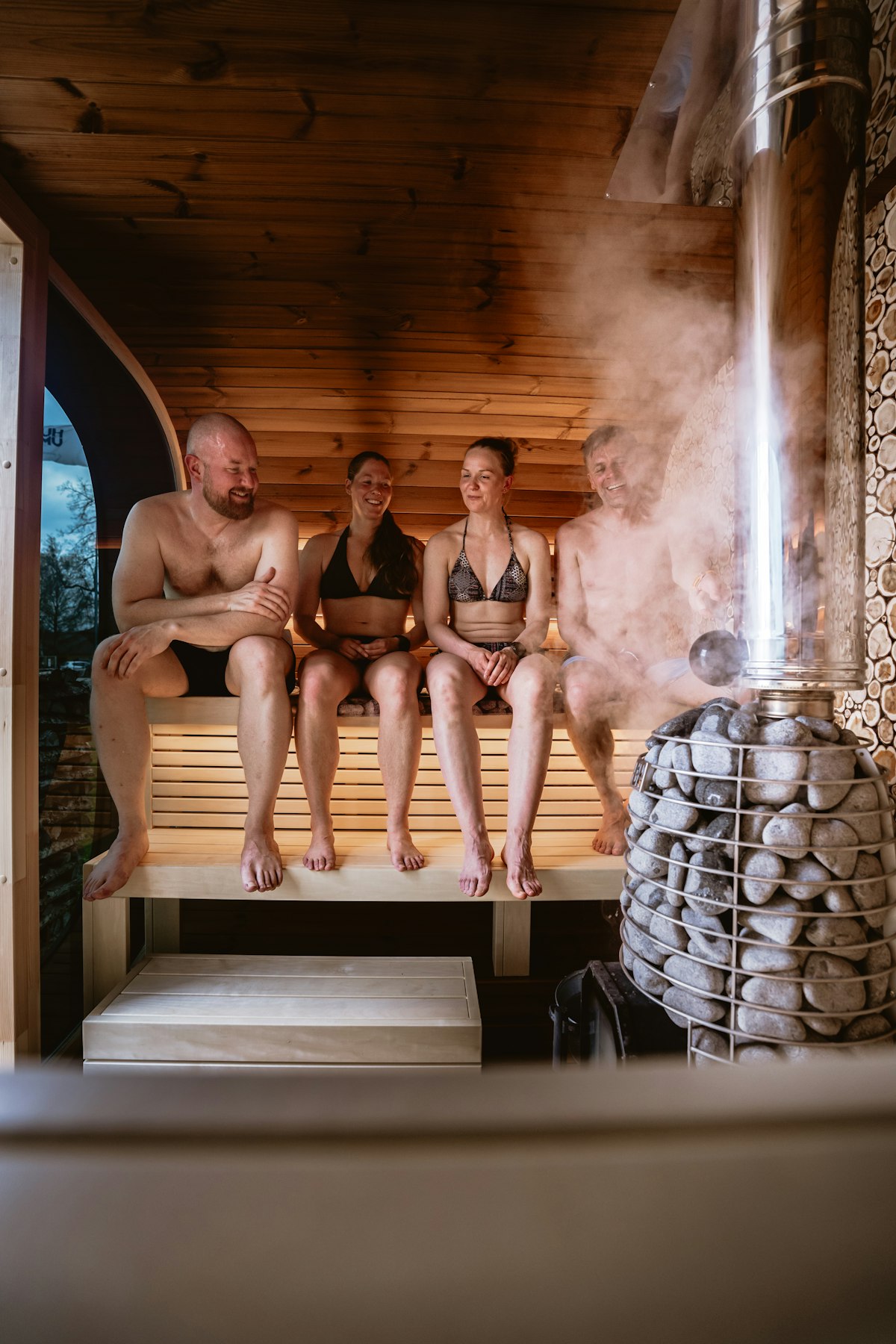
Sauna interior by Auroom Wellness. Photo via Unsplash.
When 71% of wellness consumers across the United States, United Kingdom, and Germany say "clinically proven" is the most reliable claim a brand can make, and fewer than half trust what they read on social media, the question for the sauna industry is not whether trust matters. The question is whether the industry's marketing is ready for the scrutiny that trust demands.
That number comes from WELLSurvey 2.0, a probability survey of 2,648 adults fielded in November 2025 by Civano Advisory Services. Co-authored by Kevin Kelly, the former president of Canyon Ranch and CEO of Sensei, and Peter Yesawich, PhD, the co-founder and former vice chairman of MMGY Global, the survey examined how consumers in three major markets evaluate wellness products, services, and the claims used to sell them. The results should concern any sauna brand that has been leaning on influencer partnerships, vague "detox" promises, or trend-driven marketing to fill its schedule.
- Survey: WELLSurvey 2.0, 2,648 respondents across US (1,026), UK (804), and Germany (818). Ages 25 to 74, top-half household income. Fielded November 2025.
- Most trusted claim: "Clinically proven" (71%), followed by "recommended by a scientist/medical professional" (67%) and "evidence-based" (66%).
- Least trusted claim: "Naturopathic" (34%), "advanced breakthrough" (38%), "recommended by an actual user" (43%).
- Social media: 83% access health information via social platforms, but fewer than half trust what they find there.
- Wellbeing vs. wellness: 50% are more interested in enhancing wellbeing (the integrated outcome) than wellness (the activity inputs). About 80% associate wellbeing with longevity.
- Market context: The global wellness economy reached $6.8 trillion in 2025, per the Global Wellness Institute.
What consumers actually trust (and what they don't)
The trust hierarchy WELLSurvey found was consistent across all three countries and all age groups. Scientific credibility won. Celebrity endorsements, influencer promotion, and trend-driven cues lost. That is not a regional preference or a generational quirk. It is a structural finding.
Consider the gap: 71% of respondents called "clinically proven" the most reliable descriptor. Just 43% trusted "recommended by an actual user," and "naturopathic" landed at 34%. For an industry where Instagram testimonials and biohacker endorsements have been core marketing channels, this is a direct challenge to the playbook.
McKinsey's Future of Wellness research found the same pattern independently. In its 2024 survey of more than 5,000 consumers across the US, UK, and China, the firm reported that consumers had shifted from prioritizing "clean and natural" products to demanding "clinically effective" ones. By 2025, McKinsey's follow-up survey of more than 9,000 consumers across four countries described a $2 trillion global wellness market where the most engaged segment, "maximalist optimizers," represented about 25% of consumers but more than 40% of spending, and was drawn specifically to science-backed products.
Two independent research programs. Same conclusion: evidence is becoming the price of entry.
What sauna science actually supports
The sauna industry does have real science to point to. The question is whether brands are using it carefully or stretching it beyond what the research actually says.
The strongest evidence comes from the Finnish Kuopio Ischemic Heart Disease Risk Factor Study, led by Jari Laukkanen. Published in JAMA Internal Medicine in 2015, the landmark study followed 2,315 middle-aged men from Eastern Finland for a median of 20.7 years. Men who used a sauna four to seven times per week had a 63% lower risk of sudden cardiac death, a 48% lower risk of fatal coronary heart disease, and a 40% lower risk of all-cause mortality compared to men who used a sauna once per week.
A follow-up study in BMC Medicine in 2018 expanded the sample to include women, following 1,688 participants for 15 years. The results held: participants who used a sauna four to seven times per week had approximately 70% lower cardiovascular mortality than those who used one once per week.
In 2024, Laukkanen published a comprehensive review in Temperature examining the broader evidence for passive heat therapies and healthspan extension. A 2025 meta-analysis in Complementary Therapies in Medicine, led by K. Maheshkumar, found that sauna bathing reduced blood pressure across randomized controlled trials and quasi-experimental studies.
That evidence is real and it matters. But it comes with caveats the industry often omits. The Kuopio cohort is observational, not experimental. The participants were Finnish men living in a culture where sauna use is nearly universal, making it difficult to isolate sauna as the independent variable. No large-scale, multi-site randomized controlled trial of sauna and cardiovascular outcomes has been completed. And as SaunaNews reported in May 2026, systematic reviews of contrast therapy found that the evidence for popular combined heat-and-cold protocols remains thin and methodologically inconsistent.
A systematic review by Hussain and Cohen, published in Evidence-Based Complementary and Alternative Medicine, examined 40 clinical studies involving 3,855 participants. Most studies reported beneficial health effects. But only 13 were randomized controlled trials, and most were small, with fewer than 40 participants.
The bottom line for brands: the science supports talking about sauna and cardiovascular associations, relaxation, blood pressure reduction, and potential healthspan benefits. It does not yet support claims of "detoxification," "fat burning," "immune boosting," or "life extension" as proven outcomes of sauna use.
The claims the industry is actually making
Walk through the marketing of any 10 commercial sauna brands and count how many use words like "detox," "burn calories," "boost immunity," "anti-aging," or "longevity" without qualification. In our experience, it is most of them.
That language sits in a gap between what the science suggests and what it has proven. And WELLSurvey's trust data suggests consumers are increasingly aware of that gap, even if they cannot always articulate it. When 71% say they trust "clinically proven" and only 34% trust "naturopathic," they are telling the market that they can distinguish between a substantiated claim and a marketing aspiration.
The Federal Trade Commission requires that health-related advertising be truthful, not misleading, and substantiated by "competent and reliable scientific evidence." That standard has historically been enforced against supplements and alternative medicine. In 2023, the FTC fined Rejuvica $650,000 for unsubstantiated health claims about a supplement, including reliance on fake endorsements. In 2025, Evoke Wellness paid $1.9 million to settle FTC claims about misleading consumers seeking wellness treatment.
No sauna company has been the subject of a public FTC enforcement action, as far as we can determine. But the sauna industry is now making claims that sit squarely in the same category of health-benefit advertising that the FTC has pursued in adjacent markets. If "detoxifies your body" appeared on a supplement label without adequate substantiation, it would be a regulatory risk. On a sauna website, the language is functionally identical.
Three markets, three trust profiles
WELLSurvey 2.0 also revealed that trust and participation differ by country in ways that matter for sauna brands selling across borders.
In the United States, respondents showed broader experimentation and greater dispersion of outcomes. That suggests room for premium, hybrid, and trend-forward sauna concepts, but also a higher tolerance for marketing language that the UK and German markets would scrutinize more carefully.
In the United Kingdom, respondents placed more disciplined emphasis on validation and proof. For sauna brands entering the UK market, evidence-led claims and professional endorsement likely matter more than social proof or celebrity association.
In Germany, where 75% of respondents use spa, wellness, or alternative therapies on a regular basis (versus 54% across all three markets), respondents exhibited one of the most diversified patterns of participation combined with greater institutional trust. Sauna in Germany can be positioned as part of a mature preventive-health culture. But the claims still need to be defensible. German consumers are sophisticated users, not impulse buyers.
The implication for manufacturers and franchise operators expanding internationally: the same pitch will not work in all three markets. And the safest default in every market is the one WELLSurvey says consumers already prefer: evidence-based.
What this means for operators
WELLSurvey found that 50% of respondents are more interested in enhancing their wellbeing (the broader outcome) than their wellness (the specific activity inputs). About 80% associate wellbeing with longevity. The top drivers of wellbeing, ranked by respondents across all three countries, were physical condition, financial security, mental health, emotional state, and social relationships.
That hierarchy suggests a practical reframe for sauna operators. The strongest positioning may not be "detox" or "burn 600 calories." It may be stress regulation, sleep support, emotional reset, social connection, and routine recovery. These are outcomes that align with how consumers now define wellbeing, and they can be communicated honestly without overclaiming what the science has established.
Operators already doing this well tend to build their menus around outcomes rather than access: "sleep wind-down" instead of "30-minute session," "post-workout recovery" instead of "private room," "guided heat ritual" instead of "drop-in." Research published earlier this year found that shared sauna rituals are linked to improved mental wellbeing, and the social sauna movement is already proving that community and programming can drive retention as effectively as the heat itself.
For equipment suppliers, the shift favors transparency: clear temperature specifications, safety standards, ventilation data, EMF disclosures for infrared units, medical disclaimers, and credible education materials. Operators are increasingly asking for evidence they can pass along to their own customers.
On the consumer side, the infrastructure to connect sauna science to medical practice is already being built. SaunaLMN, a physician-centered documentation platform, helps consumers obtain Letters of Medical Necessity so their physicians can prescribe sauna therapy for specific diagnosed conditions, from hypertension and chronic pain to depression and cardiovascular disease. When a physician signs that letter, the sauna purchase becomes eligible for HSA and FSA reimbursement, effectively turning a wellness expense into a tax-advantaged medical one. The model is significant because it takes the same body of evidence the sauna industry cites in its marketing and routes it through the channel consumers trust most: their own doctor. If platforms like SaunaLMN scale, they could accelerate a shift in how Americans perceive sauna, from discretionary luxury to physician-supported preventive care, with real financial incentives attached.
What remains uncertain
WELLSurvey 2.0 surveyed adults in the top half of household income in each country. That is a valuable but specific population. Whether the same trust hierarchy holds among lower-income consumers, younger demographics, or markets outside the US, UK, and Germany is not yet clear.
We also do not know whether the shift toward evidence-based purchasing will accelerate, plateau, or collide with the continued growth of influencer-driven wellness marketing. McKinsey's data and WELLSurvey's data point in the same direction, but consumer behavior does not always follow stated preference.
And the science itself remains a work in progress. New research continues to strengthen specific claims, such as the cardiovascular and immune associations documented by Laukkanen and colleagues. But large, randomized controlled trials that would allow brands to say "clinically proven" about sauna in the way consumers apparently want to hear it have not yet been completed. The longevity investment case for sauna is real, but it rests on observational data, not the gold-standard evidence that 71% of consumers say they trust most.
The WELLSurvey data does not say consumers have stopped buying wellness products. It says they are now filtering those purchases through a trust layer that did not exist at this intensity five years ago. For a sauna industry that has grown rapidly on the strength of social proof, influencer marketing, and aspirational health claims, that filter is the most important strategic variable of 2026. The brands that clear it, with honest language, defensible science, and transparent protocols, will earn the credibility that consumers are now actively looking for. The ones that do not will be competing on price in a market that is learning to tell the difference.
Consumers across the US, UK, and Germany trust science more than influencers, and they trust evidence more than trend. The sauna industry's growth depends on whether it can match that standard, or whether it will keep marketing as though the old playbook still works. For operators, manufacturers, and investors, the strategic choice is clear: lead with evidence, or get left behind by competitors who do.
Arlene Scott
Senior Wellness Correspondent & Hospitality Consultant
Arlene Scott brings over fifteen years of reporting and consulting experience across energy infrastructure, sustainable design, and thermotherapy-focused hospitality.
Full byline
Arlene Scott is a Senior Wellness Correspondent for SaunaNews.com, bringing over fifteen years of experience at the intersection of energy infrastructure, sustainable design, and thermotherapy. Her work focuses on the physiological benefits of passive heat therapies and the sustainable integration of sauna culture into modern wellness routines.
Arlene's background is rooted in the clean energy transition. She was a founding writer at MicrogridMedia.com, where she covered the technical and economic viability of desalination projects, microgrid deployments, and distributed renewable energy systems. During the mid-2010s, she was a regular contributor to Greentech Media (GTM) during its independent era — prior to the Wood Mackenzie acquisition in 2016 — reporting on the early integration of thermal energy storage and sustainable infrastructure.
Transitioning her focus from macro-energy systems to human-scale wellness, Arlene now applies her technical background to the hospitality sector. She operates as an independent consultant, advising boutique hotels and eco-resorts on the design, energy efficiency, and historical authenticity of commercial sauna and thermal spa installations. Her consulting work ensures that high-end wellness facilities balance traditional Nordic bathing principles with modern sustainable engineering.
Arlene holds a specialized certification in Applied Thermic Wellness from the Nordic Institute of Passive Heat Studies (NIPHS) and is a recognized associate member of the International Sauna Association (ISA). When she isn't reviewing the latest innovations in infrared technology or consulting on a new resort project, Arlene can be found tending to her own traditional wood-fired sauna in the Pacific Northwest. You can read her complete archive of essays on energy, wellness, and sustainable living at www.arlenescott.com.