
UK Study Ties Sauna’s Mental Health Gains to Ritual and Weekly Visits

By Arlene Scott
Senior Wellness Correspondent & Hospitality Consultant
- Published
- Reading time
- 10 min
SaunaNews is published by SaunaShare, Inc., which also runs SaunaShare.com and SaunaMarketplace.com, where we sell many of the products we write about. Assume that experience shapes what we cover and what we don't. Who owns SaunaNews · The ownership announcement
A peer-reviewed study of more than 1,900 sauna users ties wellbeing gains to belonging and ritual, and finds weekly bathers get the effect while monthly visitors largely do not.
In this story8 sections
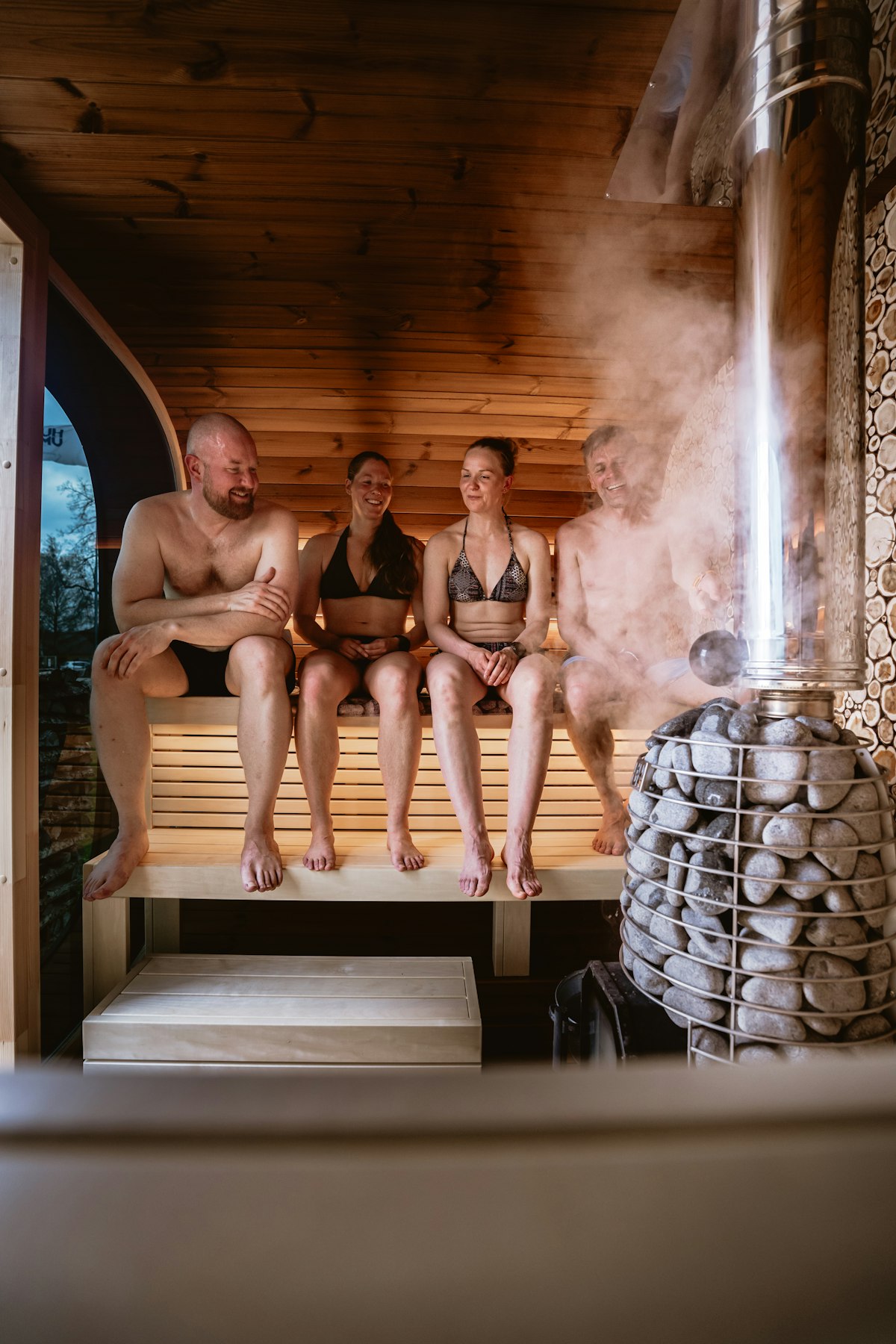
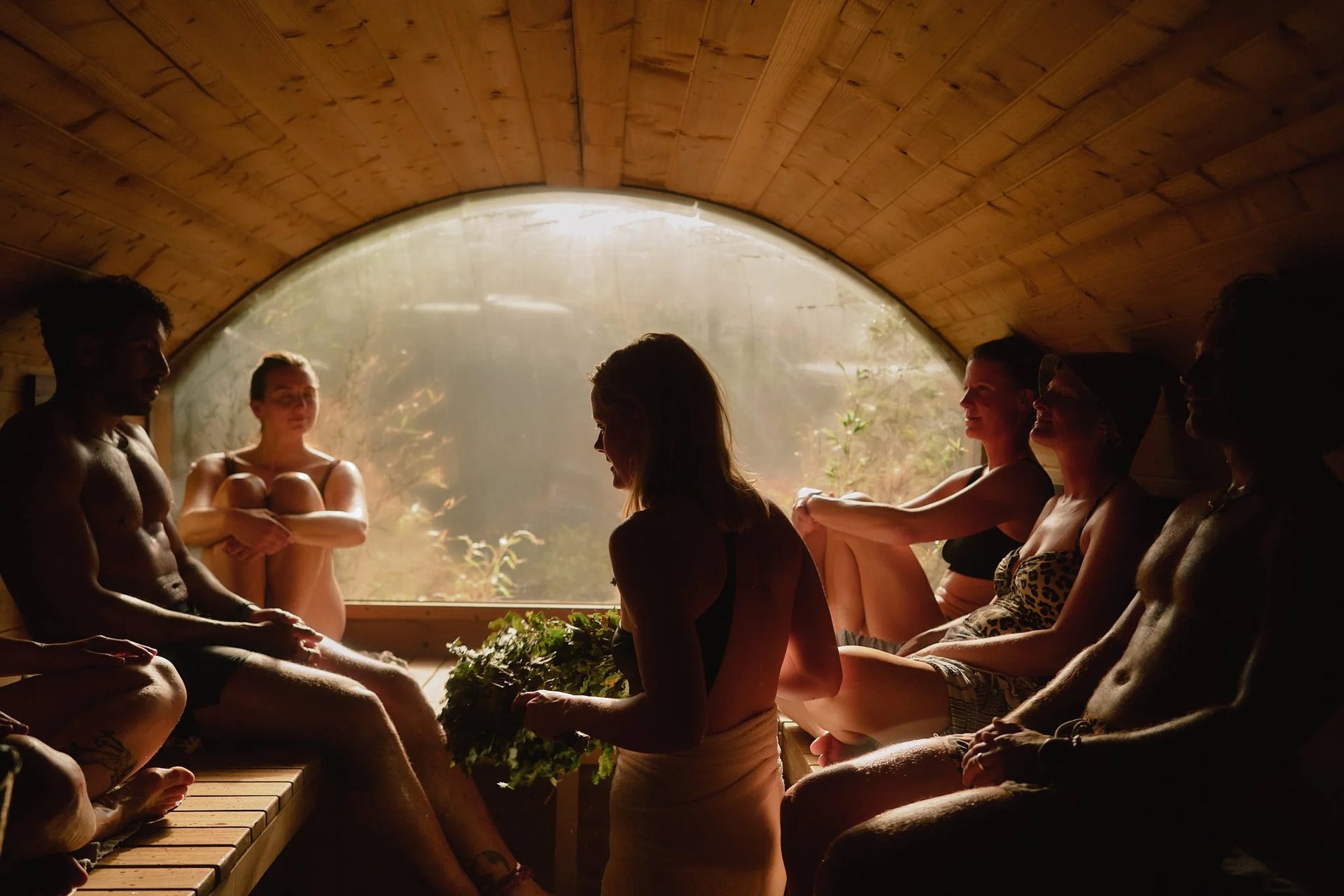
The feeling of sitting shoulder-to-shoulder in a sauna with strangers, breathing the same steam, enduring the same heat, turns out to be doing more than passing time before the cold plunge. A peer-reviewed study published in Social Science and Medicine finds that collective sauna rituals produce measurable improvements in emotional wellbeing, driven by a specific mechanism: the sense of belonging that forms when a group of people shares a physically demanding, ritualized experience together.
The research is led by Dr. Martha Newson of the Institute of Lifecourse Development at the University of Greenwich and Rachael McGrath of the London Interdisciplinary School, with three co-authors. It draws on more than 1,900 participants across three studies, and the authors say it is the first work to combine the social cure model with a ritual lens, in a market that has grown faster than the evidence base behind it. The paper went online on February 3, 2026, and an open-access copy is available through the University of Greenwich repository.
Six months on, its authors are making the larger claim in public: that communal sauna belongs in the toolkit British doctors reach for when the problem is not clinical. That is the part of this research an American operator should be watching.
The authorship carries two disclosures. Irina Mosina is listed with the British Sauna Society, and Gabrielle Reason, the Society’s director, is a co-author through the University of Kent. The paper also thanks the Society for help designing the research and thanks Community Sauna Baths CIC, whose sites and survey data made two of the three studies possible. The funding statement lists a UKRI Future Leaders Fellowship, and the paper carries no declaration of competing interest. None of that makes the findings wrong. It does mean the UK’s sauna trade body helped produce the research that supports its case, and readers should know it.
What the study actually measured
The roughly 1,900 total covers three separate pieces of work of very different sizes, and the difference matters if you are deciding what to do with the result.
Study 1 followed 33 people through a single free session at a community sauna running a traditional aufguss, measuring wellbeing before and after. Study 2 is the big one: 1,798 anonymized responses to a community sauna’s annual survey, asking whether people felt their physical and mental health had improved and how often they visited. Study 3 recruited at a sauna event built around performance aufguss, and 74 people completed matched pre- and post-session surveys measuring positive and negative affect, identity fusion with the sauna community, and perceived emotional synchrony.
So the headline number is carried almost entirely by one cross-sectional survey, and the two before-and-after studies are small. The authors say so plainly. What the design does support is a consistent direction of effect across three methods, which is more than the sauna trade usually gets.
What the data shows
Wellbeing rose significantly after sauna in Study 1, and positive affect rose while negative affect fell in Study 3. The more interesting part is the pathway.
Newson and McGrath apply the “social cure” model, a framework from social psychology that links membership in meaningful social groups to mental and physical health outcomes. Participants who most strongly identified with their sauna community reported the largest gains. Perceiving the session as a ritual, rather than a hot room to sit in, strengthened that identity, and so did emotional synchrony, the sense of feeling the same thing at the same time as everyone else on the bench.
Frequency is the finding with the clearest operational edge. Weekly bathing was associated with greater health and wellbeing benefits. Monthly visitors still reported some improvement in mental wellbeing, but their visits did not significantly strengthen belonging and did not produce the indirect benefit that runs through social connection. Occasional attendance gets you the heat. It does not appear to get you the community effect.
The demographic results are more mixed than the coverage of this study has suggested, and the paper is careful about them. Participants from lower socioeconomic backgrounds reported higher positive affect after sauna. Participants from an ethnic minority background were more likely to report physical health improvements, and disabled participants were more likely to report mental health improvements. But respondents who identified as a sexual minority were less likely to report mental health improvements than heterosexual respondents. In the authors’ words, “sauna is not a panacea for minority groups.” Any operator using this research to argue that a sauna serves everyone equally is overreading it.
The aufguss effect
The study pays particular attention to aufguss, the ritualized sauna ceremony that originated in Germanic spa culture and has developed a global competitive circuit.
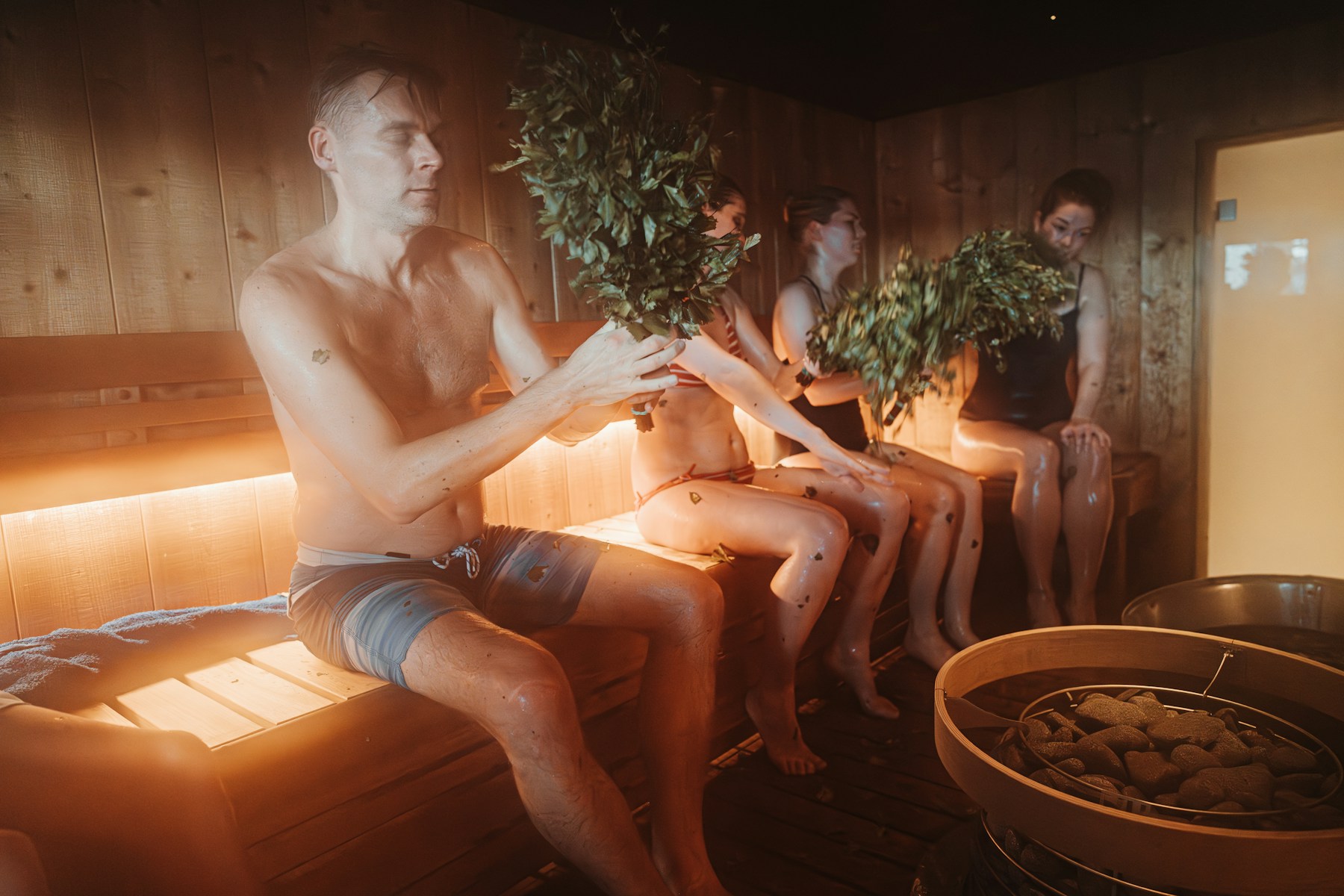
In an aufguss session, a trained saunameister pours scented water over heated stones, releasing bursts of aromatic steam, then circulates the heat with towels, flags, or branches. The paper draws a line operators should borrow: traditional aufguss keeps the sauna master focused on the cleansing purpose of the ritual, while performance aufguss is a choreographed routine built to dazzle an audience. Both showed effects here. They are not the same product to staff, schedule, or sell.
The competitive circuit is the visible edge of the trend. The paper puts the global aufguss championships at six competing nations in 2014 and eighteen a decade later, with the largest host saunas seating up to 200 bathers at once. The Global Wellness Summit named aufguss its top trend back in 2017.
It sounds theatrical. That is precisely the point. Aufguss has the formal structure of a ritual: a practitioner, a sequence of actions, a shared physical environment, and a common experience that nobody present could have alone. Those are the elements the research links to social bonding.
The paper does not name the event behind Study 3, saying only that participants were recruited at a sauna event. The obvious candidate is the third UK Aufguss Championships, held May 18 and 19, 2025 at ARC in Canary Wharf, London, in a 65-person aufguss sauna, and organized by Aufguss UK. Trade press reported ahead of that event that University of Greenwich researchers would study the psychology of sauna rituals there, though the paper does not make the connection explicit.
The neurochemistry has some grounding elsewhere in the literature. A 2020 study in Biology Letters found that blocking mu-opioid receptors with naltrexone significantly reduced social bonding among participants in religious rituals, pointing to beta-endorphin release triggered by physically demanding shared experience. Collective heat exposure fits that model. Newson and her co-authors do not test the mechanism here, so it stays a plausible explanation rather than a measured one.
Newson put the finding this way in the university’s announcement of the research:
“Sauna has well-evidenced benefits for our physical health, but our research suggests it offers something just as important: connection. In turn, this social connection elevates our mental wellbeing. In cultures around the world where sauna and steam are embedded, hot spaces function as social institutions as much as health practices, from Finland, to Japan, to Indigenous American practices. Our data show that shared ritual is integral to the feelings of connection and wellbeing that emerge from sauna use. People don’t just go for the heat; they go for the community, which is what makes sauna so powerful in the UK.”
Dr. Martha Newson, University of Greenwich
The social prescribing question
England’s National Health Service routes patients to non-clinical community activities through social prescribing: gardening groups, walking clubs, arts programs, connected to patients by link workers rather than prescribed by a doctor. The authors note that sauna is “largely absent from academic research and policy frameworks” on social prescribing despite fitting the NHS’s preventive care goals closely, and argue that the ritual and belonging mechanisms they measured are exactly what a prescribed activity is supposed to produce. The instrument used in Study 1, MYCaW, was chosen because the work started life as an evaluation of sauna-based social prescriptions.
That evaluation is not hypothetical. Community Sauna Baths, the London community interest company behind two of the three studies, reports 575 socially prescribed referrals given access to 10 free sauna sessions each, 5,750 free sessions delivered in total, 15 partner organizations, and three dedicated community officers. McGrath designed and led what she describes as the first UK evaluation of a sauna social prescribing program, at those sites. Community Sauna Baths’ Polly Wilson and Charlie Duckworth later became founding stewards of the Public Sauna-Bathing Charter, which Sauna for All took to the International Sauna Congress in Oslo in September 2026.
The authors are not triumphalist about it. They point out that the social prescribing evidence base as a whole is criticized for lacking the rigor to establish what works, for whom, and at what cost, and they call for randomized controlled trials of sauna specifically before anyone makes claims about national health impact. That is the right posture, and it is a useful corrective to a US wellness market that reaches for a health claim faster than it reaches for a study.
For US operators, the near-term read is not reimbursement. It is that a credible research pathway now exists for arguing that communal bathing produces measurable health outcomes, and the UK is further along in building it.
What the researchers are saying now
McGrath discussed the study and the social prescribing work on the August 9, 2026 episode of Badii Talk, the thermal bathing podcast hosted by Sarah Spoto, alongside psychotherapist and bathhouse consultant Sierra Blake. In the show notes for that episode, McGrath frames cultural preservation as a practical matter rather than a sentimental one:
“It’s almost like, again, the sauna as a container becomes this space for knowledge to survive and continue. So that’s why I think it’s so important to preserve the traditions and where they came from in their original context and background. Because knowledge then lives on through practicing them that way.”
Rachael McGrath, on Badii Talk, August 9, 2026
Blake, in the same episode, puts the demand side of aufguss in terms an operator will recognize:
“You have to be in-person to do it. People want to be in-person, in real life, with other people. There’s these macro trends around AI and the loneliness epidemic, that this has emerged as this antidote to. There’s something very almost primitive to the whole thing, where it’s like really stripped down and you have to be there, you’re very present. It sort of demands that.”
Sierra Blake, on Badii Talk, August 9, 2026
The UK’s sauna boom as public health context
The research lands at a particular moment in British public life. The University of Greenwich put the count at more than 600 public saunas in the UK when the study was published, drawn from the British Sauna Society’s sauna map. The paper opens on the country’s rising loneliness and the physical and mental health problems that travel with it, and the university’s announcement framed the finding against a health risk from poor social relationships it compared to cigarettes and alcohol.
Against that backdrop, a venue format that reliably produces belonging through structured shared experience starts to look less like a leisure amenity and more like a health infrastructure question. That is the argument UK operators are now equipped to make to a council, a landlord, or a health commissioner. US operators are not, yet.
What this means for operators
For operators building social sauna businesses, the variables that predicted wellbeing gains were not temperature settings or heater wattage. They were programming, community identity, and frequency of visit.
That points at specific decisions. Membership pricing that makes weekly attendance the default does more for the outcome than a discounted single session, because monthly visitors did not build the belonging that carried the effect. The frequency finding also has an odd precedent: a 1987 NASA study of an Antarctic winter crew found several of nine people using the station sauna most days, and logging every one of those sessions as solo when the researchers had watched them go in four at a time. Ritual programming is the mechanism, not the garnish, which is an argument for the cost of trained sauna masters and a regular aufguss schedule rather than an occasional special event. And if you intend to make a wellbeing claim in your marketing, this paper gives you something to cite and a set of caveats you should cite with it.
A note on limits
The authors list the problems themselves, and they are not small. All three studies used convenience samples and uncontrolled designs. Participants were people already engaged with sauna culture, and many had free sauna access during the research period, which biases the results away from a normal customer who pays. Wellbeing was self-reported throughout. The Study 1 instrument used inverted scoring, where a lower number means better wellbeing, which the authors say may have confused some respondents. The authors call Study 2’s sample biased, with 40% of respondents queer. The before-and-after studies captured immediate changes only, so nothing here tells you how long the effect lasts.
Whether the findings translate to solo home sauna use, or to the quieter Finnish tradition of private family bathing, is untested. The authors describe their results as not representative and not generalizable, and ask for randomized trials next. Treat the paper as good evidence that something real happens in a communal ritual sauna, and as weak evidence for how big it is.
The sauna industry has spent years making the physiological case for regular use: cardiovascular benefits, heat shock proteins, the 2015 KIHD study’s 40% reduction in all-cause mortality for frequent users, and more recently the immune response work out of Finland. This research adds a different dimension. The community experience is not just an amenity that keeps customers coming back. It is a variable in the health outcome the sauna produces, and the strength of the effect tracks how often people show up. That is a programming and pricing question before it is an equipment question. A 588-person Swedish survey published in July adds the sex split: women rank mental recovery ahead of company, and only they report better sleep and less pain afterward.