Therme’s Herbarium Festival Draws Aufguss Masters From More Countries Than the World Championship

By Arlene Scott
Senior Wellness Correspondent & Hospitality Consultant
- Published
- Reading time
- 6 min
SaunaNews is published by SaunaShare, Inc., which also runs SaunaShare.com and SaunaMarketplace.com, where we sell many of the products we write about. Assume that experience shapes what we cover and what we don't. Who owns SaunaNews · The ownership announcement
The fourth edition of Therme Bucharest’s botanical sauna festival assembled 92 aufguss masters from 26 countries, more nations than the Aufguss World Championship draws, though the championship’s field of more than 160 competitors is larger. For the CVC-backed thermal operator, the festival doubles as a talent pipeline for a three-billion-dollar expansion.
In this story4 sections
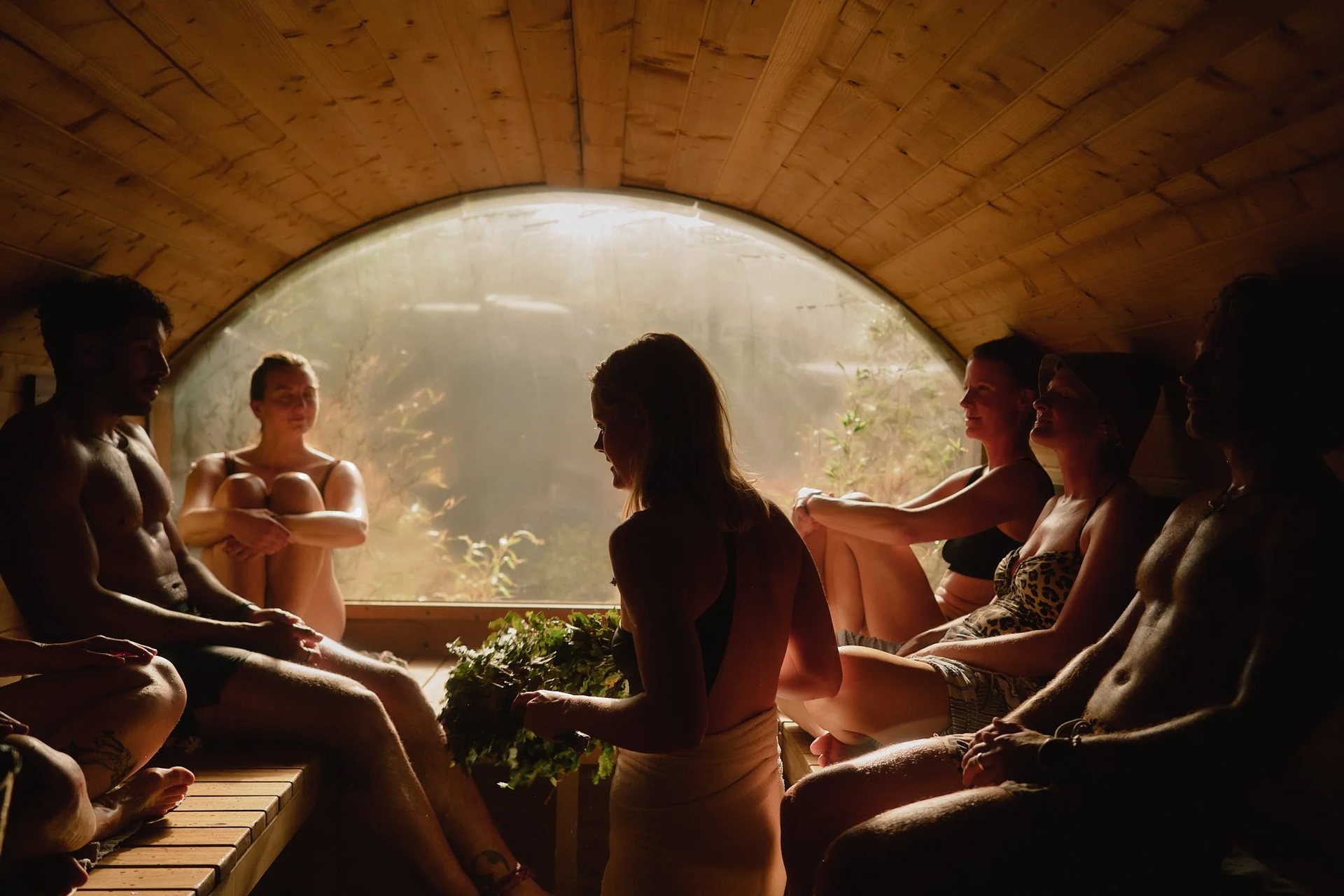
The fourth edition of Therme Bucharest’s Herbarium festival, which ran May 4–17, assembled 92 aufguss masters from 26 countries and delivered 800 sauna and steam experiences over two weeks. That is broader international representation than the Aufguss World Championship, the discipline’s marquee competitive event, has managed at recent editions, though the championship’s field is larger: more than 160 competitors at its 2025 edition. An invitation-only performance festival at a Romanian thermal complex now draws from more countries than the sport’s official pinnacle. And the operator behind it, Vienna-based Therme Group, has roughly $3 billion in new thermal facilities in its development pipeline.
Key facts
- 92 aufguss masters from 26 countries (4th edition, May 4–17, 2026)
- 800 sauna and steam experiences over 14 days across Therme Bucharest’s full thermal complex
- Growth trajectory 30 → 45 → 70 → 92 masters across four editions (2023–2026)
- Therme Bucharest 1.7 million visitors in 2025, roughly 30% foreign tourists
- Day pass pricing 162–217 Romanian lei (roughly $36–$48)
- Sound Tree EUR 24,900 olive-wood memorial sculpture by SEW Handpan
- Therme Group pipeline Manchester (£450–500M), Dallas ($800M), Washington, D.C. ($500M)
Four editions, triple the talent
The growth trajectory is the first number that matters. When Herbarium launched in 2023, it featured roughly 30 practitioners from a handful of European countries. The second edition brought 45. The third reached 70 from about 20 nations. This year’s 92 from 26 countries triples the original headcount in three years, a pace that suggests the festival is still in its acquisition phase, not yet at equilibrium.
The curatorial engine behind that growth is Cosmin Ciric, the Romanian aufguss artist who designed the festival’s format and serves as its creative director. Eight German “Meister der Heißen Luft” (Masters of Hot Air) practitioners performed at Herbarium this year, according to Sauna-Wellness-Update, the German trade outlet.
Herbarium is structured as an invitation-only event, not a competition bracket. Masters are selected, not seeded. That format eliminates the logistical overhead of judging panels and elimination rounds while concentrating the programming quality. It also eliminates a risk that competition organizers know well: nobody goes home in the first round. The model benefits the masters, too. A two-week festival run, with multiple performance slots and cross-pollination with 91 peers from every major aufguss tradition, offers development and visibility that a three-day competition bracket cannot.
What 800 experiences actually look like
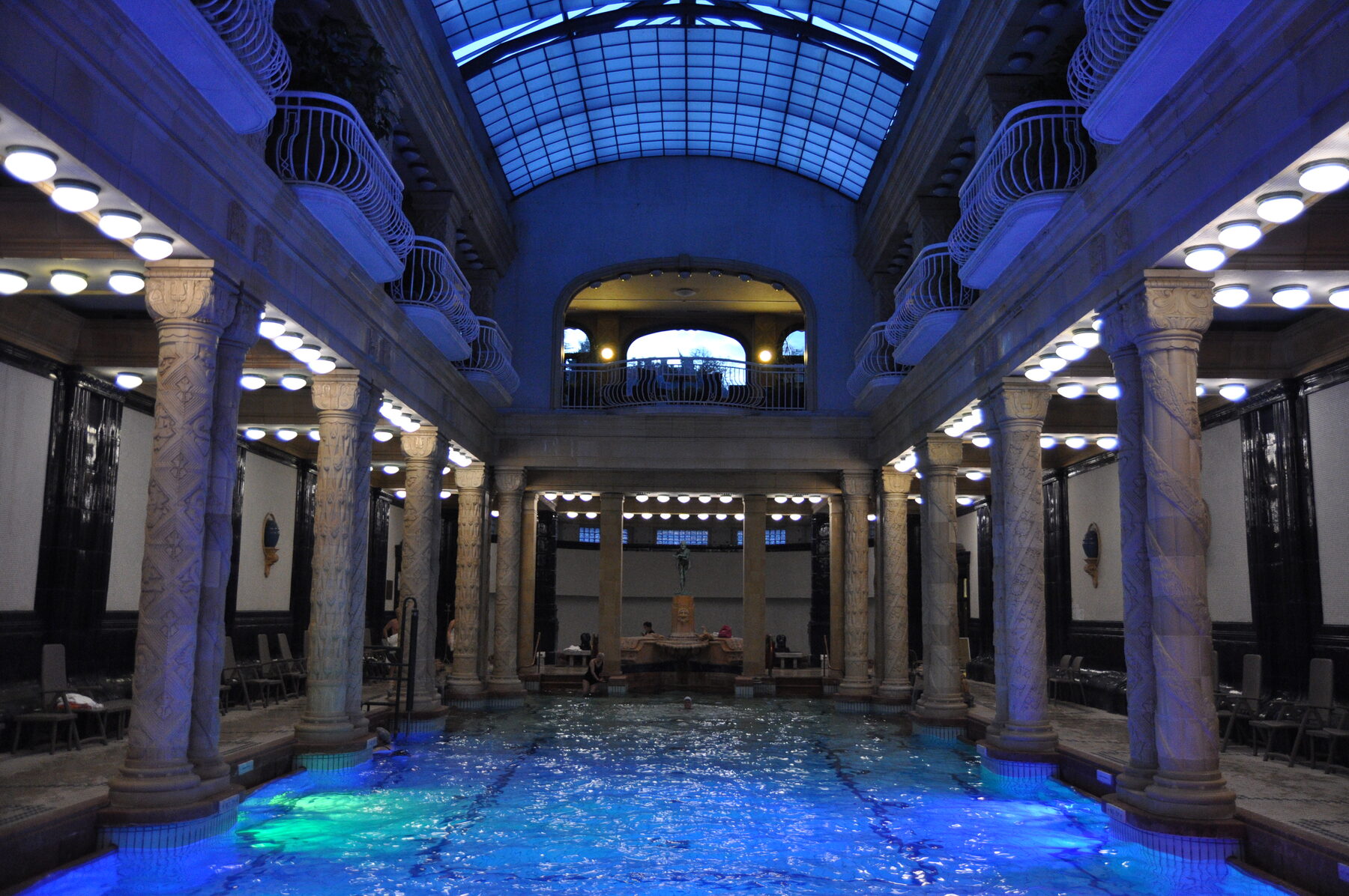
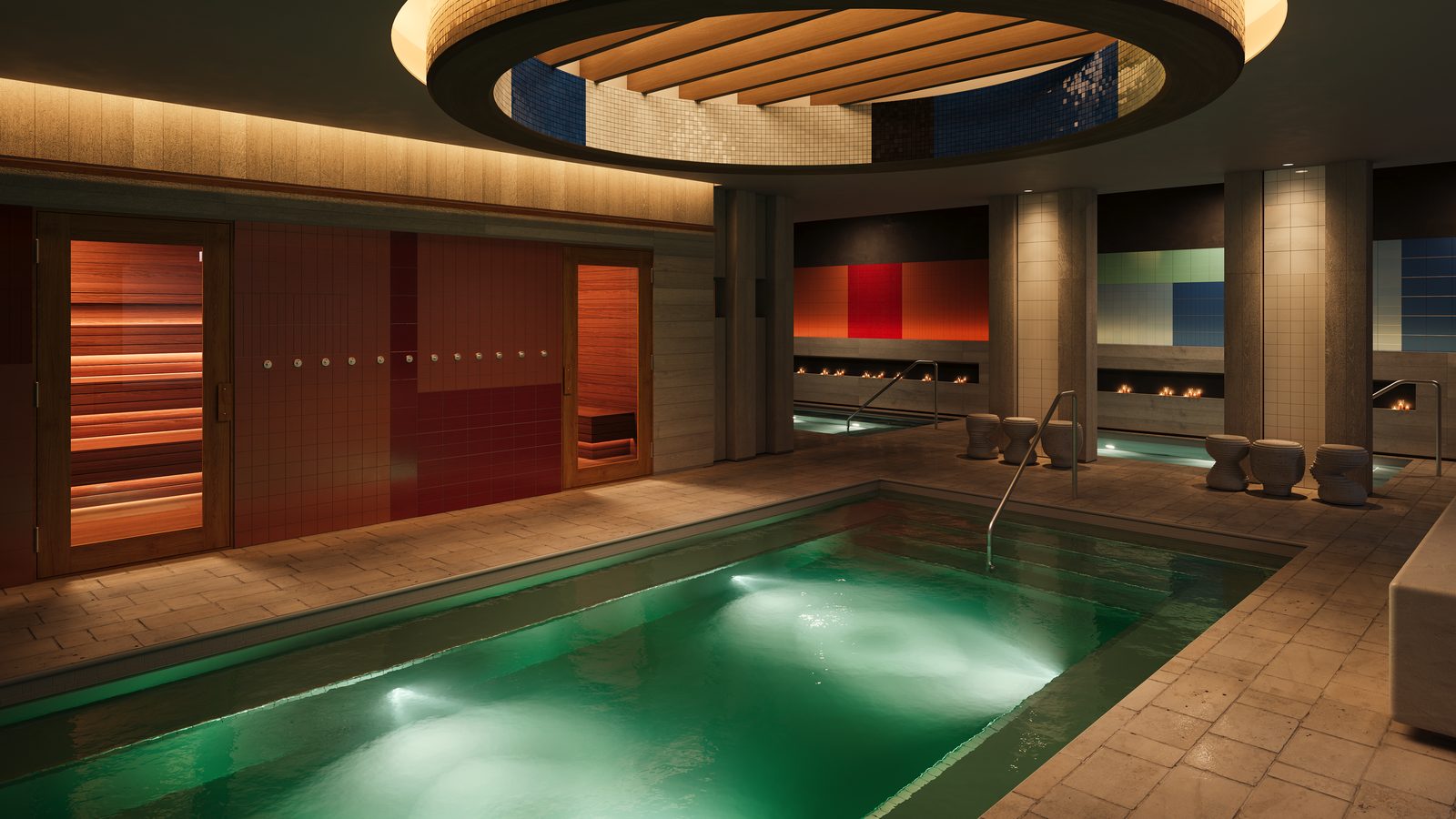
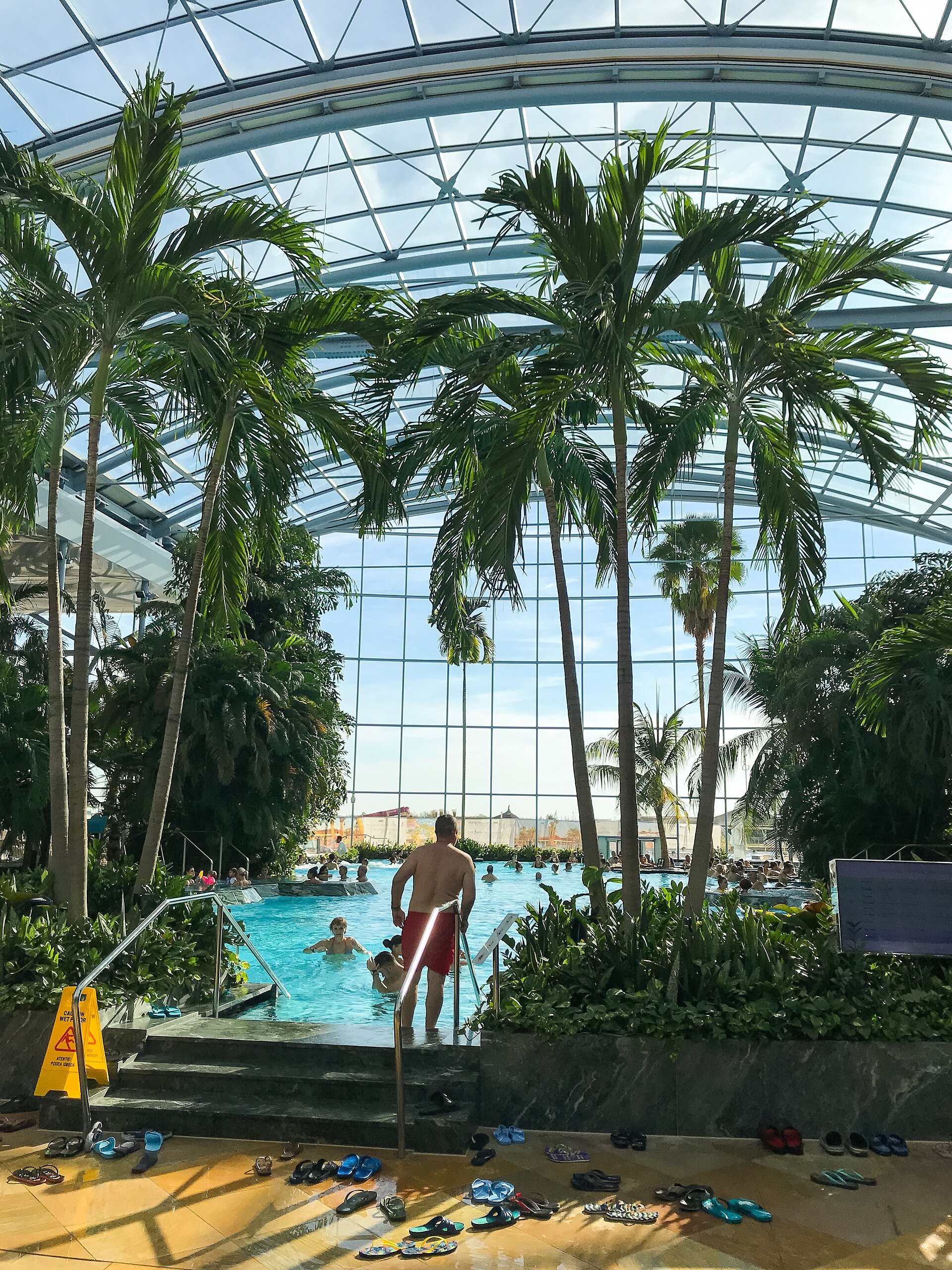
The 800-experience figure sounds enormous until you see the venue. Therme Bucharest is a roughly 323,000-square-foot waterpark and thermal complex that drew 1.7 million visitors in 2025, about 30% of them foreign tourists, according to Ziarul Financiar. The festival’s sessions span the full thermal footprint: sauna cabins, steam rooms, and dedicated aufguss arenas, programmed continuously across 14 days.
The botanical theme is substantive, not decorative. Sessions use plant-based infusions (essential oils, herbal extracts, dried botanicals) developed in collaboration with the University of Bucharest through what the festival calls the Herbarium Lab. That academic partnership distinguishes Herbarium from the supplier-catalog wellness programming that remains the industry norm.
Day passes during Herbarium ranged from 162 to 217 Romanian lei (roughly $36 to $48), which included full access to pools, saunas, and festival programming. For comparison, a single aufguss session at a destination bathhouse in London or New York can run $30 to $50 on its own. The pricing reflects Therme’s high-volume model: absorb the programming cost into a mass-market day pass and let the aufguss serve as a differentiator rather than a standalone revenue line.
The programming reached beyond pure aufguss. The Muse Quartet performed a live classical concert inside the thermal area. The festival’s signature installation, the Sound Tree, is a playable sculpture carved from a Puglia olive tree killed by the Xylella fastidiosa blight, a bacterial epidemic that devastated millions of olive trees across southern Italy. Built by the Bucharest-based handpan artisan Sebastian Enache-Wainwright of SEW Handpan at a cost of EUR 24,900 (roughly $27,000), the piece functions as both a memorial and a performance instrument. These elements position Herbarium closer to immersive theater than to a standard industry event.
Bigger than the World Championship?
The numbers invite a direct comparison. The Aufguss World Championship (Aufguss-WM), the discipline’s premier competitive event, has drawn competitors from about 19 countries at recent editions, and its organizers announced more than 160 competitors for the 2025 edition near Verona. Herbarium’s 26 countries is the wider spread; its 92 masters is the smaller field.
The comparison has structural limits. The Aufguss-WM is a scored competition with elimination rounds, judging criteria, and titles at stake. Herbarium is a showcase where masters are invited to perform, not to compete. One format tests who is best; the other demonstrates what the discipline can look like at its most ambitious. But for the commercial sauna industry, the distinction between competition and showcase matters less than the talent density and the programming ambition. Operators evaluating aufguss programs for their own facilities care about what is possible and who is available, not who placed third in the team category.
The geography tells a story too. The Aufguss-WM draws heavily from its Central European base, with Germany, Austria, the Netherlands, and the Czech Republic typically dominating. Herbarium’s 26-country roster suggests a considerably wider catchment. The growth from roughly 10 countries in 2023 to 26 in 2026 tracks the global expansion of aufguss as a commercial practice. That geographic breadth has commercial value beyond the festival. An operator considering aufguss programming in Texas or the English Midlands needs to know that trained practitioners exist outside Central Europe. Herbarium’s 26-country participant list is, in effect, a proof of labor supply for markets that do not yet have an aufguss talent base of their own.
The broader pattern is fragmentation. Aufguss is expanding from a single championship model into a distributed circuit. The USA held its first national aufguss championship in 2025. Regional competitions are multiplying across Central Europe. Herbarium sits on the non-competitive branch of that expansion.
The corporate strategy behind the rituals
Therme Group is not a local bathhouse operator running an enthusiast project. The Vienna-based company, backed by a joint venture with CVC Capital Partners valued at more than EUR 1 billion and announced in June 2025, operates five large-format thermal complexes and attracted 5.3 million total visitors in 2025. Its development pipeline includes Therme Manchester (£450–500 million, targeting a 2028 opening), a proposed Therme Dallas ($800 million), and a proposed Therme Washington, D.C. ($500 million).
Herbarium fits this expansion strategy precisely. Therme has indicated it plans to bring the festival format to its German properties, Therme Erding and Therme Bad Wörishofen, where the aufguss tradition is already central to guest expectations. If 92 masters will travel to Bucharest, the company’s bet is that the same talent network can activate facilities across its portfolio, including in markets where aufguss is still a novelty.
That lens reframes what Herbarium is at the corporate level. In our reading, the festival also works as a talent-acquisition and brand-building instrument for a company that needs to staff aufguss programs across a growing international portfolio. Every master who performs at Herbarium is a potential hire, collaborator, or brand ambassador for a future Therme property. In our reading, the cost of flying in 92 performers and mounting 800 sessions also works as a recruiting and market-development expense.
The model also generates programming IP. Therme can study which session formats, botanical themes, and performance styles produce the strongest guest engagement in Bucharest, then export the playbook to Manchester or Dallas. Luxury hotel operators building thermal facilities will recognize the approach: use a flagship property as a laboratory for concepts that scale across the portfolio.
Why it matters
The sauna industry has debated for years whether aufguss is a niche performance art or a scalable hospitality product. Herbarium’s fourth edition provides real evidence for the second view. A well-capitalized operator assembled nearly 100 international practitioners in a city with no meaningful aufguss tradition five years ago, drew them from more countries than the world championship, and is now planning to export the format across three continents.
For operators building or expanding sauna facilities with aufguss ambitions, the implication is specific: Therme is building the market for aufguss talent on terms it controls, with programming budgets that independent operators will struggle to match. That will shape who is available, what performers cost, and what guests come to expect.
Bottom line
The industry’s open question is no longer whether aufguss scales. It is who controls the talent pipeline when it does. Therme, four editions and $3 billion in pipeline capital into this experiment, is currently writing the terms.
Correction, September 25, 2026: an earlier version of this article said Herbarium drew more performers than the Aufguss World Championship, which it put at roughly 60 to 70 practitioners at recent editions. The championship’s organizers announced more than 160 competitors for 2025, per Aufguss-WM. It also said the USA held its first national aufguss championship in 2024; the first was in June 2025, per Leisure Opportunities. And it said Therme Group’s joint venture with CVC was worth EUR 1.25 billion and announced in 2024; it is valued at more than EUR 1 billion and was announced on June 17, 2025, per CVC.