
Bathhouse on Pace for $120M Revenue as Social Sauna Model Scales

By Arlene Scott
Senior Wellness Correspondent & Hospitality Consultant
- Published
- Reading time
- 10 min
SaunaNews is published by SaunaShare, Inc., which also runs SaunaShare.com and SaunaMarketplace.com, where we sell many of the products we write about. Assume that experience shapes what we cover and what we don't. Who owns SaunaNews · The ownership announcement
The urban bathhouse operator told CNBC it expects to hit $120 million in run-rate revenue by year-end, with roughly 1,000 customers per day across its New York locations.
In this story3 sections
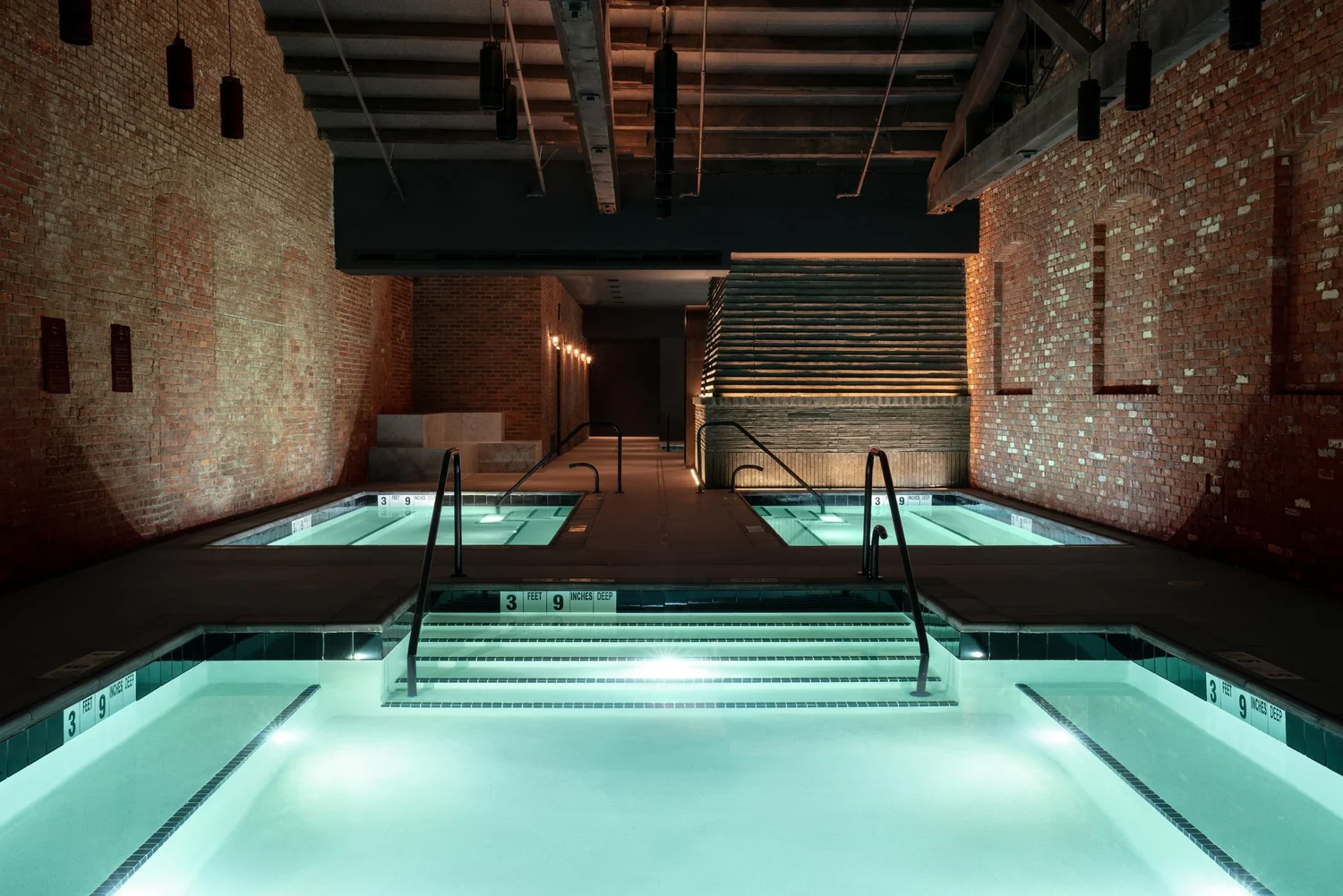
Inside a converted 1930s soda factory on North 10th Street in Williamsburg, Brooklyn, a line forms every Saturday morning. It’s not for brunch. It’s for a three-hour sauna session at Bathhouse, one of a growing number of urban sauna social clubs that are turning thermal bathing into a lifestyle category. For a deeper neighborhood lens on how operators are calibrating culture, ritual, and premium positioning, see our related Brooklyn field report on authenticity versus scale in urban sauna.
A new category emerges
The sauna social club model has proliferated in major cities over the past three years. Part traditional bathhouse, part wellness studio, part community gathering space, these aren’t luxury spas. They’re membership-driven, culture-forward venues designed around the ritual of heat and cold, with food, drink, and social programming layered on top.
The format varies, but the core elements are consistent: multiple sauna types (Finnish, infrared, sometimes steam), cold plunge pools or outdoor cold water immersion, rest areas designed for conversation, and a bar or cafe serving non-alcoholic beverages, broths, or light food.
The business model
Most operators combine monthly memberships with drop-in visits. At Bathhouse, drop-in sessions start at about $40, according to CNBC, and memberships start at $145 a month. The economics work well for operators: thermal facilities have high upfront capital costs but relatively low variable costs per session, and utilization rates tend to be strong once a community forms.
Bathhouse, which opened its original Williamsburg location in 2019 and added a Manhattan location in the Flatiron district, told CNBC in March 2026 that its two New York City locations see roughly 1,000 customers a day and that it expects to reach about $120 million in run-rate revenue by year-end. Paris’s new premium contrast club Sant Roch just validated a tighter version of the same model at much smaller footprint, clearing 85%-plus occupancy in month one by deliberately capping its sauna at roughly half its physical capacity.
The Talmadge origin story
Bathhouse’s co-founder Travis Talmadge did not set out to build a wellness brand. He started his career in investment sales. In a feature published by Hamilton College, his alma mater, Talmadge recounted the moment that changed his trajectory: a friend invited him to a Russian bathhouse in New York City, where he did a sauna and cold plunge for the first time.
I walked out of there and felt a sauna high. I was walking on clouds. I slept great that night. I was hooked from that day forward.
Talmadge, a 2009 Hamilton graduate who majored in economics and photography/fine arts, went on to co-found Bathhouse with partner Jason Goodman. The original Williamsburg location opened in 2019 inside a converted 1930s soda factory, and Bathhouse added 10,000 square feet of new interior space there in early 2025. Two Hamilton classmates joined the company as it scaled: Jordan Hummel ’09 leads real estate, and Henry Ciocca ’09 serves as general counsel.
The personal story has become a piece of the commercial story. Bathhouse does not sell amenities first; it sells the feeling Talmadge describes, that first post-sauna high, and builds memberships around people who want to chase it. The company has signaled plans to add roughly eight more locations across seven additional states, with Los Angeles, Nashville, Philadelphia, and Chicago named as near-term targets. For a deeper look at how operators like Bathhouse are building at this pace, see our analysis on how modular saunas are changing the game for commercial builders.
Cultural drivers
The trend draws from several cultural currents: the normalization of cold exposure through influencers and podcasters, the post-pandemic hunger for in-person community, the growing longevity and biohacking movements, and a generational shift toward experiences over material consumption.
As the category matures, expect more sophisticated programming, branded product lines, and expansion into secondary markets. Bathhouse is also hosting the 2026 Aufguss USA Nationals at its Brooklyn and Flatiron venues in May, which pulls the global competitive ritual circuit directly into the US social sauna scene. The sauna social club may be one of the most promising new formats in urban wellness. For a look at how the model is scaling into mid-sized American cities, see our profile on Sauna House’s franchise expansion. For the unit-economics breakdown behind performance sauna programs (labor ratios, utilization math, and the revenue-per-square-foot comparison against a traditional treatment room), see our analysis on the business of Aufguss.