Factory-Built Modular Saunas Fill the US Commercial Builder Gap

By Arlene Scott
Correspondent, Research and Industry
- Published
- Reading time
- 12 min
SaunaNews is published by SaunaShare, Inc., which also runs SaunaShare.com and SaunaMarketplace.com, where we sell many of the products we write about. That experience may change what we write about and what we don't. Who owns SaunaNews · The ownership announcement
American builders know construction, but most have not had a good way to add a sauna to a commercial space with block walls and steel framing. Factory-engineered modular systems let any GC assemble a commercial sauna from factory-built panels instead of building one on site.
In this story4 sections
Developers and general contractors adding commercial saunas in the United States face a severe shortage of experienced commercial sauna builders. Demand for high-capacity, commercial-grade saunas is rising with the North American wellness real estate market, luxury hotel brands swapping traditional pools for thermal suites, and the rapid expansion of urban bathhouses like Bathhouse NYC and Othership.
For decades, the default approach to sauna construction in North America has been “stick-built”: constructing the sauna piece by piece on-site. It can work for small residential projects built by a master craftsman. In high-traffic commercial rooms it often leads to costly delays, structural incompatibility, and inconsistent quality. Large operators are instead turning to manufacturers who engineer and prefabricate modular sauna systems in climate-controlled factories.
The knowledge gap in commercial sauna construction
A commercial sauna subjects its structural envelope to intense heat, rapid temperature swings, and high humidity for up to 18 hours a day. General contractors who build one with standard framing techniques often get it wrong.
The gap is in knowledge. US contractors are good at measuring, leveling, squaring, and executing complex architectural plans, and building science is well understood in the United States, led by experts like Matt Risinger and a community of high-performance builders. That knowledge rarely reaches sauna construction. Many commercial builders can frame a high-rise but do not know how to add a sauna to a commercial space with brick walls and steel framing.
The United States also lacks a standardized certification for sauna builders. On industry forums and contractor networks, developers report trouble finding builders who understand Finnish sauna standards. Common mistakes in US commercial builds: contractors frequently use drywall as a backing material (which degrades rapidly in high heat), and they routinely leave out the air gap between the vapor barrier and the interior wood cladding, leading to rot and structural failure.
One of the most destructive and common errors is what the industry calls the “diaper problem.” This occurs when a contractor installs a radiant foil barrier on the interior side of the sauna wall (correct) but then also wraps the exterior side of the stud cavity with a second moisture barrier such as house wrap or polyethylene sheeting. The result is a sealed pocket where moisture has no way to escape. Condensation builds between the two barriers, saturating the insulation and rotting the framing from the inside out. The damage is invisible until the wall fails. In a commercial sauna running 12 to 18 hours a day, this failure can happen in months rather than years.
Another point of failure in stick-built saunas is the incompatibility between commercial building materials and sauna requirements. Commercial properties are typically framed with concrete and metal studs. These materials do not work well with the mineral wool insulation, radiant barriers, and precise air gaps required for a functioning sauna. Metal studs conduct heat rapidly, creating thermal bridging issues, while concrete walls require specialized standoff techniques to prevent moisture accumulation.
Insulation is another problem. In Europe, sauna builders frequently use sauna-safe PIR (polyisocyanurate) rigid foam boards, which insulate and act as a vapor barrier in one step. However, these materials often conflict with US commercial building codes, which frequently require a two-hour fire wall (such as Type X gypsum board) between commercial occupancies. That code requirement is why so many US builders put drywall inside a sauna assembly. Without the PIR option, the best way for most commercial builds is a wood-studded wall with an air gap behind it, or a modular sauna, which is essentially the same assembly engineered in a factory.
Builders do not mind following direction, but they do not want an art project they have to figure out on-site. They do not want to be responsible for the building assembly of an extreme microclimate, and for good reason.
- Structural Compatibility: Stick-built struggles to adapt sauna requirements to commercial concrete and metal stud framing. Modular systems are self-contained, freestanding structures that avoid these compatibility issues.
- Material Selection: Stick-built contractors often mistakenly use drywall or locally available lumber. Modular uses thermo-treated or kiln-dried specialty timber (aspen, alder, spruce) selected specifically for thermal stability.
- Engineering Precision: Stick-built on-site cutting leads to gaps in panel joints and inconsistent air gaps. Modular uses CNC-machined components cut to tight tolerances, keeping air gaps consistent.
- Timeline: Stick-built work happens on-site, with framers, electricians, and finish carpenters working in sequence. Modular moves fabrication to the factory, so the on-site job is assembly.
- Accountability: Stick-built is fragmented across framer, electrician, finish carpenter, and GC. Modular has a single manufacturer owning design, engineering, fabrication, and quality verification.
Modular moves the hard part to the factory
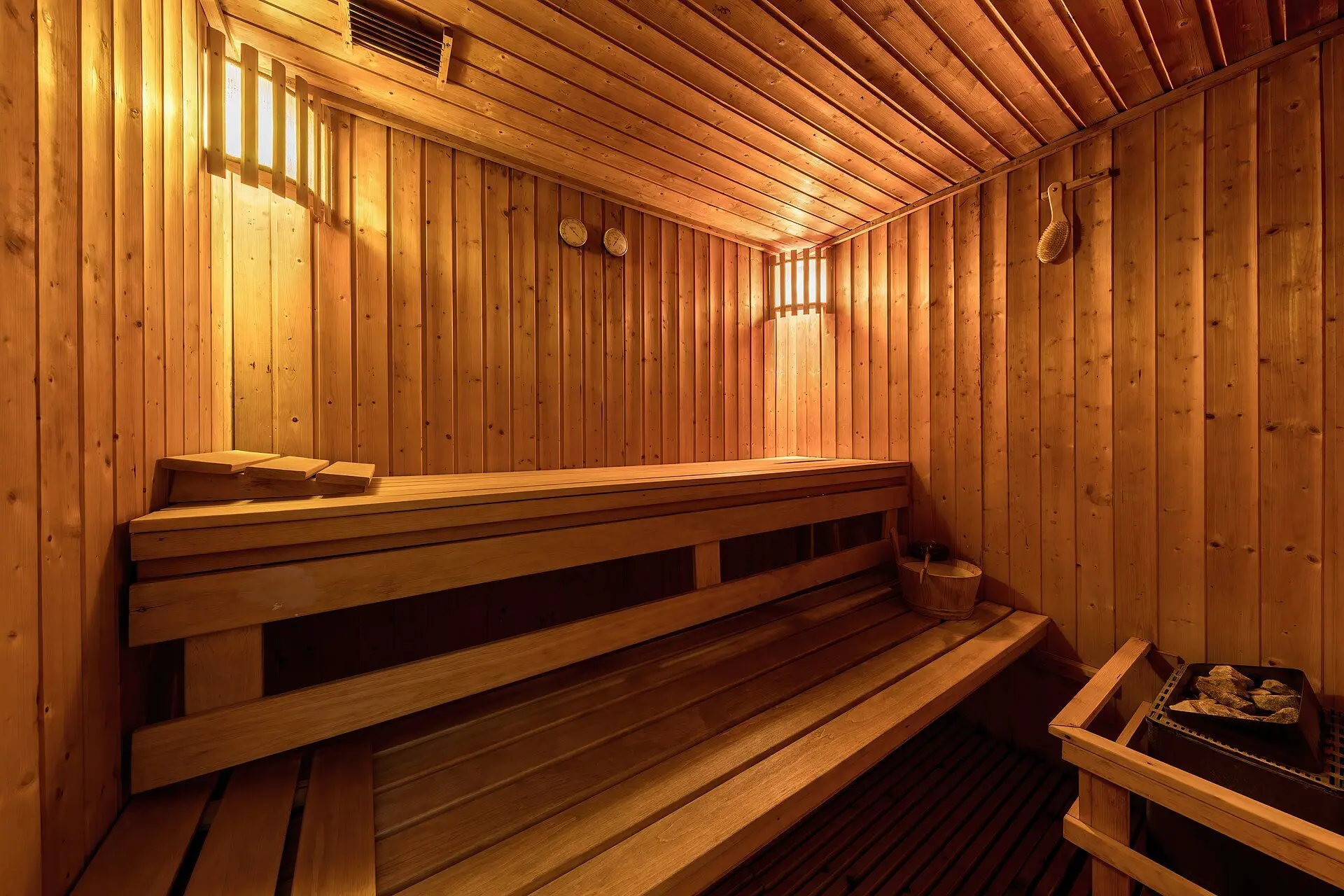
Modular construction moves the complexity of the build from the construction site to a controlled factory. In a modular system, the sauna is engineered as a complete, integrated unit. The walls, ceiling, floor panels, and interior components (including benches, lighting, and heater preparations) are manufactured to exact specifications before being flat-packed and shipped to the site.
For commercial projects, that has three advantages:
1. Factory precision keeps the air gaps right
Modular manufacturers bring decades of specialized experience. Their engineering teams design each unit in CAD software and cut it on CNC machinery, to a precision a circular saw on a job site cannot match. Every bench support, ventilation pathway, and lighting channel is machined to tight tolerances. That keeps the air gaps behind the cladding consistent and the cabin structure able to take the duty cycle of a commercial bathhouse.
Modular construction is a safer design for a sauna because it eliminates the diaper problem. The modular sauna wall has an interior radiant foil barrier to reflect heat back into the cabin, but the exterior side of the wall panel is breathable, not sealed. When the modular unit is installed inside a commercial space, the required clearance (often just 1 inch when space is at a premium, though 2 inches is standard) between the sauna’s outer wall and the building’s existing block or concrete structure creates a vented air cavity. Any heat and humidity that gets through the interior radiant barrier ends up dissipated in this vented space. The trick is making sure the space between the modular walls and ceilings and the structure is vented and not sealed, which is easy to do with a couple of well-placed vents. The system is engineered so that the building’s existing concrete or metal stud wall is never part of the sauna assembly at all. It is just the room the sauna sits inside.
Either way, the GC and architect need to make sure the client knows the assembly will eat into interior space early on.
2. The factory engineers, the GC assembles
In the US market, modular construction lets general contractors deliver commercial saunas without specialized sauna engineering knowledge. The factory handles the complex thermal engineering, material selection, and structural design. The local general contractor is only responsible for preparing the base room (providing the necessary dimensions, concrete floor, and utility rough-ins) and assembling the prefabricated panels according to detailed instructions.
Because every panel is numbered and every connection point is pre-drilled, the process uses what American builders are already good at: measuring, leveling, squaring, and executing a clear plan. A GC working with the manufacturer can assemble a commercial sauna without special skills.
3. Shorter, more predictable site work
A stick-built sauna ties up a construction site while framers, electricians, and finish carpenters work in sequence. A modular sauna arrives as a complete system. Time spent in the factory is time saved on the construction site: the crew on site assembles finished panels instead of building the room, which shortens the time the sauna holds up the rest of the project.
Predictability also applies to the finished product. Letting a builder try a commercial sauna for the first time is a large financial risk. With a modular sauna, you know what you are getting. The panels come together in a way that is hard to get wrong on-site (though it can take longer with an unskilled crew, an unlevel surface, or poor communication with the manufacturer). That makes accurate measuring, squaring and leveling the most important job on the site.
How modular sauna logistics actually work
Transporting modular saunas is often assumed to be expensive or impractical. The process is well established.
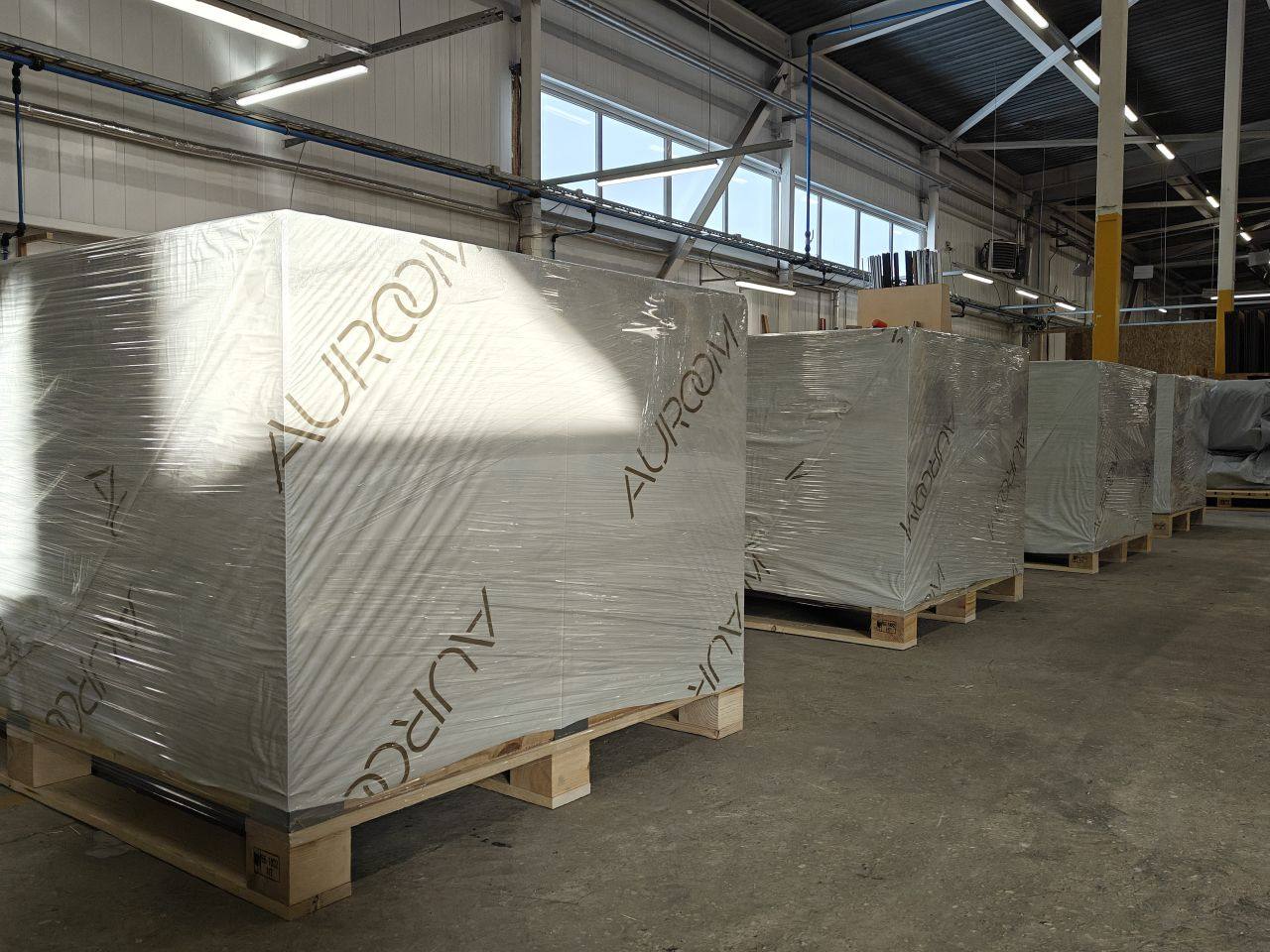
A typical commercial modular sauna is fully assembled in the factory to check the fit before shipping. It is then disassembled, flat-packed into crates, and shipped to the site. The shipment arrives at a US warehouse or directly at the general contractor’s loading dock. From there, the crates are offloaded with a standard forklift; no specialized equipment is required.
The panels themselves are designed to be carried by hand into the installation space, which matters for urban projects where elevator access or narrow hallways are the only path to the build site.
Who builds modular commercial saunas
DWILD: engineering for the hardest commercial builds
DWILD (DesignWild OÜ), based near Tartu, Estonia, pitches itself at complex, highly customized commercial projects. The company says everyone on its team comes from a technical background. DWILD says it designs every sauna in a full AutoCAD environment and supplies DWG files that architects can drop directly into their master plans. That matters for commercial projects where the sauna must align precisely with the surrounding architecture, MEP systems, and fire egress requirements.
According to the company, for a high-traffic commercial facility in the United Kingdom, where patrons frequently use the sauna in wet swimwear without showering first, DWILD developed custom bench substructures using aluminum and stainless steel to prevent the rapid degradation that would destroy standard wooden framing within months. For a project in the Swiss Alps, they engineered roof structures rated for 160 lbs/sq ft snow loads. For an Italian client, they delivered an octagonal public sauna with hidden under-bench heaters, a European commercial standard that eliminates the burn risk of exposed heating elements in high-capacity rooms.
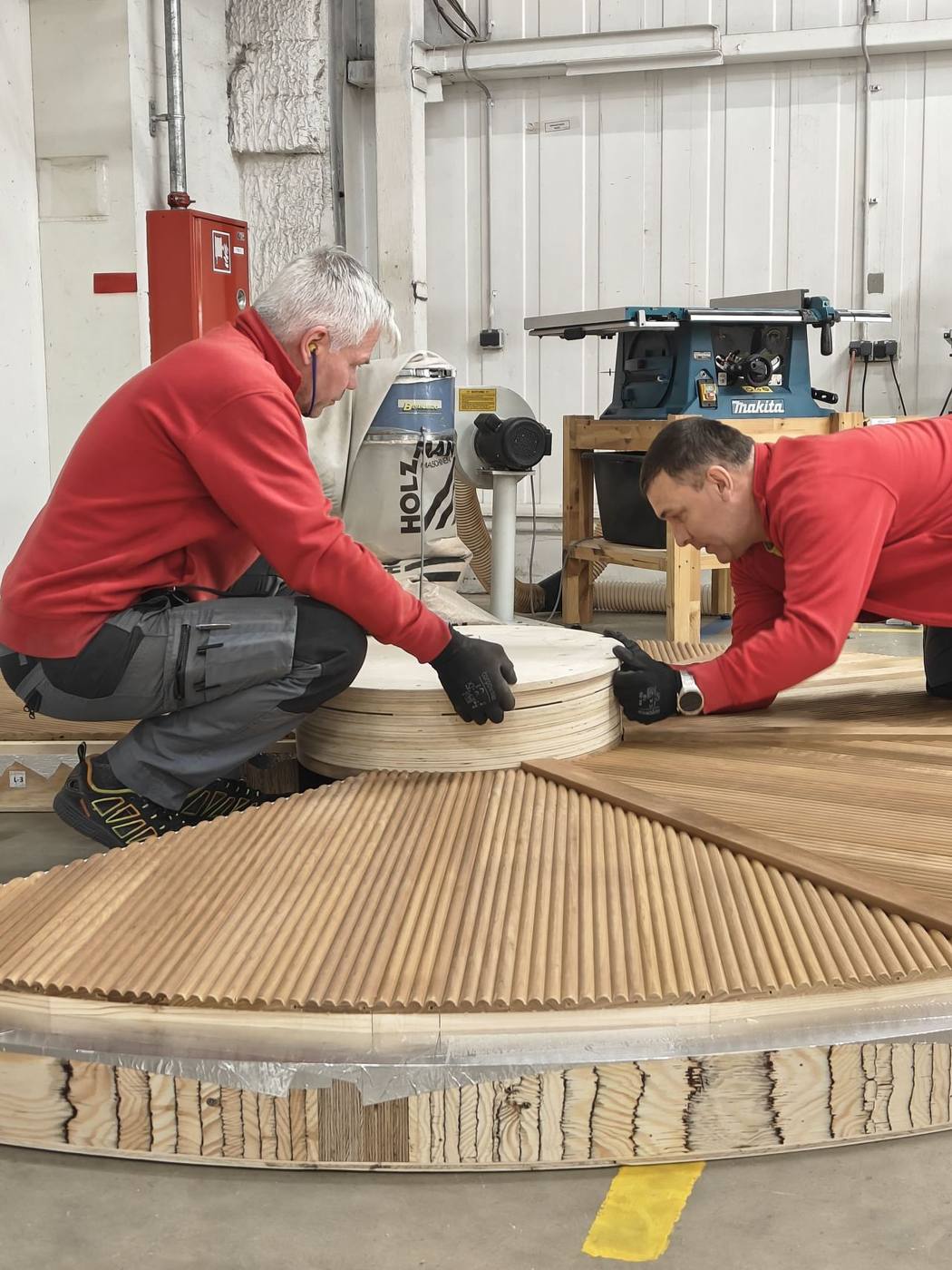
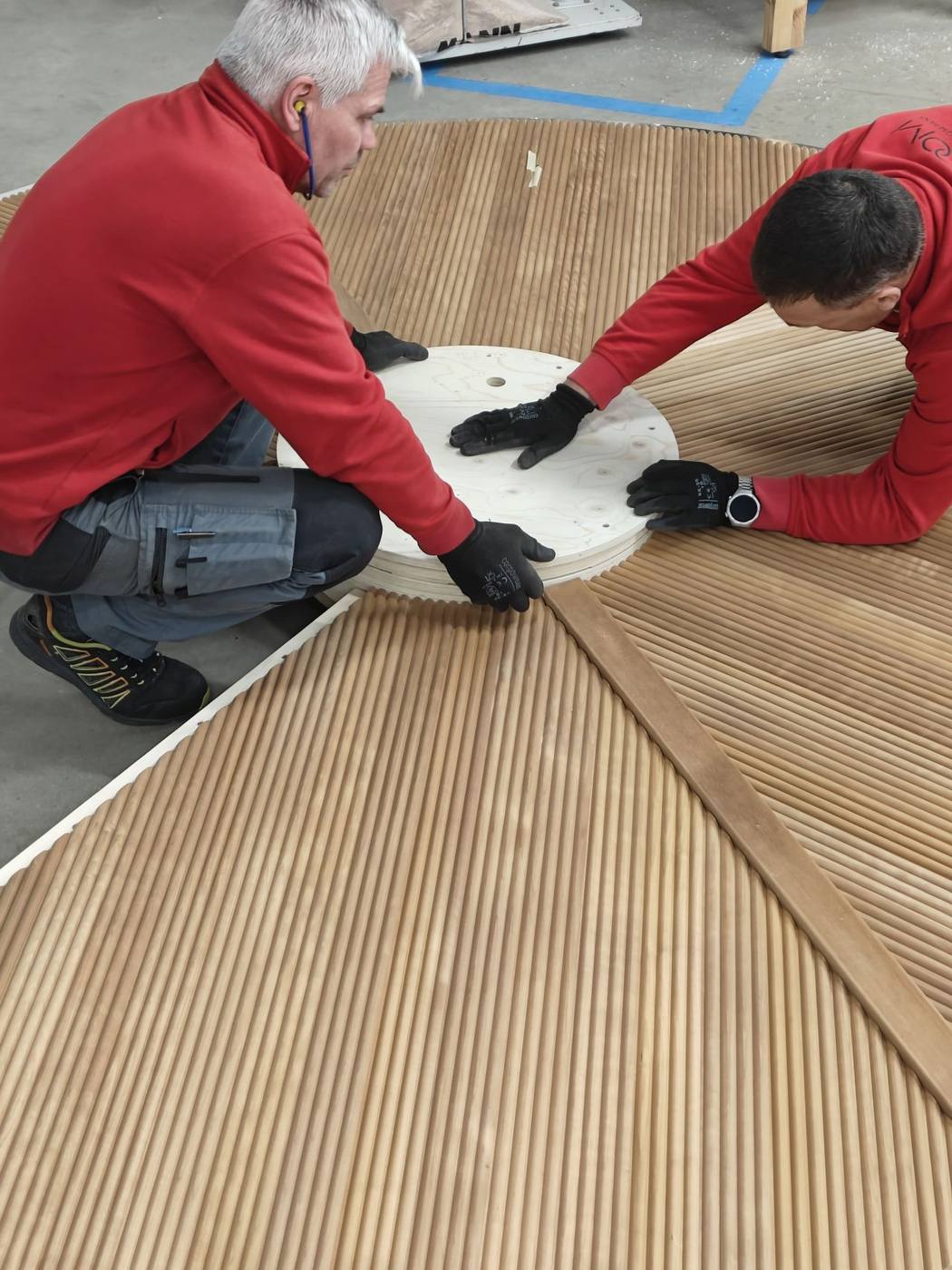
DWILD says its test-assembly protocol covers every sauna, including one-off custom builds, is fully assembled in its Estonian factory before being disassembled and flat-packed for shipping. This catches issues that would otherwise surface on-site: a panel that does not seat correctly, a CNC-machined shadow ceiling that needs adjustment, or a glass curve that does not match the specified radius. When the crates arrive at the job site, the GC is assembling a system that has already been put together once.
Auroom: modular saunas from a timber group
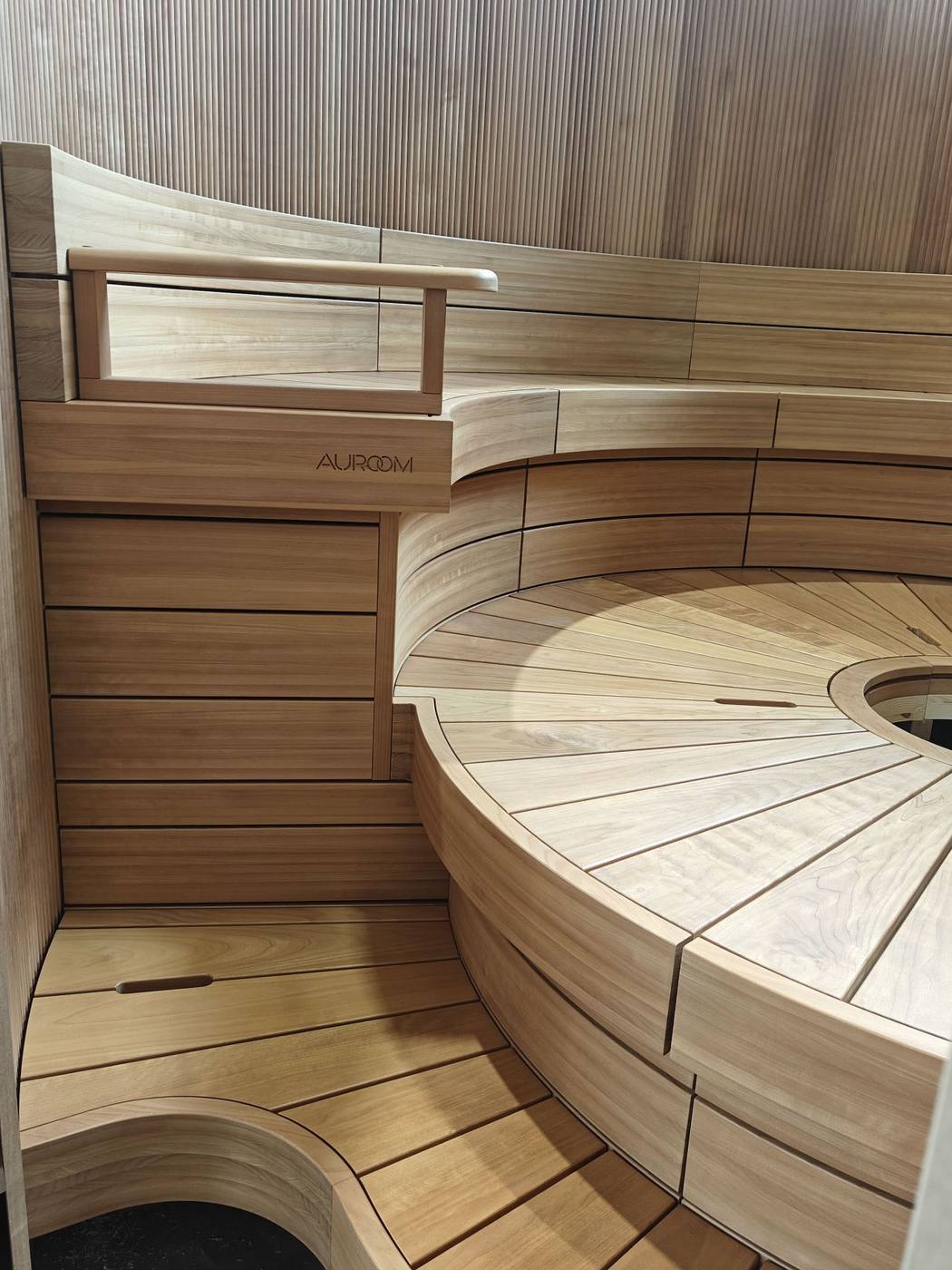
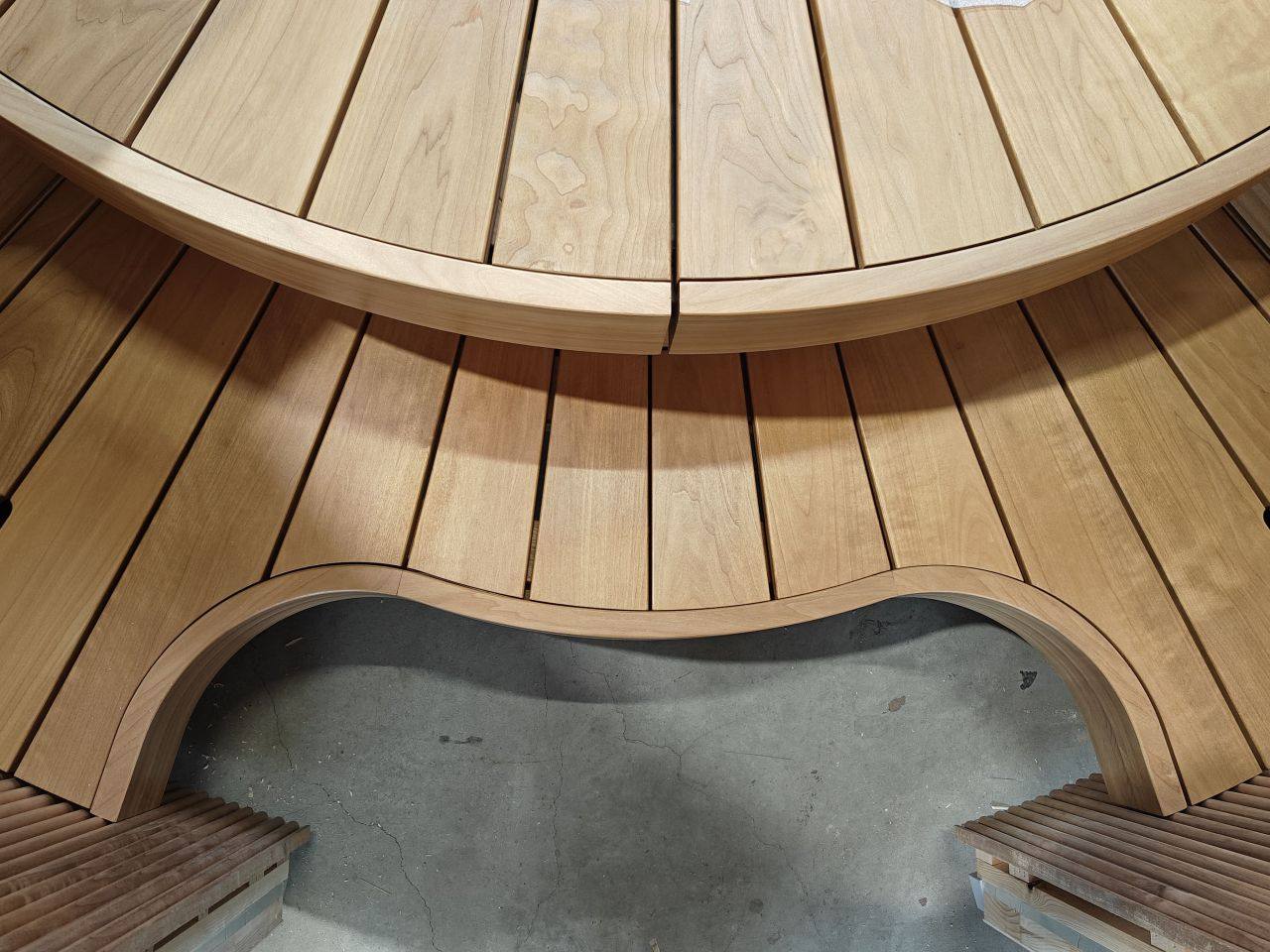
Auroom, also based near Tartu, Estonia, is part of the Thermory Group (one of Europe’s largest thermo-treated timber manufacturers), which supplies the thermally modified wood for its saunas. The Auroom sauna range runs from compact home cabins to large commercial installations.
Like DWILD, Auroom fully test-assembles its commercial units in the factory before shipping. Its commercial work includes the Les Bains de Lavey thermal spa in Switzerland. Working from a design concept by Leaderspa Pro SA, Auroom manufactured and installed four distinct modular saunas for the facility, each with unique requirements for materials, temperature profiles, capacity, and atmospheric design. SaunaShare’s Les Bains de Lavey guide covers public day access and the wider bathing circuit.
In October 2026, Auroom and DWILD joined HUUM and Leil Saunas as founders of the Estonian Sauna Trust, a shared quality mark launched at Interbad in Stuttgart.
Cedar and Stone Nordic Sauna: modular saunas built in Wisconsin
Cedar and Stone Nordic Sauna, with a flagship sauna in Duluth, Minnesota, and a manufacturing facility in neighboring Superior, Wisconsin, builds modular saunas in the United States. Co-founded by Justin Juntunen and Joel Vikre, with a stated mission to host one million people for sauna by 2033, Cedar and Stone designs, builds, and installs modular saunas across North America.
Building in a controlled facility in Wisconsin and shipping modular units lets Cedar and Stone avoid the on-site knowledge gap. The company says it has led and contributed to some of North America’s most ambitious public sauna builds, including floating saunas, brick-and-mortar facilities and large communal saunas welcoming over 100 bodies at once.
KLAFS and Design for Leisure: a dealer-installer model
DWILD and Auroom engineer their systems to be assembled by any competent local GC. KLAFS, a nearly century-old German manufacturer recently acquired by Kohler Co., takes a different approach.
Rather than relying on local GCs, KLAFS partners with Design for Leisure (DFL) as their authorized dealer and exclusive sales and installation partner for custom commercial hospitality projects in the USA and the Caribbean. DFL, a hydrothermal specialist with headquarters in London and Austin, Texas, handles the design consultation, planning, and expert installation. DFL’s own portfolio includes the spa at Canyon Ranch Las Vegas, a Forbes Travel Guide award winner in 2018. This model (European factory engineering combined with a specialized US-based installation partner) is a significantly different logistical and financial commitment from the direct-to-GC modular approach.
Bathhouse operators are scaling fast
Othership, the Canadian social bathhouse concept, opened in NYC’s Flatiron district with what it calls the largest performance sauna in the city, built of Western Red Cedar, and is planning a reported 14,000-square-foot location on the Upper East Side for 2027.
Bathhouse NYC has expanded from its original Williamsburg location to a 35,000-square-foot, three-level flagship in Manhattan designed by Rockwell Group, with further expansions planned for Minneapolis. That pace would be hard to hold if each new location had to source and vet a local sauna builder from scratch. Beyond the sauna rooms, a full social bathhouse raises mechanical, structural, and operational problems that most first-time operators underestimate; SaunaNews covers them in what bathhouse development actually requires.
Planning a commercial sauna? We help you shape a solution for your footprint and your operating plan, whether it is a compact sauna room or a large social sauna.
Share your project goals at hello@saunanews.com, or use our intake form to start the conversation.
Start Your Commercial Sauna Project