
Après-Ski Is Getting a Sauna Upgrade in America’s Best Ski Town

By Arlene Scott
Correspondent, Research and Industry
- Published
- Reading time
- 8 min
SaunaNews is published by SaunaShare, Inc., which also runs SaunaShare.com and SaunaMarketplace.com, where we sell many of the products we write about. That experience may change what we write about and what we don't. Who owns SaunaNews · The ownership announcement
A walk-in communal sauna just opened in North Conway, NH, and it is already hitting capacity on Saturdays.
In this story7 sections
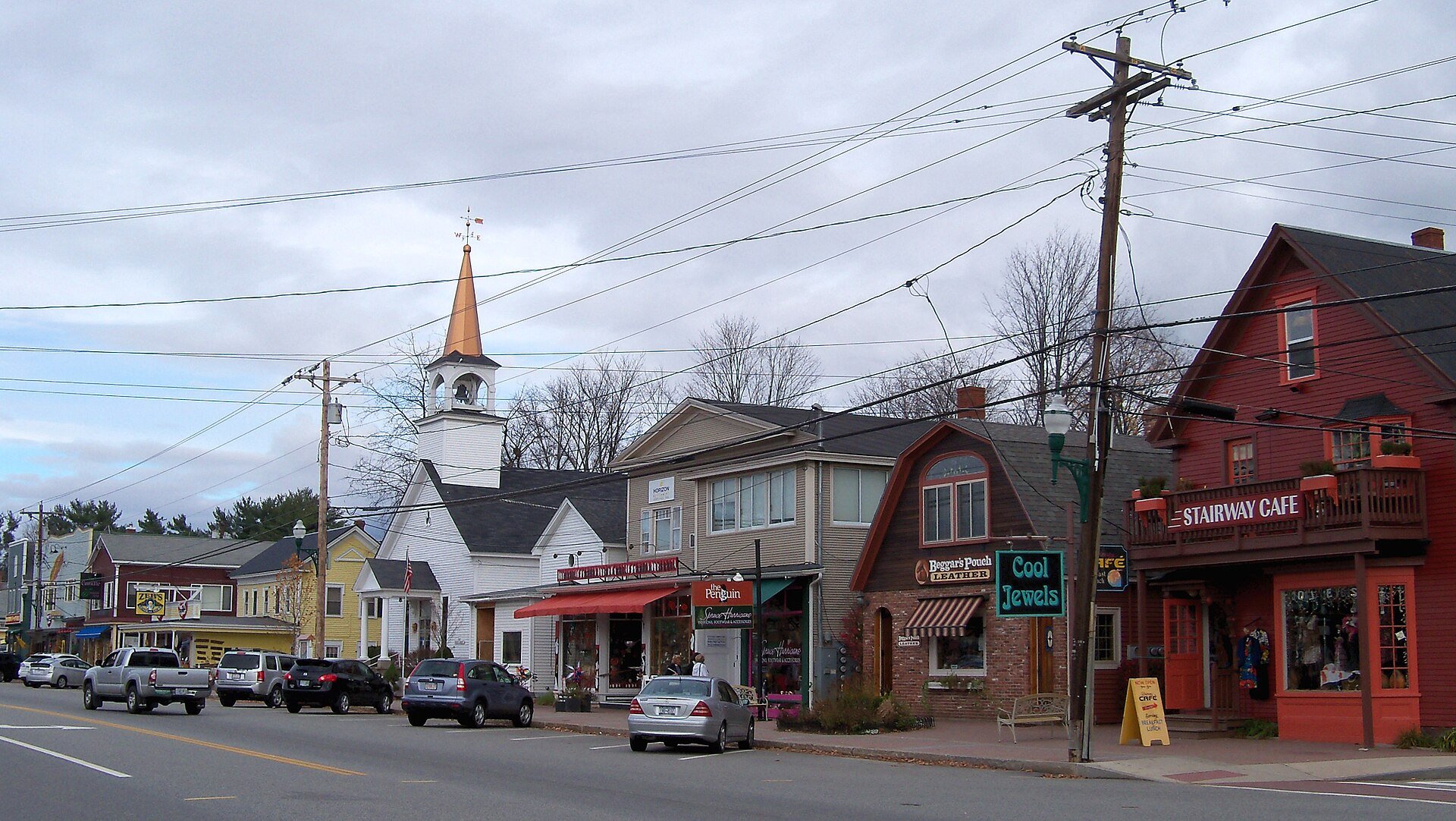
North Conway, New Hampshire, has been named America’s best ski town five times since 2016. It is the gateway to the Mount Washington Valley’s alpine resorts and groomed cross-country trails. In January 2026, it got a walk-in public sauna built for the après-ski crowd.
White Mountain Sauna Haus has two traditional Finnish dry saunas, three cold plunge pools, a 1,000-square-foot outdoor deck with views of Cathedral Ledge, and a Nordic cafe, all inside a renovated 1890s barn at 3358 White Mountain Highway. Walk-in only. First come, first served. No phones allowed inside the hot rooms. It is hitting capacity almost every Saturday.
Après-ski growth is in sauna, not bars
One market-research estimate puts après-ski and nightlife as the fastest-growing service category in the mountain resort market, growing 11.3% a year through 2033. The growth is coming from sauna, contrast bathing, and communal social spaces rather than bars. Bathhouse in New York is approaching $120 million in run-rate revenue. Sauna House posted 276% two-year revenue growth on Inc.’s regional fastest-growing list and has since made the Inc. 5000; a Sauna House franchise build-out runs up to $3.8 million. Othership raised $11.3 million to push into Manhattan.
Those are big-city venues. In ski towns, millions of visitors a year have nowhere to recover after a day on the mountain except a hotel hot tub or a noisy bar. White Mountain Sauna Haus is an attempt to fill that gap in one of the busiest ski corridors on the East Coast.
$36, walk-in only, 24 guests at a time
Guests pay $36, take a towel and complimentary flip-flops, leave their phones in a cubby, and walk in. No reservations. No app. No booking system. Doors open at 10 AM on Saturdays. Capacity is capped at 24 guests. When it fills, guests wait. The average visit runs about 90 minutes, but there is no formal time limit.
Co-founders Levi Lucy and Bryce Harrison, two North Conway locals, renovated the barn and opened the doors in January 2026. The operation runs on the premise that if the experience is easy and the price reasonable, ski tourists and locals will show up.
The heat: Harvia 50 wood-burning
The facility runs two traditional Finnish dry saunas. The larger room holds up to 20 people; the smaller fits 12. Both run on tiered benches with temperatures between 175 and 205 degrees Fahrenheit. Water goes on stones. Steam fills the room.
The heater is a Harvia 50, the Finnish manufacturer’s largest wood-burning stove: a 40 kW commercial unit holding 264 lbs of stones and sized by Harvia for sauna rooms between 706 and 1,766 cubic feet. The Harvia 50 is designated for professional use. Finnish visitors have told the owners the experience feels legitimate.
Three cold plunge pools sit between 40 and 50 degrees. The 1,000-square-foot outdoor deck, with direct sightlines to Cathedral Ledge and White Horse Ledge, is where most of the socializing happens between rounds, around a fire pit.
The vapor barrier blocks phone signals
The vapor barrier that seals the sauna rooms from moisture also doubles as a Faraday cage, blocking cell phone, Wi-Fi, and Bluetooth signals. Phones do not work inside the hot rooms.
This was intentional. In the hot rooms, guests talk to the person next to them or sit in silence.
Pricing and the ski-town math
Walk-in admission is $36. Punch cards sell at $154 for five visits and $286 for ten. Monthly unlimited is $199. They also run discounted weekly community sessions: Mellow Monday at $20, Funky Friday Nights at $25, and Locals Lazy Sunday at $20. Members get these free. The punch cards are physical, never expire, and can be shared with friends.
That tiered structure, from $20 community nights to $199 unlimited, creates multiple entry points. Tourists pay the walk-in rate after a ski day. Locals convert to punch cards or memberships. The $199 unlimited gets as low as $10 per visit for heavy users.
The Nordic cafe adds a second revenue layer. Sauna stew bowls, salmon and egg toast, grilled cheese (co-founder Harrison runs a local restaurant chain called Cheese Louise and bakes the bread himself), Tuckerman’s Pale Ale, Athletic Brewing non-alcoholic beer, Frontside Grind locally roasted coffee. Alcohol is a small part of the menu.
Back-of-envelope math using the company’s published hours (49 hours per week across five operating days), 90-minute average visits, 24-person capacity, and a blended admission yield around $27 to $30 per guest-visit suggests annualized venue revenue potential in the $650,000 to $750,000 range at moderate utilization, before cafe sales. That is not a disclosed figure. But it puts the business in the zone where a well-run independent sauna venue can sustain itself without outside capital.
Tied into the valley’s ski and tourism network
The founders have tied the business into the Mount Washington Valley tourism infrastructure.
The Eastern Slope Inn Resort now actively promotes the Sauna Haus to its vacation ownership network and daily guests as a post-mountain recovery destination. During the 2025-2026 ski season, White Mountain Sauna Haus became an official stop on the Mt. Washington Valley cross-country ski touring network. Skiers can ski to the barn along groomed trails.
They sponsor the Women’s Uphill Bash and Chicks on Cliffs, offering sauna passes as prizes to skiers and hikers. For the 2026 Winter Fest, they brought a wood-fired sauna tent to Chocorua Lake for a cold-water dip. They have partnered with Visit NH for “mud season” restorative packages, which is how a seasonal business stays alive when the snow melts.
The barn sits next to The Local Grocer (a natural foods store) and Cathedral Ledge Distillery, and visitors pair a session with a smoothie or local spirits next door.
Ski visitors spent $384 million in one New Hampshire season
Visitors to New Hampshire’s ski areas spent $384 million in the 2017-18 season, and that spending supported about 7,500 jobs statewide, according to a Ski NH economic study.
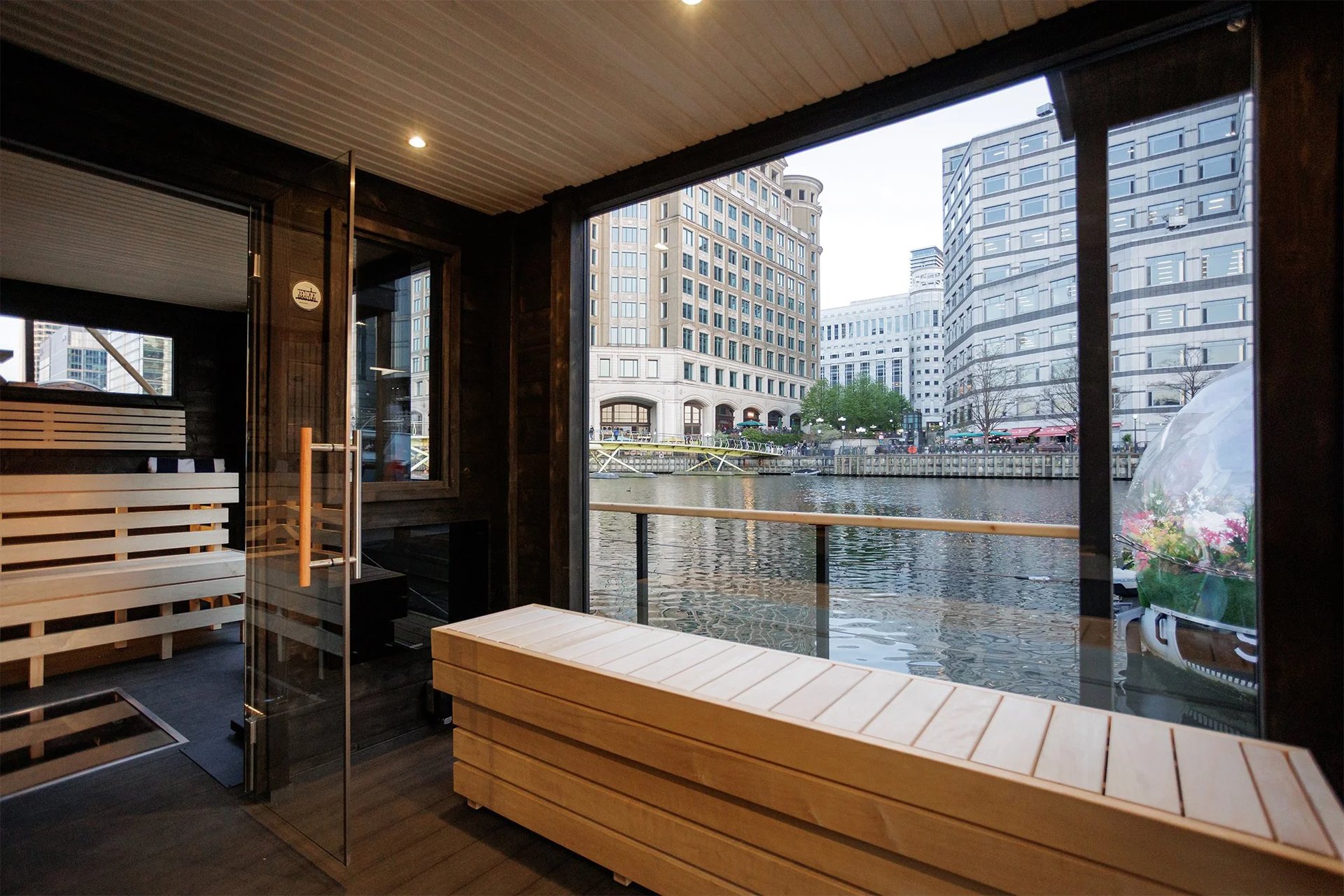
Banya, a sauna and cold plunge venue in Portsmouth, is about 80 miles away by road. The demand was already there, bundled into every lift ticket sold at Cranmore, Attitash, Wildcat, and Bretton Woods. The same “destination first, bathing program second” logic is now showing up in more design-forward formats too, including floating concepts like Kōs in upstate New York.
The cold plunge market is at $380 million globally and growing at 8.1% annually. The global sauna market was valued at $954 million in 2025 and is on pace for $1.6 billion by 2033, per Grand View Research. Sauna supply in American ski towns has not caught up.
Harvia events
1 event