Data, trends, forecasts, and analysis shaping the sauna and thermal wellness market. Consumer demand, pricing shifts, and competitive landscape.
From California and Utah to Illinois and Washington, cold-plunge policy is splitting into multiple models that can materially change design, staffing, operating costs, and expansion risk for sauna operators.
Bathhouse, Othership, and Sant Roch have moved Aufguss from European ritual to commercial asset class, and Galgorm's public £10,000-a-month number is the cleanest reference case in the category. Back into the math and utilization is only about 18.5% of theoretical capacity. The real investment thesis is a one-to-thirty labor ratio, not revenue per square foot. For US resorts and hospitality groups, the deciding variables are Sauna Master pay, commercial heater draw, insurance liability, and an honest demand curve, not the headline revenue.

Sant Roch, the new two-level premium contrast club in Paris's first arrondissement, logged 4,500 paid visits, 100-plus memberships, and guided rituals booked a week out in its first 30 days. Divide those visits into the operating grid and Sant Roch appears to be capping inventory at roughly 17 seats per start, or about half the hot room's widely reported 35-seat physical capacity. For U.S. hospitality investors and sauna operators watching the premium social sauna category, that restraint is the real reference case.

Idaho Parks is seeking a private partner to develop, manage, and maintain a sauna and cold plunge concession at Ponderosa State Park on Payette Lake. A parallel proposal from Idaho Mountain Saunas of Caldwell is in front of the McCall city council. Utah's Willard Bay State Park is the working reference case. If Ponderosa lands a qualified bidder, state parks may become the next real growth frontier for the U.S. sauna industry.
CEN approved EN 18164:2026 in January, national adoption runs through August, and Germany, Sweden, Belgium, Ireland, Estonia, Iceland, Austria, and the Netherlands have already published their editions. The standard defines four public room classes and a sharper sauna-room envelope (176 to 221 degrees F, relative humidity under 10 percent, at least 65 percent wood coverage). Nordic experts argue the text codifies a Central European idea of sauna that much of the living tradition sits outside of.
The global sauna equipment market, estimated at $905 million in 2024 by Grand View Research and projected to reach $1.56 billion by 2033, is large enough for both categories to thrive. Consumer data, clinical research, and channel dynamics paint a nuanced picture.
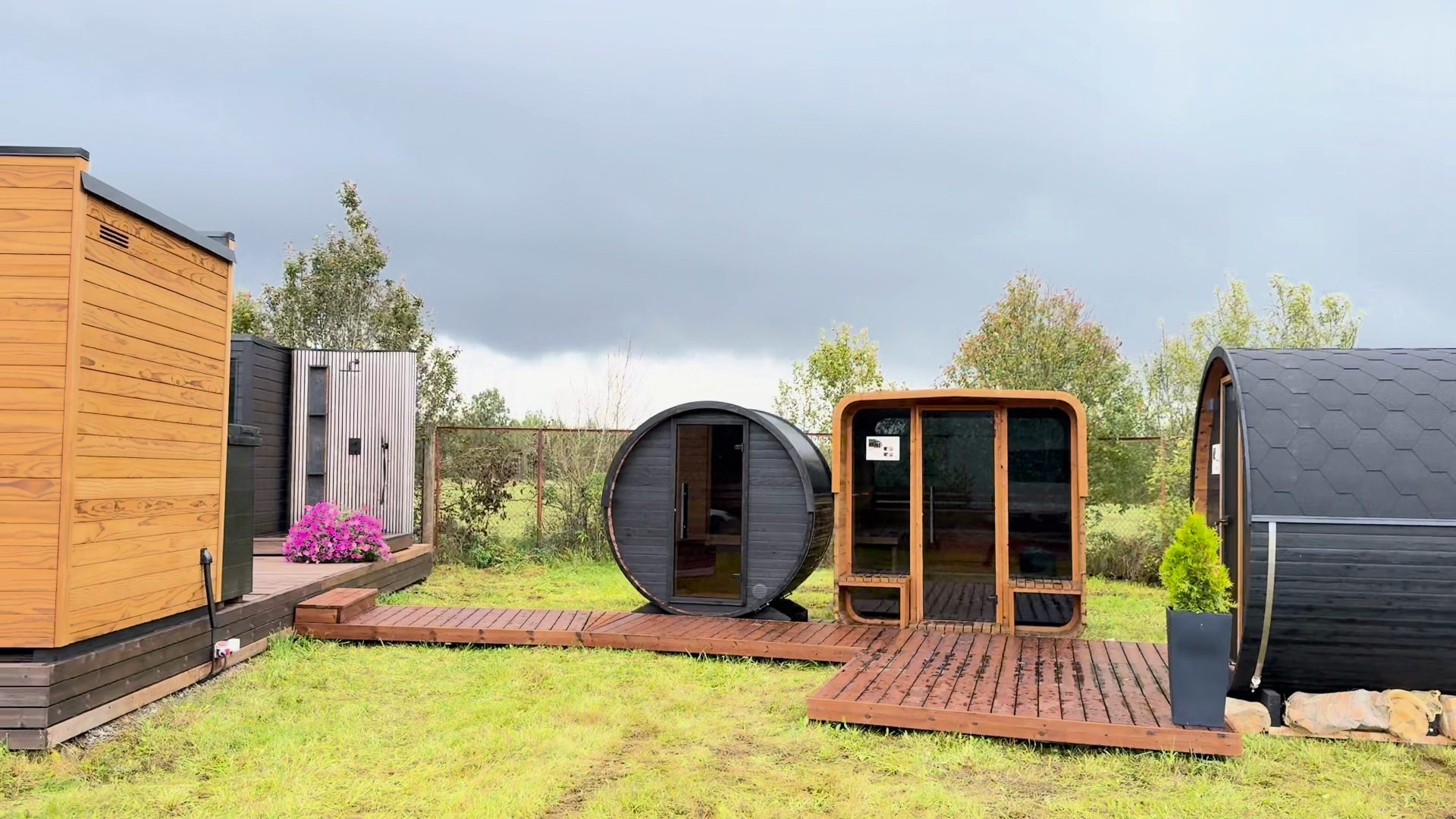
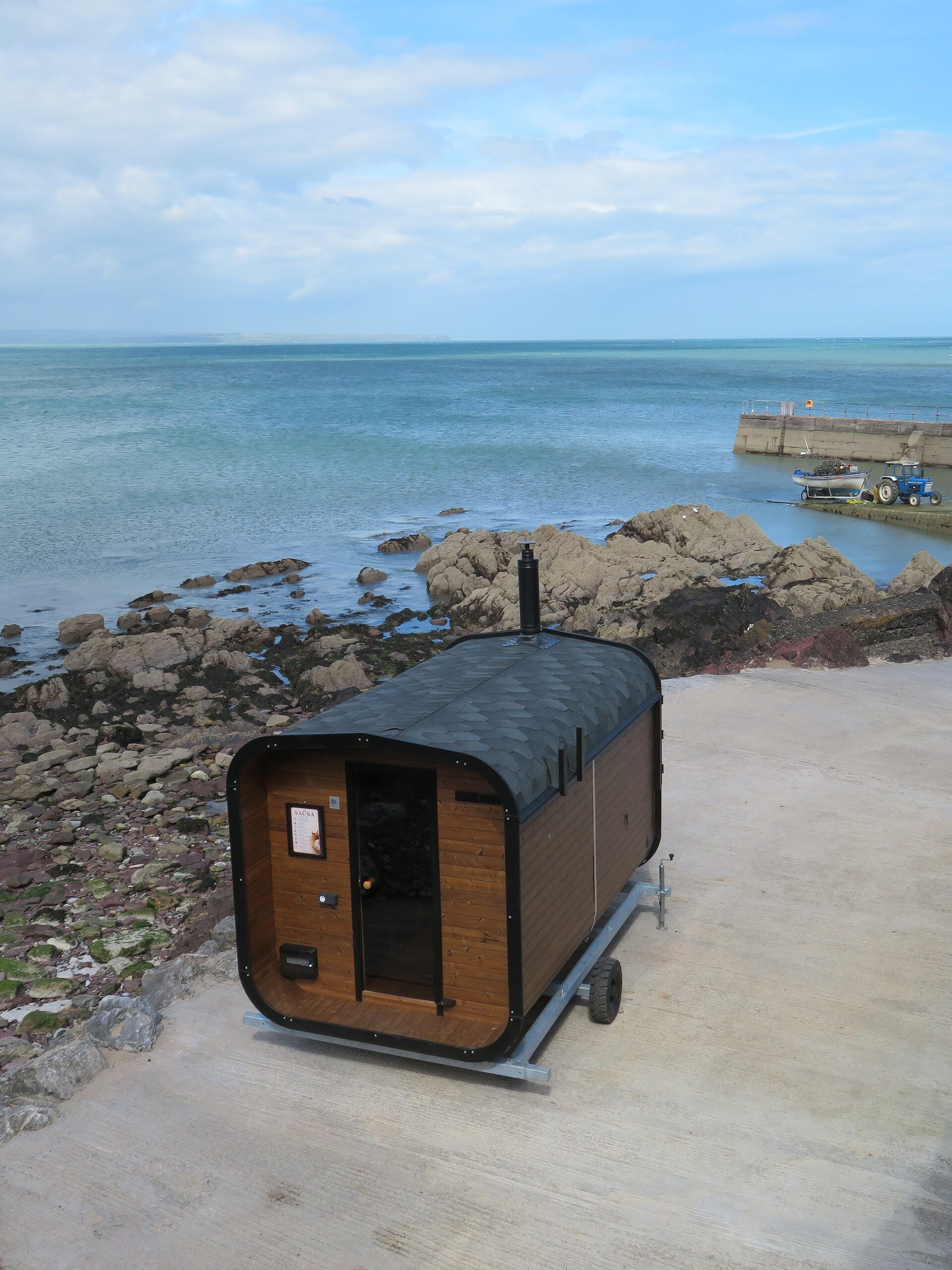
Outdoor sauna installations are outpacing indoor builds across North America, driven by post-pandemic outdoor living investment, social media visibility, and increasingly accessible price points. Barrel saunas lead the category, but custom outdoor builds and modular designs are gaining ground.
The landmark Kuopio study found that men who used a sauna 4-7 times weekly had a 40% lower risk of all-cause mortality. With the global sauna equipment market estimated at $905 million in 2024 and growing at 6.3% CAGR, the category offers a rare combination of proven health data and scalable business models.
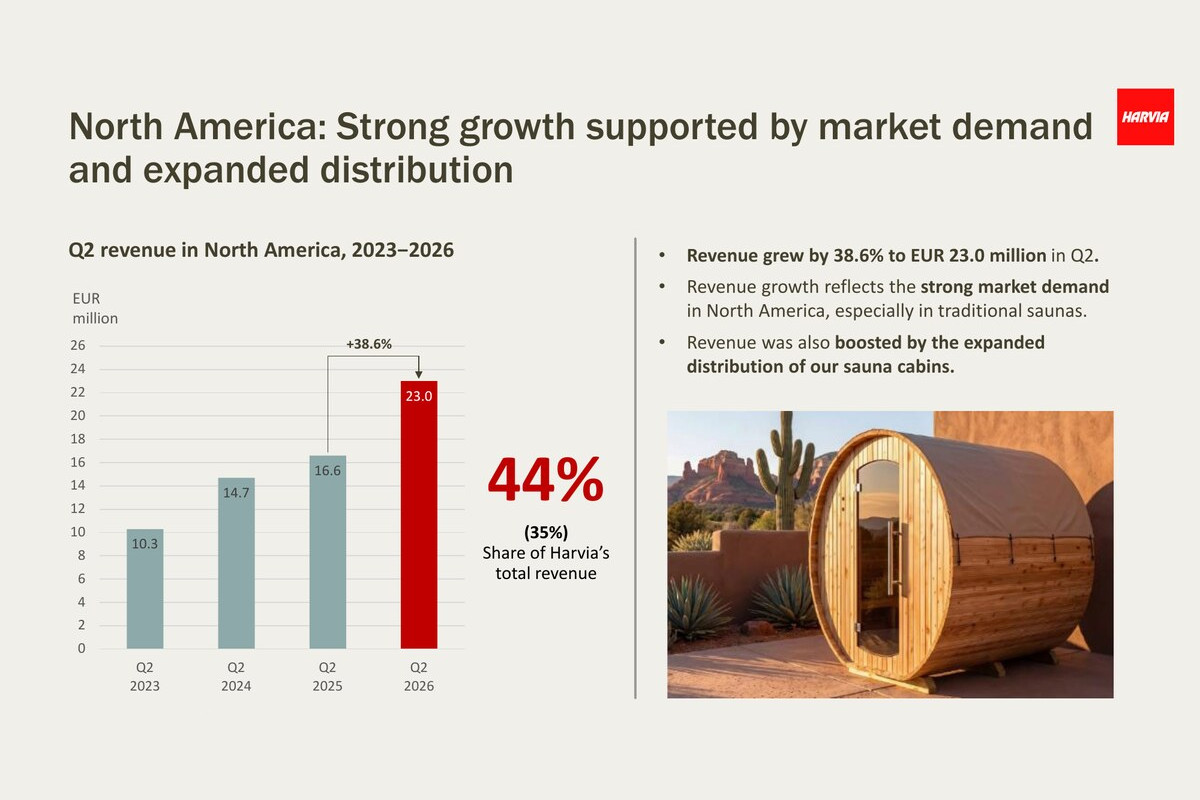
This week: Harvia's record Q1, shifting U.S. tariffs on European imports, outdoor sauna demand data, HUUM's heater upgrade, and Equinox's thermal wellness expansion.
On June 27, 2025, Underwriters Laboratories published ANSI/UL 60335-2-53, the first U.S. adoption of the international sauna heater safety standard. It is the most significant regulatory shift in North American sauna history. Here is what it changes, what it doesn't, and why your building inspector might not care yet.

Estonia's 34+ sauna manufacturers, led by Thermory, HUUM, and Saunum Group, have turned a tiny Baltic nation into one of the world's most important sauna production hubs. Here's why it matters for American buyers.
Othership charges CAD $58 per session and packs 70 people into guided breathwork classes. AIRE Ancient Baths charges CAD $205 and caps its Toronto location at a fraction of that. One has raised $18.5 million in venture capital. The other generated €69.4 million in revenue at a 36% EBITDA margin. They are ten minutes apart. Both models work. Both can fail. The failure modes are almost entirely non-overlapping.
The Global Wellness Institute now projects wellness real estate will reach $1.8 trillion by 2030, up from $876 billion in 2025. GWI’s release does not break out thermal’s share, but the operator data already points to billions in addressable demand for sauna and contrast therapy.
A concise weekly briefing on sauna launches, deals, openings, standards, and market shifts.
No spam. Unsubscribe anytime.