
Idaho State Parks Put a Sauna Concession Out to Bid

By Arlene Scott
Correspondent, Research and Industry
- Published
- Reading time
- 7 min
SaunaNews is published by SaunaShare, Inc., which also runs SaunaShare.com and SaunaMarketplace.com, where we sell many of the products we write about. That experience may change what we write about and what we don't. Who owns SaunaNews · The ownership announcement
The Idaho Department of Parks and Recreation issued an RFP on April 1 for a sauna and cold plunge concessionaire at Ponderosa State Park. Proposals are due April 24. It suggests US public agencies are starting to treat sauna as recreation infrastructure.
In this story7 sections
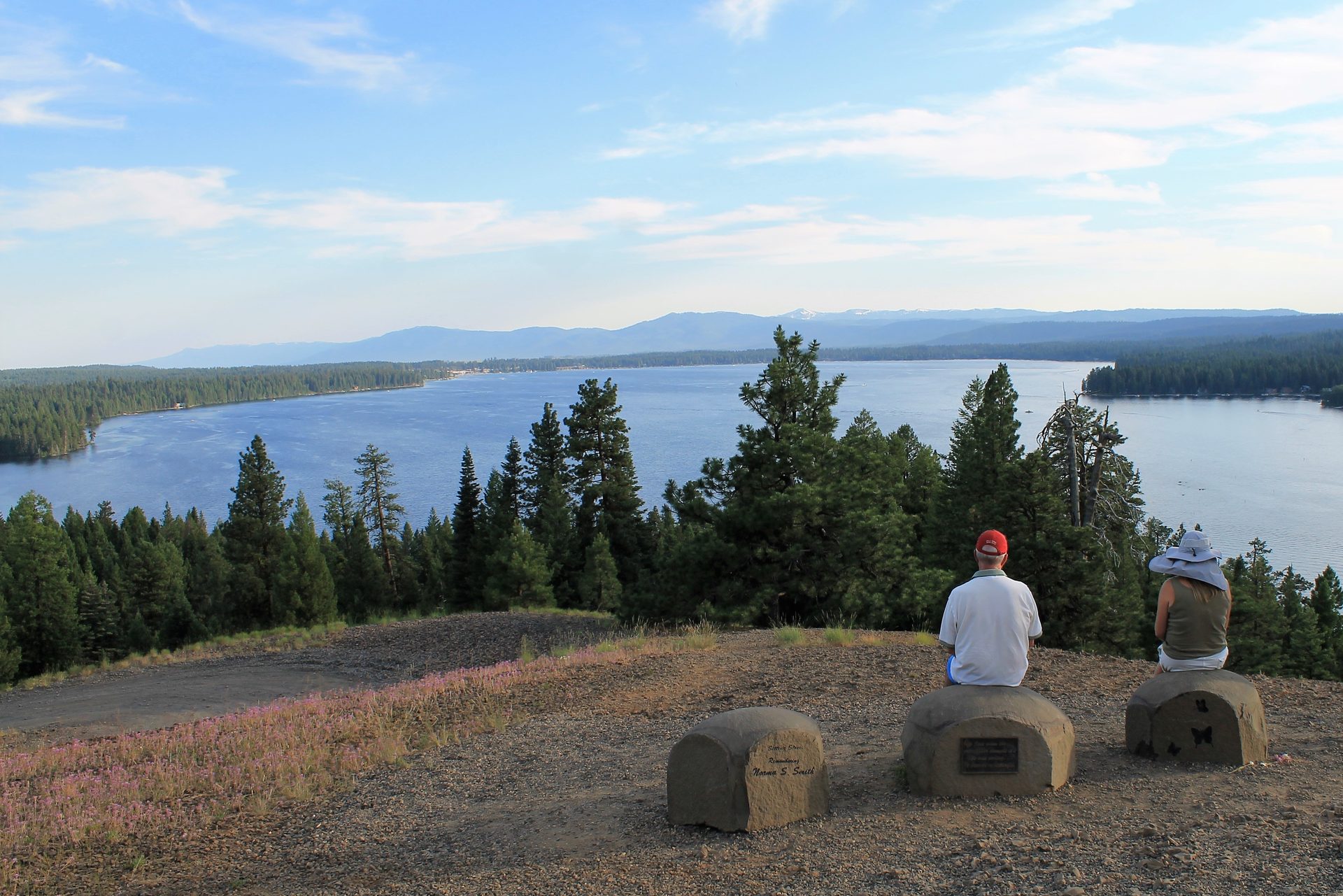
Idaho is trying to put a sauna and cold plunge inside one of its state parks. The Idaho Department of Parks and Recreation issued a Request for Proposals on April 1 seeking a private partner to develop, manage, and maintain a sauna and cold plunge concession at Ponderosa State Park, the 1,515-acre peninsula on Payette Lake just outside McCall. Proposals are due April 24, and the department expects to pick an operator this summer.
It suggests US public agencies are starting to treat sauna as recreation infrastructure.
What Idaho is asking for
The solicitation, posted on the Idaho Parks and Recreation website, says the state is looking for “motivated entities or individuals who are interested in entering a business relationship for the development, management, and maintenance of a sauna and cold plunge concessionaire” at Ponderosa. The RFP runs on a short fuse: about three weeks from issue to deadline, with a decision targeted for later in 2026.
Ponderosa is one of Idaho’s most-used state parks. It sits at 5,050 feet in Valley County, on a peninsula that juts into Payette Lake, and includes a separate North Beach unit six miles north of McCall. The park is open year-round, with 14 miles of groomed Nordic trails in winter and heavy summer traffic from campers, boaters, and day-trippers. On paper it suits a sauna and cold plunge: cold climate half the year, destination visitation, existing lakefront, and a built-in recreation crowd.
The parallel McCall proposal
On the same stretch of Payette Lake, Idaho Mountain Saunas, a Caldwell-based operator run by Garren Apple, has pitched the City of McCall on a sauna and cold plunge facility at either Legacy Park or Rotary Park, according to reporting from Valley Lookout.
Apple’s pitch is specific. A roughly 1,000-square-foot building with changing rooms. Up to eight guests per session. Operating hours of 6 a.m. to 11 p.m. Pricing at $35 per person or $175 for a private full-sauna reservation. A five-year lease with the building removable at expiration. The city would take 5 to 10 percent of revenue, which Apple projects at about $225,000 in year one and $329,000 by year five. Net to the city: roughly $22,500 in year one, rising to about $33,000 by year five.
McCall’s city council voted 3-2 in early April to open the proposal to public comment, with a survey running through the end of the month. Mayor Colby Nielsen and council members Julie Thrower and Lyle Nelson voted to move forward. Bob Giles and Mike Maciaszek voted against. The dissenters cited safety concerns about an unstaffed facility and the loss of public park space to a private operator, with cameras the only proposed supervision.
Utah’s Willard Bay went first
The precedent is Willard Bay State Park in Utah, where a private operator opened the first sauna and cold plunge inside a Utah state park. That facility runs the sauna between 170 and 190 degrees F, keeps the plunge between 38 and 44 degrees F, operates 6 a.m. to 11 p.m. daily, and caps sessions at about six guests. It has become a tourism-marketing asset for the park and a reference point for any public agency weighing the same move.
The Idaho pitches follow that template. The hours match. The group-size math is similar. The pricing range is in the same zone as urban sauna social clubs, though the operating model is leaner: lower staff count, smaller footprint, rural setting, and a state or city as landlord instead of a commercial developer.
Parks treat sauna like a marina or a boat rental
The US sauna industry sells to homeowners, hotels, gyms and spas. The audience that has been slowest to move is the one that controls the most real estate in America: public agencies.
When a parks department writes sauna and cold plunge into procurement language, it is treating the category the way it already treats marinas, campground stores, boat rentals, and food concessions: as a revenue-generating amenity that fits the agency’s recreation mission. Unlike a Sauna House franchise or an urban bathhouse, it puts sauna on public land.
The operator class this creates is different too. A concessionaire on public land is not primarily a product company. It is a small hospitality business that has to solve for utilities, winterization, cleaning, supervision, liability, pricing, and guest throughput, often in a remote setting. That rewards durability and operations over design gloss. A parks concession will punish a flimsy build in a way a backyard kit sale never does.
Who is likely to bid at Ponderosa
A three-week window is a short runway, which usually favors bidders who already have a concept ready. The most likely entrants fall into a few buckets:
- Regional mobile sauna operators who already run events in Idaho and the Mountain West and can stand up a fixed site quickly.
- Existing Idaho sauna businesses looking to expand beyond retail or wellness-studio formats, including Idaho Mountain Saunas itself, which is already pitching the parallel McCall project.
- Hospitality operators from McCall, where the year-round resort economy has produced a network of small businesses comfortable with seasonality and park-adjacent operations.
- Out-of-state operators with a park template, most obviously the Willard Bay group in Utah, which has a working reference case two states away.
Based on the RFP language, the state wants an operator, not a hardware vendor, who can build, staff, clean, and run a public-facing thermal facility on park land for years without becoming a maintenance burden or a public-safety headache.
Terms still inside the RFP documents
Several things about the Ponderosa concession are still unknown because they live inside the RFP documents rather than the public announcement. Among them:
- Whether the state is providing utility hookups, site prep, or any capital, or whether the winning bidder funds the full build.
- The contract term, renewal options, and revenue-share or minimum-annual-guarantee structure.
- Whether the concession is seasonal or year-round, and whether winter use is required.
- Insurance, staffing, and supervision requirements, particularly around the cold plunge.
- Whether the operator can sell memberships, host events, or program wellness classes, or whether it is limited to drop-in sessions.
- Pricing constraints or public-access provisions the state may impose to protect the park’s recreation mission.
Those details will decide whether the project is economically viable. A park can be a gift to an operator if it provides foot traffic and utilities. It can be a trap if the bidder carries the full capex and gets handed a short lease.
McCall fits, and other parks may follow
McCall is one of the strongest Mountain West settings for this concept. It has a winter sports economy, a summer lake economy, and an affluent second-home base that already buys cold plunge and infrared sauna at the retail level. The demographic that drives the $380 million cold plunge market vacations in places like McCall. Payette Lake itself is a credible plunge body nine months of the year. The park already has the access, parking, and visitor infrastructure.
Public agencies tend to follow one another on new concession categories. Utah went first with Willard Bay. Idaho is now running a formal RFP at Ponderosa and fielding a separate private pitch in McCall. If either Idaho project delivers a clean opening and decent first-year numbers, the number of parks departments willing to entertain a similar solicitation goes up sharply.