Howl at the Moon Is Taking Ten People to Iceland for a Week of Bathing
Alisa Cardenas runs Howl at the Moon Sauna Co. out of a converted 1989 horse trailer in West Michigan, and this November she is taking ten guests to a lakefront lodge in southern Iceland for six days of lagoons, wild bathing, and a Reykjavík sauna ritual called gúsa. It is the kind of trip more sauna businesses with a community ought to be thinking about.

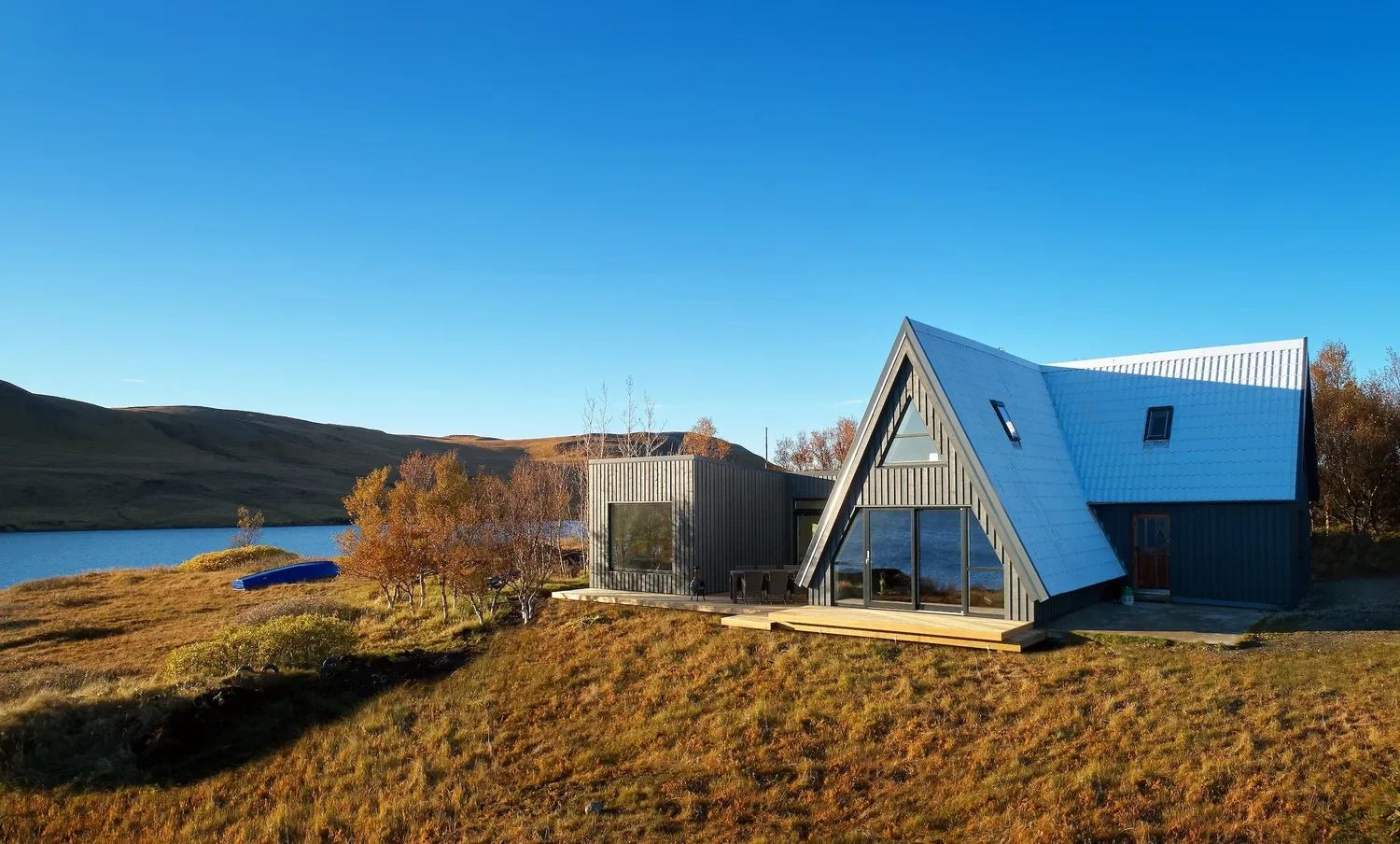
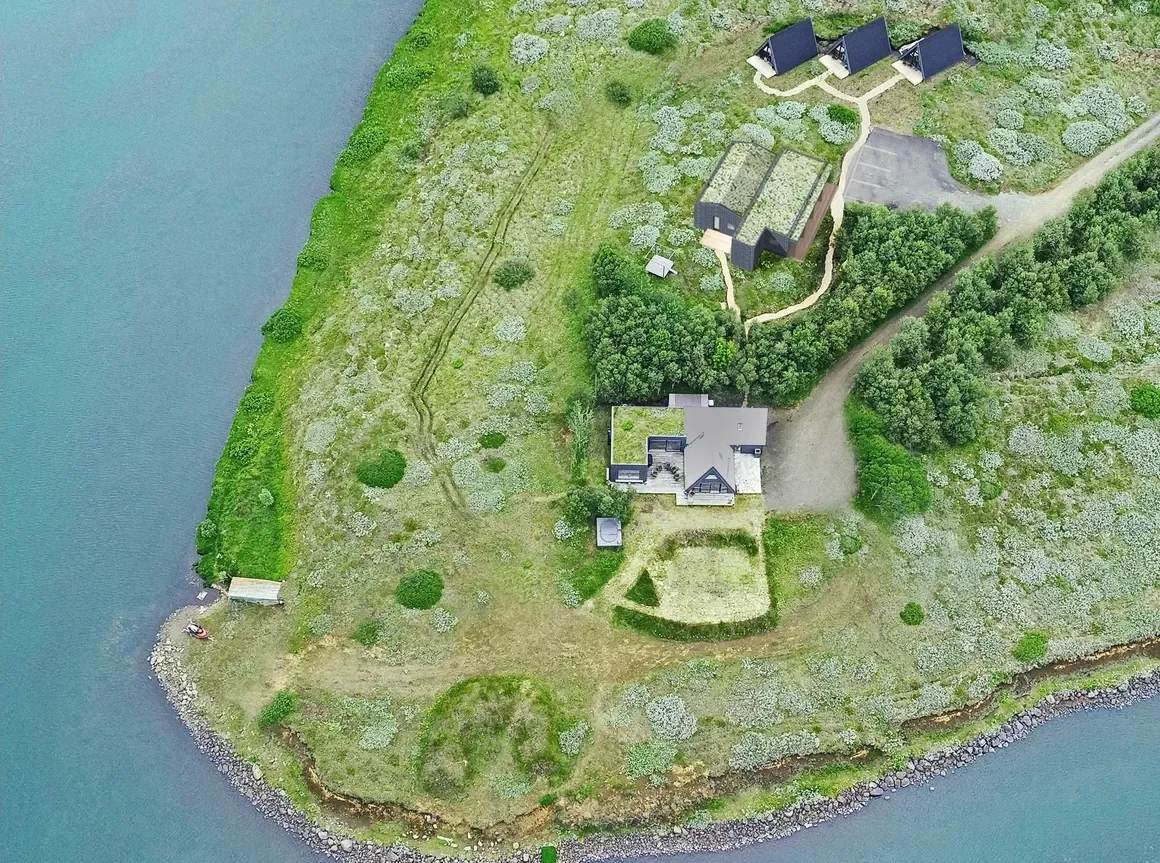
The lakefront lodge on Lake Gíslholtsvatn that anchors the Howl at the Moon Iceland Bathing Expedition this November. Photo: Howl at the Moon Sauna Co.
Alisa Cardenas runs Howl at the Moon Sauna Co. out of a converted 1989 horse trailer in West Michigan. This November, she’s taking ten people to a lakefront lodge in southern Iceland for a six-day sauna and bathing trip. The itinerary includes Sky Lagoon, wild bathing in Reykjadalur and Þórsmörk, the Icelandic sauna ritual called gúsa, and a mobile-saunagus session at the lodge. Meals, lodging, transport from Keflavík, and every bathing experience are included. It is the kind of trip more sauna businesses with a community at home ought to be thinking about.
Key Facts
- Run by: Howl at the Moon Sauna Co., based in Grand Rapids, Michigan (started 2024)
- Host: Alisa Cardenas
- When: November 2 to 8, 2026 (six days, southern Iceland)
- Where: Private 10-bedroom lakefront lodge on Lake Gíslholtsvatn
- Capacity: 10 guests
- Includes: All meals (private chef), all bathing experiences and rituals, lodging, group transport from Keflavík
- Doesn’t include: Airfare to and from KEF, Day 1 transport from KEF to Sky Lagoon
- Price: From $6,600 per person, all-inclusive (six monthly installments)
- Booking: via Wandering Roots
- Trip page: howlatthemoonsaunaco.com/iceland
About Alisa and the Wildflower
Alisa started Howl at the Moon in 2024, after the kind of 2021 corporate burnout that sends a lot of people looking for something more tactile to do with their lives. On her about page she describes the pull toward sauna as a series of small moments rather than a single epiphany: a Finnish neighbor’s casual “come sauna for a bit,” and the memory of a German bathhouse encounter twenty years earlier.
The flagship piece of gear is the Wildflower, a 1989 horse trailer converted into a mobile sauna, clad in Western Red Cedar and running a Finnish-made Iki wood-burning stove with more than 350 pounds of sauna stones. The interior runs 170 to 200 degrees Fahrenheit. Footprint is 13 by 8 by 10 feet. The Original IKI is the most plausible stove model for that stone capacity; IKI Kiuas hand-builds them in Finland and sells through regional distributors.
Beyond the rentals, Howl at the Moon hosts overnight bookings, special-event drop-ins, sauna tent rentals, public sauna and bathing nights, and recurring “Soup, Sound and Sauna” community gatherings, plus residencies at partner hotels and resorts. Recent residency stops include The Neighborhood Hotel in Grand Beach and The Monarch in Hart, Michigan. They showed up at Michigan Sauna Fest in Traverse City in April. The company serves greater Grand Rapids and the Lake Michigan lakeshore, and has been profiled by West Michigan Woman, Canvas Rebel, and Voyage Michigan since the launch.
That puts Howl at the Moon in good company with other US mobile saunas: Spa Fleet in the Hudson Valley (running since 2018), Cedar and Stone Nordic Sauna in Minneapolis (a Four Seasons partner), and the twenty-plus mobile rigs that turned up at the Willamette Sauna Festivaali in Portland in February 2026. The North American Sauna Society first wrote about US mobile sauna in 2020 with only a handful of operators on the map. There are now dozens of them.
What the Trip Actually Looks Like
Most travel itineraries hop you from hotel to hotel. This one parks you at one lodge for a week and uses it as a hub. Guests stay at a 10-bedroom, 9-bath waterfront property on Lake Gíslholtsvatn on a secluded peninsula in southern Iceland, described in trip materials as Scandinavian construction with modern Nordic architecture and a lakeside geothermal soaking pool a few steps from the door. A private chef named Abbey handles all the meals.
The published itinerary covers a different bathing experience each day:
- Day 1, arrival: Group pickup at Keflavík, then a visit to Sky Lagoon for a decompression soak before checking in at the lodge
- Day 2: A hike paired with wild bathing in a natural geothermal source
- Day 3: Reykjavík day trip and a SaunaRave session
- Day 4: Relax day at the lodge with a mobile-saunagus session
- Day 5: Þórsmörk valley exploration (volcanic terrain, glacial rivers, geothermal pockets)
- Day 6: Swim and soak at Laugarás Lagoon
- Day 7: Group transport back to Keflavík for departure
Optional at-base activities include a sound bath, Yoga Nidra, and an Icelandic cooking class. Alisa hosts the trip personally and describes the program on her expedition page as “a sensory adventure through ancient waters and the healing power of heat” built around “the raw, elemental medicine of the land.”
By the Numbers
- 6 days in southern Iceland (November 2 to 8)
- 10 guests, hosted personally by Alisa
- 5+ bathing experiences across the week (lagoon spas, wild bathing, mobile sauna, gúsa)
- 10-bedroom lakefront lodge on Lake Gíslholtsvatn as the home base
- All meals prepared by private chef Abbey
- Group transport from Keflavík and to all excursions included
- Optional at-base sessions: sound bath, Yoga Nidra, Icelandic cooking class
- Booking partner: Wandering Roots
Iceland’s Bathing Scene Right Now
Iceland is not running out of places to bathe. The country drew 2.253 million overnight visitors in 2025 per the Icelandic Tourist Board, slightly down from 2024. The modern Blue Lagoon opened in 1992 and basically defined geothermal tourism for a generation. In the past five years the scene has gotten a lot deeper.
Sky Lagoon opened in 2021 on a cliff in Kópavogur, with a seven-step ritual circuit including a cold plunge and a Finnish-style sauna with a sea view. Forest Lagoon (Skógarböðin) opened near Akureyri in 2022 on a geothermal source that turned up by accident during a tunnel project. Vök Baths in the east opened in 2019 and pulls drinkable geothermal water (a regional rarity) into floating thermal lakes. GeoSea in Húsavík uses heated seawater pumped from the harbor.
The Howl at the Moon itinerary pulls from this mix. Sky Lagoon is the arrival-day anchor. Þórsmörk and Reykjadalur are the wild-bathing pieces. Reykjadalur, a hot-river hike outside Hveragerði, draws more than 100,000 visitors per year according to local tourism estimates. Iceland’s wider public-pool culture (laug, sundlaug) is on the country’s 2023 UNESCO Intangible Cultural Heritage nomination list, alongside Finnish sauna culture (inscribed in 2020) and Japanese onsen (under review).
One Icelandic site the trip will not include this November: Laugarvatn Fontana, a third-generation public bath in the southern lake district that uses an Icelandic-style steam room built directly over a hot spring. Fontana closed for renovation in October 2025 and is scheduled to reopen June 1, 2026. If Alisa runs the trip again in 2027, Fontana is an easy add.
A Quick Word on Gúsa
Gúsa is not a generic Icelandic word for a sauna ritual. It is the specific name for a structured three-round sauna and cold-water program developed in 2024 by Vala Baldursdóttir, founder of Sækot, a small sauna and seaside-dipping operation in Reykjavík’s Vesturbær district that opened in a converted lumpfish-fisherman’s shack on the Ægisíða shoreline. The program runs three rounds at 175 to 195 degrees Fahrenheit (80 to 90 Celsius) interspersed with cold sea plunges, led by a trained sauna master, with music and aromatic infusions tied to each round. Iceland Monitor reported in January 2026 that Baldursdóttir had trained more than 140 sauna masters through the program. It is a small but quickly forming professional cohort, distinct from the older Finnish löyly tradition and from the German Aufguss school.
The “saunagus” name on the Howl at the Moon itinerary is the Danish-influenced Nordic version of the word (sauna plus gus, the term Danish operators use for what Germans call Aufguss). The closest US analog is the competitive ritual that runs at Bathhouse in New York under the Aufguss USA banner. The Icelandic gúsa training has been a public program for only two years. Pulling it onto an itinerary instead of defaulting to a Finnish löyly is the kind of choice that tells you the operator has actually been paying attention to where Nordic sauna culture is going right now.
Cedar Grove in Maine Is Doing a Version of This in Reverse
Howl at the Moon is not the only US sauna business looking outward. Cedar Grove Sauna in Montville, Maine has been doing a related version of the same idea, just from the opposite direction. Jackie Stratton, who runs Cedar Grove out of a fixed wood-fired compound on a 200-year-old farm homestead in inland Maine and two mobile horse-trailer rigs (Reef and Eddy) that park seasonally at Spinney’s at Popham Beach, took her own six-week sauna pilgrimage to Lithuania, Latvia, Finland, and Sweden in summer 2023. The Baltic pirts tradition (the smoke sauna and the ritual built around it) stuck with her in particular.
Rather than packaging a trip back to the Baltics for her customers, Jackie brought the Baltic tradition to Maine. In October 2023, Cedar Grove hosted Lithuanian Bath Masters Rimas Kavaliauskas and Birutė Masiliauskienė for their first-ever North American training: a three-day Level One Bath Master intensive at Popham Beach plus evening workshops on plant whisks, sauna construction, and Baltic bathing practice. “Winters in Maine are long and cold and dark,” Jackie told the Portland Press Herald. “We can look to our neighbors in northern Europe to see how they cope. People feel good when they sauna.”
Alisa is taking her community to a bathing culture. Jackie went to a bathing culture and brought a piece of it home. They are two different shapes of the same move, and both are the kind of move that turns a small sauna business into a cultural connector rather than a transactional rental service.
Why More Sauna Operators Should Be Looking at This
The Global Wellness Institute projects that wellness tourism crossed the $1 trillion mark in 2024, growing at roughly 16.6 percent annually through 2027 (second only to wellness real estate among wellness sectors). International wellness tourists spend an average of $1,764 per trip, according to GWI’s 2024 Global Wellness Economy Monitor. The category has plenty of room.
Bathing-anchored Nordic retreats already sit at a few different tiers. Northern Star (Copenhagen and Helsinki) runs four-to-five-day Finnish sauna tours led by Danish gusmaster Nichlas Rasmussen. Responsible Travel books an eight-day guesthouse-to-guesthouse Finnish sauna vacation in Nurmes. Black Tomato sells an eight-night Sweden and Finland luxury sauna sojourn. Green Edventures runs a seven-day women’s Iceland hot-springs and mindfulness retreat. None of them are led by a US mobile sauna outfit.
That last bit is the actual point. If you run a sauna business in the US and you have built a community at home (regulars at your residency hotel, an email list that responds when you post a session, the same fifteen faces at the Friday pop-up), you probably have ten people who would pay to go to Iceland with you. Or Finland. Or Estonia. Or Japan. Bathhouse in New York and Othership in Toronto have publicly talked about international group trips as a long-term aspiration but have not announced one yet. Manufacturers have stayed on the supply side. The window for small operators to be the ones doing this first is wide open.
If going abroad with paying guests sounds like more than you want to take on, Cedar Grove’s model is the other half of the same move. Go yourself. Study a tradition for a few weeks. Bring a teacher or a practice or a piece of vocabulary home. Both routes turn a small sauna business into the kind of place where people show up not just for the heat but because they want to learn what their operator just learned.
Why It Matters
The US mobile sauna scene is about five years past its first commercial inflection point and is still figuring out what the next move looks like. Howl at the Moon and Cedar Grove are both pointing at the same answer: turn a local sauna business into a small cultural travel operation. Iceland is a six-day trip with ten guests on it. The format repeats easily: pick a country with a real bathing culture, partner with a destination management firm or a local sauna outfit, set a date, sell a handful of seats. If Alisa’s November trip sells out and she runs it again in 2027, expect more of these from the Pacific Northwest mobile rigs, from the manufacturers expanding into new geographies, and from the urban social bathhouses. Iceland is one place to go. Finland, Estonia, Lithuania, Latvia, and Japan are the next handful.
Arlene Scott
Senior Wellness Correspondent & Hospitality Consultant
Arlene Scott brings over fifteen years of reporting and consulting experience across energy infrastructure, sustainable design, and thermotherapy-focused hospitality.
Full byline
Arlene Scott is a Senior Wellness Correspondent for SaunaNews.com, bringing over fifteen years of experience at the intersection of energy infrastructure, sustainable design, and thermotherapy. Her work focuses on the physiological benefits of passive heat therapies and the sustainable integration of sauna culture into modern wellness routines.
Arlene's background is rooted in the clean energy transition. She was a founding writer at MicrogridMedia.com, where she covered the technical and economic viability of desalination projects, microgrid deployments, and distributed renewable energy systems. During the mid-2010s, she was a regular contributor to Greentech Media (GTM) during its independent era — prior to the Wood Mackenzie acquisition in 2016 — reporting on the early integration of thermal energy storage and sustainable infrastructure.
Transitioning her focus from macro-energy systems to human-scale wellness, Arlene now applies her technical background to the hospitality sector. She operates as an independent consultant, advising boutique hotels and eco-resorts on the design, energy efficiency, and historical authenticity of commercial sauna and thermal spa installations. Her consulting work ensures that high-end wellness facilities balance traditional Nordic bathing principles with modern sustainable engineering.
Arlene holds a specialized certification in Applied Thermic Wellness from the Nordic Institute of Passive Heat Studies (NIPHS) and is a recognized associate member of the International Sauna Association (ISA). When she isn't reviewing the latest innovations in infrared technology or consulting on a new resort project, Arlene can be found tending to her own traditional wood-fired sauna in the Pacific Northwest. You can read her complete archive of essays on energy, wellness, and sustainable living at www.arlenescott.com.