
Bathhouse Raises $35M From Imaginary Ventures to Fund Eight-Location Expansion

By Arlene Scott
Senior Wellness Correspondent & Hospitality Consultant
- Published
- Reading time
- 2 min
SaunaNews is published by SaunaShare, Inc., which also runs SaunaShare.com and SaunaMarketplace.com, where we sell many of the products we write about. Assume that experience shapes what we cover and what we don't. Who owns SaunaNews · The ownership announcement
The Glossier and Skims backer is among 28 investors in the social-sauna operator’s $35 million round, putting Bathhouse on track for 10 US locations by 2028. An 85,000-square-foot LA flagship at the former Amoeba Music site is the centerpiece.

In this story3 sections
Bathhouse, the New York social-sauna operator that told CNBC in March it was on track for $120 million in run-rate revenue by the end of 2026, has raised $35 million from Imaginary Ventures to bankroll an eight-location national expansion.
Key Facts
- Round size $35 million, disclosed via SEC filings
- Investor Imaginary Ventures (Natalie Massenet and Nick Brown), an investor in Glossier, Skims, and Reformation
- Expansion Eight new US locations over the next two years, per Fitt Insider
- Marquee project An 85,000-square-foot complex at the former Amoeba Music site in Los Angeles, opening early 2028
- Other backers 28 investors total, including NBA and NFL athletes via the PLUS Capital collective
Consumer-brand capital meets the bathhouse
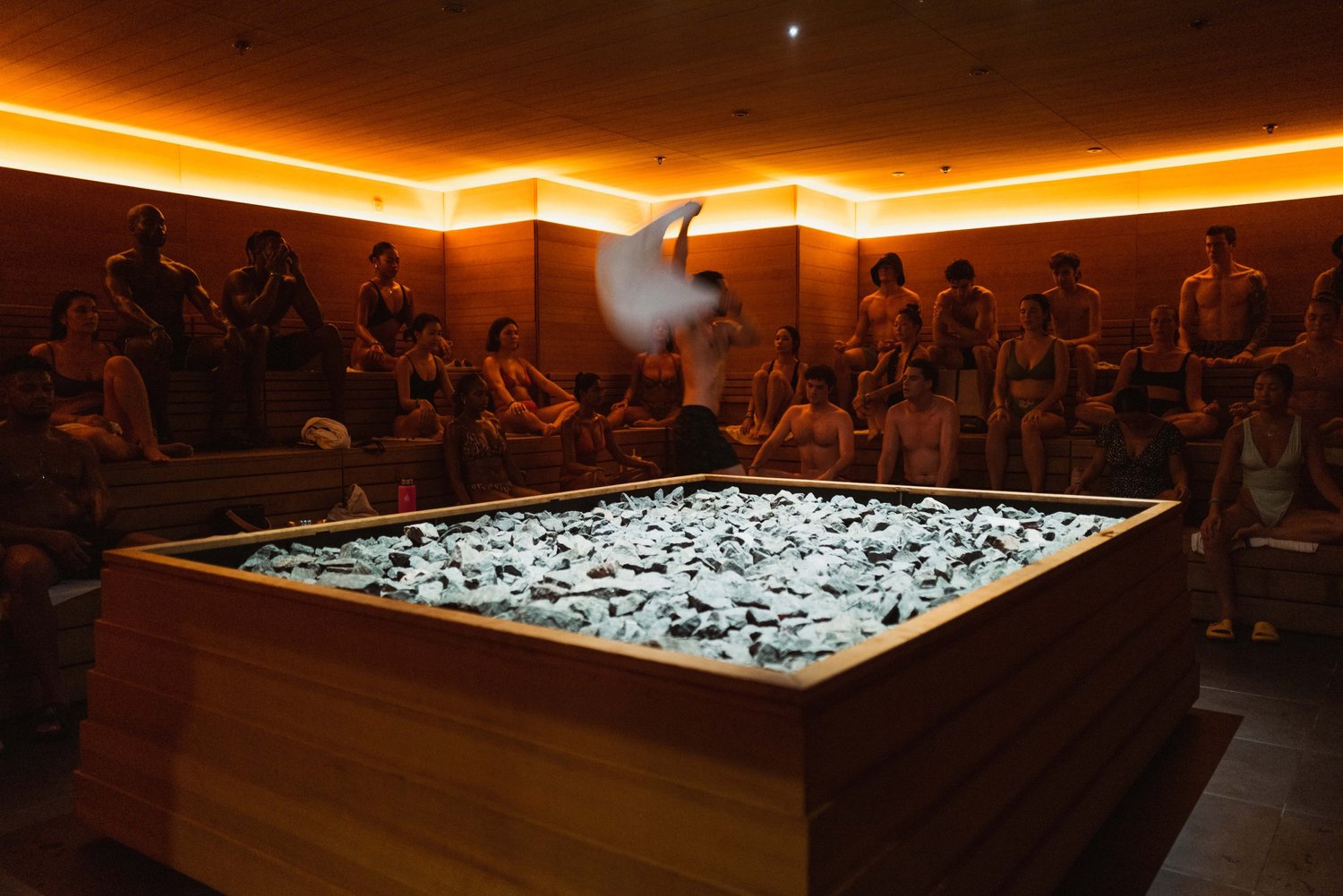
The round is a hospitality bet from Imaginary Ventures, a firm best known for consumer brands. The firm, launched in 2018 by Net-a-Porter founder Massenet and Brown, invests in what it calls “iconic, generationally-defining consumer businesses” and now lists Bathhouse in its portfolio. Co-founders Travis Talmadge and Jason Goodman have turned thermal bathing into a nightlife-adjacent social ritual at two 35,000-square-foot New York locations in Williamsburg and the Flatiron District, with day passes starting at $39 and memberships running $145 to $225 a month.
Among the 28 backers are members of the PLUS Capital collective, a group that includes NBA guards Klay Thompson and Marcus Smart and NFL wide receiver DK Metcalf.
Eight locations in two years
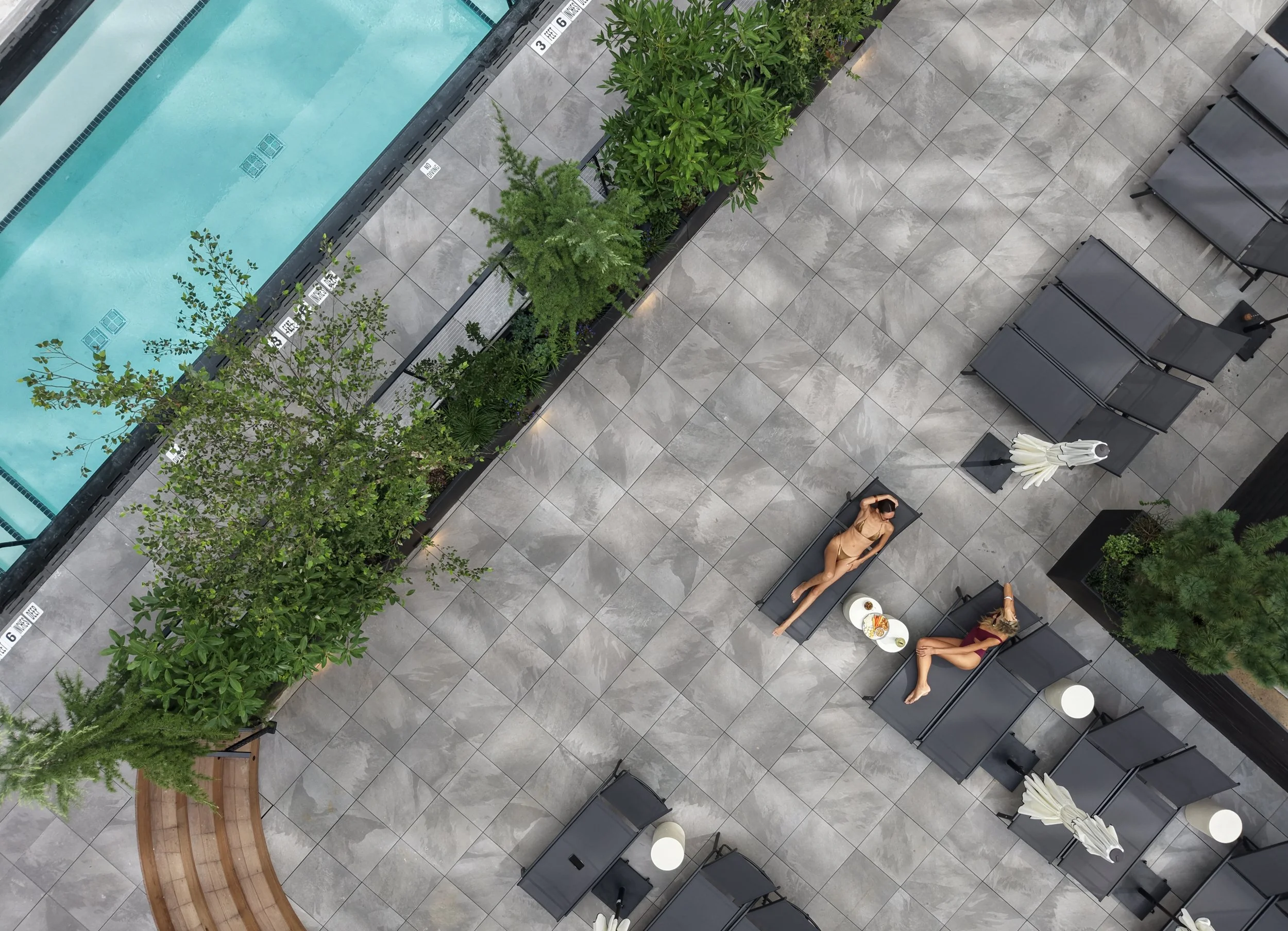
New locations are planned for Philadelphia, Chicago, Downtown Brooklyn, Berkeley Heights (New Jersey), Minneapolis, Nashville, Stamford (Connecticut), and Los Angeles. The Minneapolis outpost, targeted for 2027, will span 45,000 square feet in the North Loop neighborhood with a 100-person sauna and rooftop pool.
The headline project is LA. Bathhouse has signed a 25-year lease at 6400 Sunset Boulevard, converting the former Amoeba Music building into an 85,000-square-foot complex with a 250-person sauna, 10 thermal pools, and a 30,000-square-foot outdoor rooftop. Bathhouse developed both New York locations with Rockwell Group and Colberg Architecture. For a deep look at the mechanical, structural, and code complexity behind facilities of this scale, see our analysis of what bathhouse development actually requires.
A crowding category
The capital arrives as New York’s social-sauna field thickens. Vanity Fair called it the “sauna wars” in January, tracking a surge of new entrants: Othership (roughly $20 million raised, three NYC locations planned by 2027), Lore Bathing Club (NoHo, opened January 2026), Schwet (Tribeca, spring 2026), and The Altar (Chelsea). Bathhouse’s $35 million makes it the best-capitalized pure-play operator in the group.
Why It Matters
When a venture firm known for direct-to-consumer brands puts money into a physical bathing venue, it reframes social sauna from wellness trend to investable real estate category. North America’s thermal and mineral springs earned $1.61 billion in 2024, a sliver of Asia-Pacific’s $37.7 billion, according to the Global Wellness Institute. GWI’s count leaves out heated-water venues like Bathhouse, but the regional gap is the headroom a national bathhouse chain is betting on.
The Bottom Line: Bathhouse now has the capital to move from a two-venue New York story to a national chain. Whether the “anti-spa” model plays outside the five boroughs is the question the next two years will answer.