Portal° Thermaculture Is Building a Five-Metro Social Sauna Chain Without Outside Investors

By Arlene Scott
Senior Wellness Correspondent & Hospitality Consultant
- Published
- Reading time
- 8 min
SaunaNews is published by SaunaShare, Inc., which also runs SaunaShare.com and SaunaMarketplace.com, where we sell many of the products we write about. Assume that experience shapes what we cover and what we don't. Who owns SaunaNews · The ownership announcement
Portal° Thermaculture went from a Boulder brewery pop-up to four metros, with Austin on the way, in under two and a half years, surviving a fire and building without disclosed investors. The founder-funded playbook, from horse trailers to marine-mammal chillers, is a clear counterpoint to Bathhouse’s institutional-capital model.
In this story5 sections
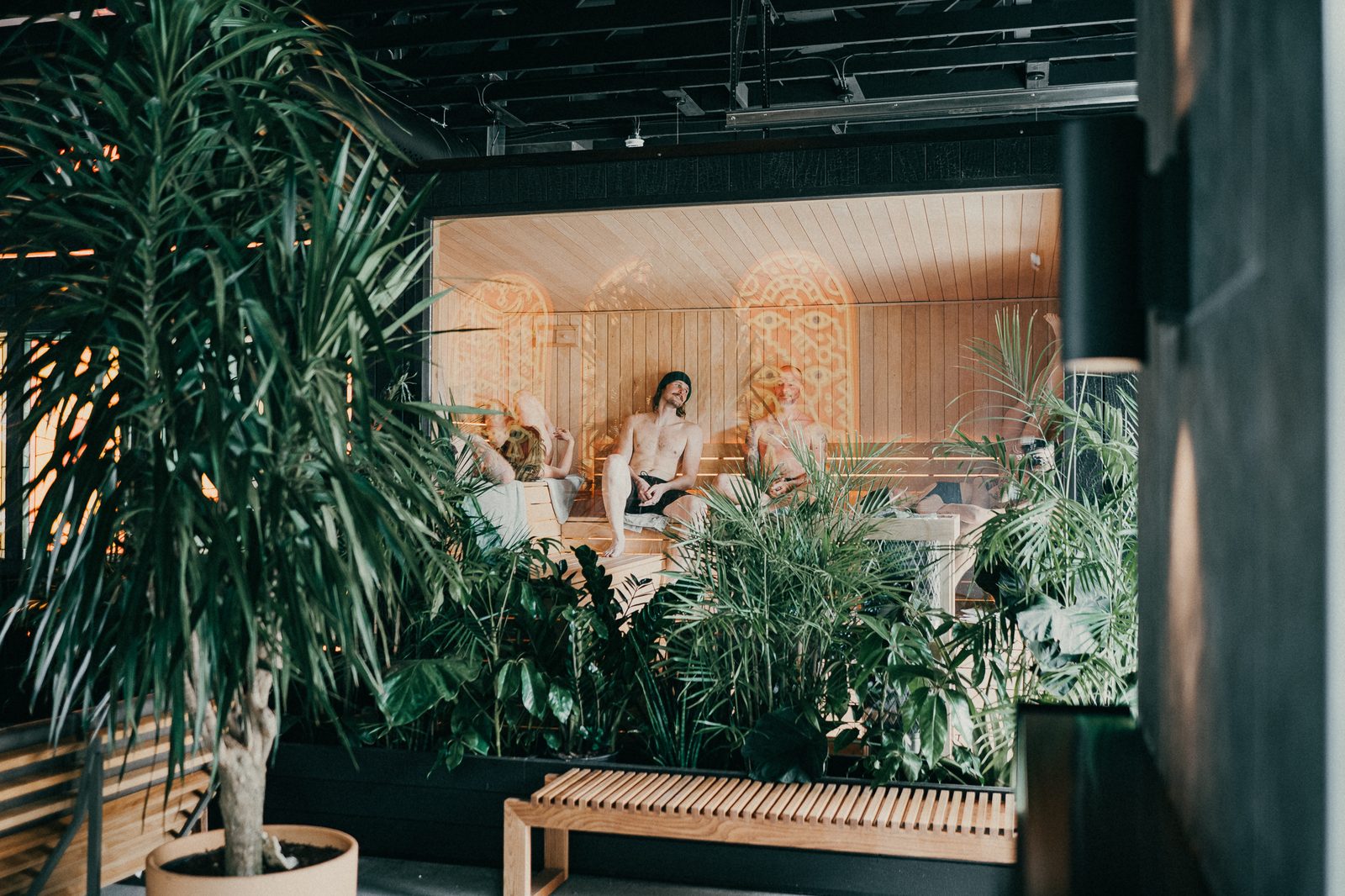
Portal° Thermaculture, the contrast-therapy social club co-founded by Will Drescher, Rory MacMurdo, and John Drescher, now operates in four US cities with a fifth on the way. The company started as a Boulder pop-up on Sanitas Brewing’s back patio in January 2024. That pop-up burned down in early January 2025. Six weeks later, a Denver location opened. By the end of May, Minneapolis was running. Bozeman, Montana, opened March 17, 2026. Austin, Texas, at 115 Industrial Blvd in the St. Elmo Arts district, is opening this spring with two saunas, six individual cold plunge tubs, and a rooftop deck. That makes five metros in under two and a half years, all without a disclosed institutional investor.
The expansion makes Portal° a clear counterpoint to Bathhouse’s $35 million raise and multi-city expansion plan announced May 8. The two operators are building the same category from opposite ends: Bathhouse with institutional capital and dense coastal metros, Portal° with personal capital and outdoor-recreation cities where people already spend weekends getting sore.
Key facts
- Founded Boulder, Colorado (pop-up at Sanitas Brewing, January 2024)
- Co-founders Will Drescher, Rory MacMurdo, John Drescher (Will’s brother)
- Operating locations Boulder (4949 Broadway, #113, NOBO), Denver LoHi (2949 Federal Blvd), Minneapolis West Maka Ska (3120 Excelsior Blvd), Bozeman (660 N Ida Ave)
- Announced Austin, TX (115 Industrial Blvd, St. Elmo Arts, opening spring 2026)
- Sessions $45 to $65 per single visit (varies by market); 8-packs from $27.50 to $55 per session
- Memberships $99/month (four credits), $129 to $179/month (single-location unlimited, varies by city)
- Build partner BW Sauna Co. (Duluth, MN)
- Materials Clear cedar hot-room interiors (BW Sauna Co.’s standard), IKI heaters
- Minneapolis footprint Converted former Jiffy Lube at West Maka Ska; three saunas, 10 x 20 ft communal cold plunge pool
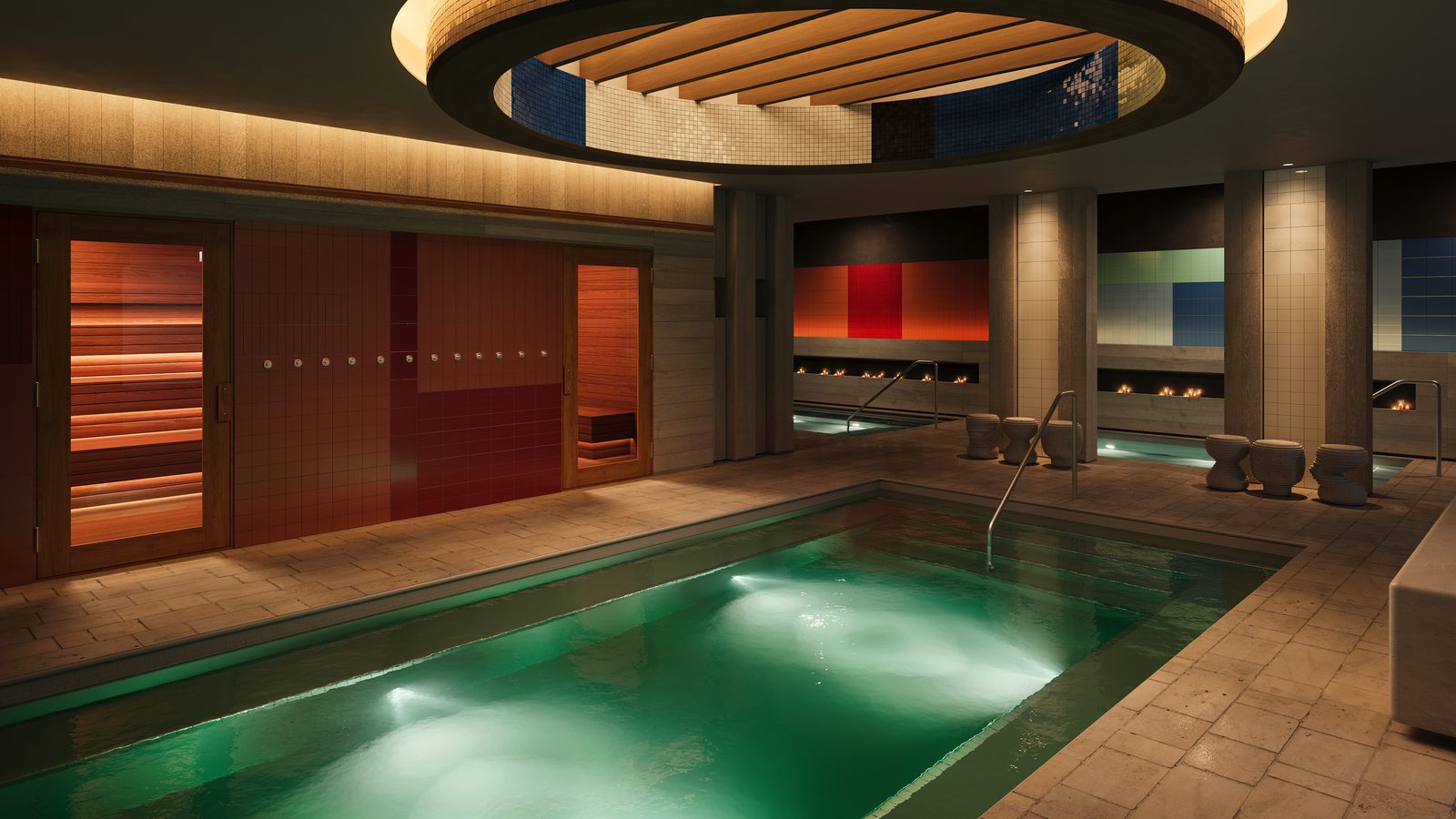
- Austin specs Two saunas, six individual cold plunge tubs, rooftop deck, indoor clubhouse
A horse trailer, a Grizzly cooler, and a trip to Moab
Will Drescher’s introduction to thermaculture began behind a strip mall in Minneapolis. As he told Boulder Weekly in August 2024: “The cold plunge was a 200-gallon white Grizzly cooler, and the sauna was a horse trailer.” The DIY setup, he said, eventually became a club called Embrace North, a grassroots operation that the Star Tribune reported in 2023 had grown to roughly 900 members before the city of Minneapolis ordered it closed for operating without permits. Drescher was a regular, not a founder, and it was there that his friendship with Rory MacMurdo took off.
The Portal° concept came into focus during a trip to the desert. “We were actually up in Moab, and we were listening to the Khruangbin album Mordechai,” Drescher told Boulder Weekly. “And we were like, ‘What if we just made Embrace North, but it sounded and looked like this?’ That’s Portal.”
They built their first pop-up in Boulder in January 2024, on the back patio of Sanitas Brewing at 3550 Frontier Avenue. The Westword profiled the venture in March 2024, when Drescher and MacMurdo were the only two names on the marquee. (John Drescher, Will’s brother, later joined as a co-founder; he was the primary spokesperson when the Minneapolis location opened, as reported by Mpls.St.Paul Magazine in July 2025.)
The Boulder pop-up burned down in early January 2025. Six weeks later, on February 15, a new Portal° location opened in Denver’s LoHi neighborhood behind the Nurture Wellcare Marketplace. Rooster Magazine described it as “a phoenix from the ashes.” A new Boulder location at 4949 Broadway later reopened in the North Boulder Arts District.
Pop-ups to storefronts: the playbook
Here is the thing that makes Portal° different from every other social sauna operator we cover: the first two locations were outdoor pop-ups with almost no overhead. As Rooster reported, the Denver LoHi club has “very little overhead: two saunas, three cold plunges, a shower, a small front office, two changing rooms, some lockers and a seating area. And by little overhead I also mean no roof. It’s all outdoors.” Drescher’s own framing is blunt. “You can’t really create a movement of building $3 to $5 million bathhouses,” he told Rooster. “You can, but you need to go get money from venture capital.” His alternative: “People need a dive bar that doesn’t serve alcohol.”
Minneapolis, which opened at the end of May 2025, was the step change. Mpls.St.Paul Magazine called it “Portal’s first official brick-and-mortar location,” noting that “the team has previously run pop-up locations in Boulder and Denver.” The club occupies a converted former Jiffy Lube on the northwest side of Bde Maka Ska, with two electric saunas, one wood-burning sauna, and a 10-by-20-foot communal cold plunge pool held at 38 degrees. The cold plunge alone was a project: originally slated for a March opening, the timeline slipped to the end of May partly because the team ordered a chiller “traditionally used for marine mammal habitats, like penguin and beluga whale tanks,” as John Drescher told the magazine.
The city selection tells you something about the thesis. Boulder, Denver, Bozeman (population roughly 58,000), Minneapolis, Austin: these are outdoor-recreation markets where the customer base already understands physical discomfort as recreation. Ski towns, bike towns, running towns. Nobody in Bozeman needs to be convinced that getting cold on purpose might feel good. That is a fundamentally different go-to-market than opening in Manhattan or Miami, where the pitch has to start with category education.
Pricing reinforces the frequency play. Per-session credits range from $45 in Bozeman to $65 in Denver, Minneapolis, and Boulder, with bulk packs bringing the per-visit cost down to $27.50 (Bozeman 8-pack) or $55 (larger markets). Monthly memberships start at $99 for four credits across all locations, while single-location unlimited plans run $129 in Denver and Boulder, $179 in Minneapolis. At $129 per month, a daily visitor in Denver pays about $4.30 per session. That is not spa pricing. That is gym pricing, and it is designed to create a daily habit.
How they build: BW Sauna Co. and IKI
Portal°’s Minneapolis hot rooms were built by BW Sauna Co. out of Duluth, Minnesota. Mpls.St.Paul Magazine described the saunas as “custom” builds by BW. BW’s own site says clear cedar lines every BW hot room, with thermally modified wood offered as an exterior finish. The heaters are IKI units, the Finnish manufacturer whose stoves are hand-built in Pieksamaki, Finland, and are known for stone capacities that dwarf most commercial alternatives (the Original IKI wood stove holds 660 pounds of stone).
The supply chain tells a story about the category maturing. Five years ago, a founder-led sauna startup might have sourced residential equipment and hoped for the best. Portal° is specifying commercial-grade Finnish heaters and custom-built hot rooms from the start, working with a regional sauna builder who knows how to handle the duty cycle. That is the kind of infrastructure buildout we track in this space.
SaunaNews was there: the Minneapolis club
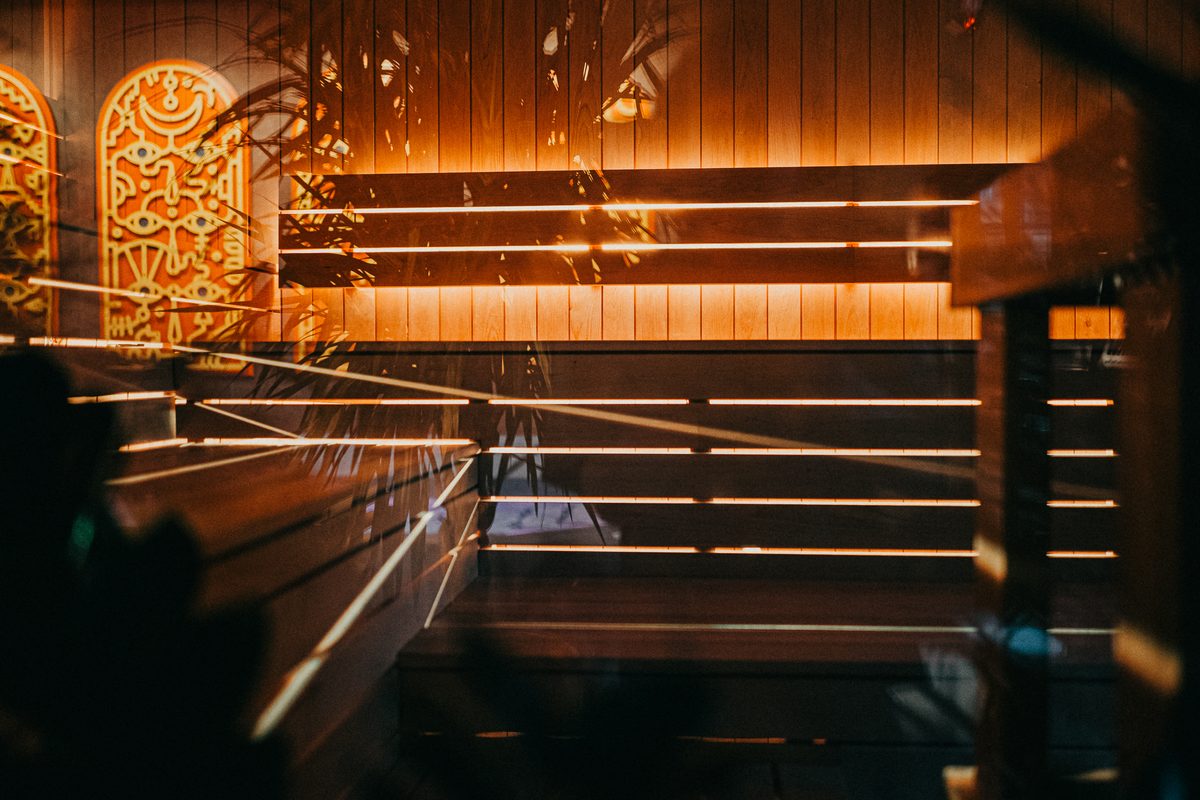
Full disclosure: the SaunaNews team has firsthand experience at Portal°’s Minneapolis location at West Maka Ska, and we are fans.
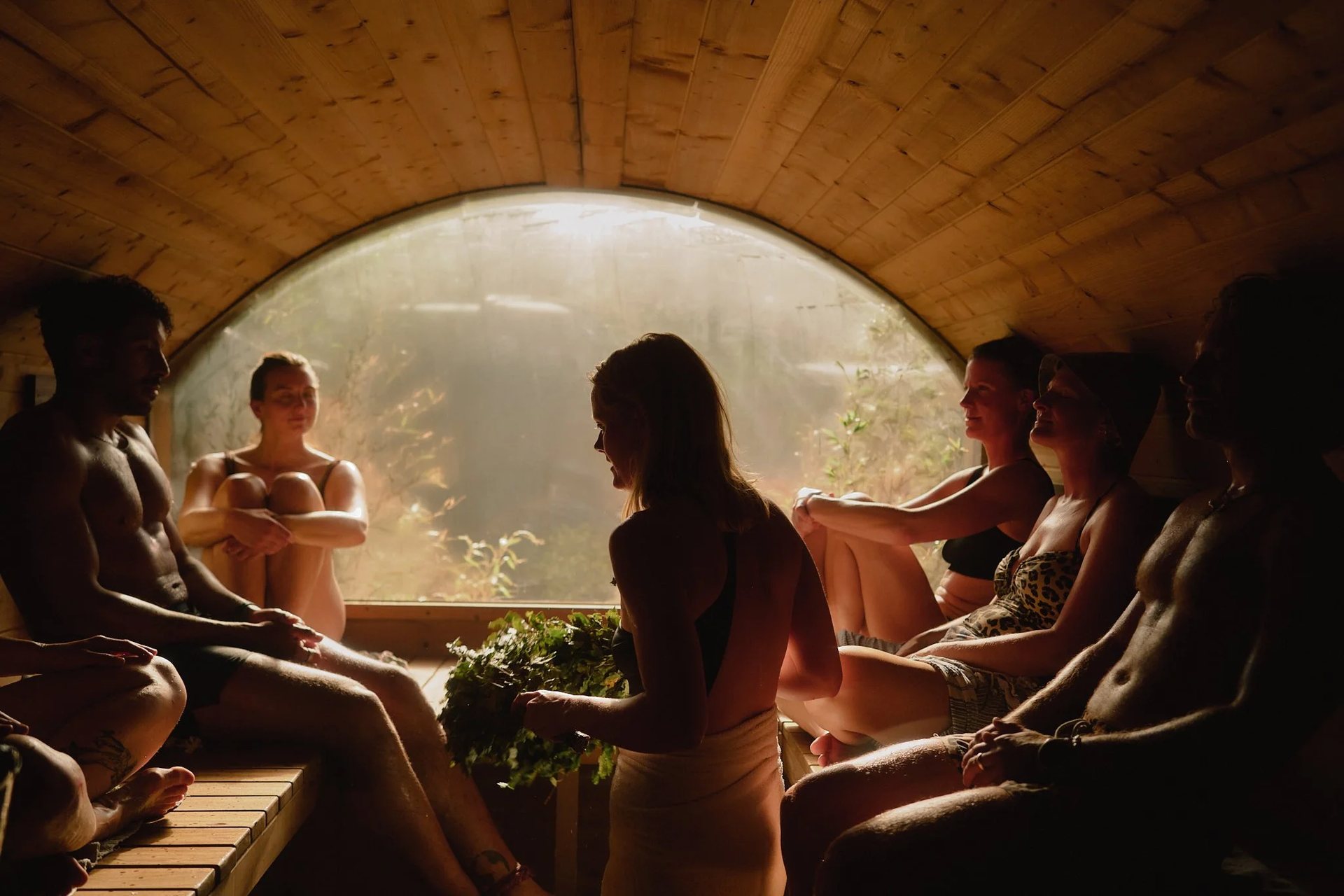
The converted Jiffy Lube is a small, well-designed space that gets the details right. There were speed dryers for swimwear (a thoughtful touch that most operators overlook), cool jazz playing softly enough to hold a conversation, and an atmosphere that felt more like a neighborhood hangout than a wellness destination. It is a genuinely good place to meet people. The crowd the evening we visited was social, relaxed, and mixed: couples, friend groups, a few solo regulars who clearly knew the staff.
Portal° frequently offers free or discounted first sessions, which is smart customer acquisition for a category where the barrier is not price but unfamiliarity. Getting someone through the door once, in a space where the vibes are right, does more than any Instagram ad. In their first month at Minneapolis, the team sold more than 400 memberships, according to Mpls.St.Paul Magazine.
The one knock: parking at the Minneapolis location is rough. West Maka Ska is a residential neighborhood, onsite parking is limited, and nearby street parking has been further constrained by construction on the METRO Green Line Lake Street station. Plan to walk or bike, which, in Minneapolis in the summer, is honestly the better move anyway.
Portal° vs. Bathhouse: two playbooks, one category
The timing of Portal°’s Austin announcement alongside Bathhouse’s $35 million raise from Imaginary Ventures (the fashion-and-consumer VC behind Glossier) frames the category question neatly. Bathhouse is targeting multiple dense metros with a premium experience and institutional backing. Portal° is founder-funded, targeting outdoor-recreation cities with a model that started as outdoor pop-ups and is only now graduating to permanent storefronts.
The models differ on almost every axis. Bathhouse has institutional capital, premium pricing, and plans for cities like Los Angeles (where it is taking over the former Amoeba Records space on Sunset Boulevard), Chicago, and Nashville. Portal° has no disclosed outside investors, credit-pack pricing as low as $27.50 per session in Bozeman, and is threading through markets where the customer base skews toward outdoor athletes who already own a lot of fleece. Sauna House, now franchising, represents a third model, while Othership in Toronto has built the social-sauna-as-nightlife variant.
What both Portal° and Bathhouse share is the conviction that commercial sauna is becoming infrastructure, not just an amenity, and that the best operators sell repeatable ritual rather than a one-time luxury experience. The question for operators watching this space is not whether the social sauna category will grow. It is whether the founder-led, outdoor-rec-city playbook can hold its own as the segment attracts institutional capital, or whether Drescher and MacMurdo end up selling that script to someone with deeper pockets. Drescher, for his part, seems uninterested in the venture path: “You can’t really create a movement of building $3 to $5 million bathhouses.”
Why it matters
Portal° Thermaculture’s expansion to five metros suggests there is now more than one viable template for scaling social sauna in the United States. The Bathhouse model uses institutional capital and dense coastal cities. The Portal° model uses personal capital, outdoor-recreation markets, and a pricing structure that optimizes for frequency over ticket size, starting from outdoor pop-ups with almost no overhead and graduating to brick-and-mortar only after validating demand. For manufacturers and builders, this is the demand signal: commercial-grade sauna equipment, specified by regional build partners like BW Sauna Co., is moving into small-footprint urban sites at a pace that would have been hard to imagine three years ago. For operators, Portal° shows that the category does not require $35 million and a Manhattan address to get started. A horse trailer, a Grizzly cooler, and a good playlist got this one going.
The bottom line
Portal° Thermaculture went from a pop-up on a Boulder brewery patio to a five-metro social sauna chain in under two and a half years, surviving a fire and building its first real brick-and-mortar in a former Jiffy Lube cooled by a marine-mammal-habitat chiller. No disclosed investors, membership pricing designed for daily use, and a founder who explicitly does not want to raise venture capital. Austin opens this spring. The category now has two visible scaling playbooks, and every operator tracking the space should be watching both.
Correction, September 25, 2026: an earlier version of this article said BW Sauna Co. uses Thermory as its exclusive wood supplier, so Portal°’s Minneapolis hot rooms almost certainly feature Thermory thermally modified timber, and said Portal° reached five metros in under two years. BW says clear cedar lines every BW hot room and offers thermally modified wood for exteriors, per BW Sauna Co., and Portal°’s first pop-up opened in January 2024, more than two years before its fourth metro, Bozeman, opened on March 17, 2026, per KBZK.