Portal Opens a Fourth US Club as Social Sauna Tests Its Scale

By Arlene Scott
Correspondent, Research and Industry
- Published
- Reading time
- 8 min
SaunaNews is published by SaunaShare, Inc., which also runs SaunaShare.com and SaunaMarketplace.com, where we sell many of the products we write about. That experience may change what we write about and what we don't. Who owns SaunaNews · The ownership announcement
Portal Thermaculture opened in Bozeman, Montana, on March 17, its first location outside Colorado and Minnesota. The fourth club in 14 months tests whether a low-overhead social-sauna format built on warehouse leases, portable memberships, and no disclosed investors can grow into a chain without venture capital.
In this story5 sections
Portal Thermaculture opened its fourth US club on March 17, 2026, in Bozeman, Montana, at 660 N Ida Ave. It is the company’s first location outside Colorado and Minnesota, and it arrives about 14 months after a fire destroyed the original Boulder pop-up that started the whole operation. Bozeman tests whether a social-sauna club built on warehouse leases, portable memberships, and zero disclosed outside capital can become a repeatable chain, or whether the format needs venture backing to reach multi-city scale.
Key facts
- Operator Portal Thermaculture, founded by Will Drescher
- Bozeman address 660 N Ida Ave, Bozeman, Montana
- Opened March 17, 2026
- Club count Four US locations (Boulder, reopened at 4949 Broadway after a January 2025 fire destroyed the original pop-up; Denver Highlands opened Feb 15, 2025; Minneapolis West Maka Ska opened mid-2025; Bozeman opened March 2026)
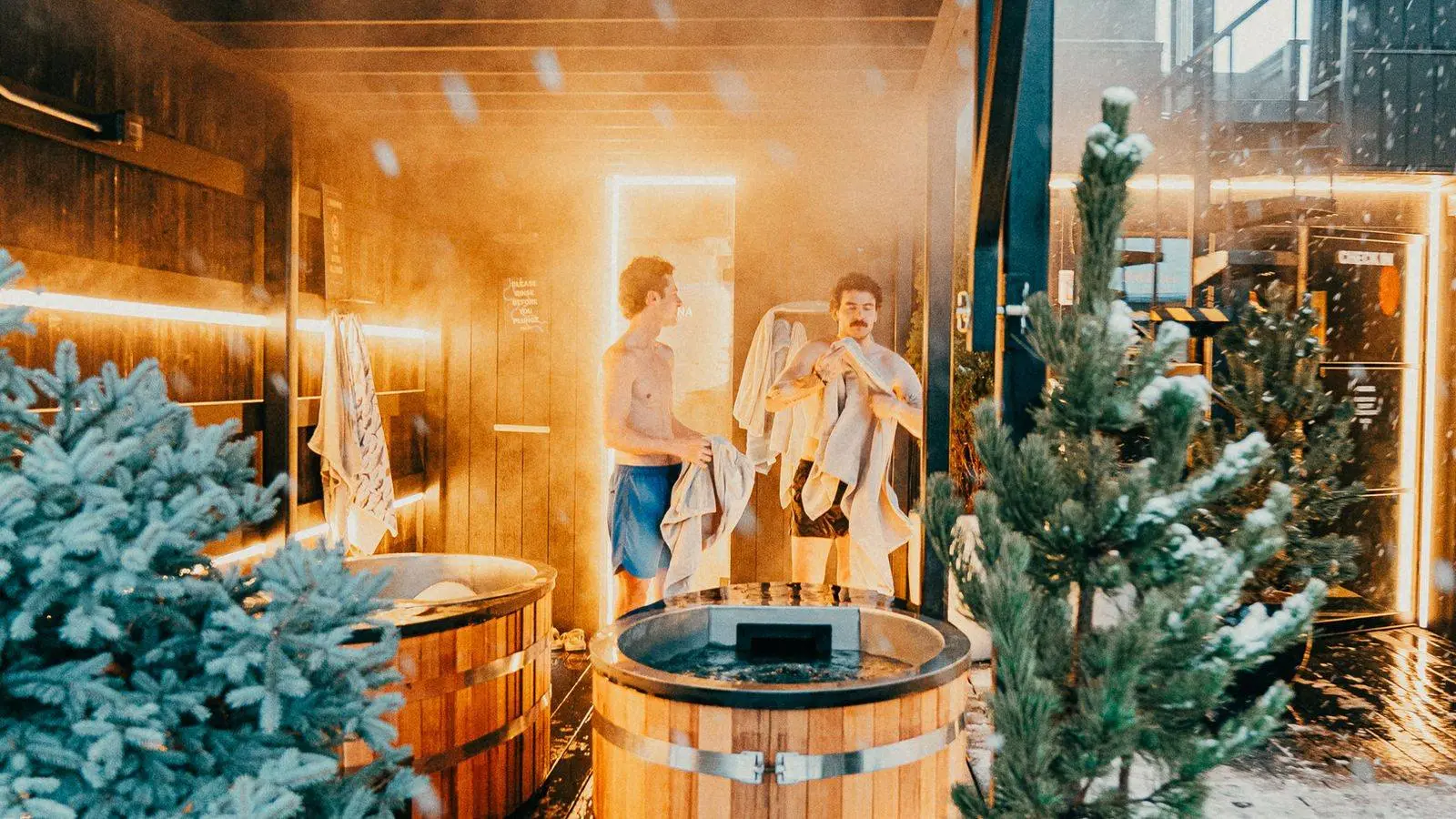
- Bozeman footprint Two traditional saunas, five individual cold plunge tubs, outdoor plunge courtyard, rooftop deck, phone-free clubhouse
- Layout Two-building format, a revamped warehouse (social space, locker rooms) plus a new-build block (saunas, plunges)
- Session protocol 15 minutes heat, 3 minutes cold, repeated three times
- Single session price $65
- Monthly memberships $99 (4 credits/month), $129 (your club unlimited), $279 (all clubs unlimited)
- Minneapolis traction 400+ memberships sold in the first month
The operating model that a fire built
Portal’s business model, as one local report put it, was “a product of circumstance.” The Boulder pop-up burned down in January 2025, and rather than rebuild, Drescher pivoted to a brick-and-mortar format in Denver’s Highlands neighborhood, opening at 2949 Federal Blvd on February 15, 2025. That Denver club is entirely outdoors: two saunas, three cold plunges, a shower, a small front office, two changing rooms, lockers, and a seating area, with no roof overhead and very little fixed overhead to match. The team went through iterations from wood-burning to propane to electric heaters in Denver, a tinkering process that would be unthinkable inside a $3 million to $5 million custom bathhouse.
The low-capital constraint became the defining feature of the format. Drescher has been explicit about why. “You can’t really create a movement of building $3 to $5 million bathhouses,” he told Rooster Magazine. “You can, but you need to go get money from venture capital.” Portal has disclosed no outside investors. If Drescher is self-funding four clubs in 14 months, the per-unit buildout cost has to be dramatically lower than the category norm, and the two-building warehouse-plus-new-build layout in Bozeman suggests a playbook designed to keep it that way.
Two other US operators are pursuing multi-city scale. Bathhouse raised $35 million from Imaginary Ventures to expand into eight cities, a capital-intensive path that buys speed and polish but yokes the company to investor return timelines. Sauna House is franchising, which shifts the capital burden to franchisees but introduces operational complexity and brand-control risk. Portal is attempting the third option: bootstrap replication, keeping unit costs low enough that each location can fund the next without outside money or franchise fees.
What the Bozeman club actually looks like
The Bozeman location occupies a two-building compound. A revamped warehouse houses the social space and locker rooms; a new-build block next to it holds the saunas and plunges. The wet side includes two traditional saunas, five individual cold plunge tubs, and an outdoor plunge courtyard. Upstairs, a rooftop deck gives views of the Gallatin Valley. The dry side is an indoor phone-free clubhouse with a living room, film screenings, ping pong, yoga, and a monthly vintage market.
Co-managers Dan Luckenbach and Black Bair are running the location on hours of 8 a.m. to 10 p.m. most days, with a late opening on Wednesdays (4 p.m. to 10 p.m.). The target customers are outdoor athletes. “Mountain bikers, skiers, runners, climbers, those were all, like, our bread and butter customers in Boulder,” Luckenbach told KBZK. “And we were like: Bozeman they’ve got the mountains, they’ve got the skiers.”
The session format is fixed: 15 minutes of heat, 3 minutes of cold, repeated three times. A fixed contrast cadence means staff do not need to manage custom programming, and members know exactly what they are getting at every club. It is one of several design choices that reduce labor costs and make the format easier to replicate.
Credits work at every club
Portal’s pricing is built around a credit system that works across all four clubs. A single drop-in session runs $65. Monthly memberships come in three tiers: $99 per month for four credits, $129 per month for unlimited visits at your home club, and $279 per month for unlimited access at every Portal location. Annual plans drop the effective rate: $1,100 per year for four credits per month, $1,400 per year for single-club unlimited, and $2,400 per year for all-club unlimited. Credit packs offer further flexibility: four credits for $240 ($60 per visit) or eight for $440 ($55 per visit). Credits are transferable, never expire, and work at any Portal club.
Portability is the bet. It turns every new location into a retention tool for existing members and a reason for prospects in new markets to buy in at a higher tier. If you are a Denver member who skis in Bozeman on weekends, the $279 all-club unlimited tier makes sense. If you are a Minneapolis member who visits Denver once a quarter, credit packs keep you in the system without a higher monthly commitment. The model borrows from coworking (WeWork’s all-access pass) and boutique fitness (ClassPass credit portability), but applied to a category where most operators run single locations with no transferability at all.
Minneapolis offers early evidence that the pricing works at the market level. The West Maka Ska club at 3120 Excelsior Blvd sold more than 400 memberships in its first month, according to Mpls.St.Paul Magazine. That club features two electric saunas, one wood-burning sauna built by BW Sauna Co. out of Duluth, and a 38-degree cold plunge. Four hundred memberships at even the lowest $99 tier would imply nearly $40,000 in monthly recurring revenue before drop-in sessions and credit packs, a strong opening for a format that appears to run on minimal fixed costs.
The phone-free rule does the retention work
Portal runs a phone-free rule. “Where else can you spend an hour away from your phone and not feel like you’re dying to reach for it?” Luckenbach asked in his KBZK interview. “Really what keeps people coming back is the community it forms; it’s like a third space.”
From an operator’s perspective, the phone-free policy lengthens dwell time. Members stay longer because they are drawn into conversation with each other, and that social stickiness builds the kind of community-driven retention that most fitness and wellness brands spend heavily on programming to create. Portal gets it for free, or close to it. The living room, film screenings, ping pong, and yoga in Bozeman’s clubhouse are low-cost amenities that extend the hang without requiring expensive instructors or content. The monthly vintage market is community-generated programming that costs Portal almost nothing to host.
This is a different approach from what Othership has built in the social-sauna nightlife lane, where guided breathwork sessions, music-driven ceremonies, and event programming are central to the experience and the cost structure. Portal is betting that the sauna itself, combined with enforced phone-free togetherness, generates enough social pull to hold members without the programming overhead. Drescher frames the philosophy in terms of local adaptation: “I view what we’re doing as bringing the space to where the neighborhoods are and the different people put their wabi-sabi onto it… it develops and creates its own culture,” he told Rooster Magazine.
The contrast between high-investment destination wellness and lean community formats is playing out across the category. Portal sits firmly on the lean side, and whether that creates a ceiling on experience quality or a floor on profitability is the question Bozeman will help answer.
What has to go right
Four clubs in 14 months is fast by any standard. Portal’s stated ambition extends beyond four locations, and the warehouse-plus-new-build model appears designed to compress both buildout timelines and capital requirements. But speed introduces its own risks. Each new market requires local co-managers who can build the community culture that drives retention (Bozeman has Luckenbach and Bair; not every market will find the right operators as easily). The cross-club credit system only adds member value as the network grows, which creates pressure to keep opening locations even if individual clubs need more time to mature. And the no-outside-capital stance means any single club that underperforms could constrain the capital available for the next one.
Portal is trying to prove that you can build a social-sauna chain on warehouse leases, fixed protocols, phone-free community, and organic cash flow. Bozeman is club number four. The question is whether the model holds at club number eight or twelve, when the easy mountain-town markets are tapped and the format has to prove itself in denser, more expensive cities.