Löylyfestivaali: A Finnish Sauna Club Builds a Bathhouse for a Day, Then Takes It Away
Tents and trailer saunas on a river beach in Koria, seven hours, 20 euros, and no building at all. The same volunteer club does it again in March on a frozen lake. The structure underneath is the part US operators should be looking at.

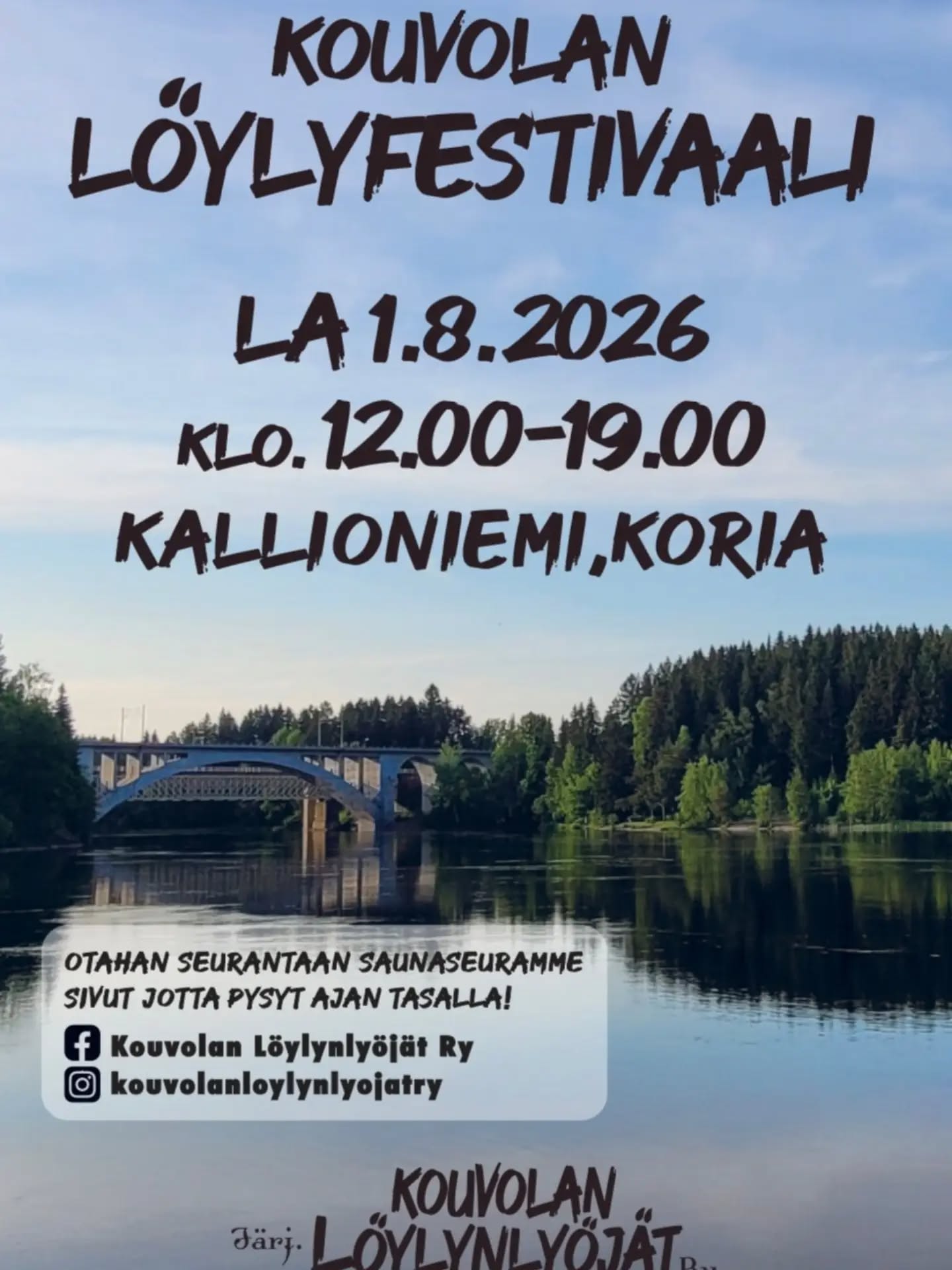
Official poster for Kouvola Löylyfestivaali 2026, the summer edition at Kallioniemi beach in Koria. Image: Kouvolan Löylynlyöjät.
On Saturday a volunteer club will assemble a public bathhouse on a river beach in Koria, run it for seven hours, and take it away again. Tents and trailer saunas roll onto the sand at Kallioniemi, the Kymijoki does the cooling, an adult wristband costs 20 euros, and by evening the venue does not exist. No building, no chiller, no lease, no plan review. Then in March the same club does it again on a frozen lake 20 miles away, cutting a hole in the ice instead of walking into a river.
That is Löylyfestivaali, and it is worth an American operator's attention for reasons that have nothing to do with tourism.
Key Facts
- Summer edition: Kouvolan Löylyfestivaali, Kallioniemi beach, Koria, Kouvola. Saturday 1 August 2026, 12:00 to 19:00. Cooling in the Kymijoki
- Winter edition: Löylyfestivaali at Radalla Resort, Uimarintie 1, Iitti. Most recently Saturday 28 March 2026, 12:00 to 21:00. Cooling in an ice hole
- Organiser of both: Kouvolan Löylynlyöjät ry, a volunteer sauna association. The Iitti edition is run jointly with Radalla Resort
- Koria wristbands: adults €20, association members €15, ages 15 to 17 €10, ages 10 to 14 €5, under 10 free
- Iitti wristbands: adults €22, or €20 in advance. Ages 10 to 17 €11, or €10 in advance. Under 10 free
- Annual fixture: the summer edition ran 2 August in 2025 and 1 August in 2026
What a One-Day Bathhouse Is Made Of
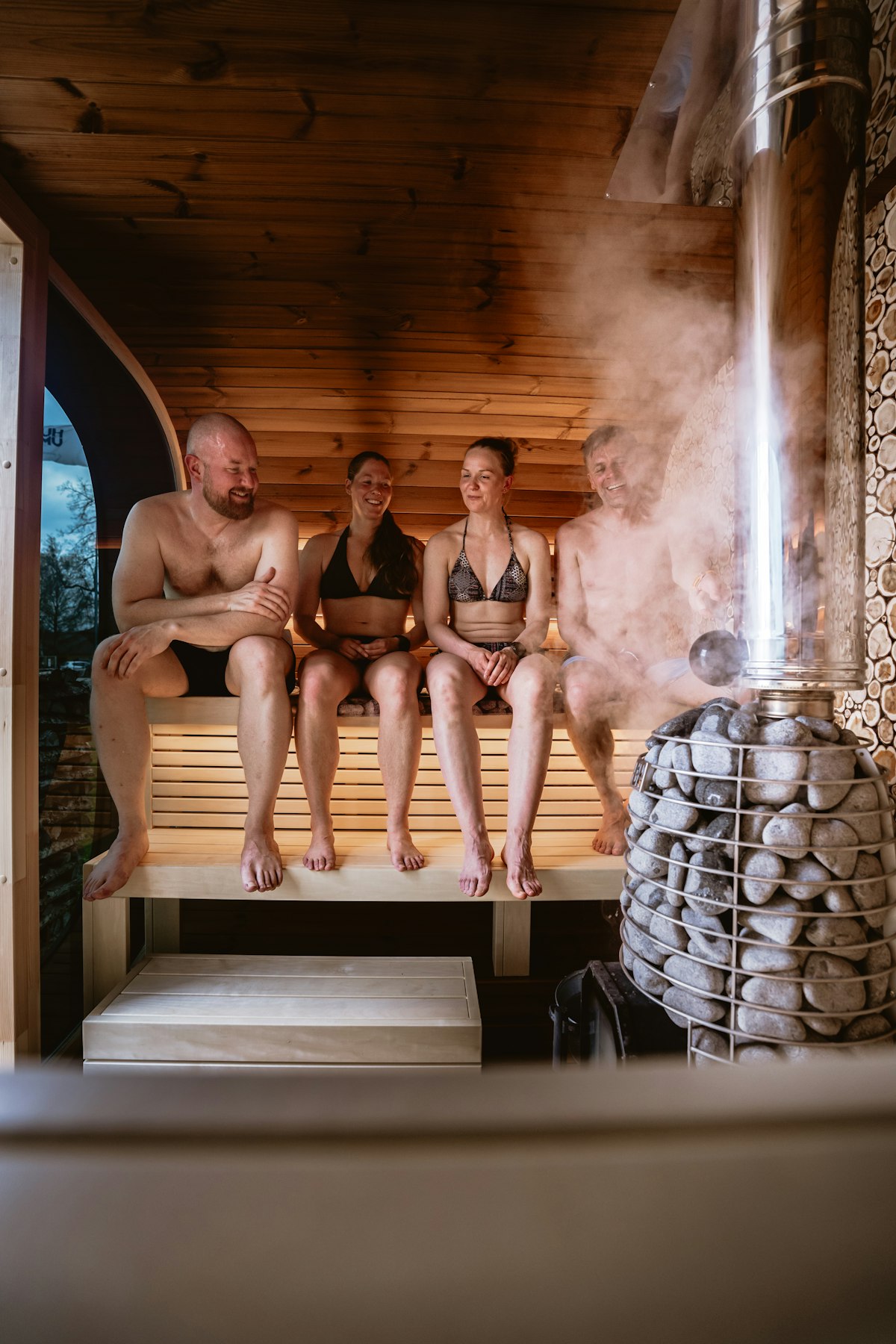
The summer festival puts sauna tents up on the shoreline at Kallioniemi and parks trailer saunas beside them. That is the entire thermal plant. Around it goes the part operators forget when they picture a pop-up: changing tents, toilets, a storage tent where you leave clothes and valuables for a couple of euros, activities for small children, product sales, and food and drink over by the railway bridge.
Cooling is the river. Not a chilled tub, not a plunge with a mechanical recirculation loop and an automatic disinfection system, just the Kymijoki at whatever temperature early August has left it. The contrast is gentler than a chiller-fed tub, which is why sessions run long and the day is social rather than clinical.
Payment is cash, MobilePay, the common credit cards, and bank transfer. The festival area is open to anyone; the wristband buys the saunas.
The Same Club, Twice a Year, Two Kinds of Water
Kouvolan Löylynlyöjät ry does not only run the river version. In March it stages Löylyfestivaali at Radalla Resort in Iitti, jointly with the resort, and the shape changes with the season. Noon to 9 p.m. rather than 7. A beach sauna, a raft sauna, a cottage sauna and portable saunas rather than tents on sand. Guided löyly sessions. An avanto, an ice hole, instead of open river. Restaurant service from 5 to 10 p.m., which is what pushes the day two hours later.
Pricing shifts too, and the age bands are drawn differently: Iitti groups everyone from 10 to 17 at €11, while Koria splits 10 to 14 from 15 to 17. Small detail, but it is the kind of thing that decides whether a family of four has budgeted correctly.
Two events, one club, both under the same name. If a listing mentions Kallioniemi, the Kymijoki or a railway bridge, it is August. If it mentions Radalla Resort, a lake or an avanto, it is March. One more trap: aggregators file the Koria event under Kuusankoski, which is a different part of Kouvola. The venue is Kallioniemi, in Koria.
Why This Model Should Interest a US Operator
Every structural cost that makes an American bathhouse hard is absent here. There is no shell to lease, no slab to pour, no chiller to specify, no year-round payroll, and no permanent water to keep in compliance. A club with trailers and tents produces a genuine public bathing day for the price of a wristband, and the thing that would be the most expensive engineering problem in a US buildout, the cold water, is supplied for free by a river.
That matters because the binding constraint is not really cost, it is water. As we reported on what a cold plunge legally is, the US regulatory apparatus is built around permanent, plumbed, recirculating vessels: how many bathers at once, in-ground or aboveground, how often you drain. A tent beside a river does not present that surface at all. The mobile and event sauna operators now working US festival and beach circuits are, whether they frame it this way or not, running the Finnish model, and it is the one shape of commercial sauna the existing pool code was never written to catch.
It also sets a price anchor worth sitting with. Seven hours of public sauna for €20, €15 if you are a member, free for anyone under 10. That is a club covering costs rather than an operator servicing debt on a fit-out, and it is a large part of why a Finnish town of this size sustains a public bathing culture that a comparable American city does not.
If You Are Going
Two towels, sandals you can walk a beach in, and a swimsuit. Finnish public sauna events are mixed and swimsuit-worn, unlike a private Finnish sauna. Bring some cash as backup even though cards are accepted, because a field on a riverbank is not where you want to discover a card reader has no signal. Budget a couple of euros for the storage tent if you are carrying anything you would rather not leave on sand for seven hours.
Sauna wristbands cost €20 for adults, €15 for association members, €10 for ages 15 to 17, and €5 for ages 10 to 14. Children under 10 enter free. Our permanent event page carries the schedule and organizer details.
If you are reading this after the weekend, early August is the date to plan around. The 2025 edition ran on 2 August, also noon to 7 p.m. in Koria. The association has not published a 2027 date.
Why It Matters
American sauna is being built as real estate: leases, slabs, chillers, plan review, and a cost base that has to be recovered from memberships. Finland has a parallel model where a volunteer club produces the same public bathing experience for one day, with equipment that drives home afterwards, and charges 20 euros. The mobile sauna operators appearing on US beaches and festival circuits are running that model without much of a playbook. Kouvolan Löylynlyöjät have been writing one for years, twice a year, in two seasons, and nobody has read it in English.
The Bottom Line
The next Löylyfestivaali is Saturday 1 August 2026, noon to 7 p.m., at Kallioniemi beach in Koria, Kouvola, with adult wristbands at €20 and the Kymijoki for cooling. The winter edition at Radalla Resort in Iitti has already run this year and returns in March. For anyone building sauna in the US, the transferable part is not the festival, it is the structure underneath it: no building, borrowed water, equipment on wheels, and a price set to fill the tents rather than service a mortgage.
Arlene Scott
Senior Wellness Correspondent & Hospitality Consultant
Arlene Scott brings over fifteen years of reporting and consulting experience across energy infrastructure, sustainable design, and thermotherapy-focused hospitality.
Full byline
Arlene Scott is a Senior Wellness Correspondent for SaunaNews.com, bringing over fifteen years of experience at the intersection of energy infrastructure, sustainable design, and thermotherapy. Her work focuses on the physiological benefits of passive heat therapies and the sustainable integration of sauna culture into modern wellness routines.
Arlene's background is rooted in the clean energy transition. She was a founding writer at MicrogridMedia.com, where she covered the technical and economic viability of desalination projects, microgrid deployments, and distributed renewable energy systems. During the mid-2010s, she was a regular contributor to Greentech Media (GTM) during its independent era — prior to the Wood Mackenzie acquisition in 2016 — reporting on the early integration of thermal energy storage and sustainable infrastructure.
Transitioning her focus from macro-energy systems to human-scale wellness, Arlene now applies her technical background to the hospitality sector. She operates as an independent consultant, advising boutique hotels and eco-resorts on the design, energy efficiency, and historical authenticity of commercial sauna and thermal spa installations. Her consulting work ensures that high-end wellness facilities balance traditional Nordic bathing principles with modern sustainable engineering.
Arlene holds a specialized certification in Applied Thermic Wellness from the Nordic Institute of Passive Heat Studies (NIPHS) and is a recognized associate member of the International Sauna Association (ISA). When she isn't reviewing the latest innovations in infrared technology or consulting on a new resort project, Arlene can be found tending to her own traditional wood-fired sauna in the Pacific Northwest. You can read her complete archive of essays on energy, wellness, and sustainable living at www.arlenescott.com.