Public Sauna Gets a Charter as the Oslo Sauna Congress Opens
Sauna for All's Public Sauna-Bathing Charter sets ten principles for how public saunas are priced, run and funded, and Sauna for All founder Becky Pelkonen speaks at the International Sauna Congress on Saturday. It isn't a certification. Twenty-seven have signed so far, and one is a US operator.
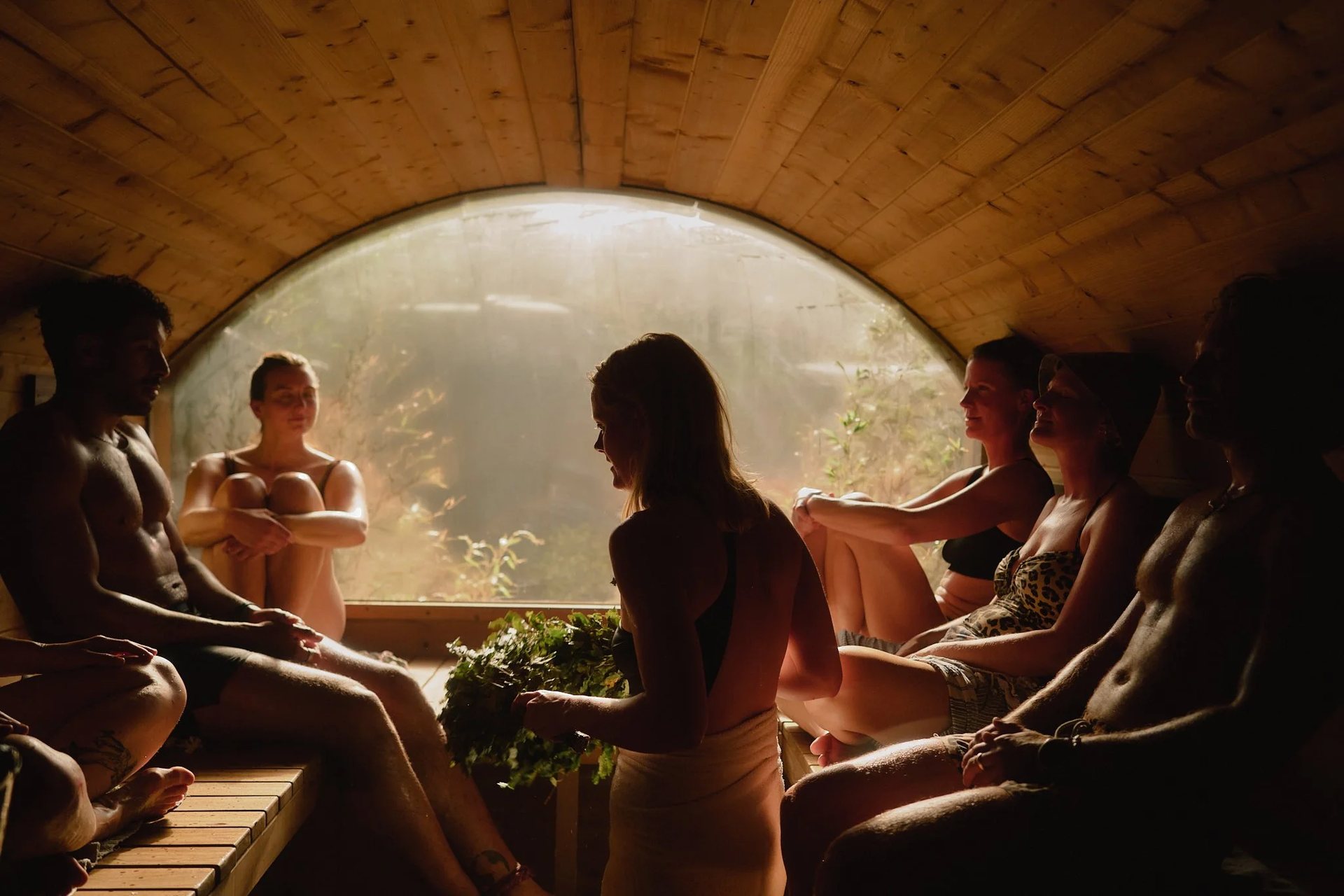
Bathers at Community Sauna Baths in the UK, where founding stewards Polly Wilson and Charlie Duckworth work. Photo: © Community Sauna Baths.
A charter written by public sauna operators in four countries arrives in Oslo this week, and it asks cities and investors to treat public sauna as social infrastructure. Sauna for All posted the Public Sauna-Bathing Charter online on Sunday and formally launched it in Oslo on Wednesday, "on the eve of the XIX International Sauna Congress," as its launch post puts it. The congress opens today at Oslo City Hall, and on Saturday morning Becky Pelkonen, who founded Sauna for All, opens the Global Sauna Culture stage with a talk titled "Sauna as Common Good."
The timing was deliberate. "We launched at the International Sauna Congress because this is a global conversation that needs to happen alongside sauna's growth," Pelkonen told SaunaNews by email on Thursday. "The Charter gives operators, cities and communities shared principles for growing sauna responsibly."
The charter sets out how a public sauna should be priced, run and governed. It isn't a certification, a technical standard or an audit. Signatories pick the principles that fit their work, write down how they'll put them into practice, and get checked on later. As of Thursday, 27 have signed, from 11 countries. Four are in the United States, and one of them is an operator.
Key Facts
- Document: The Public Sauna-Bathing Charter, version 1.0, dated August 19, 2026
- Launch: Posted online September 20; formally launched in Oslo September 23, the eve of the congress
- Organization: Sauna for All, run by volunteers and founded by Becky Pelkonen of Kamu Sauna in British Columbia, with nine founding stewards from the UK, Ireland, Canada and Mexico
- Principles: Ten, in four groups: Practice, Keeping, Tending and Stewardship
- Signatories: 27 in 11 countries as of September 24, per the public list
- Cost to sign: Free. New signatories need a reference from an existing one
- Review: The founding stewards review applications in two to four intake rounds a year. The first round is open now
- In Oslo: Pelkonen speaks Saturday, September 26, at 9:30 a.m. local time, and joins a 3:30 p.m. panel
What makes a sauna "public"
The charter's working definition is the part operators will argue about. A public sauna-bath, in the charter's FAQ, is one that offers published public sessions people can attend on their own, "without needing an overnight stay, membership in a particular group, or the purchase of another product or service." Memberships and private hire can run alongside those sessions. Ownership doesn't matter: municipal, nonprofit, cooperative and commercial saunas can all qualify. "What makes a sauna-bath public is access, not ownership," the FAQ says.
That leaves out saunas open only to members, hotel guests or private groups, which can't sign for now. Sauna for All puts it this way: "An amenity serves its guests. A public sauna-bath serves its public." By that test, a bathhouse that sells memberships and also sells drop-in sessions qualifies. A members-only club does not.
The fourth principle, Public Good Before Private Gain, reads: "Profit may serve that mission, but never override it." The launch post is plain about what that doesn't mean. "Access before profit does not mean access without cost," it says. "It does not ask anyone to run at a loss."
What signatories are promising
The charter leaves the commitments to each signatory, and the published ones range from concrete to general. The specific ones read like line items:
- Community Sauna Baths, the London community interest company that runs NHS-linked social prescribing sessions: 4% of turnover to fund access and inclusion, and universal accessibility designed into every new site.
- Löyly Floating Sauna in Kelowna, British Columbia: working to open a community sauna social enterprise by 2027, with sliding-scale pricing from the start and floating sauna revenue helping pay for affordable access.
- Kotisauna in Toronto: prices low enough for regular visits to become a routine, plus active outreach.
- SaunaGlo and Willamette Sauna Festivaali, the one US operator on the list: expanded inclusivity programs, including training to support neurodivergent guests and people with invisible disabilities.
Oslo Badstuforening, which co-hosts the congress's Floating Sauna Night on Friday, signed with a one-line promise to keep working for its vision of "Sauna to the people!" with "increased strength." The other three US signatories are an individual advocate and two publications.
There's no routine audit or inspection behind any of it. The charter runs on self-reporting and future check-ins, and the founding stewards can revoke a signature by consensus if a signatory's practices cause "serious harm to bathers, communities, or the traditions the Charter seeks to honour." Signatories can say they've signed. They shouldn't call themselves certified, accredited or endorsed.
Who wrote it
The charter came out of the "Sauna for Society" workshop at the World Sauna Forum in Jyväskylä, Finland, in June, where it was introduced in draft.
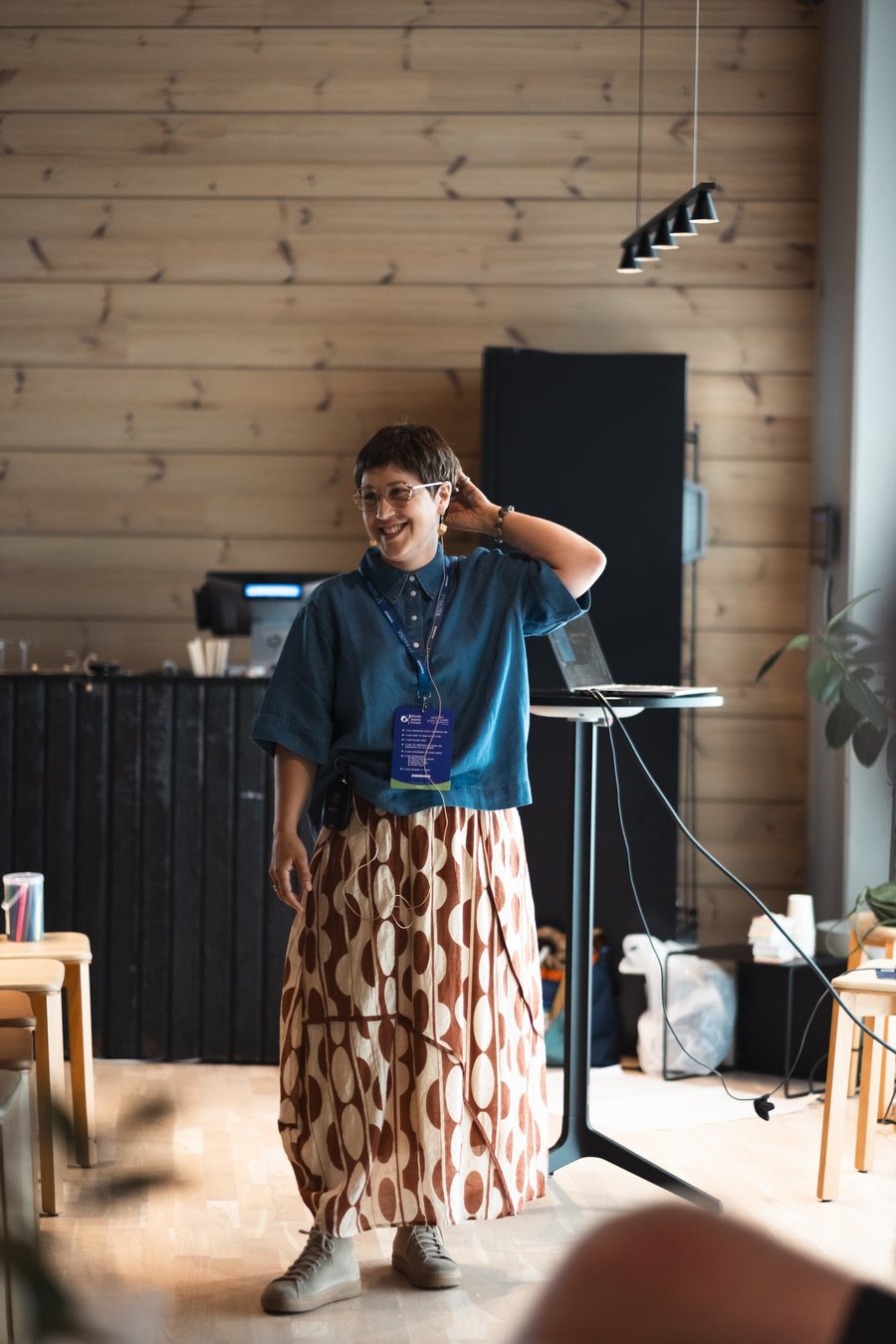
Pelkonen, a doctoral researcher at the University of Eastern Finland who also works with Sauna from Finland, shaped it with nine founding stewards from the UK, Ireland, Canada and Mexico, who became its first signatories. Most of them run public saunas:
- Polly Wilson and Charlie Duckworth, Community Sauna Baths (UK)
- Freddie Mehigan, Community Sauna Network (UK)
- Ian Whelan and Steve Crosbie, Fad Saoil Saunas (Ireland)
- Juho Pelkonen and Niamh Murphy, Kamu Sauna (Canada)
- Jason Wong, Kotisauna (Canada)
- Azar Eskandarpour, Humans Who Bathe (Mexico)
Author and historian Mikkel Aaland and Finnish folklorist Dalva Lamminmäki advised, and Sauna from Finland founder Carita Harju gave advisory support. Ireland, where Fad Saoil operates, has built 242 independent saunas in five years, with sessions that generally run $17 to $35.
The charter is also narrow about the word itself. Its FAQ defines sauna-bathing around löyly, water poured on hot stones, as a practice rooted in Finnish, Baltic-Finnic and Nordic traditions, and names hammam, banya, jjimjilbang and temazcal as separate traditions with their own names. "When every heated room is called a sauna, distinct traditions blur," the launch post says. The congress program has a Friday panel with a similar premise: "When everything is a sauna, nothing is a sauna."
Pelkonen ties that to growth. "As sauna-bathing moves further from the places and traditions that have carried it, cultural respect cannot be an afterthought," she said. "Growth brings a responsibility to understand what we are borrowing, who has stewarded it, and what we give back."
Where it shows up in Oslo
Public and community sauna runs through the congress program, and the charter's authors are on several of its stages:
- Friday, 9:40 a.m.: Robert Hammond, president of Therme Group US, on "The New Social Infrastructure: Reimagining Connection Through Bathing Culture."
- Friday, 11:00 a.m.: Bjørnar Skaar Haveland of Bergen's Laugaren community sauna and Erlend Klette of the Bergen practice Lokalkontoret on how grassroots saunas become "social infrastructure worth investing in," followed at 11:30 by a panel on the blessings and limitations of nonprofit saunas with Duckworth and Oslo Badstuforening's Ragna Marie Fjeld.
- Saturday, 9:30 a.m.: Pelkonen, "Sauna as Common Good: How the Boom Can Become a Regenerative Force For Communities Across the Globe," followed by Aaland on Sauna Aid.
- Saturday, 11:30 a.m.: Wilson and Duckworth present their evaluation of an NHS-linked community sauna program, and at noon researcher Rachael McGrath, a signatory, presents her study tying sauna's mental health benefits to ritual and social connection. Pelkonen moderates the public health panel that follows.
- Saturday, 3:30 p.m.: "Sustainable sauna boom: How to keep sauna hot forever," with Pelkonen and Hammond, moderated by Aaland.
The full schedule is on the congress site.
What it means for operators
The launch release makes the growth case with British Sauna Society figures: UK public sauna sites went from about 45 in early 2023 to 147 by early 2025. Charlie Duckworth of Community Sauna Baths, a founding steward, said in the release that the mix of owners is changing. "In the UK it's been led by grassroots operators, but that's shifting as money moves in, and this Charter is a big step toward preventing the dilution of what makes public sauna special."
The charter is written for city halls and funders as much as for operators. Its tenth principle asks local and regional government to support public sauna "in planning, regulation and funding," and asks for investors "who value it as a public good, not a private bet." The charter leaves technical detail to local codes. In the US, where no operator-level standard exists, that means the charter is a set of values to point to in a meeting with a city or a funder. It doesn't tell anyone how to run a heater.
Pelkonen pointed to the US directly. "Sauna is expanding rapidly into new markets, cities and communities, including across the US," she said. "The Charter exists to make sure we grow more than just an 'industry,' offering shared values that protect access, living culture and the public value sauna can create."
For a US operator that sells drop-in sessions, signing is free and needs a reference from an existing signatory, and there are now four in the US who can give one. The organizers say the questionnaire takes 15 to 30 minutes and doesn't save as you go, so draft the commitments first. Sauna for All takes questions at hei@saunaforall.org.
Update, September 24, 2026: This story now includes comments from Becky Pelkonen, figures and a quote from Sauna for All's launch release, the charter's formal launch date of September 23, and photographs supplied by Sauna for All.
Arlene Scott
Senior Wellness Correspondent & Hospitality Consultant
Arlene Scott brings over fifteen years of reporting and consulting experience across energy infrastructure, sustainable design, and thermotherapy-focused hospitality.
Full byline
Arlene Scott is a Senior Wellness Correspondent for SaunaNews.com, bringing over fifteen years of experience at the intersection of energy infrastructure, sustainable design, and thermotherapy. Her work focuses on the physiological benefits of passive heat therapies and the sustainable integration of sauna culture into modern wellness routines.
Arlene's background is rooted in the clean energy transition. She was a founding writer at MicrogridMedia.com, where she covered the technical and economic viability of desalination projects, microgrid deployments, and distributed renewable energy systems. During the mid-2010s, she was a regular contributor to Greentech Media (GTM) during its independent era — prior to the Wood Mackenzie acquisition in 2016 — reporting on the early integration of thermal energy storage and sustainable infrastructure.
Transitioning her focus from macro-energy systems to human-scale wellness, Arlene now applies her technical background to the hospitality sector. She operates as an independent consultant, advising boutique hotels and eco-resorts on the design, energy efficiency, and historical authenticity of commercial sauna and thermal spa installations. Her consulting work ensures that high-end wellness facilities balance traditional Nordic bathing principles with modern sustainable engineering.
Arlene holds a specialized certification in Applied Thermic Wellness from the Nordic Institute of Passive Heat Studies (NIPHS) and is a recognized associate member of the International Sauna Association (ISA). When she isn't reviewing the latest innovations in infrared technology or consulting on a new resort project, Arlene can be found tending to her own traditional wood-fired sauna in the Pacific Northwest. You can read her complete archive of essays on energy, wellness, and sustainable living at www.arlenescott.com.