
Mikkel Aaland Brings Sweat Back With New Naked Sweat

By Arlene Scott
Senior Wellness Correspondent & Hospitality Consultant
- Published
- Reading time
- 5 min
SaunaNews is published by SaunaShare, Inc., which also runs SaunaShare.com and SaunaMarketplace.com, where we sell many of the products we write about. Assume that experience shapes what we cover and what we don't. Who owns SaunaNews · The ownership announcement
Nearly half a century after Sweat mapped the world’s hot rooms, Aaland is pairing a restored facsimile with new photography and essays. The two-volume set launches at the International Sauna Congress in Oslo on September 24, and in a new interview he explains the cover shoot, the fifty-year wait and what the sequel argues.
In this story4 sections
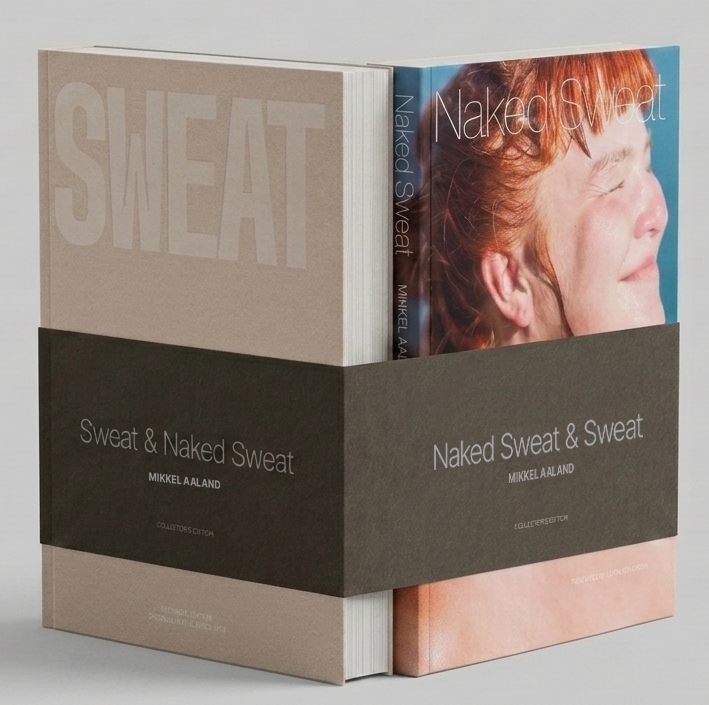
Mikkel Aaland’s Sweat is coming back to print. The 1978 cult classic returns September 24 in Oslo beside his new book, Naked Sweat, in a limited two-volume Collector’s Edition from Bathhouse Books and Therme Art.
That makes this more than a reissue. One book catches global bathing culture when Aaland was a young photojournalist roaming from Finnish saunas and Russian banyas to Japanese mushi-buro, Mexican temescals and Native American sweat lodges. The other finds him nearly half a century later, looking at what survived, what changed and why everybody suddenly seems to be building bathhouses again.
The set contains two softcover volumes. Sweat is a digitally restored facsimile of the original. Naked Sweat brings together new photography, essays and reflections, with a foreword by artist and WET magazine founder Leonard Koren. As of September 17, Bathhouse Books has still not published the page count, dimensions or size of the limited print run.
The book that kept sweating
Aaland spent three years traveling and photographing bathing traditions before Capra Press published Sweat in 1978. Its full title was wonderfully unwilling to choose a niche: Sweat: The Illustrated History and Description of the Finnish Sauna, Russian Bania, Islamic Hammam, Japanese Mushi-Buro, Mexican Temescal, and American Indian & Eskimo Sweat Lodge. The original ran 252 pages and ended with instructions for building a sauna or sweat bath.
It was scholarship, road book and how-to manual sharing one towel. A recent MIT Press history of countercultural bathing called Sweat the standard back-to-the-land bathing manual of 1978, praising the mix of research, first-person experience and humor. The book has stayed available digitally, and much of it can still be read on Aaland’s website, but the print edition has been out of circulation for years.
Its timing now feels almost suspiciously good. In 1978, Aaland had to explain that sauna was only one branch of a much older global family of hot rooms. In 2026, American operators are borrowing from those traditions to open social saunas, bathhouses and contrast-therapy clubs faster than the language can keep up. The old book supplies the long memory. The new one gets to ask what this revival is actually reviving.
Why he waited fifty years
Aaland answered the obvious question in a long interview with Jane Withers of Culture of Bathe-ing, published September 16. The newsletter is presented by Therme Group, which the post says also supports the book. Offers to reprint Sweat arrived for years and never felt right, he said, because he was always on to the next book. He put much of the material online instead and had “a lot of fun” watching used copies “go for $3,000 a copy.” Work on Naked Sweat changed his mind: put the two books side by side, he told Withers, and the contrast does the work.
The interview also fills in the story behind the cover. The sweaty group with its visible nudity was photographed in a public sauna in Berkeley with friends from the communal house Aaland lived in, one of his brothers at the back. He had been financing the book by shooting portraits at county fairs from a mobile studio with a darkroom in the back, and his publisher suggested using the same quick-portrait approach for the cover. The book still sat in bookstore windows, which Aaland doubts a store would risk today. A more revealing photograph of his brother inside the book was cropped for the second printing.
The research took longer than he planned. Aaland went to Norway to look after his grandfather, crossed to Finland expecting a short project, and ended up in a student apartment in Helsinki for close to a year, mostly in libraries, before setting out to find the baths he had read about. In Japan he documented kiln baths, the dome-shaped kama-buro and cave baths around the Seto Inland Sea, a hot-air tradition he says the Japanese had nearly forgotten while the imported Finnish sauna gained ground. He was later told the book opened Japanese eyes to their own sweat culture. For the sweat lodge chapter he asked Native American leaders what he needed to do to earn their approval before writing about his time with the Navajo and the Oglala Sioux.
A new book, not a victory lap
Naked Sweat: The Art and Soul of Sauna and Global Bathing Culture is billed as a contemporary companion rather than an update. That distinction matters. Revising Sweat into a tidy 2026 guide would erase the thing that makes it valuable: it shows what one curious traveler could see before infrared cabins, Instagram bathhouse launches and the modern sauna business existed.
Aaland did not exactly leave the subject alone. He went on to host the seven-part Perfect Sweat documentary series and co-founded Sauna Aid, which has delivered portable saunas in response to war and natural disasters. Naked Sweat brings that later life back into conversation with the book that started it.
Withers describes a far more visual book than the inky black-and-white original: nudes with sweat running down their backs, unguarded faces, and photographs taken behind the scenes of Perfect Sweat, the 2024 series in which Aaland went back to many of the places he visited half a century earlier and found many of them flourishing. In the introduction he writes: “A lot has changed since I wrote Sweat. The world is more stressed than ever and in desperate need of experiences like the sweat bath that nourish both body and soul.” His explanation for why the sweat bath keeps surviving across continents is a simple one. He frames it as a sustainable cultural system resting on three interdependent pillars: the physical, the social and the spiritual.
Therme Group has also released a short film, Wet & Sweat, in which Koren and Aaland talk through the two books and why they belong together. It is embedded in the Culture of Bathe-ing post.
How the preorder works
The Collector’s Edition is priced at €120, about $138 at September 17 exchange rates. The launch preorder is for attendees of the International Sauna Congress in Oslo, which runs September 24 through 26, and copies are collected there. The Congress’s own listing set an order-by date of September 9, which has passed. As of September 17 the Bathhouse Books page still shows the pickup edition for preorder with no cutoff of its own, and still asks readers who cannot attend to contact the publisher before the Congress about alternative arrangements. Aaland will launch the set and speak at the Naustet Sauna Book Café.
Everyone else waits a little longer. Bathhouse Books says worldwide ordering through the publisher and selected booksellers opens after the Congress debut, and the Culture of Bathe-ing post says details on copies for general sale will follow.
Collector’s editions can become an excuse to add a slipcase, a numbered card and $80 to a familiar book. This one has a better reason to exist. It puts the document that helped a generation rediscover sweat bathing beside the account of what Aaland found when he kept looking.
Update, September 17, 2026: this article was first published August 20. It now includes material from Jane Withers’ September 16 interview with Aaland in Culture of Bathe-ing (the cover shoot, the fifty-year wait, the Japanese kiln baths and the argument of Naked Sweat), the book’s full title, the Wet & Sweat film, and the state of the Oslo preorder after the Congress’s September 9 order-by date.