
Saunas Are About to Outnumber Sento in Japan, a SaunaNews Analysis of Government Records Finds

Research, standards and the sauna industry
- Published
- Reading time
- 7 min
SaunaNews is published by SaunaShare, Inc., which also runs SaunaShare.com and SaunaMarketplace.com, where we sell many of the products we write about. That experience may change what we write about and what we don't. Who owns SaunaNews · The ownership announcement
Licensed sauna baths rose 49% in four years, to 2,031, while sento fell to 2,730. If the pace holds, saunas pass sento by March 2027.
In this story7 sections
- 01Tokyo added 107 sauna baths in four years
- 02Japan’s sento count is down 70% since 1997
- 03The permit rules loosened for small saunas
- 04Small saunas are going into homes and hotel rooms
- 05Harvia set out to become Japan’s top sauna brand
- 06Japan has more saunas and fewer sauna-goers than in 2019
- 07What a US operator can take from Japan’s numbers
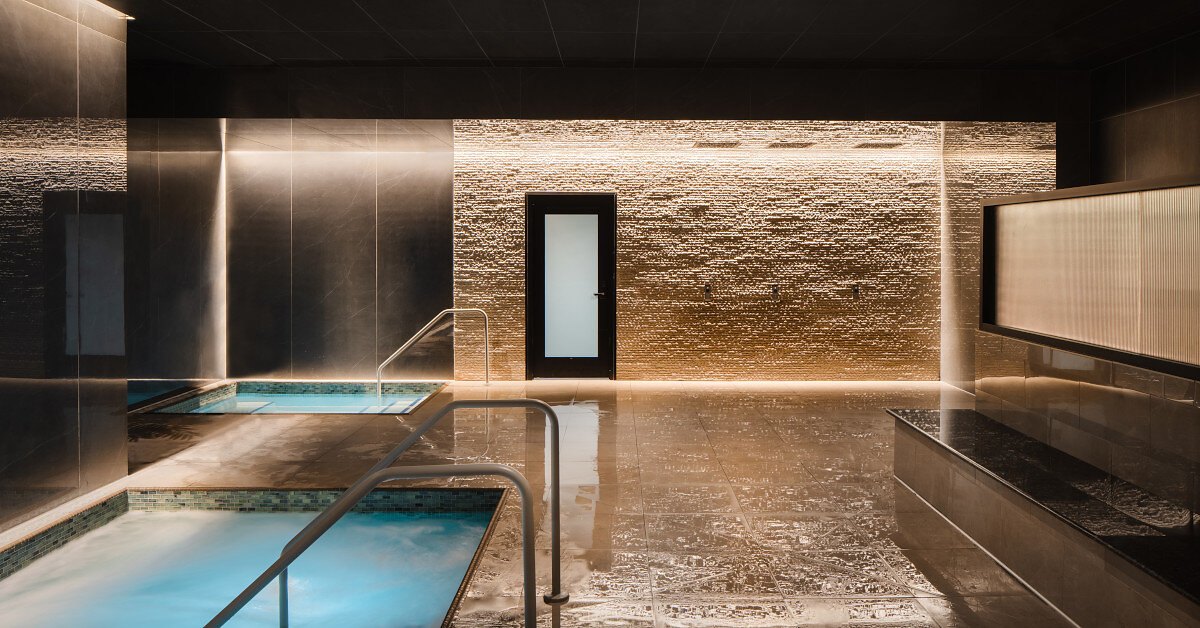
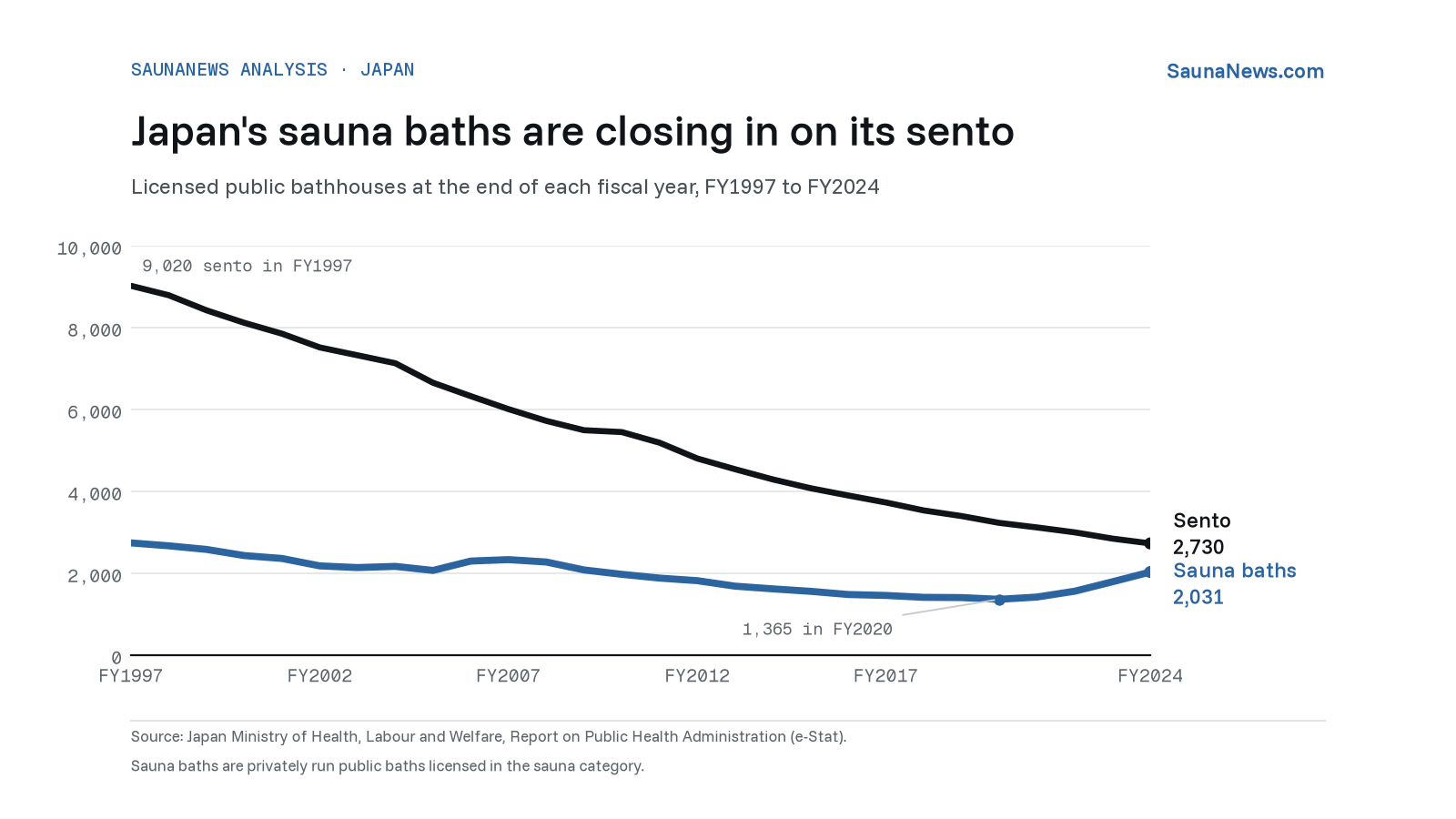
Japan had 2,031 licensed sauna baths at the end of March 2025, up 49% from 1,365 four years earlier, according to a SaunaNews analysis of 28 years of records from the Ministry of Health, Labour and Welfare. Over the same four years, the country’s sento, the neighborhood public baths, fell from 3,231 to 2,730.
The gap is now 699. In the 2024 fiscal year alone, Japan added 238 licensed sauna baths and lost 117 sento. If that pace holds, sauna baths will outnumber sento before the end of the 2026 fiscal year in March 2027. That is a SaunaNews projection, not a ministry forecast. Japan’s fiscal year runs April to March, and every count here is the number of licensed businesses on March 31.
The turn is recent. Licensed sauna baths fell in most years from 2,742 in FY1997 to the FY2020 low. In December 2019, a ministry paper on the bath business said sento and sauna baths had each shrunk about 35% in 10 years and that “nothing has halted the decline” (SaunaNews translation). The ministry paper was reference material for the ministry’s advisory council on hygiene businesses. Five years later, the sauna count is the highest since FY2009.
Tokyo added 107 sauna baths in four years
Sauna baths rose in 45 of Japan’s 47 prefectures between FY2020 and FY2024. Mie and Nara held level, and none fell. Tokyo went from 211 to 318, the largest gain. Nagano, Aomori, Aichi and Shizuoka each roughly doubled their counts.
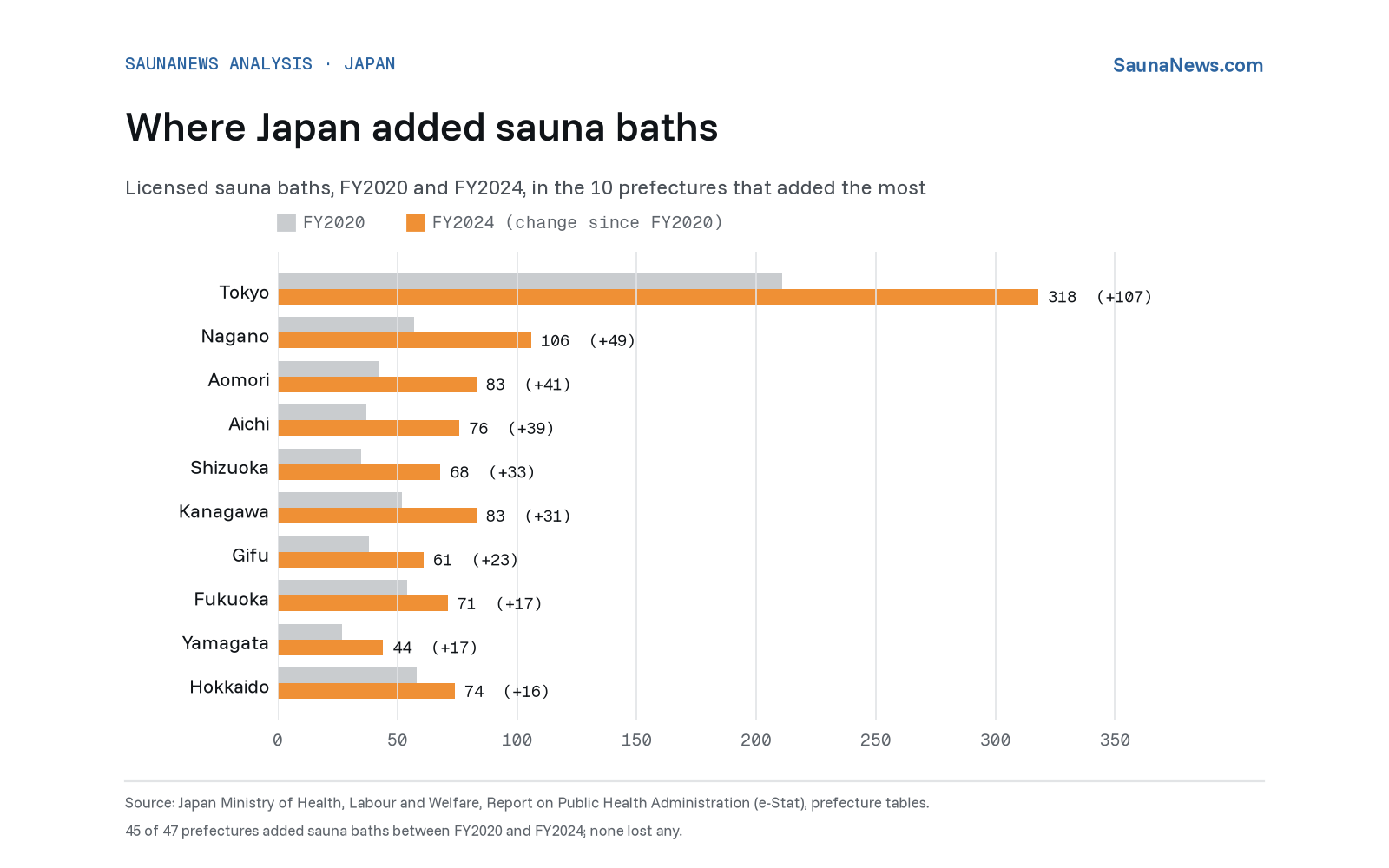
Aomori, at the northern tip of Japan’s main island, sits near the top of both counts. It has 22.4 sento for every 100,000 residents, 10 times the national rate of 2.2, and 7.1 sauna baths per 100,000, against 1.6 nationally. Its sento count has fallen 29% since FY1998, against 69% nationwide over the same years.
Japan’s sento count is down 70% since 1997
Japan had 9,020 sento in FY1997. The ministry’s long-run summary table puts the count at 16,866 in 1977, the first year it lists sento separately. Tokyo had 429 at the end of FY2024, down from 500 in FY2020.
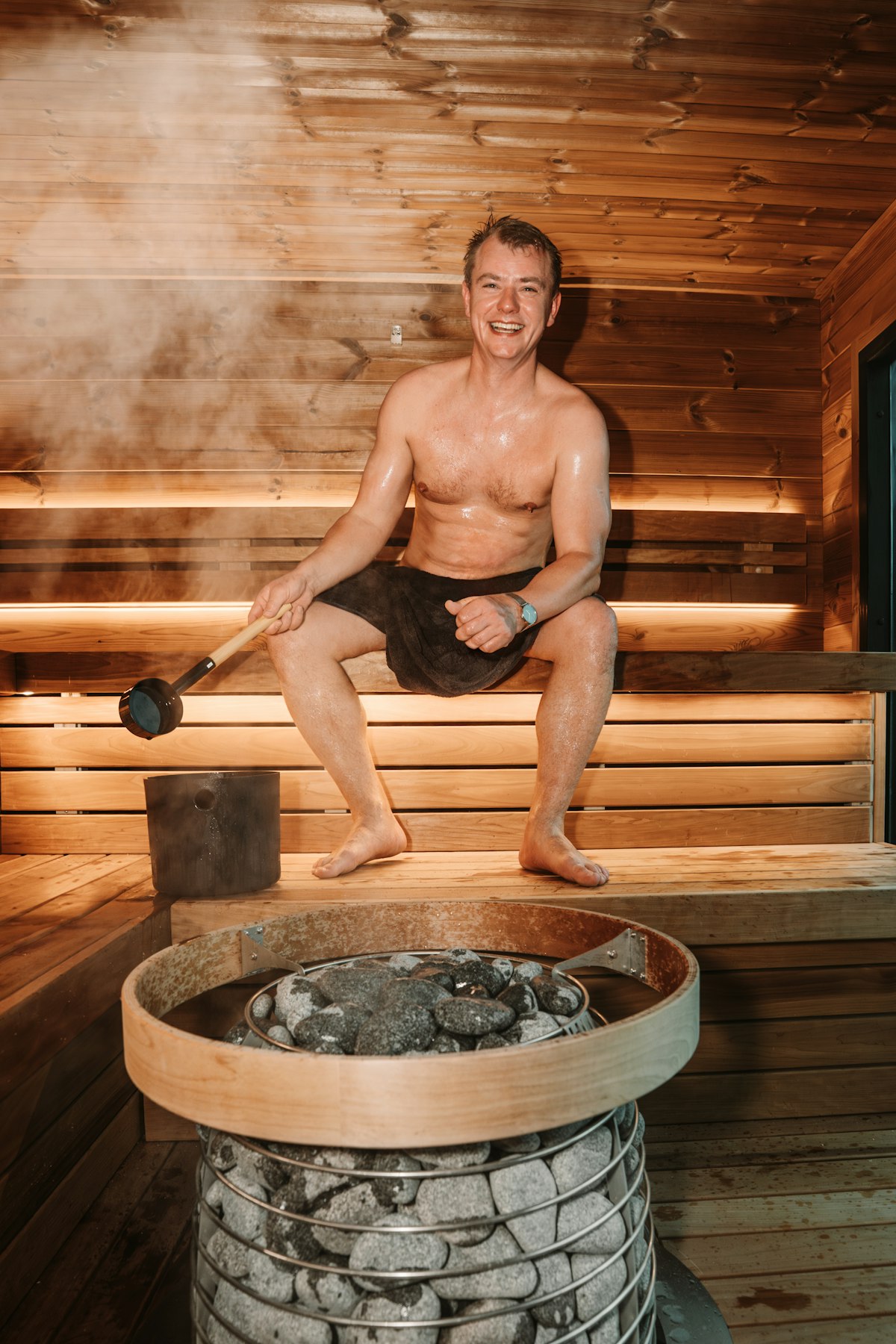
The sento still open are earning more and keeping less. Credit research firm Teikoku Databank, which tracks bathhouse operating companies, reported in April that sento operators’ sales would reach their highest level since the pandemic in FY2025, more than 30% above FY2020, helped by higher admission prices and younger customers and families who came for the saunas. Sento that put in automatic löyly systems (the steam from water on the stones, here poured by a machine) and barrel saunas drew visitors from farther away. The same operators’ combined profit was on track to halve from FY2024, when one in four lost money. Higher heavy-oil and labor costs did the damage, and prefectures cap what a general sento may charge for admission, a squeeze SaunaNews covered when the oil shock hit in the spring.
Towns are also leaving the bath business. Publicly run baths of all kinds fell by 460 in four years, to 3,361 at the end of FY2024, according to the ministry tables.
The permit rules loosened for small saunas
Japan licenses sauna businesses under its Public Bath Act, and each prefecture and large city writes its own standards. In October 2023, a study group convened by the national public bath federation with ministry funding surveyed all 157 local governments that issue those permits, and every one answered. All 157 had sauna standards. Of those, 118, or 75%, allowed exceptions, including smaller changing rooms and washing areas for small private-room saunas and mixed-gender use in swimwear, according to the group’s March 2024 report, and the Japan Sauna-Spa Association and the Japan Sauna Society both sat on it.
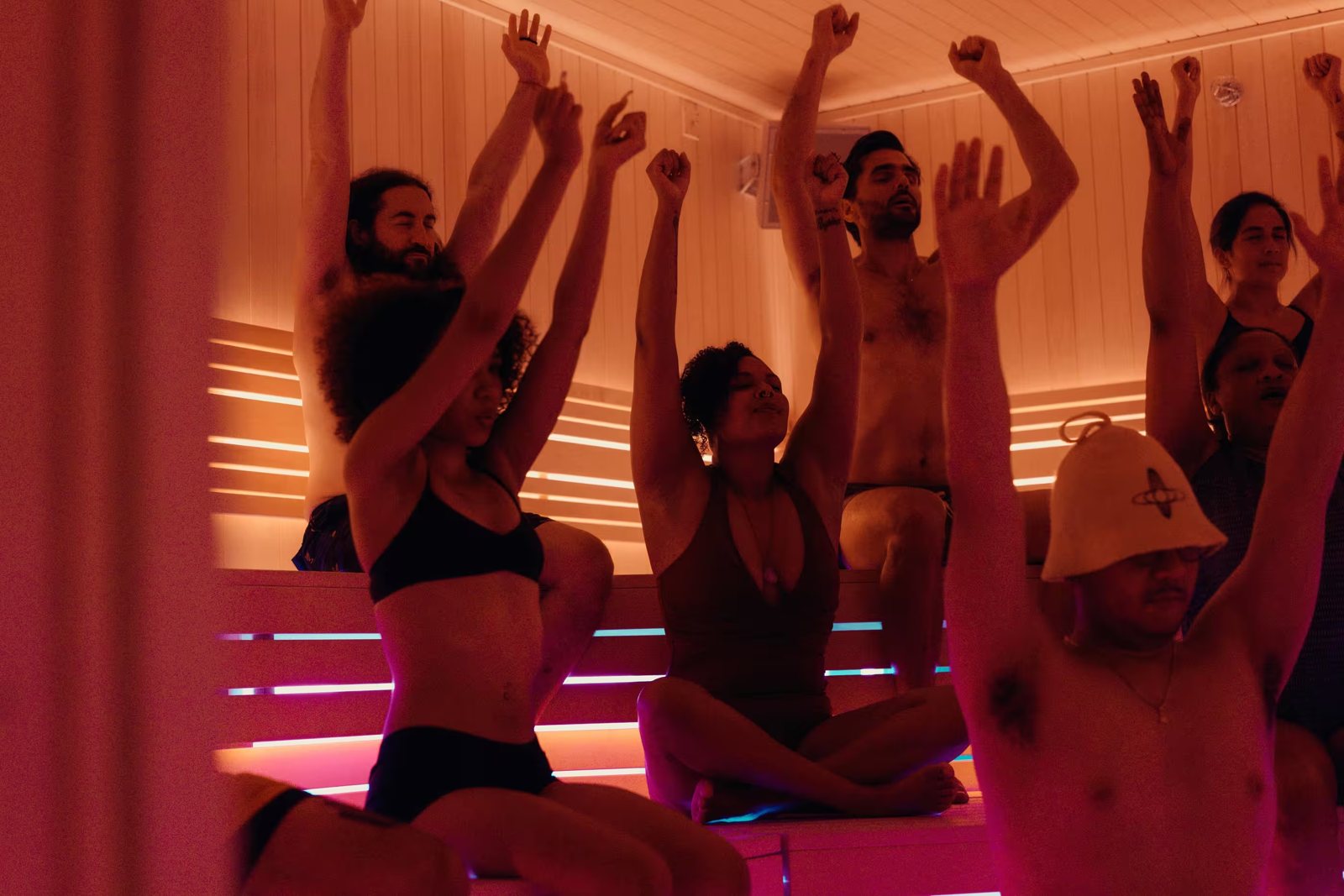
On April 5, 2024, the ministry sent those practices to every prefecture and permitting city in a formal notice so others could apply them. The ministry’s tables don’t say what kind of sauna each new license covers, so the count can’t show how much of the rise came from private-room saunas or from sento adding hot rooms. Tokyo’s newest formats run to two-hour private sessions in themed rooms.
Small saunas are going into homes and hotel rooms
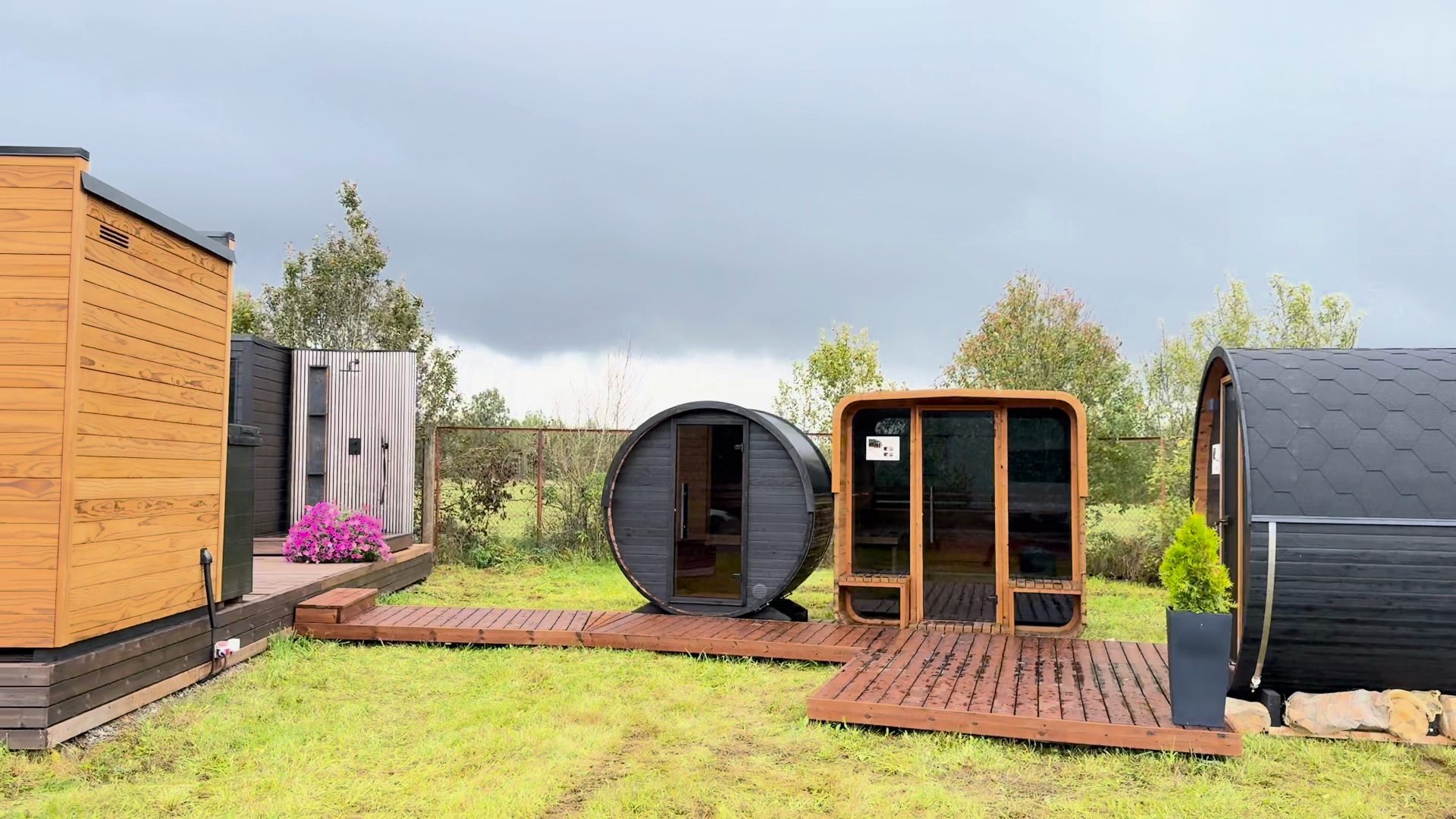
The ministry doesn’t count saunas in private homes or in hotel guest rooms, because neither is a public bath. Both are growing, according to the companies selling them. In August 2024, the Japanese importer totonoü said it had sold more than 500 Nordic cabin and barrel saunas since 2021, with installations in all 47 prefectures, and that more homeowners were adding a cabin sauna when they build or renovate. Guest rooms with their own saunas were on the rise too, the company said in a release marking the milestone.
Space sets the size. Estonian maker Auroom sells in Japan through totonoü, its exclusive distributor there, which helped Auroom develop the Cala Mini. It’s a one-person cabin about 37 inches square and 6.7 feet tall, which totonoü launched in September 2022 as sized for Japanese condominiums and city rentals, and it heats to 230°F and takes löyly. According to totonoü’s January 2025 release, the Kobe Portopia Hotel and NOT A HOTEL’s Kitakaruizawa Base have installed the Mini, and the two companies developed the latest Cala Glass together. Sold in the US as the Cala Glass Mini, the same cabin has done well with American buyers too, and SaunaNews’s sister store carries Auroom’s Cala sauna models.
Hotels charge for the privacy. In 356 Japanese hotels that sell rooms both with and without a private sauna, the sauna rooms were priced a median 32% higher for stays in mid-May 2026, according to an analysis of online rates by Metro Engine Research for the hotel trade site HotelBank.
Harvia set out to become Japan’s top sauna brand
Harvia signed Bergman, a Tokyo company, as its exclusive distributor in Japan in October 2021, with a plan for 50 Harvia Sauna & Spa showrooms within three years. Japan has “a mature spa culture” and “an evolving sauna market,” then-CEO Tapio Pajuharju said when the distribution deal was announced, adding, “Together with Bergman we can challenge the market leader.”
Bergman opened 15 showrooms in its first year. In March 2023 the two companies agreed to form a joint venture, 51% owned by Harvia, and Pajuharju said “our aim is to become the number one sauna brand in Japan in the long run.” Bergman CEO Seiji Kasama said, “The sauna culture in Japan is enjoying a boom,” according to the joint venture announcement, which said Harvia already had a presence in Tokyo, Osaka, Nagoya and Sapporo.
Harvia’s current CEO, Matias Järnefelt, said in the company’s half-year report in August that “key markets such as Japan, China, and Australia demonstrated sustained positive momentum,” even as revenue for Harvia’s Asia-Pacific, Middle East and Africa region fell 4.9%. Bergman is also the Japanese partner of Thermory, under an exclusive deal for its thermally modified sauna wood.
Japan has more saunas and fewer sauna-goers than in 2019
The new capacity isn’t following a bigger crowd. About 16.7 million people aged 18 to 69 went to a sauna at least once in FY2025, down from 28.2 million in FY2019, according to the Japan Sauna Research Institute’s March 2026 survey (日本サウナ総研調べ), an online poll of 10,000 people weighted to the national population. The drop came in FY2021, and the total has stayed between 15.7 million and 17.8 million every year since.
Regulars are what came back. People who go four or more times a month numbered 2.54 million in FY2025, up 35% in a year, though still 24% below FY2019. The survey is an industry estimate, not a government count, and it measures people rather than visits.
What a US operator can take from Japan’s numbers
- Plan the business around regulars. Japan added more than 600 licensed sauna baths while its occasional sauna-goers fell away. The group that grew last year was people who come at least four times a month. Membership, punch cards and the daily-visit price matter more than one-time demand.
- Get the permit classification first. Three in four of Japan’s permitting authorities already make exceptions for small saunas. Ask your health department in writing how it classifies a sauna-only venue, a private-room sauna and a sauna inside a pool or bath before you sign a lease. The rest of that list is in the SaunaNews guide to what bathhouse development actually requires.
- Price an in-room sauna as an upgrade. Japanese hotels that sell rooms with and without a private sauna charge a median 32% more for the sauna room. That gives a US hotel a benchmark to test before it builds.
- Price the fuel before the build. Japan’s sento are adding saunas and still losing money on oil. Put the heating fuel and its price risk into the operating model, not just the heater.
Harvia events
1 event