A Sauna With a Waterfall Inside Wins SATOYAMA TERRACE a Good Design Award

By SaunaShare
Sauna culture and community
- Published
- Reading time
- 4 min
SaunaNews is published by SaunaShare, Inc., which also runs SaunaShare.com and SaunaMarketplace.com, where we sell many of the products we write about. That experience may change what we write about and what we don't. Who owns SaunaNews
The Chiba resort an hour from Tokyo has a 27-seat sauna built around two trees, a 24-seat sauna with a stone waterfall, spring-water cold baths and a $19 weekday day pass.
In this story5 sections
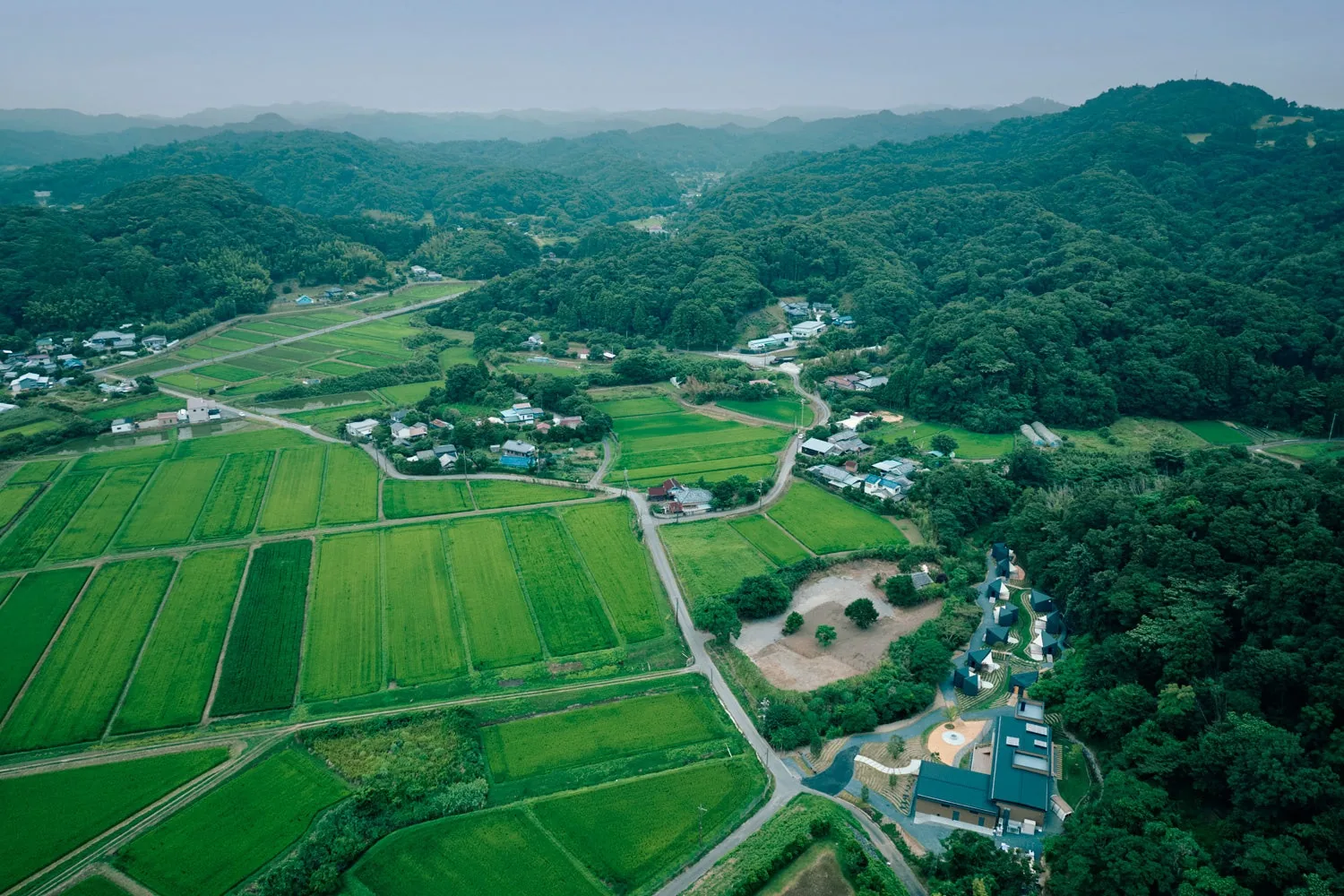
SATOYAMA TERRACE, a sauna and cabin resort in Futtsu, Chiba, about an hour’s drive from central Tokyo, has won a 2026 Good Design Award. The operator, Yokohama retailer Amina Collection, announced the award on October 15 on the resort’s website. It is a standard GOOD DESIGN award, not a Best 100 or Gold Award, and the award entry lists the project as a bath and accommodation facility.
The resort opened its day-use saunas on August 8, 2025, with overnight cabins following on August 20. It is mixed-gender, swimsuits are required, and day visitors need no reservation.
SATOYAMA TERRACE at a glance
- Where Futtsu, Chiba (898-1 Tabara), about 60 minutes by car from central Tokyo
- Saunas two, the Mountain Sauna (27 seats) and the Waterfall Sauna (24 seats)
- Cold water two spring-water baths, one at natural temperature
- Day pass weekdays ¥2,970 (about $19) for 2.5 hours; weekends and holidays ¥3,850 (about $24)
- Hours weekdays 10 a.m. to 10 p.m.; weekends and holidays from 9 a.m.; last entry 9 p.m.
- Stay ten cabins for two to four guests, from about ¥40,000 (about $250) per cabin for two
- Good to know mixed-gender, swimsuits required, no reservation needed for day use
The jury liked how the buildings move wind and water
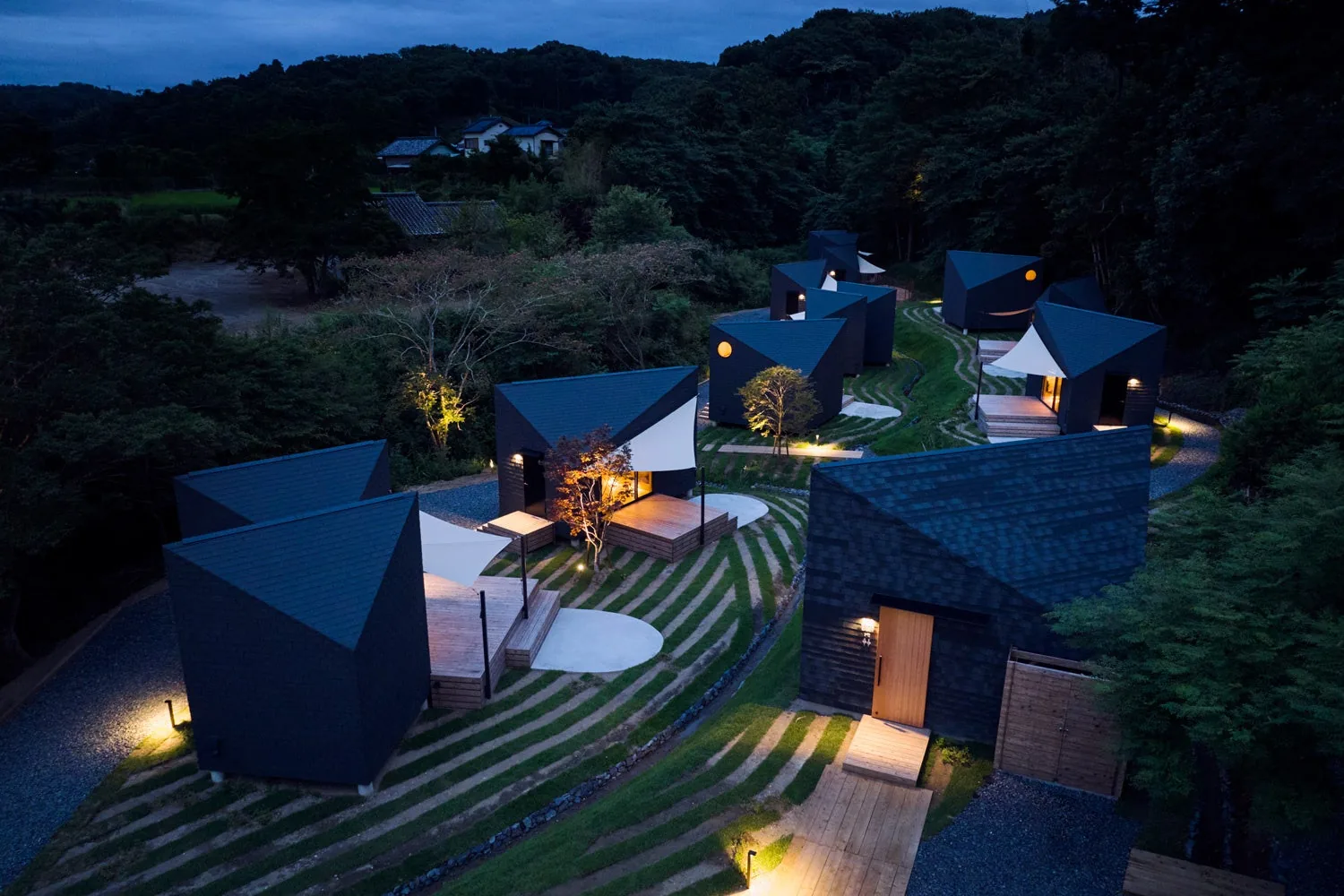
Architect Tatsuro Sasaki Architects designed the project and is credited as its director and designer. PLAT design did the landscape. The jury’s comment, in our translation, says the project treats architecture as “a device that makes the behavior of the environment visible,” with small buildings that guide the flow of wind and water. Instead of building a sheltered place indoors, the jury wrote, the designers put their effort into the outdoor space where guests deal with nature directly.
The entry lists a 2.2-acre site (8,758.94 m²) and one-story buildings with about 7,000 square feet of floor area (648.22 m²), framed mostly in timber with some steel. In the main building, two wooden beams span about 42 feet (12.7 m) over a semi-outdoor space with no columns.
One sauna has two trees in it, the other a waterfall
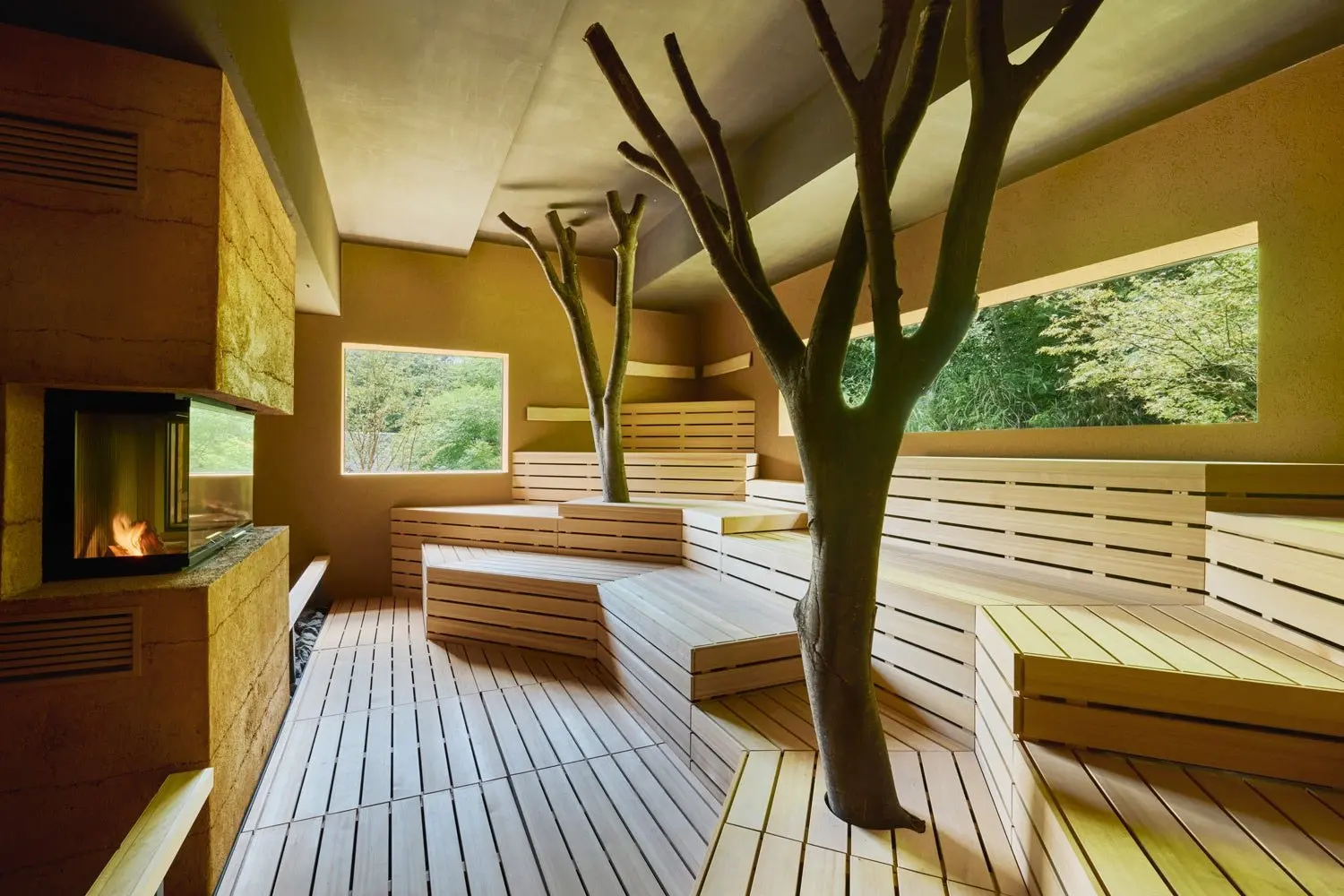
The Mountain Sauna covers about 371 square feet (34.51 m²) and seats 27. The SATOYAMA TERRACE sauna page puts it at about 176 to 185°F (80 to 85°C). Two stoves heat it. A glass-fronted fireplace lets bathers watch a fire, and the trunks of two large zelkova trees stand in the room. According to the booking site, the stoves pour water on their own stones at a quarter past and a quarter to each hour. The resort has not named the heater make.
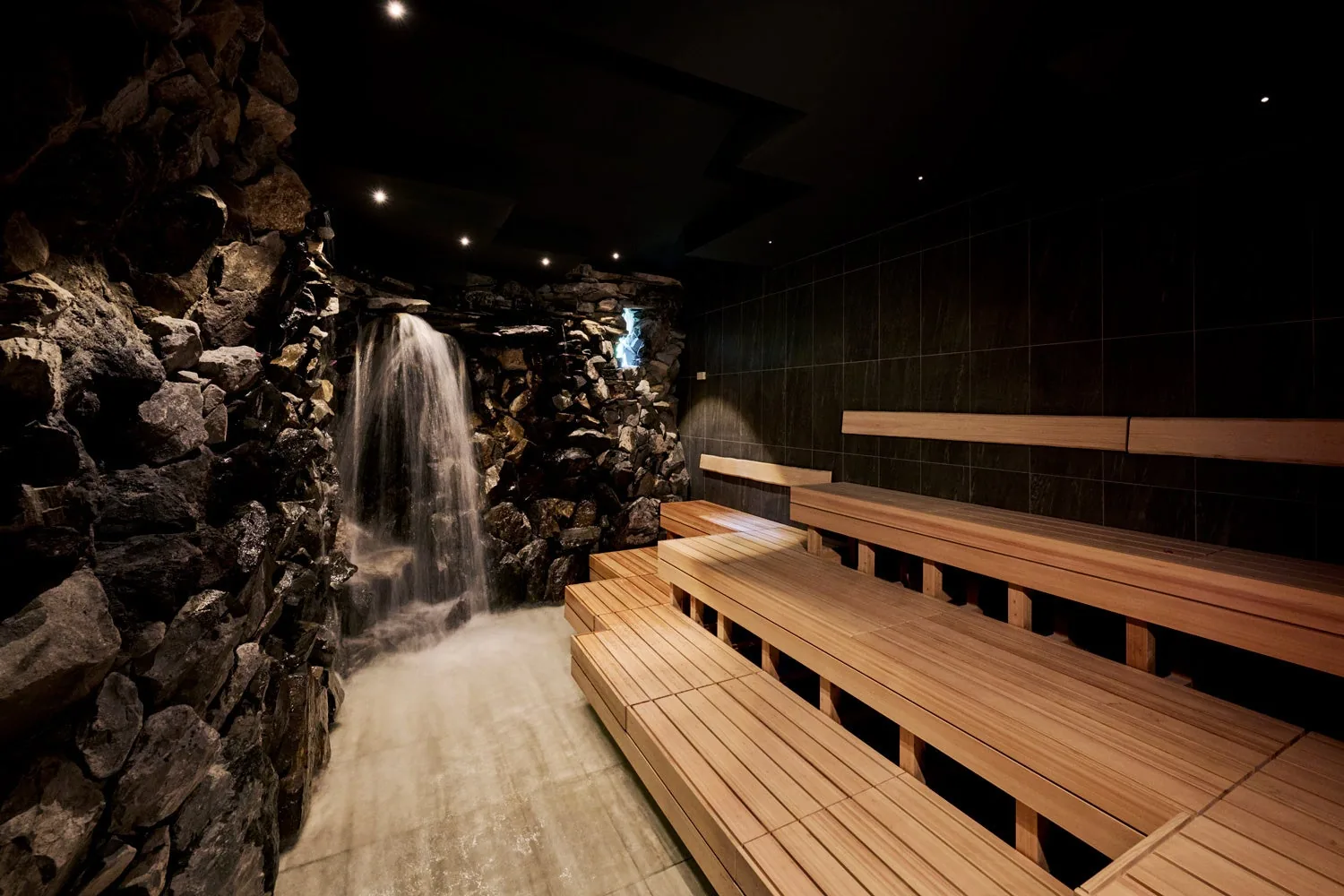
The Waterfall Sauna is about 341 square feet (31.70 m²), seats 24 and holds around 176°F (80°C). Spring water runs down a natural-stone waterfall inside the hot room, and every 30 minutes, on the hour and half hour, the flow surges.
Both cold baths use local spring water
The larger cold bath, the Water of Purification, runs free-flowing spring water at its natural temperature. It seats 20 and, according to the opening release, is about 43 inches (110 cm) deep at its deepest. The resort modeled it on Taki no Fudoson, a local spring. The smaller Water of Healing seats 10 and has wild herbs added. A chiller keeps it at 48 to 59°F (9 to 15°C) in summer, and in winter it becomes a warm bath at up to 104°F (40°C).
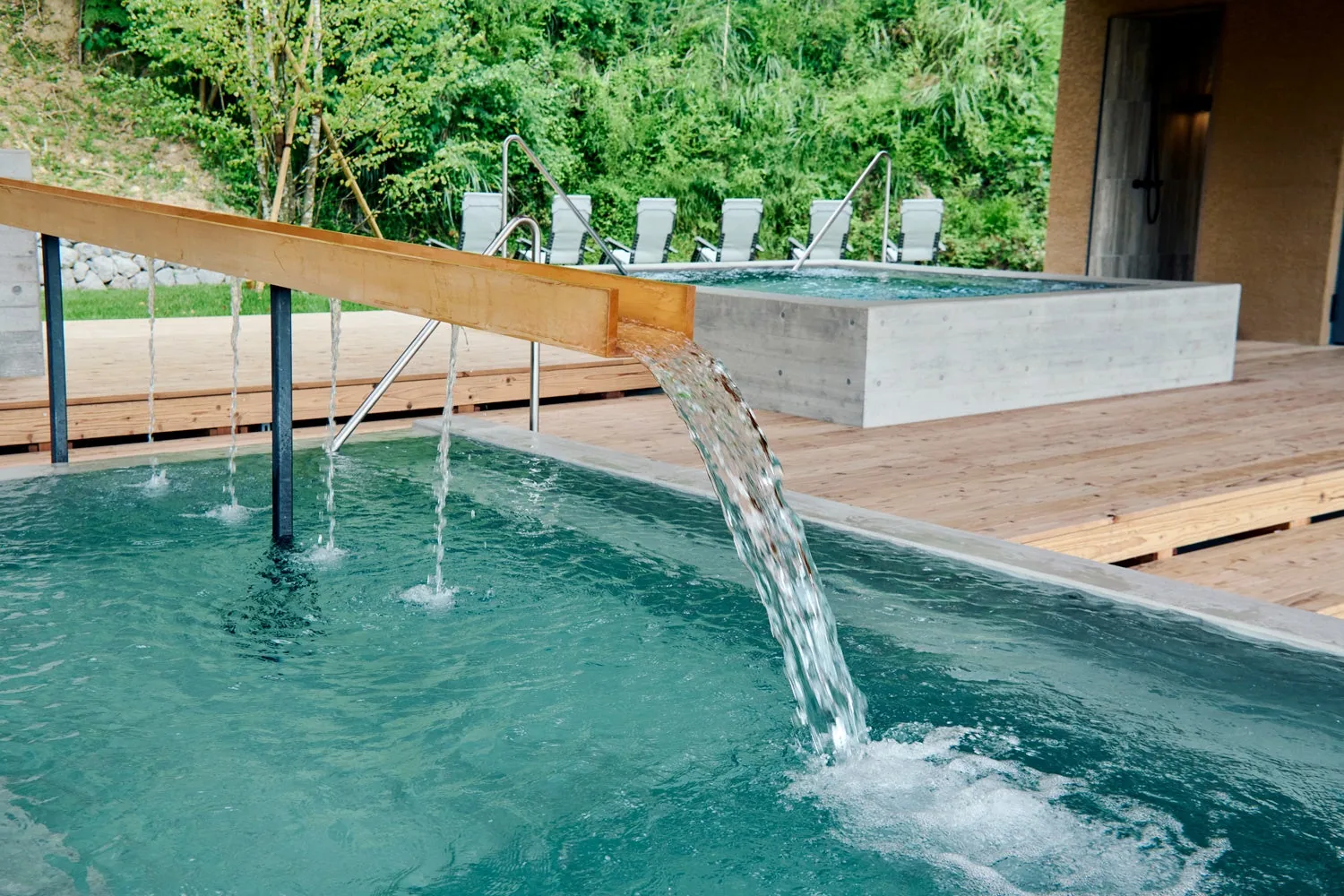
Between rounds, guests rest on a deck under a large roof or in an indoor-style rest tent.
The cabins sit on footings, and there’s no plumbing in them
The 10 cabins are shaped after Mt. Nokogiri, the jagged peak nearby, and sleep two to four. They stand on isolated footings to keep their contact with the ground small. The resort’s concept page says bathrooms and other plumbing are grouped in a separate Water Cabin, so the guest cabins have none. Two cabins have dog runs. Overnight guests pay ¥1,100 (about $7) for unlimited sauna use.
Fireflies are the measure of success, and no counts are published yet
The operator has made a firefly habitat its measure of how well the land is recovering. Staff and local volunteers have dug ditches to manage runoff from the hills, cleared paths for the wind, thinned trees and cut firewood in workshops. Fireflies were seen at the back of the site in 2025, the company said in a May release, and it hopes to see them nearer the cabins. The concept page frames the goal over five to 20 years. No counts or water-quality data have been published.
Amina Collection says about 60,000 people visited in the first year, with more than 5,000 a month now. Its sauna business also runs HARE-TABI SAUNA & INN in Yokohama.
Our count of government records shows licensed sauna baths in Japan on course to outnumber sento, the traditional neighborhood baths, by March 2027. SATOYAMA TERRACE’s award follows another design honor for public saunas this year: the Kuusijärvi smoke saunas in Vantaa won Finland’s Finlandia Prize for Architecture. For a very different take on Japanese sauna design, see Sauna Mother’s womb-themed private sauna in Tokyo.