Finished Canadian Saunas Miss the 50% Tariff List; Their Cedar Cladding Doesn't
CBP's Section 338 list doesn't include 9406.10, the code for a prefabricated wooden building. It does include 4409.10.90, where CBP put the tongue-and-groove cedar in a Canadian sauna kit in 2012. The line isn't assembled versus flat-packed, and four CBP rulings say exactly where it falls.

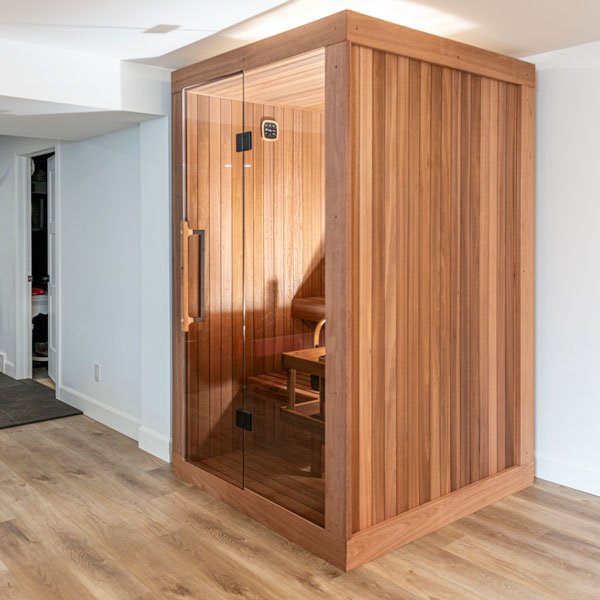
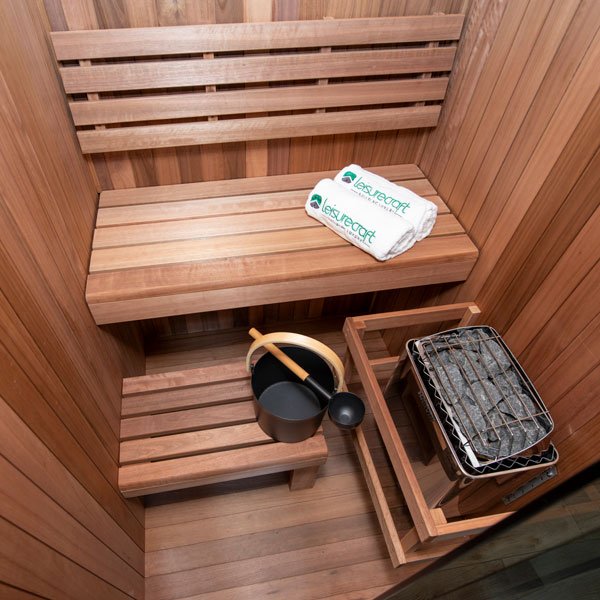
A Canadian-built cedar sauna room. Entered assembled as a prefabricated building it misses the new 50% list; broken into cladding, a door and bench components it does not. Photo: Leisurecraft.
The 50% tariff that hit $20 billion of Canadian goods at 12:01 a.m. Eastern on August 22 does not appear to reach a finished Canadian sauna. It reaches the cedar that sauna is made of, and U.S. Customs and Border Protection has already put that in writing.
The list is six pages long. CBP published it the day before the tariffs went live, and 9406.10.00, the classification for a prefabricated building of wood, is not on it. 4409.10.90 is. That is the subheading for continuously shaped coniferous wood, its ten-digit breakout is named Western red cedar, and it is exactly where CBP told a Canadian sauna importer its tongue-and-groove planks belonged in a 2012 internal advice ruling.
So two shipments a buyer would describe with the same three words, "a Canadian sauna," can now differ by 50 percentage points of duty depending on whether Customs sees a building or a bundle of wood. That is not the same question as whether it arrived assembled, and the difference is where most of the confusion this week is coming from.
What is and is not on the 50% list
- Not on it: 9406.10.00, prefabricated buildings of wood (2.6% general rate, free under USMCA)
- Not on it: 8516.29.00, the subheading CBP uses for an electric sauna heater
- Not on it: heading 7321, wood-burning stoves
- On it: 4409.10.90, shaped coniferous wood, including the Western red cedar statistical line
- On it: 4410.19.00 particleboard and OSB, 4411.13 and 4411.14 MDF, most of heading 4412 plywood
- On it: 4418.21.80 and 4418.29.80, wooden doors and their frames and thresholds
- On it: 9401.69.60 and 9401.91.90, wooden-framed seats and wooden seat parts
- On it: 9403.60.80, other wooden furniture
- On it: 8516.80 electric heating resistors, 9032.10.00 thermostats, 8537.10.91 control panels
- The test: 9406 requires a freestanding building whose parts left the factory at final dimension. Flat-packing is allowed; on-site cutting is not.
- Effective: 12:01 a.m. ET, August 22, 2026. USMCA origin does not exempt a covered good.
What Washington actually did
Three proclamations issued July 20 invoked Section 338 of the Tariff Act of 1930, a provision nobody had used to impose a tariff in the 96 years it has been on the books. It allows duties of up to 50% on imports from a country found to be discriminating against U.S. commerce. The administration cited Canada's dairy supply management, provincial liquor board restrictions on American product, and auto measures. USTR put the covered trade at nearly $20 billion a year.
The duties were set for August 19, postponed three days while negotiations ran, then took effect when the talks collapsed. Prime Minister Mark Carney called them a miscalculation, said Canada had been attacked, and announced dollar-for-dollar retaliation beginning September 8.
Two mechanics matter more than the headline number. A valid USMCA certificate does not get you out of Section 338, so goods that would otherwise cross duty-free still pay the 50% if their classification is listed. And the proclamations carve out merchandise already covered by the Section 232 wood, steel, aluminum, copper and auto provisions, which sit at a 0% additional rate under 9903.03.15 and 9903.03.16. An entry pays one regime or the other. Anyone quoting you "50% on top of the lumber tariff" stopped reading early.
RBC Economics sized it on August 22: the targeted goods are about 5% of Canadian exports to the U.S., enough to lift Canada's average effective U.S. tariff rate from roughly 3% to roughly 6%, with more than 80% of Canadian exports still crossing duty-free under CUSMA. Wood products and furniture are among the sectors RBC flags as most affected. For most of the Canadian economy this is a glancing blow. For a company that mills cedar into sauna cladding, it is not.
Assembled or flat-packed is not the question
The reflexive assumption, and the one we would have made a week ago, is that a fully assembled sauna craned off a flatbed is a building and a palletized kit is a pile of lumber. That is not what the tariff schedule says.
Note 4 to Chapter 94 defines prefabricated buildings as "buildings which are finished in the factory or put up as elements, entered together, to be assembled on site." The Explanatory Note to 94.06 spells out three acceptable presentations: complete buildings fully assembled, complete buildings unassembled, and incomplete buildings, assembled or not, that have the essential character of a prefabricated building. Flat-packing is expressly allowed. A barrel sauna on a pallet is not disqualified from 9406 by being on a pallet.
What disqualifies a shipment is different, and CBP has drawn the line in four rulings that are all worth having on file.
The two questions Customs actually asks
First: is it a building, or is it a lining for someone else's building? In N290059, from October 2017, an importer argued that its Canadian sauna kit belonged in 9406.10. CBP disagreed in one paragraph: "The sauna kit is not freestanding, but is instead incorporated into an existing structure, such as a home. The kit requires the framing, wiring, roof, exterior walls, and insulation of an existing building; without this, the sauna could not stand on its own. It is not a complete building." The kit went to 4407.10.01 for the dimensional lumber and 4409.10 for the shaped components, and CBP flagged the softwood AD/CVD orders on the way past.
That ruling distinguishes the case that went the other way. NY 884879, from 1993, covered Finnish saunas and vacation homes from Honka Log Homes. CBP described the saunas as "small complete buildings with built-in benches, all of wood" and put them in 9406, benches included. N290059 cites it by name as the freestanding-complete-sauna-building precedent. The same ruling notes that any appliances included at the time of importation would be classified separately from the building.
N304393, from June 2019, is the modern version: a cross-laminated timber sauna shipped assembled, weatherproof, freestanding on adjustable legs with lifting hooks in the roof, classified 9406.10.0000.
Second: is the site work assembly, or is it fabrication? This is where HQ H179957 comes in, issued September 20, 2012 out of the Port of Detroit after Great Saunas disputed a CBP letter. The merchandise was a "Deluxe DIY Cedar Sauna Kit" from Canada: roughly 192 pieces of tongue-and-groove Western red cedar, a duckboard floor, a prefabricated door and frame, hardware, foil vapor barrier and an electric heater, shipped unassembled in a single crate.
CBP held it was not a building for two stacked reasons. It was not freestanding, so the buyer had to supply framing, insulation, wiring and exterior wall coverings. And, decisively, the buyer had to cut the wood: "the material list for the Sauna Kit indicates that the purchaser must measure and cut no fewer than 132 of the 192 total cedar pieces from larger planks included in the kit." Under GRI 2(a), an article entered unassembled still gets classified as the finished article, but only if the parts need nothing more than assembly. Components that must "be subjected to any further working operation for completion into the finished state" fall out. CBP's line, quoting its own earlier reasoning: "a conglomeration of materials shipped together does not become a prefabricated building simply by packing them together." The cedar went to 4409.10.90. The heater went to 8516.29.00.
The contrast CBP drew in that same ruling is the useful one for anyone building saunas. In HQ 962347 a log home kit did qualify as a prefabricated building, because the logs were cut to specific size, numbered, and partially assembled at the factory to confirm every joint fit before being knocked down for shipping. Same pallet, different answer, because the factory finished the parts.
What that means for the two kinds of Canadian sauna
Put the test in the terms this industry actually uses.
A freestanding outdoor sauna, the barrel, cabin, cube or pod that arrives as milled staves or pre-built wall panels with its own roof, floor and door, is on the safe side of both questions whether it ships assembled on a flatbed or flat-packed on a pallet. It is a building, and the buyer bolts it together rather than cutting it to fit. A custom Canadian builder craning a finished room into a backyard and a manufacturer shipping a numbered kit are, on this test, doing the same thing. What matters is that the parts left the factory at final dimension.
An indoor sauna-room kit, the bundle of cedar and trim you install inside an existing framed basement room, fails the first question before anyone opens the crate. It is not a building. And if the installer has to trim tongue-and-groove to fit the space, which is normally the whole point of that product, it fails the second question too. Those components get classified one by one, and 4409.10.90 is now a 50% line.
The practical exposure, then, is not spread evenly across "Canadian saunas." It sits on indoor room kits, on cladding and trim sold as material, on doors and benches shipped on their own, and on service parts. It sits much more lightly on the freestanding outdoor product that most Canadian manufacturers actually build. None of that is a determination about any particular shipment, which is precisely the point: the answer is in the entry paperwork, not the product page.
The cedar line, and the older fight underneath it
Heading 4409 covers wood continuously shaped along an edge, end or face. Tongued, grooved, chamfered, V-jointed, beaded. That is a plain-language description of sauna cladding, and the way the list splits it will look arbitrary to anyone who buys the stuff.
Wood siding under 4409.10.10, which has its own Western red cedar statistical lines, is not on the 50% list. Wood flooring under 4409.10.20 is not on it. But 4409.10.90, the residual basket where profiled cedar that is neither siding nor flooring nor molding nor dowel ends up, is on it, along with 4409.10.40 and 4409.10.50 for moldings and 4409.29.91 for the nonconiferous equivalent, which is where a lot of thermally modified hardwood lands.
Cedar that has not been shaped yet is a separate and much older fight. Canadian softwood lumber under 4407.11 through 4407.19 is carrying a combined antidumping and countervailing cash deposit rate of 35.16%, plus the 10% Section 232 duty on softwood timber and lumber that took effect October 14, 2025. Commerce's seventh administrative review would cut the AD/CVD portion to roughly 25% based on its June 30 post-preliminary analysis, but those are not the rates anyone is depositing at today and the final results are not out. Until they land, raw Canadian softwood is arriving at about 45 points of duty before Section 338 enters the conversation at all.
| What crosses the border | Classification | Where it lands |
|---|---|---|
| Freestanding sauna building, assembled or flat-packed at final dimension | 9406.10.00 | Not on the Section 338 list; free under USMCA |
| Indoor sauna-room kit installed in an existing room | components classified separately | Cladding and trim hit the 50% lines |
| Profiled cedar cladding, "other" | 4409.10.90 | On the list, +50% |
| Plywood and veneered panels | most of 4412 | On the list, +50% |
| MDF, particleboard, OSB | 4411.13, 4411.14, 4410.19 | On the list, +50% |
| Wooden sauna door and frame | 4418.29.80 | On the list, +50% |
| Wooden bench and bench parts | 9401.69.60, 9401.91.90 | On the list, +50% |
| Dimensional softwood lumber | 4407.11 to 4407.19 | Section 232 and AD/CVD instead, about 45% |
| Electric sauna heater | 8516.29.00 | Not on the list |
| Replacement heating element | 8516.80 | On the list, +50% |
| Thermostat or control panel | 9032.10.00, 8537.10.91 | On the list, +50% |
Said plainly: the further a Canadian sauna's parts got through the factory, the better it does at the border. Not how big the crate is, and not whether it arrived in one piece. Two saunas at the same retail price can now have completely different landed cost because one left Ontario as a numbered building and the other left as boards. Get the ten-digit numbers off your supplier's last three entries instead of reasoning from a product photo.
Heaters mostly walk. Elements and thermostats do not.
Heading 8516.29, where CBP put the sauna heater in H179957, is not on the Section 338 list. CBP has also said that appliances included at the time of importation are classified separately from the building, so a heater riding along with a 9406 sauna can land on its own entry line. Neither is 7321, where wood-burning stoves live. Homecraft, which has built stainless sauna heaters in Surrey, British Columbia since 1988 and is the largest Canadian name in the category, is selling into the U.S. this week on last week's duty terms.
Its spare parts are a different matter. 8516.80, electric heating resistors, is on the list. So is 9032.10.00, thermostats, and 8537.10.91, the residual line for control boards and panels rated under 1,000 volts. A Canadian-built heater is fine. A replacement element, a bare thermostat or a controller shipped on its own is a 50% item. Warranty stock and service parts are where this shows up, and it will show up on a freight invoice three weeks from now rather than in anybody's press release today.
Canada has almost nowhere else to sell these
UN Comtrade data explains why this lands harder in Ontario than the 5%-of-exports headline suggests. Canada exported $124.3 million of prefabricated wooden buildings in 2025, and $121.4 million of it, 97.6%, went to the United States. The 2024 figure was 96.4% and 2023 was 96.8%. This is not a diversified export category. It is a category with one customer.
Run it the other way and the dependency reverses. The U.S. imported $271.2 million of prefabricated wooden buildings in 2025. Canada supplied 42.7% of that, which is a lot, but China at 16.4%, Mexico at 8.9% and Estonia at 7.4% are all real alternatives with real capacity. It is the same asymmetry RBC found across the whole targeted basket: Canada is 3.7% of U.S. imports of these goods, while the U.S. takes 81% of Canada's exports of them.
| Origin | 2024 | 2025 | 2025 share |
|---|---|---|---|
| Canada | $95.0M | $115.7M | 42.7% |
| China | $36.3M | $44.6M | 16.4% |
| Mexico | $31.1M | $24.3M | 8.9% |
| Estonia | $13.0M | $20.2M | 7.4% |
| Poland | $22.3M | $7.1M | 2.6% |
| Latvia | $1.6M | $1.8M | 0.7% |
| Finland | $1.6M | $1.2M | 0.5% |
| All origins | $249.0M | $271.2M | 100% |
Read the Estonia row twice. It grew 55% year over year while Poland fell 68%, and it did that before any of this happened. The heading covers every prefabricated wooden building, sheds and cabins included, so nobody should call this a sauna import statistic. As a directional read on where American buyers were already sourcing rooms, it is the best public number there is.
Seven in ten Leisurecraft dealers are American
Leisurecraft, the Melancthon, Ontario manufacturer behind the Dundalk barrels, the Canadian Timber cabins and the Pure Cube line, is the most exposed name in this story, and it publishes enough to size that exposure. Its Find a Retailer page claims 100 or more retailers across the USA, 75 or more across Canada, and 45 or more across Europe.
The live feed behind that locator, at the company's own dealermap.ca, is more specific. Pulled on August 23, it returns 416 rows covering 400 unique named locations. 280 of them, 70.0%, are in the United States. 120, 30.0%, are in Canada.
Dealer count is a footprint, not revenue, and one Toronto retailer can outsell three in Ohio. But 70% is not a rounding error, and it matches what the company says about itself. Leisurecraft's whole position is Canadian manufacturing sold mostly to Americans, which was a marketing asset in 2025 and is a problem to be managed in 2026. It has been shipping the glass-fronted CT Element to U.S. buyers since June.
It is not alone up there. Nootka Saunas builds Western red cedar cube and barrel saunas in Squamish, British Columbia, and sells into the U.S. True North Saunas has been building cedar saunas in Owen Sound, Ontario, and shipping to both countries. Northern Lights Cedar sends Western red cedar barrels and tubs south from Manitoba. All of them face the same question, and for all of them the answer depends on how a kit is entered rather than on where it was built.
The math that moves buyers to Europe and West Virginia
Here is the comparison that decides 2027 order books.
Under the EU trade framework that took effect July 1, most EU-origin goods entering the United States face a 15% all-inclusive ceiling, with no stacking on the MFN rate, and the ceiling was written to hold for lumber regardless of how the Section 232 wood investigations land. Estonia and Latvia are in the EU. The Baltic sauna room that competes head to head with a Canadian one now has a known, capped number. Its Canadian competitor has a number that depends on how a Customs officer reads a packing list.
That is the entire argument for SaunaLife, whose rooms the company says are hand-crafted in Northern Europe and which reaches American buyers through Bathing Brands in Wheeling, Illinois. It is the argument for Auroom, registered as AUROOM OÜ with its factory at Tõrvandi, Estonia and a barrel plant at Madona, Latvia. It is the argument for Thermory, the Estonian thermowood producer whose cladding has been going into North American sauna projects for years. None of them are cheap. All of them can quote a landed cost a dealer can defend to a customer without a disclaimer, which in this market is a different and better kind of advantage than being cheap. We have written about how a country of 1.3 million became this industry's contract manufacturer. This is the tariff environment that trend was waiting for.
The American case is stronger than it was and less purely American than the marketing implies. Almost Heaven has built saunas in West Virginia's Greenbrier Valley since 1977 and is the obvious beneficiary of a tariff on Canadian components. It has also been owned by Harvia since 2019, and every unit ships with a Harvia heater, so the most visible American-made sauna brand is a subsidiary of a Finnish public company. Its about page says the lumber is "responsibly sourced" and does not say from where. For a buyer choosing on tariff exposure that is the question to put in writing, because Western red cedar is a Pacific Northwest and British Columbia species and a West Virginia assembly line does not by itself tell you which side of the border the boards came from.
Our earlier read on which sauna brands carry the most tariff exposure treated European kits as the pressured ones. Twelve months and one Supreme Court ruling later, a 15% capped European room is the predictable option on the board.
September 8 is the other half of this
Canada's retaliation takes effect the Tuesday after Labor Day. Carney has named steel, dairy, appliances, agricultural equipment, pulp and paper, and electronics as target sectors. Ottawa had not published the tariff lines as of August 23.
Electronics is the word that should hold a sauna executive's attention, because that is where controllers, contactors and electrical panels live, and because American heater and control brands sell into Canada. Anyone telling you today that a specific U.S. heater or controller will be hit on September 8 is guessing. Have the HS codes for your Canada-bound SKUs ready so you can read the schedule the hour it publishes instead of the week after.
Before your next purchase order
- Get the ten-digit HTS numbers your Canadian supplier used on its last three U.S. entries. Not the product name. The numbers.
- Ask whether the shipment enters as one 9406 building or as separately classified components, and get the answer in writing.
- Find out who is importer of record. Duty is assessed on customs value and paid by the importer, so a 50% tariff is not a 50% increase in retail price unless somebody decides it is.
- Price service parts separately. Elements, thermostats and control boards from Canada are 50% items even when the heater is not.
- Ask any brand claiming domestic manufacture where the wood comes from. Assembly country and lumber origin are two different facts.
- Have your Canada-bound HS codes ready before Ottawa publishes its list.
The reflex this week is to say Canadian saunas just got 50% more expensive. The list says otherwise, and the list is what gets read at the border. What actually changed is that the cost of a Canadian sauna now turns on paperwork in a way it never has, and that the one supply chain in this business with a hard capped number happens to sit in the Baltics.
Arlene Scott
Senior Wellness Correspondent & Hospitality Consultant
Arlene Scott brings over fifteen years of reporting and consulting experience across energy infrastructure, sustainable design, and thermotherapy-focused hospitality.
Full byline
Arlene Scott is a Senior Wellness Correspondent for SaunaNews.com, bringing over fifteen years of experience at the intersection of energy infrastructure, sustainable design, and thermotherapy. Her work focuses on the physiological benefits of passive heat therapies and the sustainable integration of sauna culture into modern wellness routines.
Arlene's background is rooted in the clean energy transition. She was a founding writer at MicrogridMedia.com, where she covered the technical and economic viability of desalination projects, microgrid deployments, and distributed renewable energy systems. During the mid-2010s, she was a regular contributor to Greentech Media (GTM) during its independent era — prior to the Wood Mackenzie acquisition in 2016 — reporting on the early integration of thermal energy storage and sustainable infrastructure.
Transitioning her focus from macro-energy systems to human-scale wellness, Arlene now applies her technical background to the hospitality sector. She operates as an independent consultant, advising boutique hotels and eco-resorts on the design, energy efficiency, and historical authenticity of commercial sauna and thermal spa installations. Her consulting work ensures that high-end wellness facilities balance traditional Nordic bathing principles with modern sustainable engineering.
Arlene holds a specialized certification in Applied Thermic Wellness from the Nordic Institute of Passive Heat Studies (NIPHS) and is a recognized associate member of the International Sauna Association (ISA). When she isn't reviewing the latest innovations in infrared technology or consulting on a new resort project, Arlene can be found tending to her own traditional wood-fired sauna in the Pacific Northwest. You can read her complete archive of essays on energy, wellness, and sustainable living at www.arlenescott.com.