
French Villages Fight to Keep Their $3.50 Pools Open

By Arlene Scott
Senior Wellness Correspondent & Hospitality Consultant
- Published
- Reading time
- 6 min
SaunaNews is published by SaunaShare, Inc., which also runs SaunaShare.com and SaunaMarketplace.com, where we sell many of the products we write about. Assume that experience shapes what we cover and what we don't. Who owns SaunaNews · The ownership announcement
A half-day at Châteauneuf-sur-Sarthe’s municipal pool costs about $3.50. Running it costs at least $116,000 a year. Heatwaves, drowning risk and the disappearance of nearby pools have turned an old recreation budget into a public-infrastructure fight.
In this story4 sections
A half-day at the public pool in Châteauneuf-sur-Sarthe costs €3, about $3.50. Keeping the pool open costs the municipality at least €100,000 a year, roughly $116,000. Nobody has misplaced a decimal. This is what a public bath looks like when the public part is taken seriously.
Reporting from Angélique Chrisafis in The Guardian follows residents in two western French villages fighting to keep their aging municipal pools. The story has heatwaves, tight budgets and a 75-year-old woman who recently learned to swim. Underneath all of it is a hard facilities question: who pays when a cheap place to cool off becomes essential infrastructure?
The ticket was never supposed to cover the pool
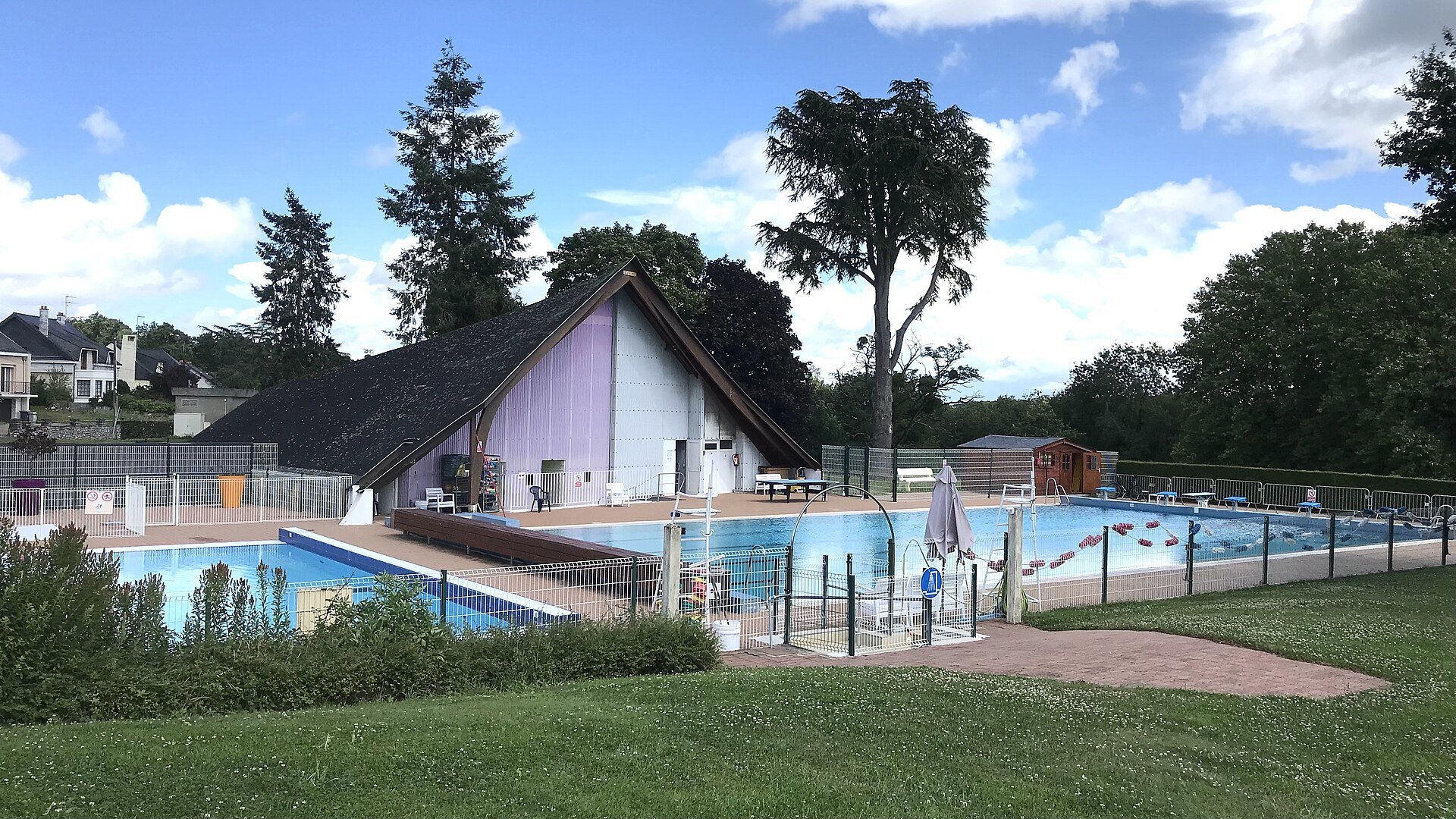
Châteauneuf-sur-Sarthe is home to about 3,200 people. Its outdoor pool opened in 1973 and is now the only one within roughly 20 miles after three neighboring facilities closed. The town’s 2026 price list charges €3 for adult admission, €1.80 for reduced admission and €1 for access to the solarium without swimming. That buys half a day, not 50 carefully optimized minutes.
The math works only because the pool is not expected to behave like a private club. Its return shows up elsewhere: children learn to swim, older residents exercise, families who cannot afford a vacation have somewhere to spend an afternoon, and a farming town gets a public room during weeks when the countryside is dangerously hot.
France built hundreds of pools on exactly that logic. In 1969, the national government launched Opération 1,000 piscines to spread swimming instruction beyond major cities. Standardized designs were meant for smaller towns and lower construction and operating costs. A French Senate record shows that maintenance trouble was already serious by 1987. Economical public buildings do not remain economical simply because the original brochure said they would.
Two village pools
- Châteauneuf-sur-Sarthe Open June 6 through August 30 in 2026; €3 adult half-day admission; at least €100,000 in annual operating cost
- Rochefort-sur-Loire Open July 1 through August 29; swimming lessons, children’s water familiarization and adult aqua-fitness classes
- Catchment Châteauneuf’s facility is the only pool left within about 20 miles
- National context France recorded 925 drownings from May 1 through July 15, 2026, including 274 deaths
- Heat 73% of drownings occurred during heat-alert periods, although those alerts covered half the days studied
Heat has changed the maintenance argument
A tired filtration pump used to be a recreation-budget problem. In a heatwave, it can close the only supervised water in driving distance.
Santé publique France recorded 925 drownings between May 1 and July 15 this year, up 14% from the same period in 2025. Of those incidents, 274 were fatal. Seventy-three percent occurred during three official heat-alert periods, even though those alerts accounted for only half the days in the surveillance window.
The risk is not confined to the pool deck. When supervised pools disappear or fill up, people turn to rivers, quarries and other open water. In Rochefort-sur-Loire, the municipal pool sits beside the Louet River. The river ran too low for normal bathing during this summer’s heat, while the town separately rated the remaining water as only middling for bathing. The maintained pool became more useful at the exact moment its natural alternative became less so.
Rochefort put the community on the maintenance crew
The Piscine du Louet in Rochefort-sur-Loire offers a small working example of what saving a pool looks like after the speeches. In 2021, the municipality, local volunteers and the PALM pool campaign carried out major work together to return the facility to operation. The town’s current pool page lists a full 2026 summer schedule along with children’s lessons, water-familiarization sessions and adult aqua-fitness.
Residents have also used the pool for theater, poetry and community events, Chrisafis reports. That might sound like charming rural improvisation. It is also an operating strategy. A seasonal pool used only for lap swimming is easy to reduce to a cost per swimmer. A pool that hosts lessons, classes, performances and social life becomes harder to cut because more of the town has a reason to defend it.
Volunteer maintenance has limits. It can paint walls and refresh a tired site. It cannot finance a new filtration plant, replace structural systems or guarantee enough certified lifeguards for another decade. France’s rural campaigns are asking the national government to treat that capital gap as a shared problem rather than wait for individual mayors to lose a game of equipment roulette.
The lesson for bathhouse operators is not to charge $3.50
A private sauna or bathhouse cannot copy a municipal admission price and stay private for long. It can copy the reason people care about these pools.
Cheap access helped generations build a habit. Swimming lessons made the facility useful before anyone became a customer by choice. Aqua-fitness gave older residents a reason to return. Shade, grass and permission to stay turned a rectangular tank into an afternoon. Programming pulled in people who were not there to swim laps at all.
Commercial bathhouses spend heavily on hot rooms, pools and finishes, then sometimes treat the social layer as a launch-week calendar. The French pools reverse that order. Their equipment is old and their budgets are dreadful, but the community function is so clear that residents volunteer to paint the place and campaign in the street when closure threatens.
That does not solve the capital bill. It does explain why the fight exists. Châteauneuf and Rochefort are not trying to save obsolete leisure equipment. They are trying to keep the one place in town where a child can learn not to drown, a family can afford the whole afternoon and a 75-year-old can become a swimmer.