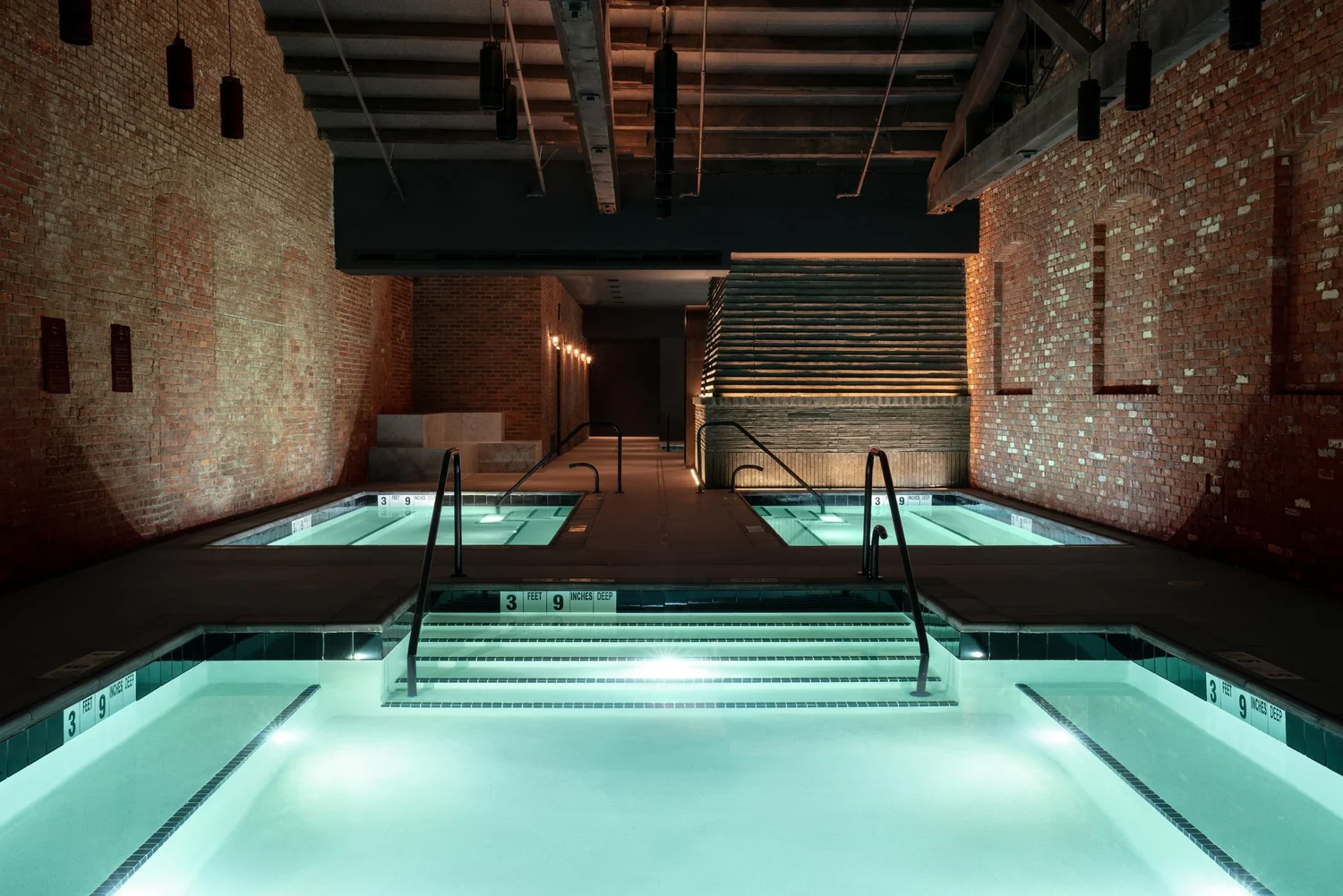
SCHWET Brings a Banya, and a Kitchen, to Tribeca in October
Mauri Waneka's Budapest-inspired bathhouse at 78 Franklin Street opens to members and friends in October and to the public in November, months behind its spring target. A banya, a mineral hot pool and a Slavic menu share one circuit, and the lounge is built as the main event.

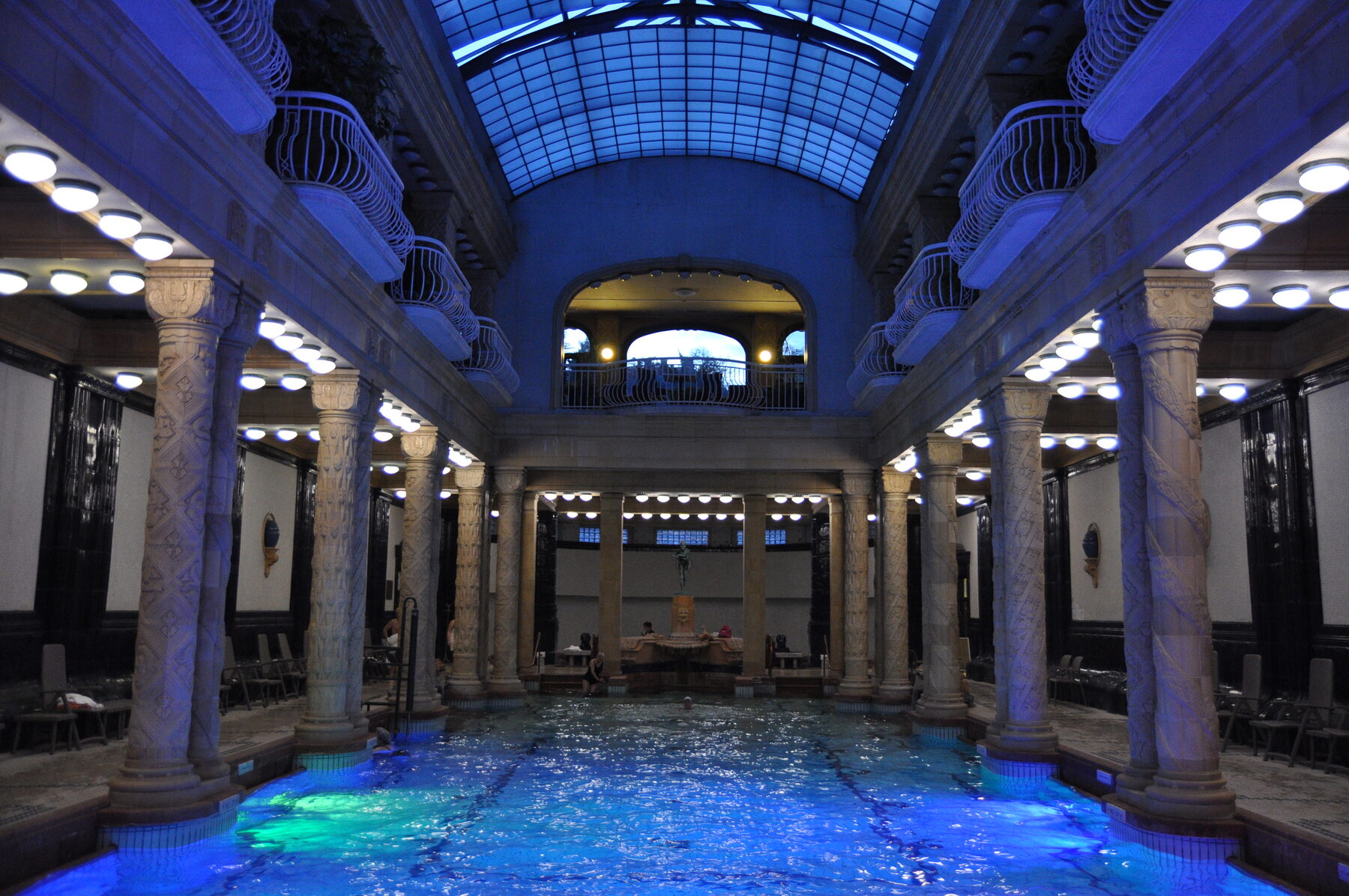
The indoor pool hall at Budapest's Gellért Baths, the design reference for SCHWET. Photo: Christo / Wikimedia Commons, CC BY-SA 4.0.
SCHWET, the Russian-style banya and social club Mauri Waneka is building at 78 Franklin Street in Tribeca, will open to members and friends in October and to the public in November, Waneka told Robert Hammond in a Culture of Bathe-ing interview published September 23. That's several months behind the spring 2026 opening the project was listing last winter.
It's also a bathhouse with a restaurant's priorities. The interview spends as much time on the lounge, the menu and the parties as on the hot rooms, and that emphasis tells operators where SCHWET expects to make its money.
Key Facts
- Operator: SCHWET, founded by Mauri Waneka
- Address: 78 Franklin Street, Tribeca, Manhattan
- Size: about 6,500 square feet (600 m²), per Wallpaper*
- Opening: members and friends in October 2026, public in November
- Bathing: Russian banya, mineral hot pool, cold plunge for three or four people, steam room, Japanese scrub room, infrared
- Last listed price: $150 for two and a half hours, general admission (December 2025 listing; current pricing not published)
- Food: Slavic with Japanese influence, served in a ground-floor lounge
How the building works
Guests check their phone and wallet at the door, take a key and go downstairs. Men's lockers sit halfway down, women's at the bottom, and both groups meet at the main bathing room two and a half levels below the street. Waneka calls it the Schwestine Chapel: dark pink marble floors under a hand-painted ceiling mural, with a mineral hot pool, a cold plunge and the banya.
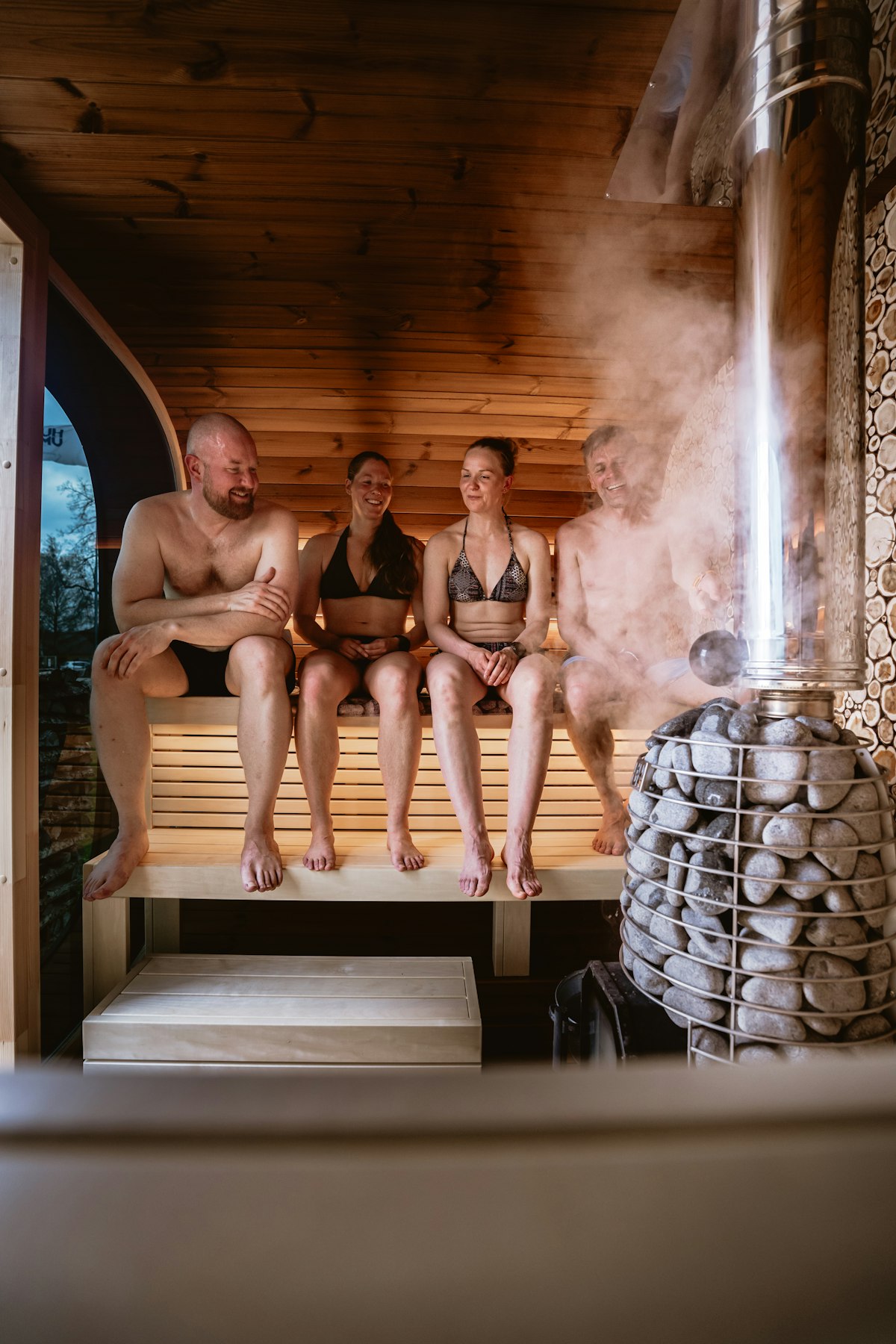
The banya is narrow on purpose. "It's almost like you're in a booth across from someone, close enough that you might have to say hi," Waneka said. "We're forcing it a little." The cold plunge fits three or four people. A December 2025 Culture of Bathe-ing guide listed it at 48°F.
After the pools, the circuit moves back up to a ground-floor "skin suite" with the steam room, the Japanese scrub room and infrared, and from there into the lounge, where guests order food and drinks in a robe, a swimsuit or street clothes. The building once held a large pool, since removed; Waneka hosted a Culture of Bathe-ing dinner for more than 100 people at the bottom of it, with no silverware, while the floor was still under construction.
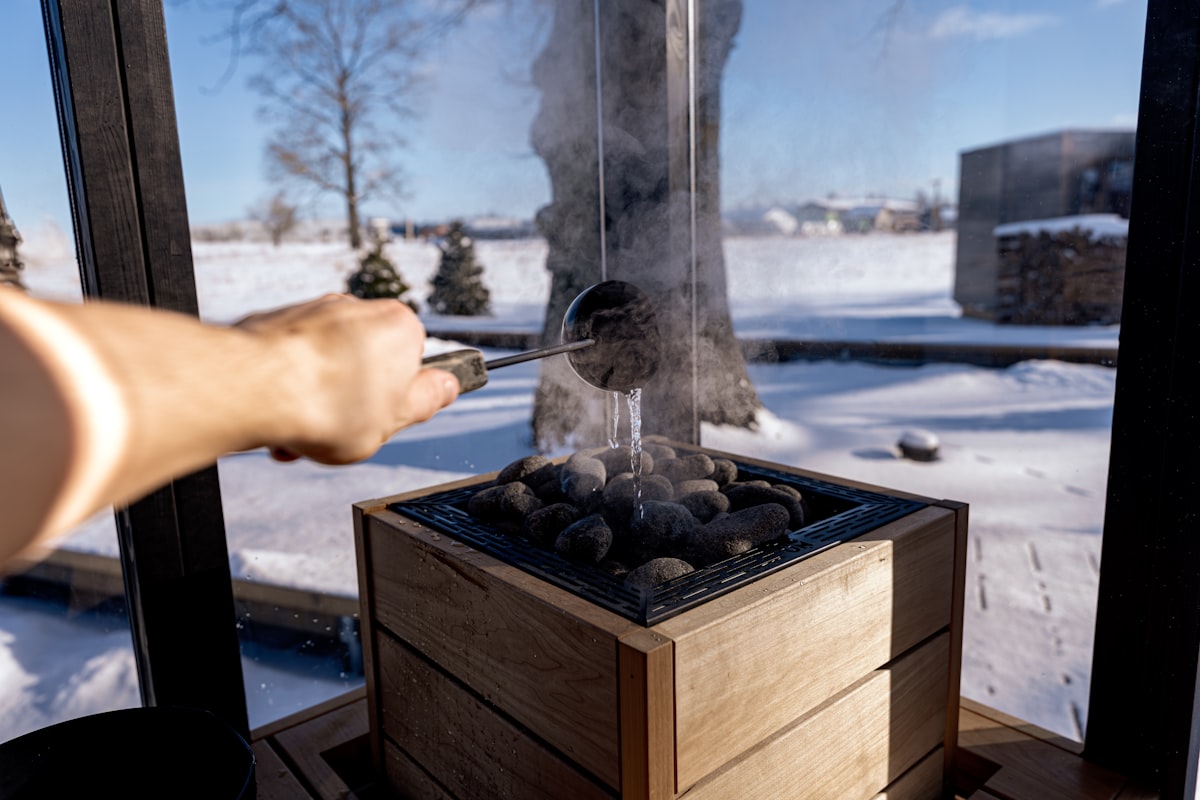
SCHWET hasn't published its heater or stove specifications, pool volumes, bather capacity or membership pricing. Waneka named the investments she considers serious: filtration, HVAC, "speciality sauna wood" and house-made scrubs. All the water is run through reverse osmosis, and the drinking water is remineralized and free on tap downstairs.
Food and drink at the center
The menu is Slavic with some Japanese dishes: vareniki, borscht, pickles and tinned fish. Waneka's pitch is decadence rather than austerity. "You don't go to sweat, you SCHWET," she said. "You're going to have fun, connect with somebody, get sweaty, feel good, eat something delicious, drink something amazing."
That puts SCHWET at the other end of the New York market from the sober, phone-free evening format Othership has built its sauna-as-nightlife programming around. Waneka told Hotel Online in August: "I want a place where you can have a green juice one day and a great glass of wine the next."
The pre-opening events show the playbook. Around Frieze New York in May, SCHWET threw a party for which Waneka prepped and cleaned a 171-pound tuna that was served as sashimi from the steam room, which was off that night, while a dance party ran in the lounge. At big events, phones go into pouches with brass locks.
Who's behind it
Waneka comes from hospitality, not wellness. She built and ran a boutique hotel and members' club that she later sold to Soho House, now known as Holloway House, and then opened Camp Kasbah, a retreat in Aspen, according to her Boutique Lifestyle Leaders Association speaker bio. She describes SCHWET as "an old-school Russian bathhouse" at its core, and the design draws on Budapest's Gellért Baths.
Membership won't be required. "We're not exclusive in the sense that you can't come if you're not a member," Waneka said. "It might be harder to get a reservation, but it's important to me that everybody can come to SCHWET."
A crowded downtown
SCHWET opens into the market Vanity Fair called the "sauna wars," where Bathhouse opened its Atlantic Avenue location in May and Othership has signed a third New York site on the Upper East Side for 2027. On last winter's listings, SCHWET's $150 visit cost more than twice a $65 session at The Altar; Lore Bathing Club listed $200 a month or $90 for a week, and SAINT $280 a month.
SCHWET is taking waitlist sign-ups at getschwet.com.
Also in New York
- CUL DE SAC, Gabe Bender's community sauna project, runs a residency with an outdoor wood-fired sauna at La Plaza Cultural Community Garden in the East Village from September 28 to October 16, and launches a Kickstarter on September 29 to fund a four-month winter residency starting in November, per Culture of Bathe-ing.
- Othership Williamsburg hosts the first session of "EXPERIENCE TOGETHER: Harry Styles," a guided session built on the singer's album with New Frequency, on October 1 at 8:30 a.m.
Arlene Scott
Senior Wellness Correspondent & Hospitality Consultant
Arlene Scott brings over fifteen years of reporting and consulting experience across energy infrastructure, sustainable design, and thermotherapy-focused hospitality.
Full byline
Arlene Scott is a Senior Wellness Correspondent for SaunaNews.com, bringing over fifteen years of experience at the intersection of energy infrastructure, sustainable design, and thermotherapy. Her work focuses on the physiological benefits of passive heat therapies and the sustainable integration of sauna culture into modern wellness routines.
Arlene's background is rooted in the clean energy transition. She was a founding writer at MicrogridMedia.com, where she covered the technical and economic viability of desalination projects, microgrid deployments, and distributed renewable energy systems. During the mid-2010s, she was a regular contributor to Greentech Media (GTM) during its independent era — prior to the Wood Mackenzie acquisition in 2016 — reporting on the early integration of thermal energy storage and sustainable infrastructure.
Transitioning her focus from macro-energy systems to human-scale wellness, Arlene now applies her technical background to the hospitality sector. She operates as an independent consultant, advising boutique hotels and eco-resorts on the design, energy efficiency, and historical authenticity of commercial sauna and thermal spa installations. Her consulting work ensures that high-end wellness facilities balance traditional Nordic bathing principles with modern sustainable engineering.
Arlene holds a specialized certification in Applied Thermic Wellness from the Nordic Institute of Passive Heat Studies (NIPHS) and is a recognized associate member of the International Sauna Association (ISA). When she isn't reviewing the latest innovations in infrared technology or consulting on a new resort project, Arlene can be found tending to her own traditional wood-fired sauna in the Pacific Northwest. You can read her complete archive of essays on energy, wellness, and sustainable living at www.arlenescott.com.