RUKU Hired KLAFS's Export Chief. Now It Faces the US Listing Test.
Thorsten Bichler left KLAFS on June 30 after twenty years, most recently as its director of international sales. Six days later KLAFS put the S1 on sale in America. He now shares the management of a 30-person Bavarian builder that sells into four European countries and discloses no North American listing or dealer network at all.

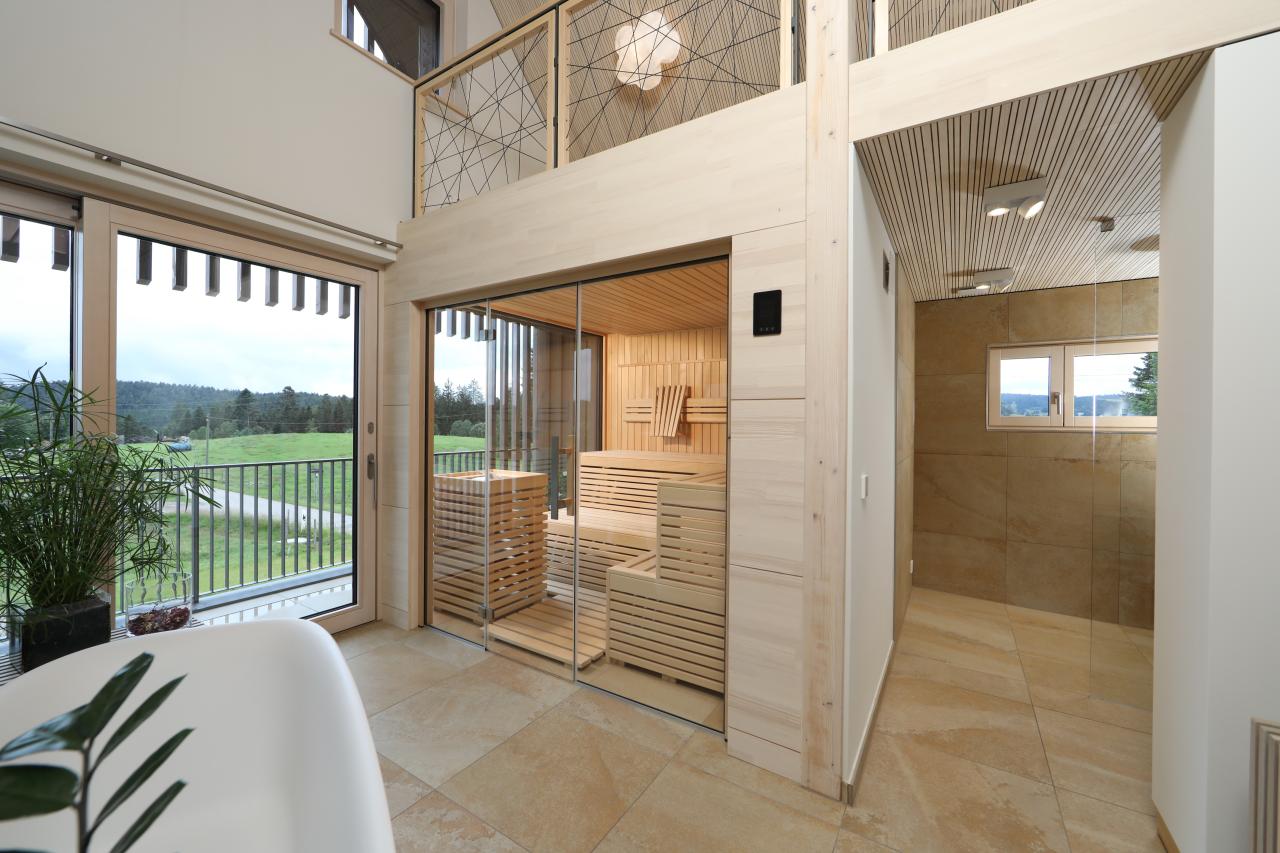
A RUKU classic sauna. Photo: RUKU Sauna-Manufaktur.
RUKU Sauna-Manufaktur, a custom sauna builder in Illertissen, Bavaria, has named Thorsten Bichler a managing director, and his brief is growth at home and abroad. The company’s own German legal notice now lists him alongside Philipp Egner as Geschäftsführer of GB Verwaltungs-GmbH, the general partner that runs the Illertissen partnership. That is the legal role. He calls himself CEO, which is a title a German limited partnership does not actually have, and either way he is not the only name on the door: Philipp Egner is still on it. He arrived from KLAFS, where he was director of international sales.
The dates are the story. In a post published July 1, Bichler wrote that he had closed “an important chapter” the day before, “after 20 intense and successful years at KLAFS,” and was starting at RUKU that morning with the aim of serving “customers worldwide.” Six days later, on July 7, KLAFS put its retractable S1 on sale in the United States at $44,900 to $51,900. He spent twenty years at KLAFS, most recently as its director of international sales, and he was gone the week the flagship reached America. Spa Business and its sister title Leisure Opportunities reported the move on July 24, three weeks after it happened.
So the international sales director of the world’s largest sauna manufacturer now runs a 30-person Bavarian custom builder whose sales network covers Germany, Austria, Italy and Switzerland, for owners who bought it in January 2025 and want it bigger. Thirty people is the number to hold onto. It is not a criticism, it is the constraint every decision below runs into.
Here is the part nobody is going to say out loud. Every sauna heater RUKU sells is, on the company’s own product page, “VDE-tested” and carries “the GS mark.” Those are German marks, and a German mark is not what an American inspector accepts. RUKU discloses no North American listing anywhere in its catalog or on its website. Whether one exists behind the scenes is unverified, because the listing directories are not open to a public search.
Key Facts
- Company: RUKU Sauna-Manufaktur GmbH & Co. KG, Dietenheimer Straße 39, Illertissen, Bavaria
- Register: Amtsgericht Memmingen, HRA 12697; general partner GB Verwaltungs-GmbH
- Appointment: Thorsten Bichler. Started July 1, 2026 by his own account; reported July 24, 2026. Formal register-effective date not public
- Prior role: Director of international sales, KLAFS, where he spent 20 years to June 30, 2026
- Headcount: 30, per the owner’s portfolio page. No RUKU revenue figure is published; the EUR 80 million on that page is all five ME Capital holdings combined
- Owner: ME Capital Advisory & Consulting, through its subsidiary MPE Wellness GmbH
- Deal: All shares acquired; counsel’s notice dated January 17, 2025; terms undisclosed
- Products: Classic sauna, Infratherm infrared cabin, Thermium infrared sauna, Meditherm steam generator, steam bath, garden sauna
- Certification named in RUKU’s catalog: VDE-tested with the GS mark on sauna heaters; TÜV-tested with the GS mark on Thermium infrared heating sections. No North American mark appears anywhere in it
- Stated cabin operating range: 176°F to 248°F
- Sales footprint: Network covering Germany, Austria, Italy and Switzerland. Three German showrooms, five German regional sales offices, and a showroom and sales office in Zurich. No North American location located
- Insulation claim: Isoholz multi-chamber system, around 10 percent energy savings and shorter heat-up versus a mineral-wool cabin (company claim via trade report; no lambda or U-value published)
- Sources: Spa Business and Leisure Opportunities, July 24, 2026; RUKU’s own Impressum; Bichler’s July 1 post
He Told Spa Business He Wants Hotel Chains
Bichler laid out his priorities to Spa Business, and the long-term one is not a residential plan. “I would like to establish Ruku as a full-service provider for residential and commercial customers in the wellness industry,” he said, so that the company can be “a competent and reliable partner for end users, architects, designers, spa consultants, hotel chains, and other project stakeholders.” Before that, he said, come internal processes, then an expanded product range aimed at existing sales channels and new ones.
Architects, spa consultants, hotel chains. That is the commercial specification channel, and it is the harder of the two to enter from abroad, because a hotel project runs through a permit, an inspector, and a general contractor who will not accept an appliance without a listing mark he recognizes. It is also, precisely, the channel KLAFS reaches in the United States through Design for Leisure, its exclusive dealer for US and Caribbean commercial projects. Bichler is describing the KLAFS commercial model, which he knows well, for a company that has not yet built the residential one outside German-speaking Europe.
The Playbook He Just Watched Work
KLAFS did not walk into the American market. It was carried in. Kohler acquired KLAFS in January 2024, and by May 2026 there were KOHLER-branded saunas shipping to American homes with nationwide turnkey installation and a KLAFS FERO heater built for the US. The S1 launch in July carried a Kohler, Wisconsin dateline, not a German one, and the commercial channel runs through Design for Leisure as exclusive dealer for US and Caribbean projects.
Strip out the sauna and that is a distribution story. Kohler already had American showrooms, American installers, American plumbing-trade relationships, and, critically, the compliance apparatus of a company that has been putting listed appliances into US buildings for a century. KLAFS supplied the product. Kohler supplied everything that gets a product to a jobsite legally.
Bichler had a front-row seat for all of it. He operated the half that sells. RUKU has hired him to reproduce the other half too.
The Mark on the Heater
RUKU’s classic sauna page states that its heaters are VDE-tested and carry the GS mark, and describes them as stainless steel, available free-standing, wall-mounted, or underbench. The infrared side is the same story with a different lab: the heating sections of the Thermium cabins are TÜV-tested and GS-marked. GS, Geprüfte Sicherheit, is a German voluntary safety mark, and both labs are real and rigorous. Neither mark is what an American inspector looks for, which is a listing by a Nationally Recognized Testing Laboratory.
The distinction is finer than it sounds, and it cuts in RUKU’s favor on one point and against it on another. OSHA currently recognizes 21 NRTLs. VDE is not among them. But two TÜV entities are, TÜV Rheinland of North America and TÜV SÜD America, so a manufacturer already working with a German TÜV has a relationship it can extend rather than a vendor it has to find. What it cannot do is carry the German result across. A GS mark is a test against European requirements; an NRTL listing is a test against a US standard, with follow-up factory inspections attached. Same laboratory group, different scheme, and only one of them satisfies an inspector in Texas.
No North American mark appears anywhere in RUKU’s catalog or on its website. The NRTL directories are not open to a public search without an account, so absence from the catalog is what we can show. We put the question of whether any UL or ETL work is underway to RUKU in writing, and it is unanswered.
The standard that matters here is in motion, which makes the timing worse rather than better. As we reported on April 11, the 2024 International Mechanical Code, Section 914, still requires electric sauna heaters to be listed and labeled to UL 875. ANSI/UL 60335-2-53, the American adoption of the international standard Europe already builds to, published on June 27, 2025. UL 875 did not go away. Adoption of the new standard runs jurisdiction by jurisdiction on a three-year model-code cycle, so a European manufacturer entering the US in 2026 has to pick a lane, pay for the testing, and then discover which of the two standards the local inspector has actually adopted.
The two regimes also do not agree on how hot a sauna may run, which is why European visitors find American cabins cool. RUKU markets a cabin range topping out at 248°F. UL 875 caps the reading at the thermostat sensor at 194°F. Those are different measurements taken at different places and we are not going to subtract one from the other, but a manufacturer moving a European cabin into a US listing has to satisfy the American number as the American standard defines it, and that is engineering work before it is sales work.
That is a cost, not a wall. Getting listed does not require an American parent. What a parent buys is the calendar to absorb a certification program that lands entirely before the first American sale, plus a dealer network waiting on the other side of it. RUKU has no public North American dealer network that we could find, and a company whose English site still names a managing director who has been replaced is not a company visibly mid-launch.
Three Legal Notices, Three Different Managements
RUKU publishes its Impressum in at least three places. As of August 1, all three named a different management.
The German page lists Thorsten Bichler and Philipp Egner. The English page, same domain, lists Gotthard Balles and Philipp Egner. The Swiss regional site at bern.ruku-sauna.ch lists Gotthard Balles alone. All three carry the same two register entries, HRA 12697 for the operating partnership and HRB 16261 for GB Verwaltungs-GmbH, so the company is one company. Only the names of the people running it disagree.
Switzerland is a real footprint, not a translated page. RUKU runs a showroom and sales office in Zurich, and its own English homepage puts Austria and Italy in the network too. What the Swiss imprint shows is who publishes the site, which is the Illertissen company under German law with a German address and phone. Whether a separate Swiss entity exists is a question for the Swiss commercial register, which we have not searched. Either way the export RUKU has actually done is into three neighbouring countries a truck can reach overnight.
The English storefront is the sharper detail. RUKU’s sitemap declares an en-us locale specifically, not en-gb. Somebody built that page for Americans. Its newest news item is a regional trade fair in Hochheim in November 2024, its sitemap dates most of those pages to October 2024, and its legal notice still tells an American reader that a man who has been replaced runs the company. A firm that just hired an export chief has an English website with the wrong name on the door.
The Owner Sells Furniture, Metal Parts, and Auto Components
ME Capital Advisory & Consulting is a southern-German family investment firm that buys mid-sized companies from owners with a succession problem. RUKU is the fifth holding on its portfolio page and the only one in wellness. The other four are Plocher Möbelelemente (furniture, 2016), Gutekunst (deep-hole drilling, 2018), G.S. Autoteile (auto parts, 2022), and Heckel Präzisionsteile (precision machining, 2023). One of those, G.S. Autoteile, sells into 21 countries, so the firm is not parochial. But none of it is a North American channel for a heated wooden room that needs a licensed electrician, a permit, and a listed appliance.
ME Capital publishes headcounts. RUKU is its smallest holding at 30 people, against 85 at Heckel and 65 at Plocher, and the EUR 80 million turnover on that page covers all five companies together rather than any one of them. Thirty people is enough to build custom cabins beautifully. It is thin for running a certification program, a US dealer recruitment effort, and a domestic order book at the same time, which is the workload Bichler has described for himself.
This is the structural difference between the two hires. KLAFS got a parent that had already solved American distribution. RUKU got a parent that has solved German manufacturing succession four times. Those are both good things to be. They produce very different export strategies, and only one of them puts a product through a US inspection.
What RUKU Actually Sells
The craft is the asset here, and it is the reason there is a premium position to export at all. RUKU builds to measure rather than to catalog. Cabin interiors run to Nordic spruce and local fir, benches to knot-free, sapwood-free abachi. The insulation, which the company calls Isowood, is wood, air chambers, and aluminum reflective foil with no mineral wool anywhere in the wall, and it carries a 30-year guarantee on consistent insulation quality.
Skipping mineral wool is an unusual choice, and RUKU’s case for it is that fiber insulation in a sauna wall settles and takes on moisture over time while a wood-and-air assembly does not, which is what the 30-year guarantee is written against. RUKU puts a number on it through the trade report: energy savings of around 10 percent and shorter heat-up times against a conventional mineral-wool cabin.
Ten percent is a claim an operator can act on, so it deserves the follow-up question. RUKU’s own pages publish no lambda value, no U-value, and no wall thickness, and name no testing body for the comparison. For a home buyer that is a footnote. For an operator heating cabins open to close, seven days a week, it is a line in the energy budget, and the right response to an unbenchmarked 10 percent is to ask which cabin it was measured against, at what setpoint, and by whom.
The heritage is older than the sauna business and the two get conflated. In 1852 Rudolf Kurz founded a sawmill and plaster mill in Illertissen. The family turned it into a wood-processing business, and the sauna operation dates to 1974, which the company states plainly in its own tagline. The current partnership sits in the Memmingen register under HRA 12697. When you see “founded 1852” attached to a sauna manufacturer, that is a sawmill.
Why It Matters
The German premium sauna trade is consolidating into two shapes. One is KLAFS: bought by an American fixture giant, now selling through American showrooms with American-listed hardware. The other is RUKU: bought by a regional succession fund, hiring the export talent directly, and disclosing no North American listing or dealer network at all. Both bets are on the same conclusion, that the growth is in the United States. The first one bought the distribution and hired the product. The second is hiring the distribution and hoping the product travels. Watch which one gets a heater listed first, because that is the milestone that separates an intention from a market entry, and it is publicly checkable in a way that a press release is not.
Bottom Line
If you specify, distribute, or install saunas in North America and a European manufacturer approaches you this year, ask for one thing before anything else: the NRTL file number for the heater and the standard it is listed to, UL 875 or UL 60335-2-53. A CE declaration is not that. A GS mark is not that. VDE testing is not that. Then call your local building department and ask which of the two standards they have adopted, because the answer differs by jurisdiction right now and it determines whether the cabin you are quoting can pass inspection. RUKU has hired someone who knows how to sell into export markets. Whether the company arrives in this one is a question about a label, and it will be answered by a certification file, not by a hire.
On August 1 SaunaNews put written questions to RUKU Sauna-Manufaktur and to the KLAFS press office. We asked RUKU for Bichler’s start date and exact title, whether North America is a target market, and whether any UL 875 or ANSI/UL 60335-2-53 certification is underway with an OSHA-recognized laboratory. We asked KLAFS to confirm his role there and his departure date. Neither had responded at publication. This piece will be updated when they do. RUKU has issued no release of its own about the appointment and its company news page has not been updated since 2024. The July 1 start date and the twenty years at KLAFS come from Bichler’s own post; the date the appointment took formal effect in the register is not public.
Arlene Scott
Senior Wellness Correspondent & Hospitality Consultant
Arlene Scott brings over fifteen years of reporting and consulting experience across energy infrastructure, sustainable design, and thermotherapy-focused hospitality.
Full byline
Arlene Scott is a Senior Wellness Correspondent for SaunaNews.com, bringing over fifteen years of experience at the intersection of energy infrastructure, sustainable design, and thermotherapy. Her work focuses on the physiological benefits of passive heat therapies and the sustainable integration of sauna culture into modern wellness routines.
Arlene's background is rooted in the clean energy transition. She was a founding writer at MicrogridMedia.com, where she covered the technical and economic viability of desalination projects, microgrid deployments, and distributed renewable energy systems. During the mid-2010s, she was a regular contributor to Greentech Media (GTM) during its independent era — prior to the Wood Mackenzie acquisition in 2016 — reporting on the early integration of thermal energy storage and sustainable infrastructure.
Transitioning her focus from macro-energy systems to human-scale wellness, Arlene now applies her technical background to the hospitality sector. She operates as an independent consultant, advising boutique hotels and eco-resorts on the design, energy efficiency, and historical authenticity of commercial sauna and thermal spa installations. Her consulting work ensures that high-end wellness facilities balance traditional Nordic bathing principles with modern sustainable engineering.
Arlene holds a specialized certification in Applied Thermic Wellness from the Nordic Institute of Passive Heat Studies (NIPHS) and is a recognized associate member of the International Sauna Association (ISA). When she isn't reviewing the latest innovations in infrared technology or consulting on a new resort project, Arlene can be found tending to her own traditional wood-fired sauna in the Pacific Northwest. You can read her complete archive of essays on energy, wellness, and sustainable living at www.arlenescott.com.