Lunawood Plans a Biogas Switch for Its Iisalmi Thermowood Mill
The thermowood manufacturer has signed a preliminary agreement to replace fossil LPG with farm-sourced biogas at its Finnish factory, a step toward carbon-neutral production by 2035.


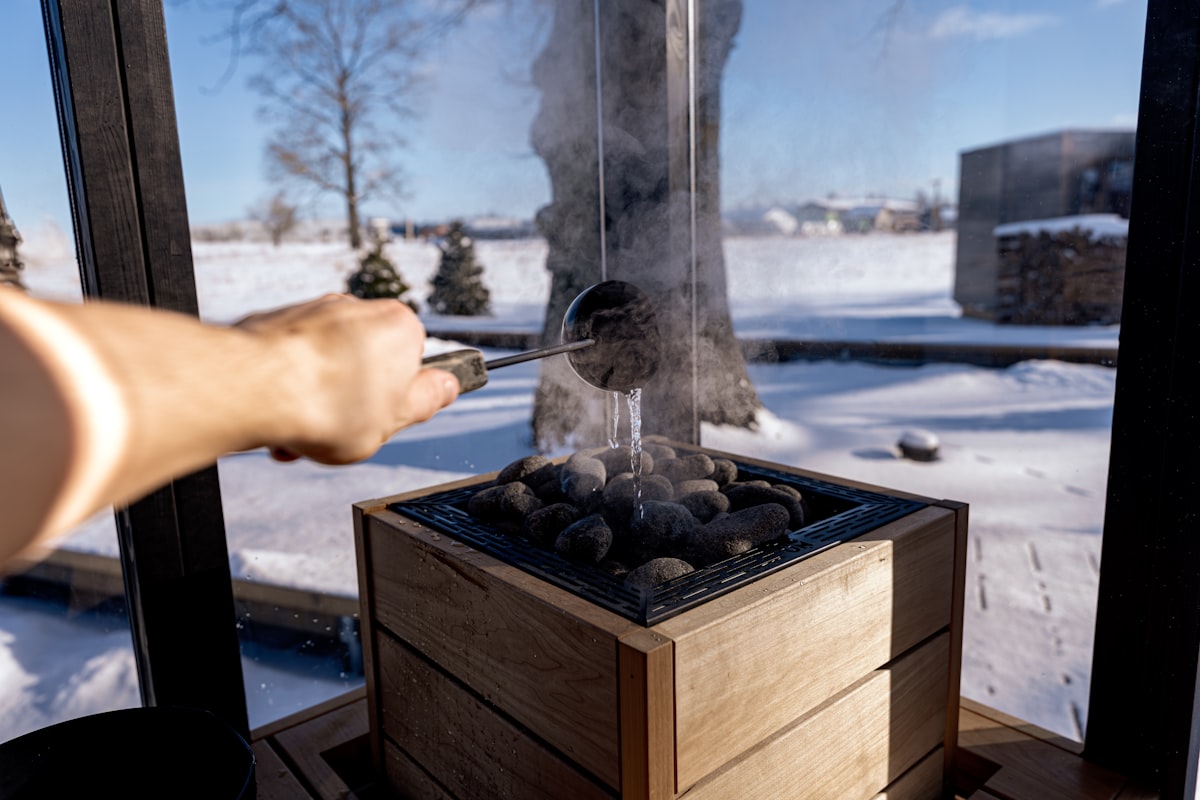
Biogas from farm feedstock could replace fossil LPG at the mill where Lunawood heat-treats Nordic softwood into ThermoWood. Photo: Unsplash.
Lunawood, the Finnish company whose thermally modified timber lines sauna benches and walls from Helsinki to Houston, signed a preliminary agreement on June 3 with the municipal utility Vieremän Lämpö ja Vesi to supply biogas to its thermowood factory in Iisalmi, Finland. The plan calls for a new farm-feedstock biogas plant and a dedicated pipeline to the mill, replacing the fossil liquefied petroleum gas (LPG) that currently fuels part of the heat-treatment process.
The switch, if completed, would remove one of the last major fossil inputs from a production line that already hit a 44 percent reduction in Scope 1 and 2 greenhouse gas emissions against its 2021 baseline, according to figures Lunawood published in April. That result exceeded the company’s Science Based Targets initiative (SBTi) validated goal of 42 percent by 2030, five years ahead of schedule.
Key Facts
- What: Preliminary agreement between Lunawood and Vieremän Lämpö ja Vesi to supply biogas to the Iisalmi thermowood mill
- Date signed: June 3, 2026
- Fuel replaced: Fossil liquefied petroleum gas (LPG)
- Infrastructure planned: Farm-feedstock biogas plant and dedicated pipeline
- Emissions reduction achieved: 44% (Scope 1 and 2, vs. 2021 baseline)
- SBTi target: 42% reduction by 2030 (already exceeded)
- Next goal: Carbon-neutral production by 2035 (Scope 1 and 2)
- Renewable electricity: 100% since 2025
- Total renewable energy share: 70% of production energy (2025)
- Carbon storage: ThermoWood products store up to 5x more carbon than is emitted in production
- Status: Preliminary agreement, not a signed supply contract
What the Agreement Covers
The preliminary agreement outlines the intention to build a biogas production facility sourcing feedstock from local farms in the Ylä-Savo region, connected to the Iisalmi mill by pipeline. The deal does not yet specify volumes, capital commitments, or a construction timeline. It is a first step toward a binding supply contract.
Lunawood has not disclosed the share of its production energy that LPG currently represents. What is public: 70 percent of the company’s production energy came from renewable sources in 2025, including biomass and green electricity, according to the 2025 sustainability report. Replacing the remaining fossil gas would close a significant portion of the 30 percent gap.
Why It Matters to the Sauna Supply Chain
Thermowood is the material underneath the trend. It lines the benches, walls, and ceilings of saunas built by Leil Saunas, Auroom, and dozens of other cabin manufacturers. It clads the exteriors of commercial builds specified by architects across Europe and North America. Lunawood, which describes itself as the pioneer and global market leader of ThermoWood, says its products store up to five times more carbon than is emitted during production.
For developers, architects, and operators who specify thermowood, a credible move off fossil gas at the source mill gives them a documented sustainability claim to attach to the most common premium sauna material. That matters in an era when ESG reporting requirements are tightening procurement decisions, not just marketing copy.
Lunawood’s Georgia mill, which opened to serve the North American market, is a separate facility. The biogas agreement applies specifically to the Iisalmi factory in Finland, where the thermal modification process requires sustained high temperatures to harden Nordic softwood without chemicals.
The Broader Pattern
The Iisalmi mill has been at the center of Lunawood’s decarbonization push. In 2023, the company completed what CEO Arto Halonen called “the largest investment in Lunawood’s history” with a large-scale energy modernization at the site. In 2025, it began sourcing 100 percent of its electricity from renewable sources. The biogas agreement is the next step on a roadmap that targets carbon-neutral operations (Scope 1 and 2) by 2035.
The broader Nordic and Baltic sauna manufacturing cluster is under similar pressure. Thermory, Lunawood’s closest competitor in the thermowood space, publishes its own sustainability reports and holds FSC, PEFC, and Nordic Swan Ecolabel certifications. As procurement teams in hospitality, multifamily housing, and commercial wellness begin to weight embodied carbon in material choices, the manufacturers who can document a clean supply chain will have a structural advantage.
Why It Matters
This is a preliminary agreement, not a done deal. The volumes, construction timeline, and capital commitments are not yet public. But the direction is clear: the company whose wood lines more sauna rooms than any other thermowood producer is systematically removing fossil fuel from its production. If the biogas switch closes, every ThermoWood bench slat and cladding panel from Iisalmi will carry a cleaner lifecycle number, and every architect who specifies it will have a stronger answer for the procurement officer asking about embodied carbon.
The Bottom Line
Lunawood has already beaten its 2030 emissions target five years early. The biogas agreement with Vieremän Lämpö ja Vesi maps the path from 44 percent to carbon-neutral, but the gap between a preliminary agreement and a flowing pipeline is real. The next milestone to watch: a signed supply contract with disclosed volumes and a construction start date.
Arlene Scott
Senior Wellness Correspondent & Hospitality Consultant
Arlene Scott brings over fifteen years of reporting and consulting experience across energy infrastructure, sustainable design, and thermotherapy-focused hospitality.
Full byline
Arlene Scott is a Senior Wellness Correspondent for SaunaNews.com, bringing over fifteen years of experience at the intersection of energy infrastructure, sustainable design, and thermotherapy. Her work focuses on the physiological benefits of passive heat therapies and the sustainable integration of sauna culture into modern wellness routines.
Arlene's background is rooted in the clean energy transition. She was a founding writer at MicrogridMedia.com, where she covered the technical and economic viability of desalination projects, microgrid deployments, and distributed renewable energy systems. During the mid-2010s, she was a regular contributor to Greentech Media (GTM) during its independent era — prior to the Wood Mackenzie acquisition in 2016 — reporting on the early integration of thermal energy storage and sustainable infrastructure.
Transitioning her focus from macro-energy systems to human-scale wellness, Arlene now applies her technical background to the hospitality sector. She operates as an independent consultant, advising boutique hotels and eco-resorts on the design, energy efficiency, and historical authenticity of commercial sauna and thermal spa installations. Her consulting work ensures that high-end wellness facilities balance traditional Nordic bathing principles with modern sustainable engineering.
Arlene holds a specialized certification in Applied Thermic Wellness from the Nordic Institute of Passive Heat Studies (NIPHS) and is a recognized associate member of the International Sauna Association (ISA). When she isn't reviewing the latest innovations in infrared technology or consulting on a new resort project, Arlene can be found tending to her own traditional wood-fired sauna in the Pacific Northwest. You can read her complete archive of essays on energy, wellness, and sustainable living at www.arlenescott.com.