
How Japanese Onsen Culture Is Influencing Western Sauna Design

By Arlene Scott
Senior Wellness Correspondent & Hospitality Consultant
- Published
- Reading time
- 8 min
SaunaNews is published by SaunaShare, Inc., which also runs SaunaShare.com and SaunaMarketplace.com, where we sell many of the products we write about. Assume that experience shapes what we cover and what we don't. Who owns SaunaNews · The ownership announcement
The quiet aesthetic, ritualistic approach, and material philosophy of Japanese bathing culture is reshaping how Western designers think about sauna spaces.
In this story2 sections
Look at any of the most talked-about sauna and bathhouse projects of the past few years, from Therme Manchester (the massive wellbeing resort under construction in Trafford) to QC Terme’s growing Italian portfolio to Soak & Sauna in Portland, and you’ll notice a common thread that has nothing to do with Finland. The spatial language, material palette, and experiential sequencing borrow heavily from Japanese bathing culture.
The influence
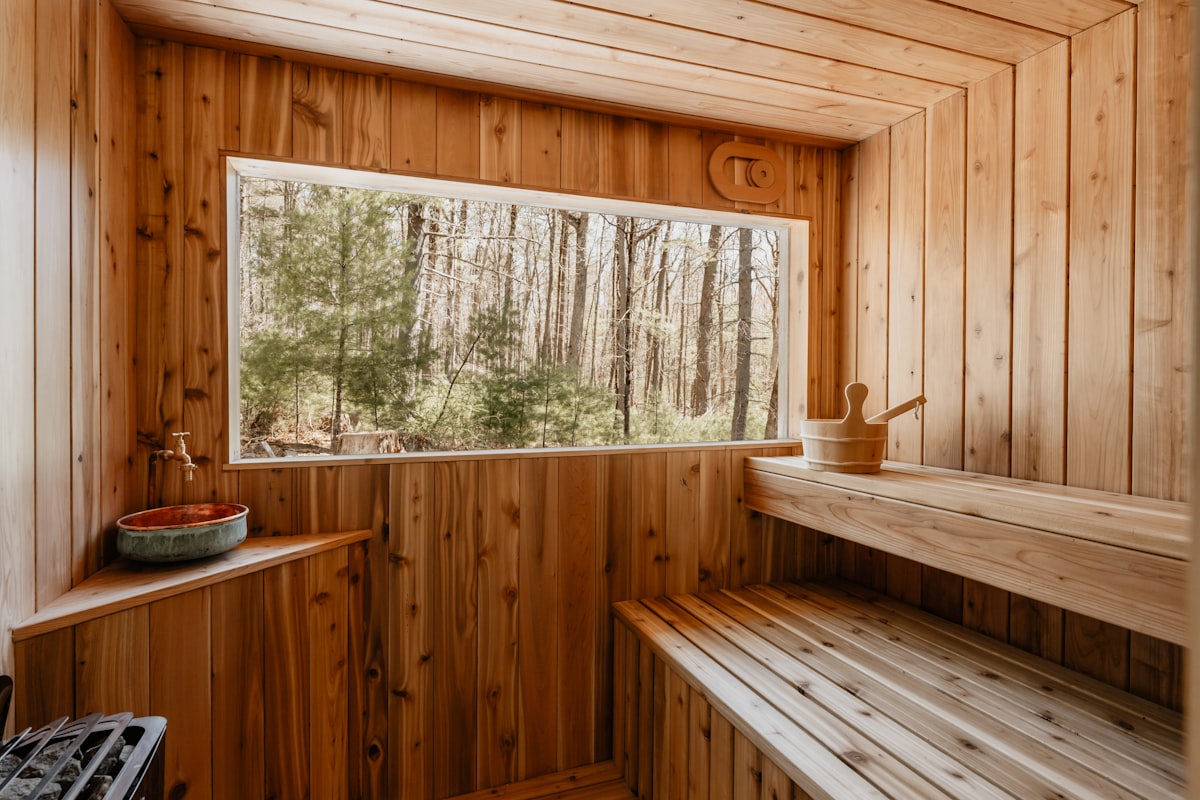
Japanese onsen and sento traditions bring a distinct design philosophy to thermal bathing: an emphasis on natural materials (stone, wood, water), a sequential approach to the bathing ritual, spatial compression and expansion to create emotional rhythm, and an aesthetic of restraint that values imperfection and patina over polish.
These principles are increasingly showing up in Western sauna and bathhouse design, not as direct imitation but as a design sensibility that’s being hybridized with Nordic sauna traditions.
The best new sauna spaces aren’t purely Finnish or purely Japanese. They’re drawing from both traditions to create something that feels timeless and culturally rich.
Material and spatial choices
Specific Japanese-influenced design choices showing up in new Western sauna projects include: the use of hinoki (Japanese cypress) alongside traditional Nordic woods, stone and mineral plaster surfaces instead of exclusively wood interiors, outdoor transition spaces that echo the concept of the tsuboniwa (courtyard garden), and low, intimate proportions that prioritize closeness to water and earth.
Implications for manufacturers
For sauna manufacturers and equipment suppliers, the Japanese design influence creates both opportunities and challenges. Demand for more refined finishes, natural stone integration, and custom proportions is growing, but these requirements often push beyond what standard product catalogs offer.
The convergence of Nordic and Japanese bathing aesthetics may be one of the most significant design trends shaping the commercial sauna and wellness market in the coming decade.