Ireland Has 242 Saunas and Sells Them at Pub Prices. Bench Count Is Why.

By Arlene Scott
Senior Wellness Correspondent & Hospitality Consultant
- Published
- Reading time
- 7 min
SaunaNews is published by SaunaShare, Inc., which also runs SaunaShare.com and SaunaMarketplace.com, where we sell many of the products we write about. Assume that experience shapes what we cover and what we don't. Who owns SaunaNews · The ownership announcement
Roughly 90% opened since 2020, more than half in 2025 alone. A full 12-seat Irish session bills more per hour than a 7-seat US one at a higher ticket, and Kerry’s new beach permits preview what American councils will ask.
In this story6 sections
A floating sauna in Dún Laoghaire, on the coast south of Dublin, costs about $29 for 45 minutes and seats twelve. A wood-fired sauna in downtown New Haven costs $35 for an hour and seats seven. The Connecticut operator built its model on what its founders saw in Ireland, and the gap between those two price cards is the most useful thing happening in commercial sauna right now.
Ireland has at least 242 independent saunas in operation. Roughly 90% of them opened after 2020, and more than half launched in 2025 alone, according to figures compiled by Irish spa directory Spas.ie and reported by The Sauna Guide in March. The US has no comparable count, which is part of the story: nobody here is keeping one.
Where the saunas are
Dublin leads with 31 operators. Cork has 25, Kerry 16, Donegal 15, and Wicklow 12. At Sandycove, home of the Forty Foot swimming spot south of Dublin, three separate sauna businesses now trade within about a third of a mile of each other.
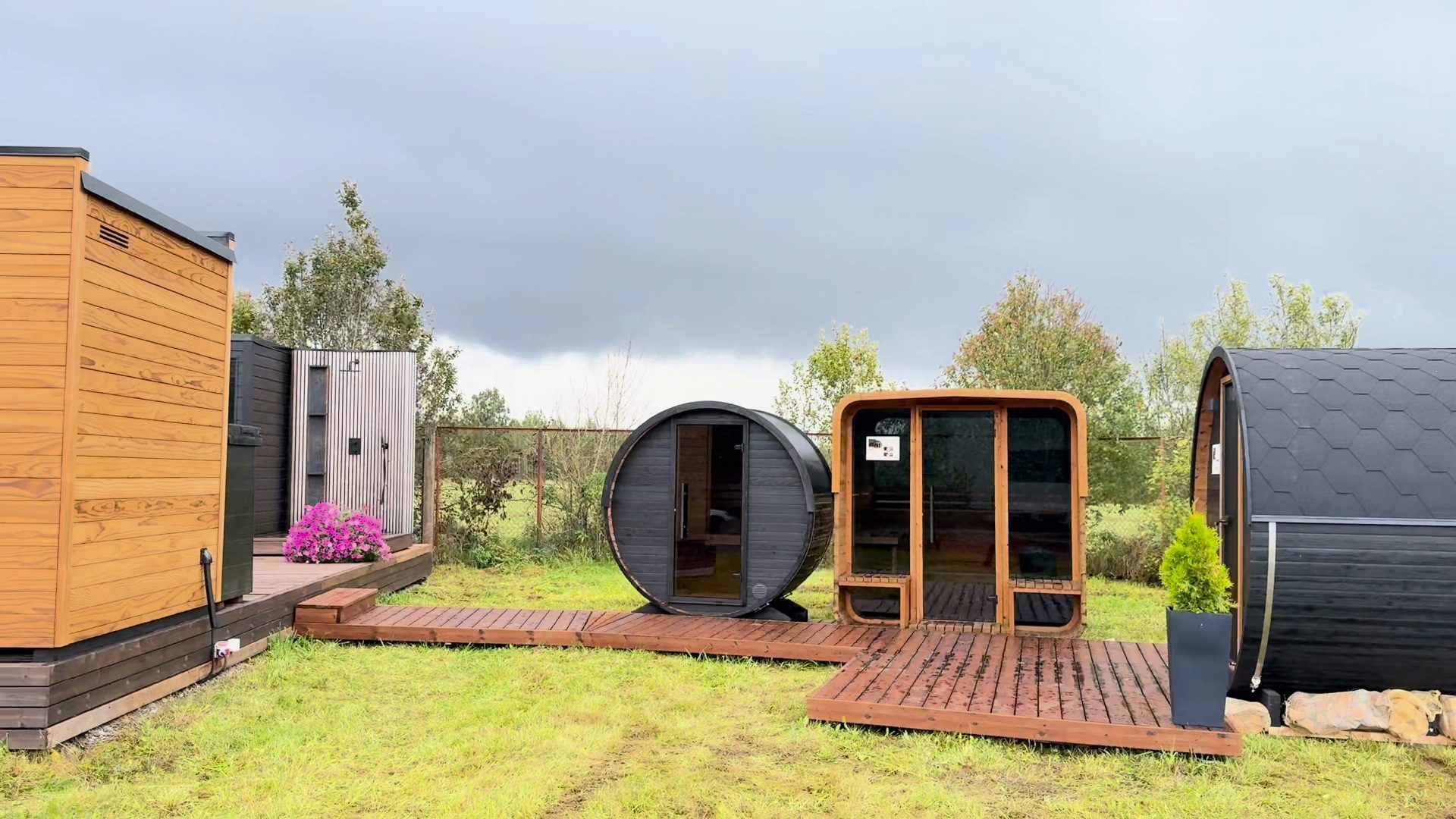
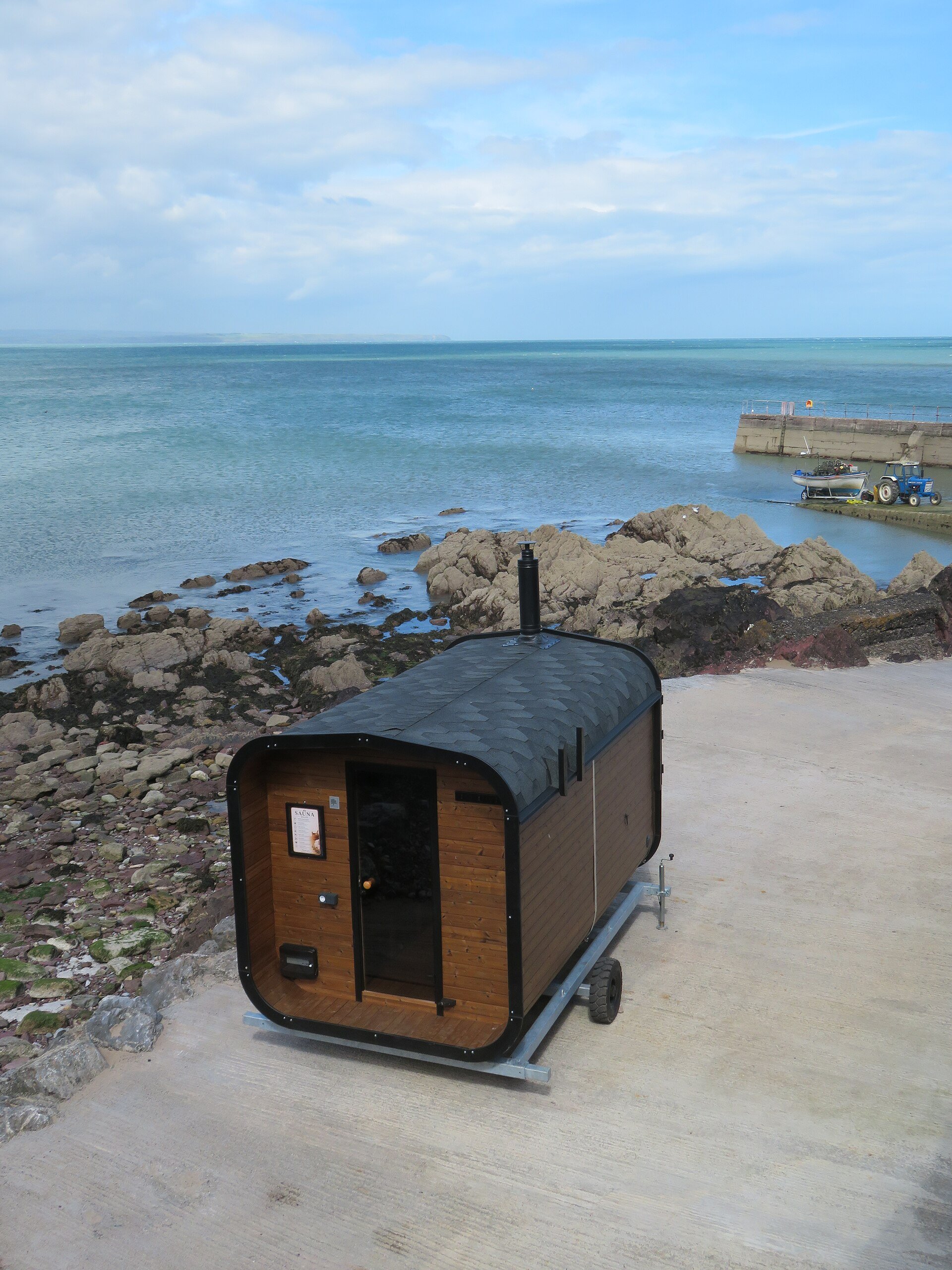
The format is mostly what an American operator would call the cheap end: barrel saunas on trailers that park at a beach, and small permanent timber rooms with a sea view. Around 40% of new public and commercial installations in 2024 used solar thermal or locally sourced biomass, per the same compilation. Sessions generally run 15 to 30 euro, about $17 to $35 at the August 11 rate of $1.15 to the euro.
Three operators show the shape of it. Fad Saoil Saunas runs sites at Rathmines and Clontarf in Dublin and at Greystones in Wicklow, and describes itself as community led. Hot Box started in 2021 and now runs a nationwide events schedule rather than a single address. Helios operates what it bills as Ireland’s first floating sauna, at Dún Laoghaire: 12 seats, 45-minute sessions, 24.95 euro on peak, running 8 a.m. to 10 p.m. seven days a week.
The number that should interest US operators
Run the arithmetic on published prices and stated capacity. A full session at the Helios floating sauna bills 299 euro, about $346, for 45 minutes of room time. A full session at DRYYP in New Haven, which charges $35 a head and caps sessions at seven guests, bills $245 for 60 minutes.
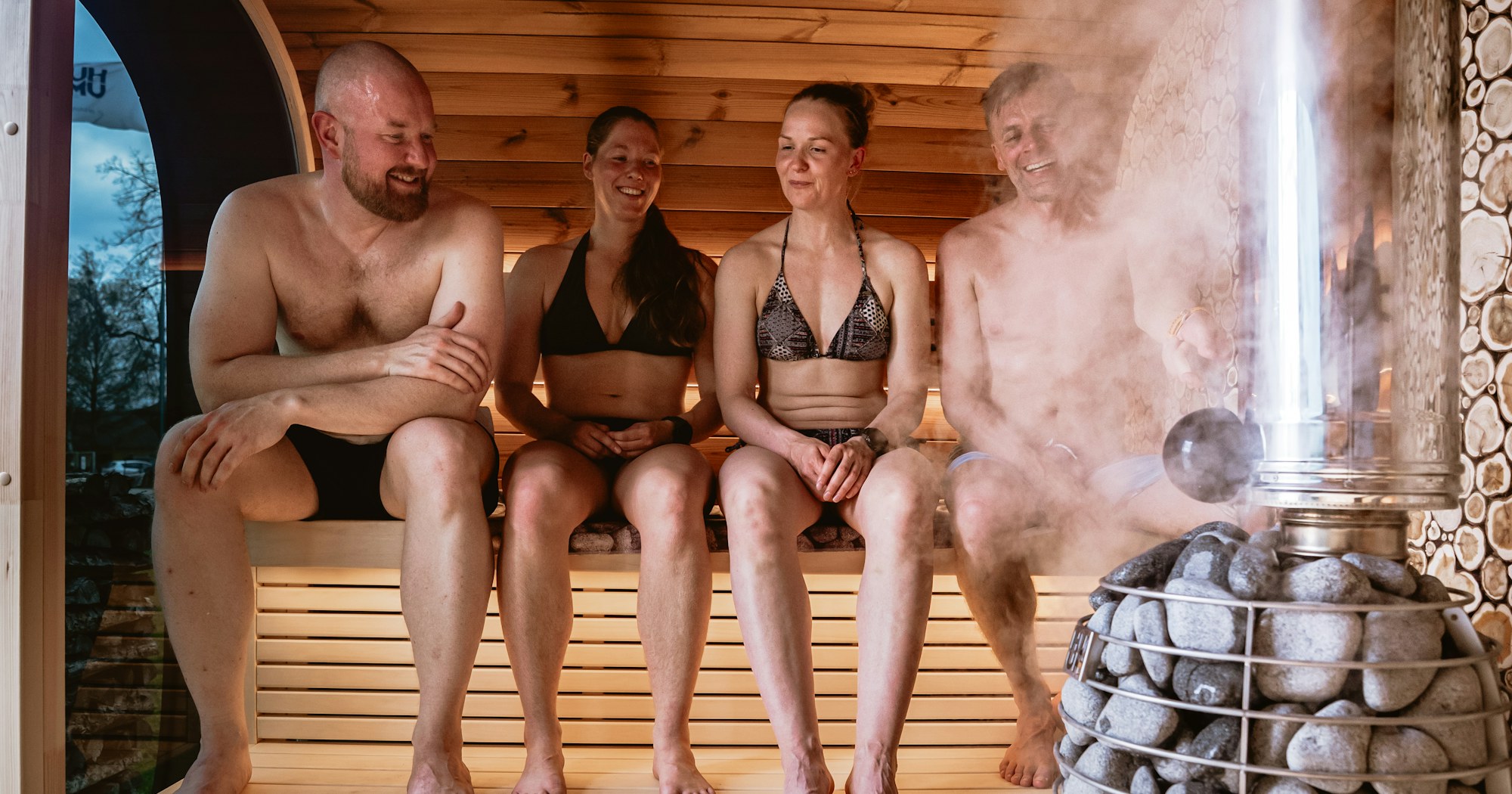
The Irish operator charges less per person and takes in more per hour of room time, because it has 12 seats and a 45-minute turn instead of seven seats and a 60-minute one. That is the whole trick. The accessible price is not a margin sacrifice made for community goodwill. It is what a room with enough benches in it can afford to charge.
US operators have generally solved the same equation from the other end, with fewer seats at a higher ticket and a longer dwell. That works, and our reporting on the economics of a ritual room found a European reference case earning roughly $12,700 a month at about 18.5% seat utilization. But it produces a product that sells to people who already buy wellness. The Irish model sells to people leaving a cold sea.
Mike Garrow, who co-founded DRYYP with Meg Garrow after living in Dublin, put the comparison bluntly on the July 12 episode of the thermal bathing podcast Badii Talk:
“Wellness culture here in America is very elevated and very Sojo Spa… It costs ten euro, twelve euro to go take a thirty, forty-five minute sauna in Ireland. And I think that’s a big part of what we want to get to is being able to create this as an accessible space for anyone.”
Mike Garrow, co-founder, DRYYP
DRYYP has not fully landed at Irish pricing. At $35 a session it is closer to the top of the Irish range than the bottom, though its session packs bring the effective rate down to $27.90 at ten sessions, and a $149 monthly membership takes a weekly bather to about $34 a visit. It operates out of Wellness Park at 745 Chapel Street, a community wellness venture created by Jess and Jamal Robinson, which is its own answer to the rent problem: share the site rather than carry it.
Why it grew that fast
Two forces, and neither is a wellness trend.
The first is sea swimming. Ireland’s cold water swimming culture expanded sharply during the pandemic, and the sauna arrived as the thing you do after the dip. That is why so much of the estate is coastal and mobile rather than urban and fixed.
The second is the pub. Irish operators talk openly about filling the social slot that drinking used to occupy, and the demographic data gives them a case: a 2023 Healthy Ireland survey found weekly drinking down 14% among 25 to 34 year olds since 2018. The picture is not uniform, since the following year’s survey put binge drinking on a typical night out at 28%, up from 24%. But a sauna session at $17 to $35 competes for the same evening and the same money as a round, and Irish operators say so out loud.
Underneath both sits a heritage argument the US market simply does not have. Ireland’s beehive-shaped drystone sweat houses, the teach allais, were in common use into the nineteenth century before modern medicine displaced them. About 300 still stand, roughly a third of them in County Leitrim, and archaeologists identified a Bronze Age sweat lodge in 2003. Irish operators can say, accurately, that they are restarting something rather than importing it.
On the June 14 Badii Talk episode about Irish sauna culture, Danielle Bradley, who runs a purpose-built aufguss sauna in Northern Ireland with her husband Ryan, framed what that is worth:
“But a whole lot of that culture was probably lost a long time ago. And it’s lovely to see it come back in… It’s nice to have your own kind of thing. This is our culture for saunas. This is how we do it.”
Danielle Bradley, on Badii Talk, June 14, 2026
The labor model is freelance
Ryan Bradley completed a foundation sauna master course in 2025 through Deborah Carr’s Anada program in the UK and now works as a freelance aufguss master, traveling sauna to sauna across Northern Ireland rather than staffing one venue. He built a backyard sauna specifically to develop rituals in, and rehearses scent and music there before running them publicly.
“[Aufguss] is an enhanced sauna experience. It’s multi-sensory. It’s aromatherapy. It’s sound. It’s a wee bit of a performance.”
Ryan Bradley, freelance aufguss master, on Badii Talk
For a US operator that solves a real problem. A trained ritual practitioner is the most expensive thing in the room and the hardest to hire, and a small venue cannot fill a full-time schedule with them. A traveling practitioner spreads that cost across several sites. It is also a live question for anyone writing job descriptions, because the freelance model imports every classification and insurance question that comes with it.
Ireland has already reached the regulation phase
This is the section to read twice, because it is the part that arrives in US beach towns next.
Kerry County Council adopted a permit regime for beach saunas that took effect in June 2026. Twelve of Kerry’s 16 Blue Flag beaches now have designated sauna service areas, from Ballinskelligs to Ballyheigue, and the Irish Examiner reported the conditions applicants must satisfy: noise prevention, signage, operating hours set to limit light pollution, first aid provision, and fire prevention. Units are not permitted on sand, even above the high water line, and anything proposed for a sand location triggers environmental assessment and consultation with the National Parks and Wildlife Service. Operators must maintain a clear line of sight to the sea and along the access route so staff can watch bathers, a condition written around cold water shock and the gasp reflex.
Ten saunas operate on the Dingle peninsula alone, and some had already received enforcement notices before the scheme existed. Councillor Anluan Dunne of the Green Party in Tralee raised the “cumulative visual impact” of commercial units on the character of the beaches, which is precisely the objection a Cape Cod or Oregon coast selectboard will hear.
Cork went the licensing route. The Echo reported in June that a Carrigaline Municipal District by-law now requires sauna operators and other beach vendors to hold an annual licence for a designated pitch at 1,400 euro, about $1,615. The licence is non-transferable, vendors supply their own bins, styrofoam is banned, and the fees fund two community wardens and additional public toilets. The council expects to extend the scheme to seven other municipal districts. And near the Forty Foot, a commercial sauna operating in the garden of a private home triggered a planning row in April 2025.
Two years from an unregulated boom to designated pitches, annual licences, sightline rules, and fire conditions. US operators watching plunge regulation arrive state by state, where one tub can hold three different legal identities, should recognize the sequence.
What actually transfers
Not the coastline. The US has cold sea swimming culture in a handful of metro areas, and most of the country cannot build a business on people walking out of cold water in February.
What transfers is the seat math and the siting. Twelve benches at an accessible price with a 45-minute turn is a different business from seven benches at a premium with a 60-minute one, and it reaches a customer the US market has mostly not tried to serve. Sharing a site with an existing community venture, as DRYYP does at Wellness Park, is how you get the fixed cost low enough for that price to work.
The caution is that Ireland’s growth ran ahead of its rules and the rules caught up inside two years, with real costs attached. An operator planning a mobile or beachfront unit in the US should assume the same arc, and should read Kerry’s conditions as a preview of the questions a council will ask: where does it sit, who is watching the water, what happens if it catches fire, and who pays for the extra toilets.
The US sauna market has spent five years proving that people will pay a premium for a beautifully built room. Ireland spent the same five years proving something harder to copy and more valuable to know: that the category works at pub prices when the room has enough benches and the site costs little to hold. The research on why communal bathing works points at frequency, and frequency is a pricing decision. Ireland priced for it.