Cold Plunge Guidance Calls for 3 ppm Chlorine, 30-Minute Turnover and a 5-Minute Sign

By Arlene Scott
Senior Wellness Correspondent & Hospitality Consultant
- Published
- Reading time
- 4 min
SaunaNews is published by SaunaShare, Inc., which also runs SaunaShare.com and SaunaMarketplace.com, where we sell many of the products we write about. Assume that experience shapes what we cover and what we don't. Who owns SaunaNews · The ownership announcement
The council behind the CDC’s model pool code published cold plunge guidance: 3 ppm chlorine, spa-rate turnover, a 5-minute sign and advice for single-user tubs.
In this story5 sections
US health departments now have a template for cold plunge plan review and inspection. The Council for the Model Aquatic Health Code, which collects, assesses and relays recommendations on the CDC’s Model Aquatic Health Code for public pools, released cold-water venue guidance in July. It covers cold plunges, ice baths, cold-soak tubs and drain-and-fill pools, from built-in vessels to single-user plug-and-play units.
The guidance “does not create regulatory requirements.” Your health department decides what applies. It was written for health agencies, operators, designers and builders, and the committee was chaired by Sarah Cheshire of Utah’s health department. It included the CDC, public health members from Wisconsin, North Carolina, Canada and Queensland, Australia, and industry members including Life Time and IAPMO.
What the guidance recommends
- Cold water 32 to 70°F. A cold-water venue is one kept below 70°F for immersions of 5 minutes or less.
- Disinfectant free chlorine at or above 3.0 ppm, or bromine at or above 4.0 ppm. Cyanuric acid is not recommended.
- Turnover the spa rate, typically 30 minutes or less, with continuous circulation and surface skimming.
- Equipment automated chemical controllers with a low- or no-flow interlock, and filters certified to a recognized standard such as NSF/ANSI/CAN 50.
- Secondary treatment designers should “strongly consider” UV, ozone or advanced oxidation.
- Design load 10 square feet per bather.
- On deck a visible thermometer and clock, slip-resistant decking and rinse showers.
- Staff an attendant trained in CPR, first aid and getting a person out of the vessel, on site during open hours.
Cold water is harder to keep clean
The guidance classes cold-water venues as high-risk under the model code because chlorine and bromine work more slowly in cold water and organic loads run higher. Hence the 3.0 ppm floor, continuous automated dosing, and the push toward UV or ozone.
Two equipment calls stand out:
- Test kits. Most poolside kits read inaccurately at low temperatures. Use kits designed for cold water, or warm the sample before testing, and keep the records.
- Salt systems. In-line electrolytic chlorine or bromine generators are “generally not recommended,” because, on limited evidence, they may make disinfectant more slowly in cold water and raise total dissolved solids. A health department may consider approving one case by case if the manufacturer documents low-temperature performance. Batch or side-stream generators don’t raise the same concern.
Small or busy venues may need more frequent water replacement than a typical pool. The guidance also calls for monitoring combined chlorine and keeping a documented cleaning schedule against biofilm.
Single-user tubs: drain between bathers, or treat the water continuously
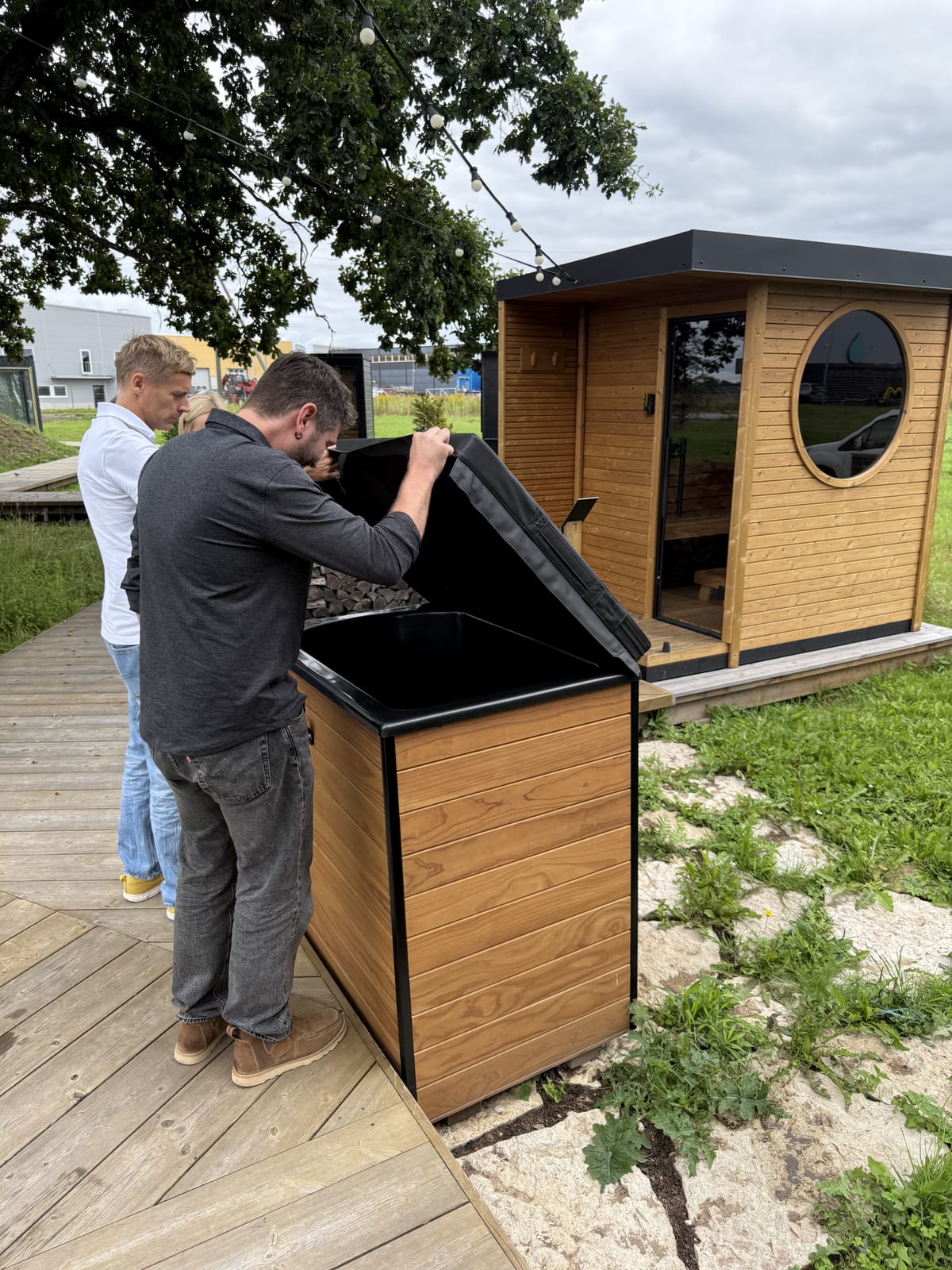
The guidance singles out plug-and-play tubs, noting that many were built for residential use and “may not meet MAHC design and construction standards without modification.” It gives operators two paths:
- No continuous recirculation, filtration and automated chemical control: drain, clean, disinfect and refill the tub between bathers.
- Shared water: continuous treatment that meets the model code, plus replacement water of at least 4 gallons per bather per day, and often more in small tubs.
It tells inspectors to require plan review for single-bather systems, to check that drain-and-refill units actually follow the process, and to judge them on performance rather than on whether they look like a traditional pool. New York’s spa-pool definition already turns on the same drain-or-treat line, as our look at a cold plunge’s three legal identities found.
What goes in the plan review packet
Beyond the model code’s usual items, the guidance asks for:
- the target operating temperature
- the circulation and treatment system design
- peak occupancy, figured at 10 square feet per bather
- condensation control for indoor rooms
- documentation that chillers, controllers, filters and pumps hold up to low temperatures and repeated disinfectant exposure
The signs
The guidance recommends posting these statements where bathers decide whether to get in:
- “Bathers should not spend more than 5 minutes in the cold-water venue in any one session.”
- “Bathers should not use the cold-water venue alone.”
- “Children aged 14 years and younger are prohibited from bathing in a cold-water venue, unless under the direct supervision of a licensed medical professional.”
- “Due to the risk of cold shock from total or partial immersion in cold water, any bather should consult a physician before using the cold-water venue.”
- “Elderly persons, pregnant women, persons using prescription medications, and those suffering from heart disease, diabetes, or high blood pressure should consult a physician before using the cold-water venue.”
- “Individuals under the influence of alcohol or other impairing chemical substances should not use the cold-water venue.”
- “Persons suffering from a communicable disease transmissible via water may not use the cold-water venue.”
It also recommends a sign on the effects of sudden cold exposure and one prohibiting running and horseplay.
What it doesn’t settle
The guidance doesn’t apply to private residential use, natural bodies of water, or temporary or inflatable portable systems unless a health department otherwise regulates them. It doesn’t override state rules either. Washington already treats commercial plunges as spa pools, as covered in the cold plunge code fight, and California’s bill to carve out single-user tubs stalled in the Assembly in May.
Using this guidance
- Ask your health department in writing whether it will use this guidance for plan review, and which parts.
- Spec equipment against it before you buy: an automated controller with a low- or no-flow interlock, filtration certified to a standard such as NSF/ANSI/CAN 50, a cold-water test kit, a UV or ozone option, and a documented answer if the tub uses an in-line salt cell.
- If a tub has no continuous treatment, drain, clean, disinfect and refill it between bathers, and log it.
- Post the signs and a clock, and staff an attendant trained in CPR, first aid and extrication.