Mobile Saunas Are Coming to St. Paul Parks: Council Votes 6-0 for a $106 License

By SaunaShare
Sauna culture and community
- Published
- Reading time
- 4 min
SaunaNews is published by SaunaShare, Inc., which also runs SaunaShare.com and SaunaMarketplace.com, where we sell many of the products we write about. That experience may change what we write about and what we don't. Who owns SaunaNews
The new license costs operators $106 a year. They need $1.5 million in insurance and Parks’ consent for each site, must stay 300 feet from homes, and can run from 6 a.m. to 10 p.m. No parks or dates are set.
In this story5 sections
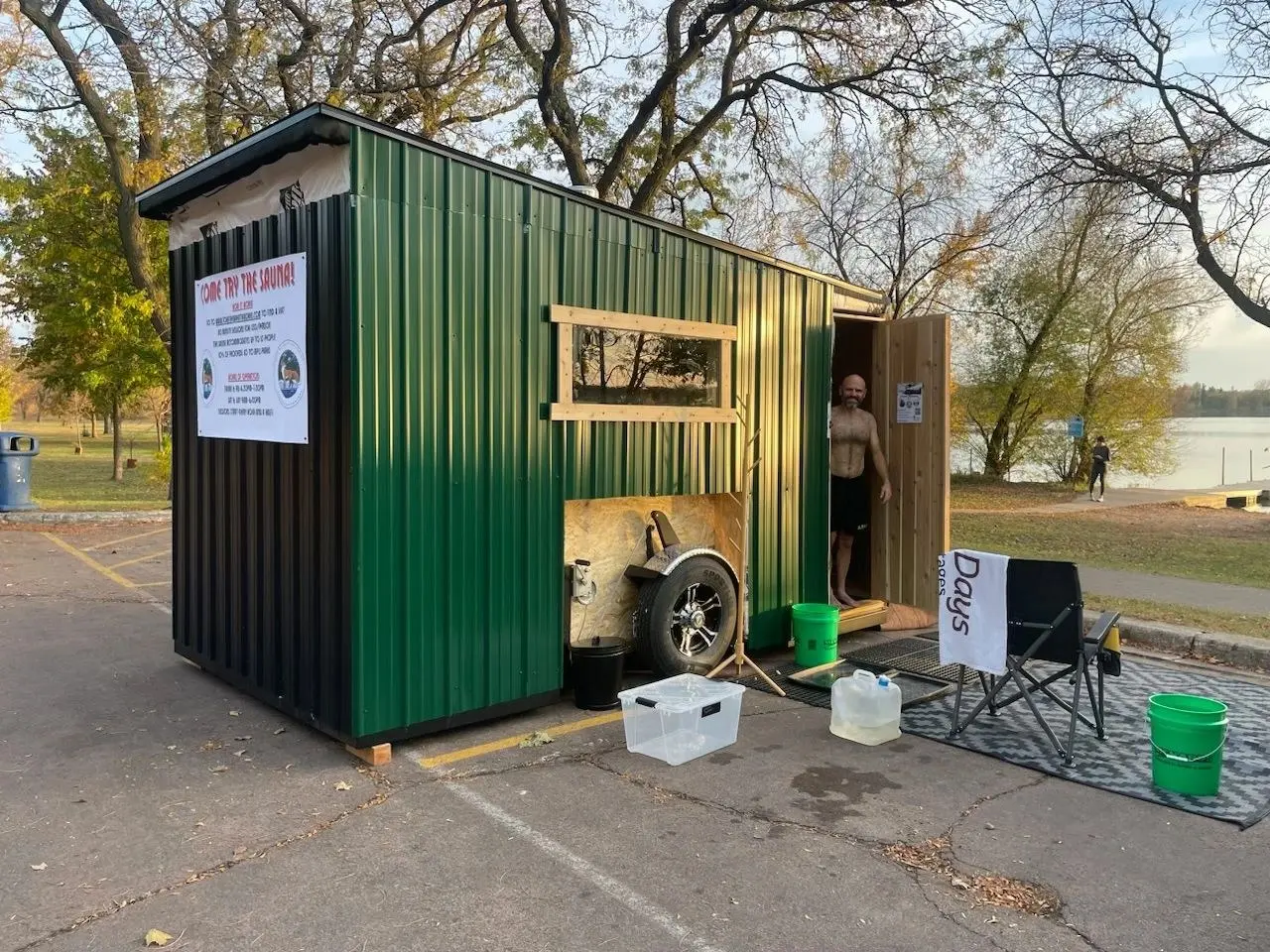
The St. Paul City Council voted 6-0 on Wednesday, November 18, to let mobile saunas operate in city parks under a new license that costs operators $106 a year. The ordinance takes effect 30 days after the mayor approves it and it is published. Saint Paul Parks and Recreation still has to choose the parks and set its own terms, so there are no sessions to book yet.
The ordinance, Ord 26-53, adds Chapter 428A, Mobile Saunas on Park Property, to the city’s Legislative Code. Councilmember HwaJeong Kim sponsored it, and Councilmember Nelsie Yang was absent for the vote. The city’s mobile sauna page said on November 19 that the city hopes to bring “a new wellness experience to Saint Paul parks in the near future.”
St. Paul’s mobile sauna license
- Where city park property, only with Parks and Recreation’s consent, and never within 300 feet of a residence. No parks have been named.
- When adopted November 18, 2026; in force 30 days after the mayor’s approval and publication. No season dates yet.
- Hours 6 a.m. to 10 p.m.
- Prices the license costs operators $106 a year; Parks may add placement and management fees, not yet set. No session prices yet.
- Insurance at least $1.5 million per occurrence and $2 million aggregate, with the city as an additional insured
- Booking nothing to book yet. The city’s page directs would-be operators to Tyler McKean in Parks and Recreation.
- Vote 6-0, Councilmember Nelsie Yang absent; sponsor Councilmember HwaJeong Kim
What an operator has to file
The license comes from the Department of Safety and Inspections and lasts a year. It can’t be transferred, and it has to be displayed on each sauna. The $106 fee matches the city’s massage practitioner and tanning facility licenses, which the department judged to cost about the same to administer, according to the ordinance. Applicants file:
- proof of liability and property damage insurance of at least $1.5 million per occurrence and $2 million aggregate, naming the city as an additional insured and certificate holder;
- plans and specifications for each sauna: photographs, mechanical schematics, construction materials, equipment types, manufacturers, model numbers, possible locations, dimensions and performance capacity;
- the power source, with installation details and any custom-fabricated equipment;
- a plan to secure the sauna when it isn’t in use;
- a plan for nuisance and safety concerns, which can cover lighting, cleaning schedules and staffing.
To renew, an operator shows continued insurance and three months of cleaning and maintenance logs. Inspectors can check a sauna at any time it’s open.
Wood fires are allowed; speakers and noisemakers are not
Wood-burning saunas are allowed. The fire must be tended at all times, with a way to put it out on hand. It must burn clean fuel such as seasoned firewood and be put out when the sauna isn’t in use. A fire official can order it out if it creates a nuisance or excessive smoke. Every power source has to meet building, electrical and fire codes.
Saunas can run only from 6 a.m. to 10 p.m. and never within 300 feet of a residence. The ordinance bans “sound amplifying equipment, television, or similar entertainment devices, lights, or noisemakers, including bells, horns, or whistles.” Saunas must be built from materials “impervious to moisture, bacteria, mold, and fungus growth” and kept sanitary. The text doesn’t say how that rule applies to the wood benches and wall boards inside most saunas.
Parks still has to pick sites and set fees
Placement stays with Parks and Recreation. No business can put a mobile sauna on park property without consent from the department’s designee, and Parks can set its own fees and rules for each site. City staff gave the council’s Policy Committee a presentation on mobile saunas in parks on May 20. The ordinance’s preamble notes that other Minnesota municipalities already license mobile saunas or run public saunas of their own on park property.
The council file listed the ordinance with the mayor’s office on November 19. Publication in late November would put the effective date in late December.
St. Paul has hosted a park sauna before. In 2016 the council accepted Knight Foundation funds for Little Box Sauna’s month-long event at Como Regional Park.
A Minneapolis operator says its parks take 10% of sauna revenue
All four written comments in the council file backed the ordinance. One came from Nick Fox, owner of FoxFire Breathworks, which runs public wood-fired saunas at Lake Nokomis and Bde Maka Ska in Minneapolis and is opening a third location in Eden Prairie this winter. Fox wrote that he employs more than 20 sauna hosts, had more than 4,000 visitors last season, and that “the parks receive 10% of proceeds from the sauna.” He also cuts ice holes in both lakes for winter dips and wrote that he looks forward “to St. Paul setting up a permitting process for sauna permits and ice holes.” St. Paul’s ordinance doesn’t mention ice holes.
FoxFire sells seats at $30 for an 80-minute session, for up to eight people at Lake Nokomis and ten at Bde Maka Ska, according to its booking page. Mobile saunas that sell seats at public sessions charge a median $35, a SaunaNews survey of 196 US public saunas found this month.
Minnesota sauna and bathhouse businesses took eight SBA-backed loans from fiscal 2020 through fiscal 2026, more than in any other state, including two mobile sauna operators in the east metro, according to a SaunaNews analysis of federal loan records.
Other public landowners are turning to private sauna operators too. Nanaimo, British Columbia, signed a revenue-sharing pilot with Gatherwell for an electric sauna at Westwood Lake Park, and Idaho State Parks put a sauna concession out to bid in April.
Operators can put their questions to Parks now
The city’s page lists Tyler McKean in Parks and Recreation as the contact for anyone who wants to run a mobile sauna on parkland. The open questions are the ones the ordinance leaves to Parks: which parks, what Parks will charge for placement, whether it takes a share of revenue, and whether bathers can plunge in a lake.