Grotto Baths Brings a Social Bathhouse to Miami’s Wynwood This Summer
A real estate developer, a former Standard Hotels culture director, and the co-founder of Tender Greens are building Miami’s first modern social bathhouse in the heart of Wynwood. The 7,500-square-foot venue opens this summer with a full thermal circuit, no phones, and no alcohol.

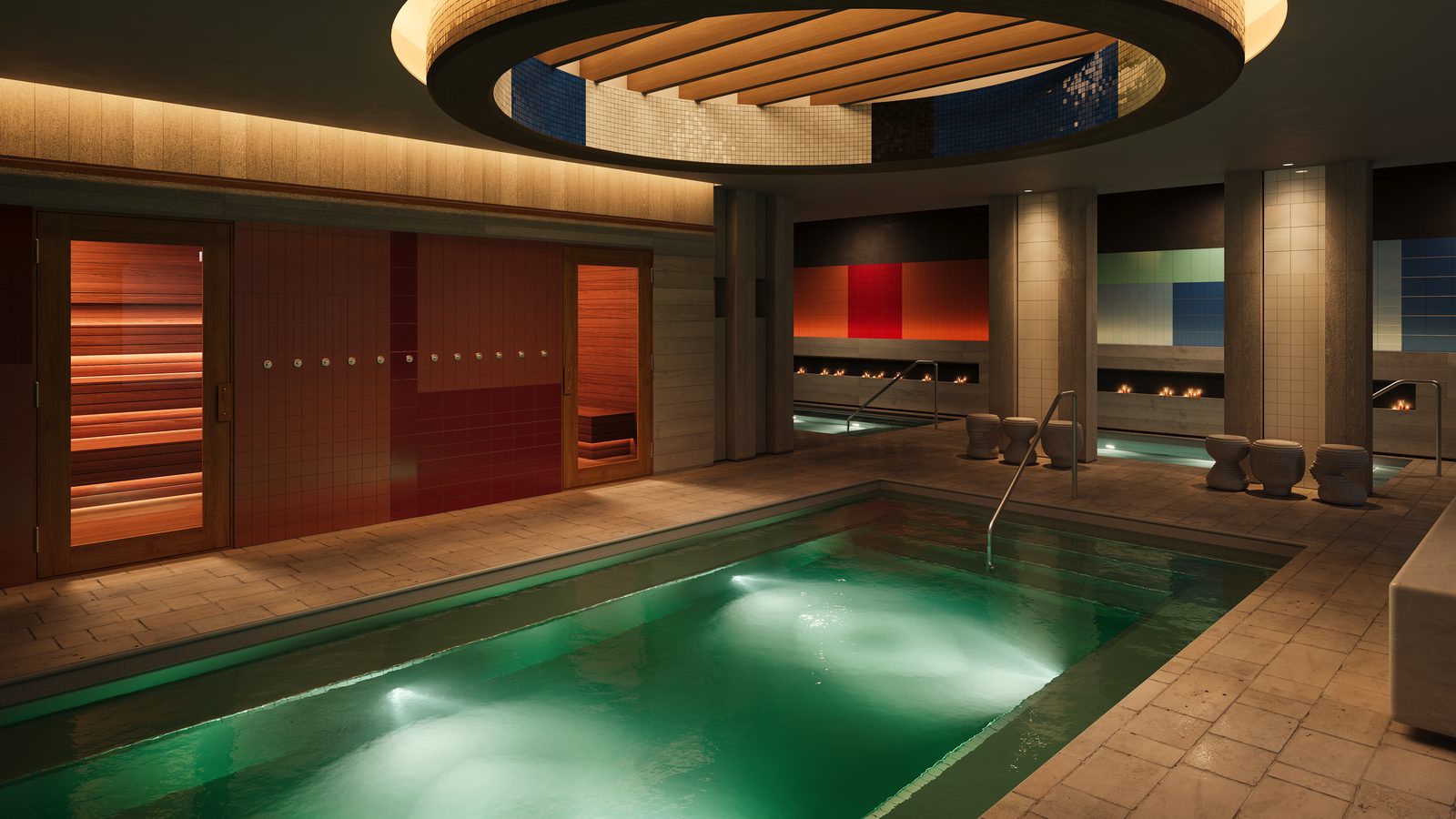
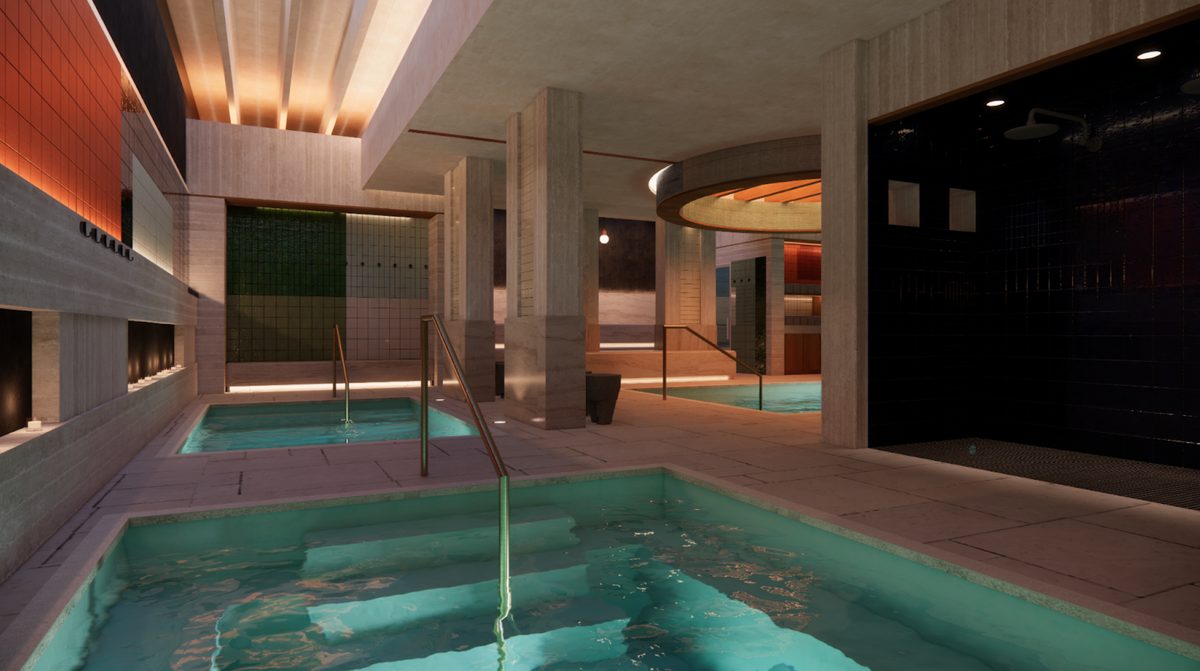
Rendering of Grotto Baths in Wynwood, Miami. Photo: Grotto Baths.
A 7,500-square-foot social bathhouse is about to open in one of Miami’s busiest nightlife districts, and the people behind it are not wellness founders. Grotto Baths, set to open this summer at 325 NW 28th Street in Wynwood, is the project of real estate developer Nathan Kaplan and co-founder Nick Anselmo, with an operating team that includes a former nightlife and culture director from The Standard Hotels and the co-founder of the restaurant chain Tender Greens. The venue will run a thermal circuit of ceremonial sauna, infrared sauna, steam room, thermal bath, mineral pool, and cold plunge, with no phones and no alcohol.
In a city defined by bars, clubs, and bottle service, that combination is a deliberate provocation. Grotto is not positioning itself as a spa. It is positioning itself as the thing that replaces the bar.
Key Facts
- Venue: Grotto Baths, 325 NW 28th Street, Wynwood, Miami
- Size: 7,500 sq ft total (5,000 sq ft indoor bathing, 2,500 sq ft outdoor lounge and cafe)
- Opening: Early summer 2026 (exact date not yet confirmed)
- Founders: Nathan Kaplan (real estate developer) and Nick Anselmo
- Operating partners: Darryl Gibson (former Regional Director, Culture and Programming, The Standard Hotels) and Erik Oberholtzer (co-founder, Tender Greens)
- Architect: Stokes Architecture + Design
- Creative direction: Cohere, founded by Antoinette Marie Johnson
- Artist: Emmett Moore (Miami-born), sculptural installations from reclaimed South Florida construction materials
- Thermal circuit: Ceremonial sauna, infrared sauna, steam room, thermal bath, mineral pool, cold plunge
- Food and beverage: Alcohol-free Sensory Bar and Cafe, farm partners French Farms and Paradise Farms (Homestead, FL)
- Policy: Phone-free
- Under construction since: October 2025
- Company founded: November 2023
The Team Tells the Story
The founding team is the signal. Nathan Kaplan, the lead founder, comes from real estate, not wellness. That means Grotto was underwritten as a real estate play: a developer saw a site in Wynwood, modeled the returns, and decided a bathhouse pencils better than another restaurant or co-working space. The co-founder, Nick Anselmo, brings a data and consulting background, having served as a senior manager in global business intelligence analytics at Abbott before co-founding the venture in November 2023.
The operating side is where the thesis gets specific. Darryl Gibson, who joined as a partner in October 2025, spent his career building the kind of cultural programming that turned hotels into destinations. He was Regional Director of Culture and Programming at The Standard Hotels (including the Standard Spa in Miami Beach), Programming and Experience Director at Faena Miami Beach, and Director of Culture and Nightlife at André Balazs Properties, which operated the Chateau Marmont. Before any of that, he was General Manager at Bungalow 8 in New York, the early-2000s nightlife institution. His resume is a map of how American hospitality moved from nightclub to hotel lobby to wellness floor.
“When I moved to Miami, there weren’t any communal bathing places, except for hotel spas and some of the fancier gyms,” Gibson told A Hotel Life. That gap, he said, is what makes the project viable.
Erik Oberholtzer, the fourth partner, co-founded Tender Greens in Los Angeles in 2006, as Time Out Miami reported, growing it into a nationally recognized fast-casual chain before shifting into hospitality consulting. His role at Grotto is to build the food and beverage operation: a “Sensory Bar and Cafe” serving seasonal bites and adaptogenic drinks sourced from local farms, including French Farms and Paradise Farms in Homestead. The goal, per Time Out Miami, is “less juice bar and more thoughtful culinary experience.”

What the Space Looks Like
The 7,500-square-foot venue splits into two zones: 5,000 square feet of indoor bathing space and a 2,500-square-foot outdoor lounge and cafe. Construction began in October 2025 at 325 NW 28th Street, in the northwest quadrant of Wynwood, as development tracker Traded.co confirmed.
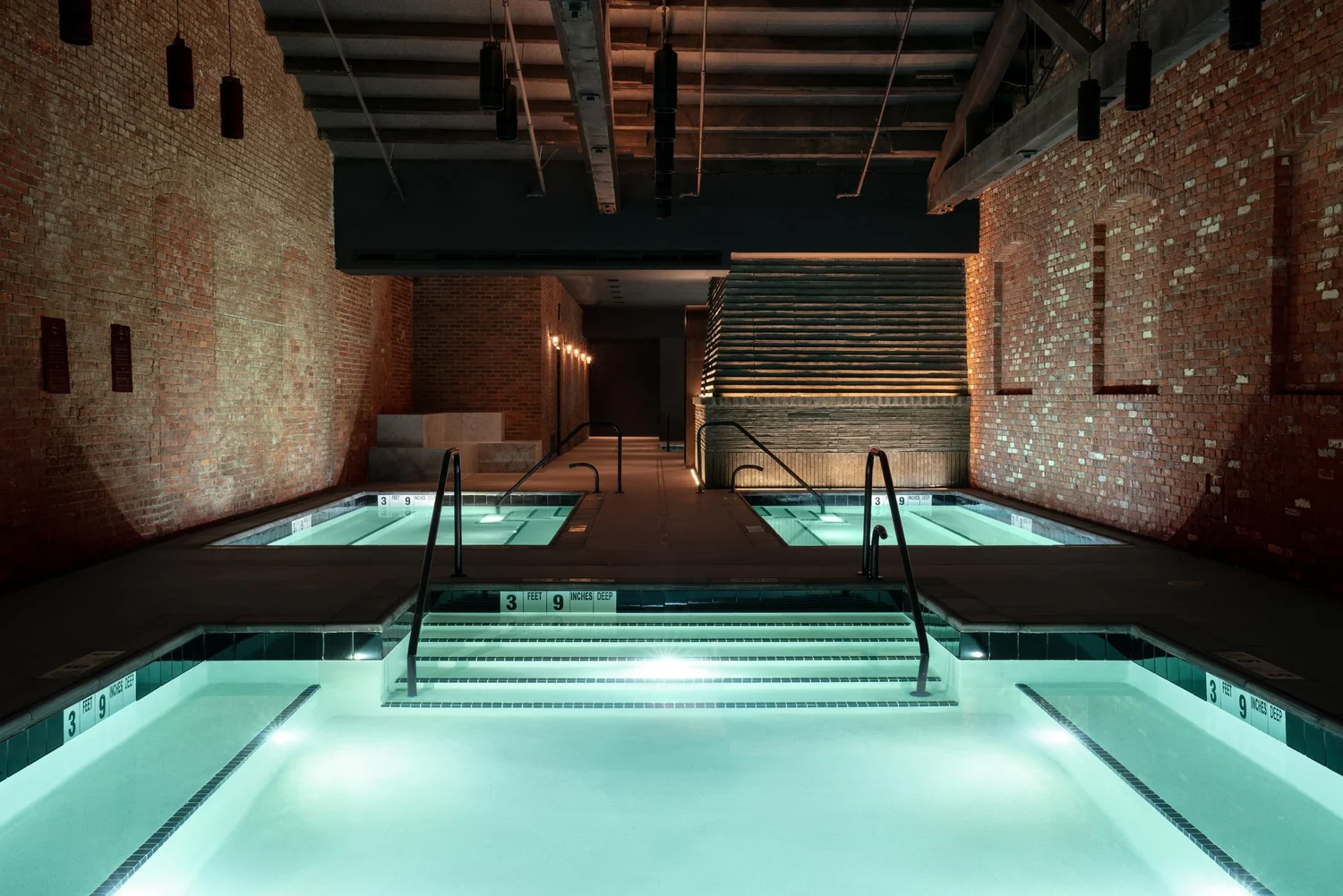
The design, by Stokes Architecture + Design with creative direction from Antoinette Marie Johnson’s agency Cohere, draws on Brazilian modernism: arches, zigzags, and rhythmic forms in stone, brick, and travertine. The official announcement describes the material palette as “grounded in tactile materials,” as Modern Luxury reported, meant to evoke warmth in a tropical setting, not the industrial or Scandinavian minimalism that defines most social bathhouses in the Northeast.
Miami-born artist Emmett Moore is creating sculptural installations from reclaimed materials sourced from South Florida construction sites, referencing coral rock, limestone, and mid-century breeze-block architecture. One installation at the entrance is inspired by his exhibition at the Bass Museum, also titled “The Grotto.”
The thermal circuit includes a ceremonial sauna, infrared sauna, steam room, thermal bath, mineral pool, and cold plunge. Early coverage from Miami New Times also listed aufguss rituals, breathwork sessions, and leaf ceremonies as planned programming. The venue will be phone-free throughout.
Where Grotto Fits in the Market
Grotto calls itself “Miami’s first modern social bathhouse,” and the claim holds up with a qualifier. Miami New Times noted that the announcement came weeks after the opening of Hürrem, a Turkish hammam in North Miami billed as the largest authentic hammam in the country. Miami Beach also has the long-running Russian and Turkish Baths. But neither operates the social-club, thermal-circuit model that has defined the category in New York, Toronto, and, increasingly, across the United States. In that specific format, Grotto is a first for the Miami market.
Nationally, the social bathhouse category is in the middle of a capital surge. Bathhouse, the New York operator, raised $35 million from Imaginary Ventures in May to fund an eight-city expansion, building on a business that SaunaNews reported was on pace for $120 million in annual revenue. Othership has raised roughly $20 million and plans three New York locations by 2027. Portal° Thermaculture is building a five-metro chain without outside investors. Lore Bathing Club opened in NoHo in January. Schwet is coming to Tribeca. The Altar is slated for Chelsea.
Grotto’s capital structure is different from all of them. It is developer-funded, not venture-backed. Kaplan is underwriting the project as a real estate investment, which means the financial thesis is about the asset, not about building a brand to flip. That distinction matters: it suggests that at least one developer in South Florida has concluded that a bathhouse generates enough revenue per square foot to justify a ground-up build in a high-rent district, without needing the growth narrative that venture capital requires.
The Miami Test
Every social bathhouse that has opened in the past three years has done so in a cold-weather city. Bathhouse is in New York. Othership started in Toronto. Portal° launched in Minneapolis. The implicit pitch has always included a weather component: when it is freezing outside, a hot sauna and a cold plunge feel urgent.
Miami flips that. Average winter highs sit in the upper 70s. Summers are in the 90s with near-total humidity. The thermal contrast that drives walk-in traffic in January in Brooklyn does not exist in Wynwood. What does exist is a population that spends more per capita on going out than almost any other American city, and a cohort of younger residents who are looking for social venues that do not center on alcohol. SaunaNews has tracked this shift: wellness is moving into the social slot that bars and clubs used to own, and Grotto is a direct bet on that thesis in one of the country’s most nightlife-saturated markets.
The alcohol-free policy sharpens the bet further. In a city with one of the densest bar-per-capita counts in the United States, Grotto is wagering that the social experience of communal bathing, combined with a serious food and drink program (minus the alcohol), is enough to draw the same crowd. Gibson’s nightlife background is not incidental: he knows the customer, and he is arguing that the customer is ready for something different.
What Comes Next
Grotto has not disclosed pricing, membership tiers, or a confirmed opening date. All public sources say “early summer 2026.” For context, day passes at Bathhouse in New York start at $39, with memberships running $145 to $225 a month. Othership’s single sessions in New York start at $58. How Grotto prices against those benchmarks, and whether it adopts a membership model, a day-pass model, or some hybrid, will say a lot about how the team reads the Miami market.
The other open question is what it actually takes to build and operate a facility like this at 7,500 square feet. That footprint is roughly one-fifth the size of Bathhouse’s 35,000-square-foot New York locations, which means the guest-flow design, revenue-per-square-foot math, and capacity management will all look different. Smaller can be an advantage (lower buildout costs, faster break-even) or a constraint (fewer guests per session, less room for premium programming). The answer depends on execution.
Why It Matters
When a real estate developer, a former nightlife operator from The Standard and Faena, and a restaurant founder build a social bathhouse together in Miami’s busiest going-out district, it confirms something the industry has been signaling for two years: commercial sauna is becoming an operating model, not a decorative amenity. Grotto is not a spa inside a hotel. It is a standalone venue designed to compete for the same Friday night as the bar next door. That a developer is underwriting it as real estate, not a lifestyle brand play, makes the signal stronger. If it works in a warm-weather nightlife city without venture capital, the category just got a new proof point.
The Bottom Line
Grotto Baths is the first social bathhouse to test the category in a city that does not need thermal relief. The team is uncommonly well-assembled for the task, and the capital structure signals conviction that a bathhouse can pencil as real estate. Pricing, programming, and an opening date are still to come. When they arrive, SaunaNews will be watching.
Arlene Scott
Senior Wellness Correspondent & Hospitality Consultant
Arlene Scott brings over fifteen years of reporting and consulting experience across energy infrastructure, sustainable design, and thermotherapy-focused hospitality.
Full byline
Arlene Scott is a Senior Wellness Correspondent for SaunaNews.com, bringing over fifteen years of experience at the intersection of energy infrastructure, sustainable design, and thermotherapy. Her work focuses on the physiological benefits of passive heat therapies and the sustainable integration of sauna culture into modern wellness routines.
Arlene's background is rooted in the clean energy transition. She was a founding writer at MicrogridMedia.com, where she covered the technical and economic viability of desalination projects, microgrid deployments, and distributed renewable energy systems. During the mid-2010s, she was a regular contributor to Greentech Media (GTM) during its independent era — prior to the Wood Mackenzie acquisition in 2016 — reporting on the early integration of thermal energy storage and sustainable infrastructure.
Transitioning her focus from macro-energy systems to human-scale wellness, Arlene now applies her technical background to the hospitality sector. She operates as an independent consultant, advising boutique hotels and eco-resorts on the design, energy efficiency, and historical authenticity of commercial sauna and thermal spa installations. Her consulting work ensures that high-end wellness facilities balance traditional Nordic bathing principles with modern sustainable engineering.
Arlene holds a specialized certification in Applied Thermic Wellness from the Nordic Institute of Passive Heat Studies (NIPHS) and is a recognized associate member of the International Sauna Association (ISA). When she isn't reviewing the latest innovations in infrared technology or consulting on a new resort project, Arlene can be found tending to her own traditional wood-fired sauna in the Pacific Northwest. You can read her complete archive of essays on energy, wellness, and sustainable living at www.arlenescott.com.