
Wellness Is Coming for Nightlife

By Arlene Scott
Senior Wellness Correspondent & Hospitality Consultant
- Published
- Updated
- Reading time
- 8 min
SaunaNews is published by SaunaShare, Inc., which also runs SaunaShare.com and SaunaMarketplace.com, where we sell many of the products we write about. Assume that experience shapes what we cover and what we don't. Who owns SaunaNews · The ownership announcement
Othership’s event-led model shows how social sauna is evolving into a true nightlife category: less recovery utility alone, more engineered belonging through sober, phone-free evening formats.
In this story4 sections
September 2026 update: movement, workshops and DJ sessions
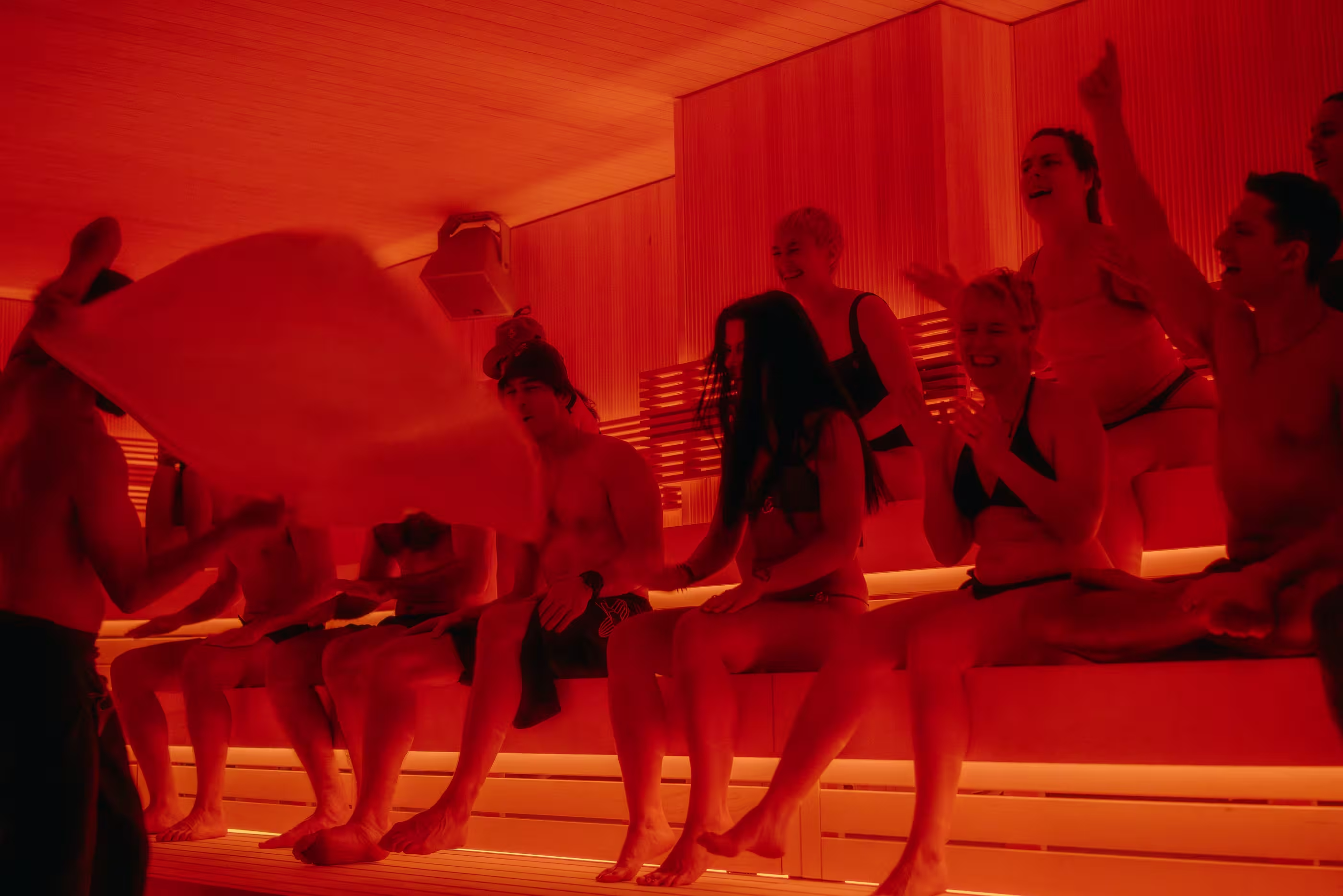
Updated September 28, 2026. Othership’s recent programming gives the social-sauna model some concrete new examples. Sanctum listed collaborations at Othership Williamsburg for August 29 and September 19: a 150-minute program beginning with outdoor movement in the breezeway, followed by a 75-minute Othership Free Flow.
At the same Brooklyn location, Othership’s September 20 HRV Workshop + Unwind listing paired a 45-minute talk and questions with guest facilitator Salim Najjar with a 60-minute guided session. HRV stands for heart rate variability. The listing establishes the workshop format, not a measured health outcome.
Music remains part of the calendar, too. Flatiron listed AMANDAFEST, a Beat Drop DJ takeover, for September 26. These dates are past listings, not upcoming ticket recommendations. Together, they show how a bathhouse can program movement partnerships, guest workshops and evening socials around its existing sauna and plunge facilities.
The strongest new challenger to bars may not be the mocktail lounge. It may be the social sauna.
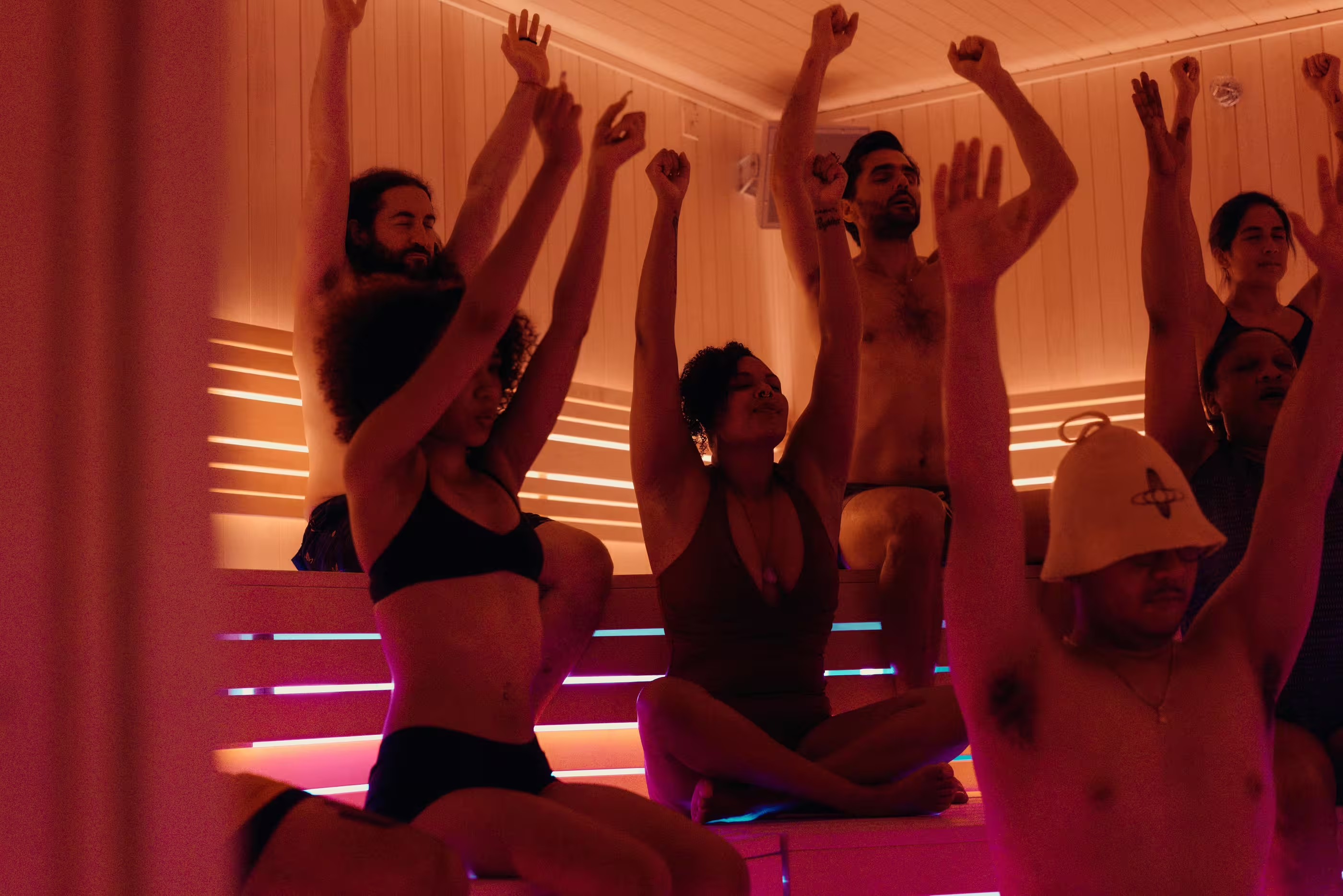
Othership’s growth across Toronto and New York now reads like a blueprint for what some operators call “reverse nightlife”: evening social infrastructure engineered around contrast therapy, guided breathwork, music, and phone-free communal time instead of alcohol service. Its current mix of singles socials, comedy formats, DJ-led sessions, runners nights, Shabbat programming, and couples formats suggests a deliberate strategic move from “recovery add-on” to “night-out destination.”
Part I: Why “wellness as nightlife” is scaling
1) The demand signal is structural, not seasonal
The category tailwind extends beyond Dry January marketing cycles. Multi-year consumer research now points to a broad sober-curious shift, especially among younger demographics, and US self-reported drinking participation remains historically low (Gallup: 54% in 2025). At the same time, loneliness has become a measurable public-health and economic issue, with social connection increasingly treated as a paid service in fitness and wellness environments.
Those two macro currents (less alcohol and more demand for intentional in-person connection) create the opening social sauna operators are exploiting. In this model, the product is not just heat exposure. It is belonging engineered through repeat rituals.
2) Othership’s origin story explains its operating logic
Othership began with backyard and garage sessions in Toronto before scaling to commercial sites. That grassroots start matters because the core product was community behavior before it was real estate. By the time the company moved into formal locations, it had already validated a high-frequency social ritual: people would repeatedly show up for guided hot/cold sessions when the environment made vulnerability feel safe and structured.
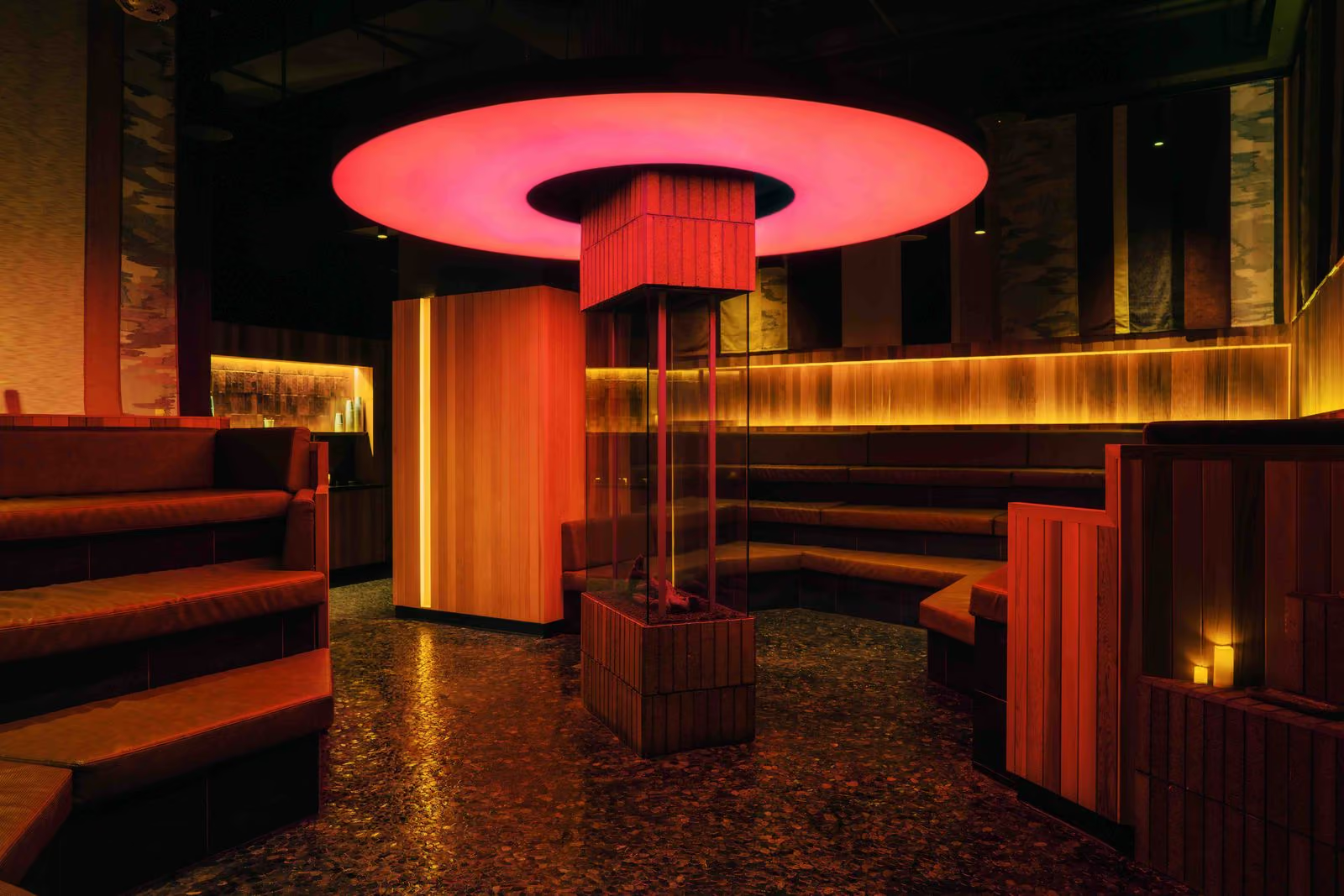
The expansion path now includes two Toronto flagships, two New York locations (Flatiron and Williamsburg), and a signed Upper East Side project targeted for 2027. The UES plan (publicly reported as a 14,000-square-foot, multi-level buildout) underscores how capital-intensive this category becomes once operators move from boutique wellness to institutional urban nightlife replacement.
3) The event calendar is the moat
Scroll an Othership calendar and the strategy becomes explicit: recurring themed events create a reason to go out tonight, not just recover tomorrow.
- Lovership / Singles Social: Contrast-therapy dating format built around shared discomfort, movement, and facilitator-led interaction.
- Comedy Night: Stand-up programming inside a high-heat sauna with cold-reset intervals between sets.
- DJ Takeovers / Sauna Raves: Sober-curious dance energy translated into thermal cycles, music arcs, and guided breath.
- Shabbat Social Schvitz + affinity nights: Cultural and community-tailored sessions that widen audience entry points.
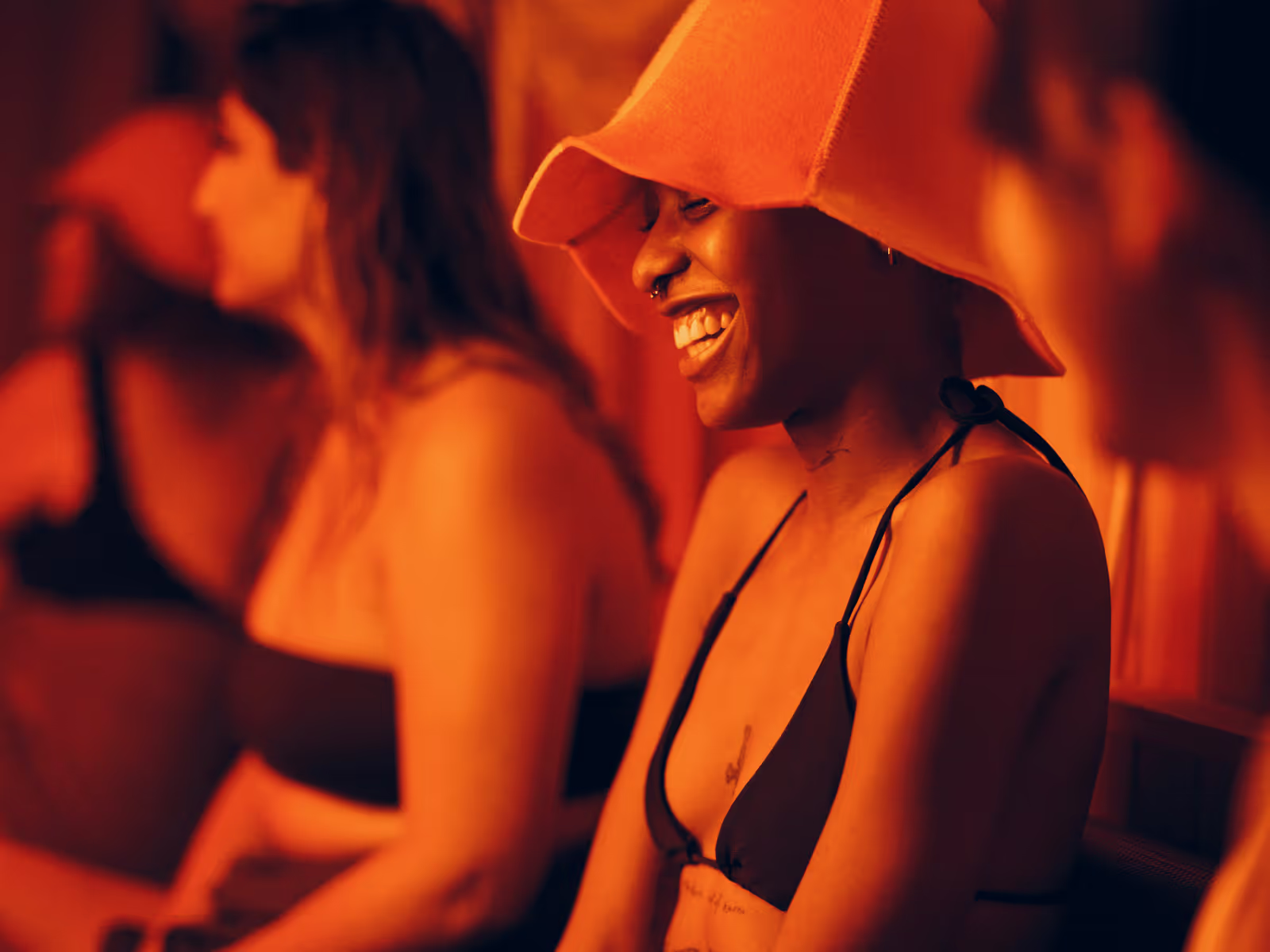
This is nightlife function in a wellness format: mood-shifting, social permission, a shared script, and a story-worthy arc over a two-hour window.
Part II: Competitive positioning and the economics of state-shifting
4) The market is stratifying fast
The alcohol-free social category is no longer a single lane:
- Othership: Event-led communal bathhouse model with explicit nightlife substitution.
- Remedy Place: Clinical, high-luxury “social wellness club” positioning across breathwork, cold exposure, and medical-adjacent modalities.
- Bathhouse: Large-footprint thermal hospitality, occasionally intersecting with underground nightlife energy.
- Sauna House and regional operators: Replicable social bathing models moving into smaller US markets.
The strategic distinction is simple: many brands can sell recovery. Fewer can consistently sell Friday-night relevance.
5) Why investors and landlords care
Social wellness operators are attractive because they combine recurring membership revenue with event monetization and unusually sticky community behavior.
For landlords, high-engagement wellness anchors can drive traffic and support residential or mixed-use positioning. That helps explain the large leases and heavy MEP/HVAC investment required for advanced sauna, steam, plunge, and lounge environments in dense urban markets.
Othership’s reported funding trajectory and pricing architecture reinforce the thesis: premium enough to support experiential operations, but still within range of a typical city night out. In other words, the comparison set is less “boutique fitness class” and more “dinner + drinks + entertainment.”
The cultural tension: connection vs. “wellness guilt”
The boom is not universally celebrated. Consumer reactions show a split between people who describe social sauna as psychologically life-changing and critics who see an expensive, aestheticized optimization culture. Common concerns include price accessibility, class signaling, and the pressure to perform an idealized wellness identity.
That tension is important for operators. The brands that scale long-term are likely to be the ones that preserve rigor and safety while reducing intimidation: clearer newcomer pathways, multiple intensity levels, and community norms that feel inclusive rather than performative.
What this means for sauna operators
The commercial takeaway is not that every operator should copy Othership’s exact brand language. It is that the competitive battlefield has shifted.
- Old framing: sell utility (recovery, resilience, longevity).
- New framing: sell utility plus social ritual (a recurring reason to gather at specific evening hours).
Heat and cold are now table stakes in many urban markets. Programming, facilitation quality, and community design are the differentiators deciding who captures discretionary nightlife spend. The unit economics that make this programming work (what a certified Sauna Master costs, what a 30-to-90-seat performance heater draws, and what the resulting labor ratio does to a spa P&L) sit in SaunaNews’s separate analysis of the business of Aufguss.