Thermory Joins the ThermoWood Association With Certified Plants in Estonia and Finland

Research, standards and the sauna industry
- Published
- Reading time
- 5 min
SaunaNews is published by SaunaShare, Inc., which also runs SaunaShare.com and SaunaMarketplace.com, where we sell many of the products we write about. That experience may change what we write about and what we don't. Who owns SaunaNews
The association’s auditor lists Thermory’s plants in Loo, Estonia, and Teuva, Finland, for both ThermoWood classes. Its thermo-aspen and thermo-alder sauna boards come from a third plant, made under pressure.
In this story7 sections
- 01Loo and Teuva hold the certificates
- 02Thermory says stricter entry rules are why it joined
- 03Every certified plant gets a yearly audit and a board test
- 04Thermo-aspen and thermo-alder come from Reola, made under pressure
- 05The US trademark covers wood for “sauna structures”
- 06Three of the 20 certificates are in North America
- 07Ask for the certificate, the plant and the species
Thermory has joined the International ThermoWood Association, the Helsinki group that owns the ThermoWood trademark, and two of its plants are certified to make ThermoWood: Loo, in Estonia, and Siparila’s plant in Teuva, Finland. Both are in the public certificate register kept by the association’s outside auditor, Control Union Finland, also known as Finotrol.
The association welcomed Thermory on November 9, and Thermory USA’s announcement, dated November 19, ran in its LinkedIn newsletter. Thermory, one of Estonia’s cluster of sauna makers, calls itself the world’s largest manufacturer of thermally modified wood and sauna materials. It’s the only Estonian company among the association’s 20 permanent members in 10 countries.
Its thermo-aspen and thermo-alder sauna boards come from a third plant, Reola, by a different process. Reola isn’t in the register, and the certificates don’t cover those boards.
Loo and Teuva hold the certificates
Each certificate covers both ThermoWood classes: Thermo-S, treated at about 374°F, and Thermo-D, about 414°F for Scots pine, spruce and ash. The association’s handbook recommends either class for saunas, and Thermo-D for decking and exterior cladding.
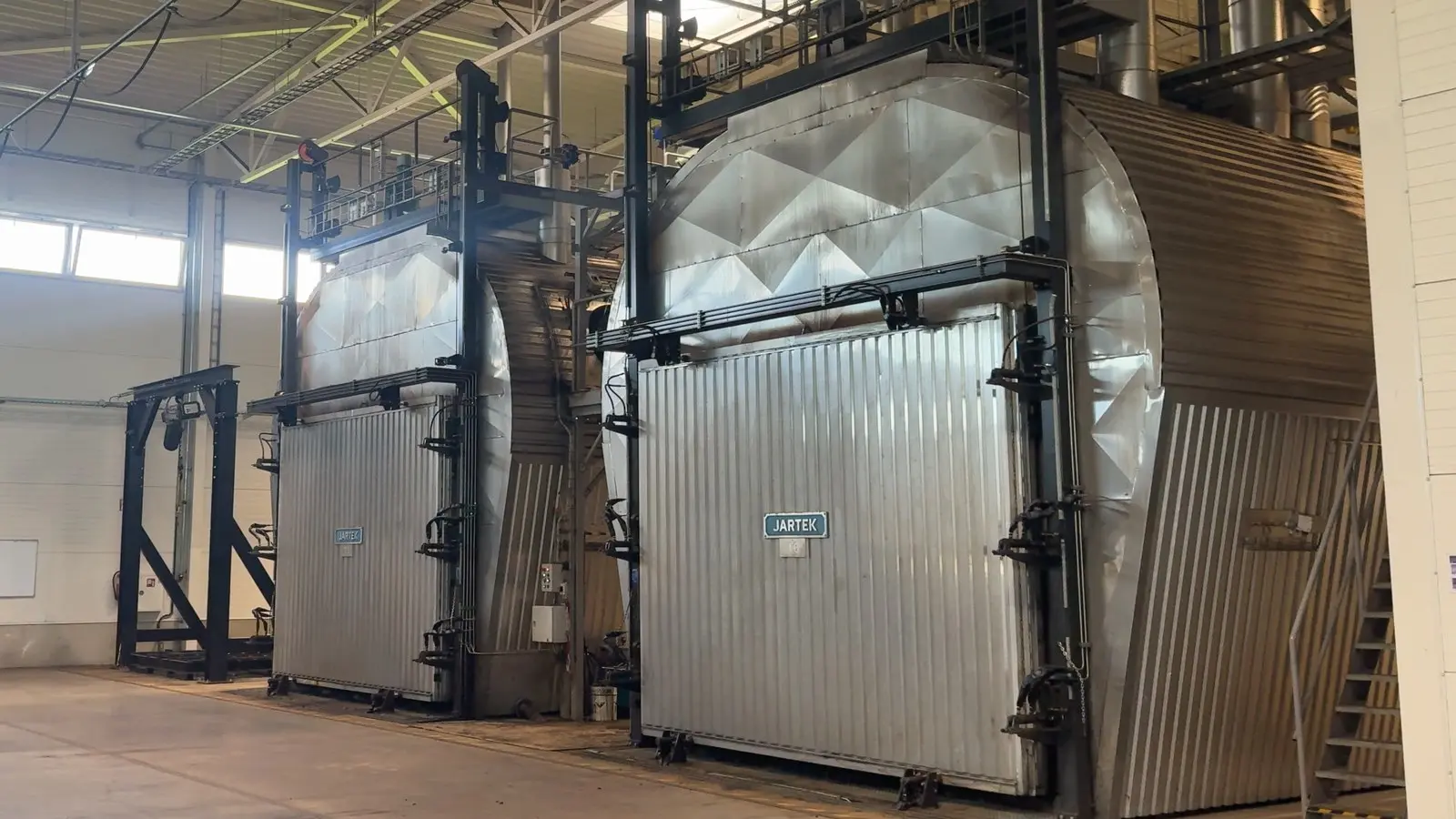
- Loo, outside Tallinn: Certificate 133-01, held by Thermory AS. Thermory’s plant list has it making decking, cladding and flooring. Four kilns from Jartek, a Finnish maker and association member, went into a new hall there in late 2021.
- Teuva, in western Finland: Certificate 132-01, held by Siparila, a Thermory Group company. The plant list has it making painted decking and cladding.
Thermory USA says all its wood is modified in Estonia, so Loo’s is the certificate for a US buyer to ask about.
Teuva has been in the association before. Siparila still carries Suomen Lämpöpuu as a trade name there, and Suomen Lämpöpuu was a listed ThermoWood producer as recently as May 2020. Ha Serv, an Estonian sauna-wood maker, bought it in 2017 and merged with Thermory the next year.
Thermory says stricter entry rules are why it joined
The association “has strengthened its membership standards, introducing performance benchmarks and independent third-party testing,” Thermory USA wrote. “That’s what made this the right time for Thermory to join.” Thermory submitted product samples, which it says met the association’s performance requirements. The announcement doesn’t name the products or list the benchmarks.
Matt Stansell, Director of Building Products at Thermory USA, said the “commitment to independent testing and accountability makes membership meaningful.” For the parent, sales and marketing director Katrin Reinaste-Parve said it is increasingly important to “raise awareness, champion consistently high quality and strengthen industry standards.”
The association’s joining steps, which weren’t on its site in June, start with an eligibility check and an initial audit by a third-party auditor. The board then reviews the application and either admits the company or puts it on a year of monitoring. The quality system behind them, audited by an outside inspector, dates to 2006.
A new producer pays a €30,000 entrance fee (about $33,000), then €2,640 to €13,200 a year (about $2,900 to $14,500) depending on volume. In return it can use the trademark and gets the association’s shared research, its quality control system and a place at two general meetings a year. A dealer can join as a cooperative partner for €2,000 a year (about $2,200).
Every certified plant gets a yearly audit and a board test
The continuing checks are set out in the ThermoWood Handbook 2025:
- Audit: Each production plant is audited at least once a year by an accredited outside inspector.
- Product test: Once a year, an approved outside lab tests finished boards. The auditor’s representative picks them.
- What gets inspected: Moisture level, surface and interior cracks, color, and process parameters.
- If a plant falls short: Its certification can be revoked.
Decay resistance isn’t on that list. It can be on the certificate itself: the one Belgium’s LDCwood holds names the plant, both classes, and durability classes 1 and 2 for Thermo-D. Thermory declares its own. Its 2026 declaration for uncoated cladding lists thermally modified spruce, red oak and ash in Class 1, the top durability class, and Scots pine and radiata pine in Class 2.
Thermo-aspen and thermo-alder come from Reola, made under pressure
ThermoWood is the name of one process: heat and steam at atmospheric pressure, with no added chemicals. Permanent members must produce with “high temperature, normal air pressure and steam,” and certificates are issued plant by plant.
Thermory’s thermally modified wall panels and bench boards are made under pressure. The wood goes into a high-pressure chamber, where it is heated while the pressure rises to about 130 pounds per square inch, according to its June 2026 sauna catalog. Thermory says that modifies the wood without over-drying it and limits cracking and warping.
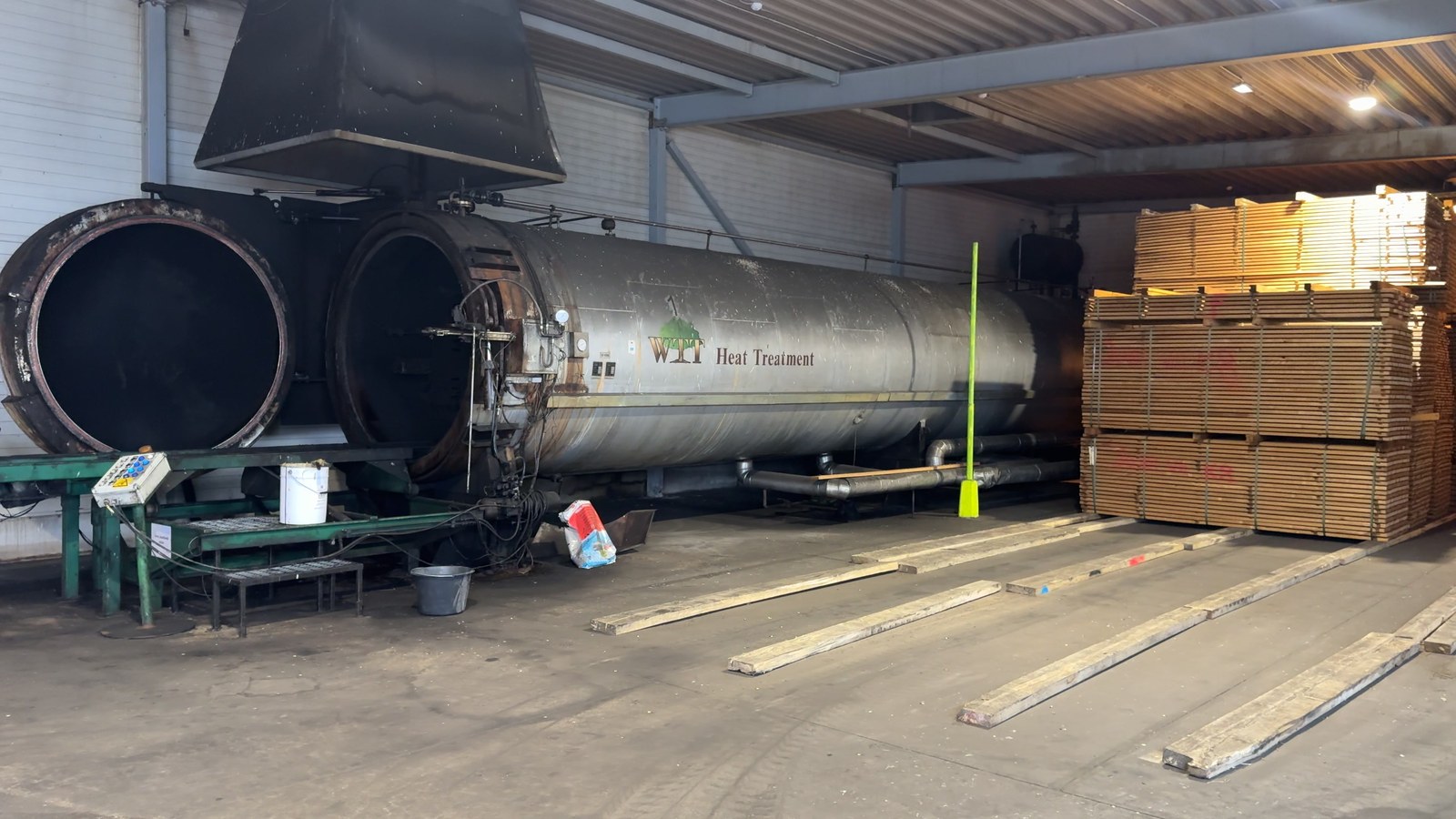
Thermory’s plant list puts sauna materials at Reola, near Tartu. The pressure chamber in our photo there carries the name of WTT, a Danish equipment maker. In a 2012 video, WTT shows a plant for Ha Serv with a vessel about 6 feet across and 39 feet long, and calls it a “completely closed system (autoclave)” that works by heat, pressure and steam.
The plant for each kind of board is named in Thermory’s declarations. The 17 declarations of performance for thermally modified exterior cladding all name Loo. The two for thermo-aspen and thermo-alder, both for interior use, name Reola. The environmental declarations, built on 2023 production, name both plants for uncoated spruce, ash, oak and radiata pine. All of these papers were written before Thermory joined, and none uses the ThermoWood name.
Plant named in Thermory’s declarations for thermally modified boards
| Boards | Performance declaration | Environmental declaration |
|---|---|---|
| Pine cladding | Loo | Loo |
| Factory-coated cladding | Loo | Loo |
| Spruce cladding | Loo | Loo and Reola |
| Ash, oak and radiata pine cladding | Loo | Loo and Reola |
| Aspen and alder sauna boards | Reola | Reola |
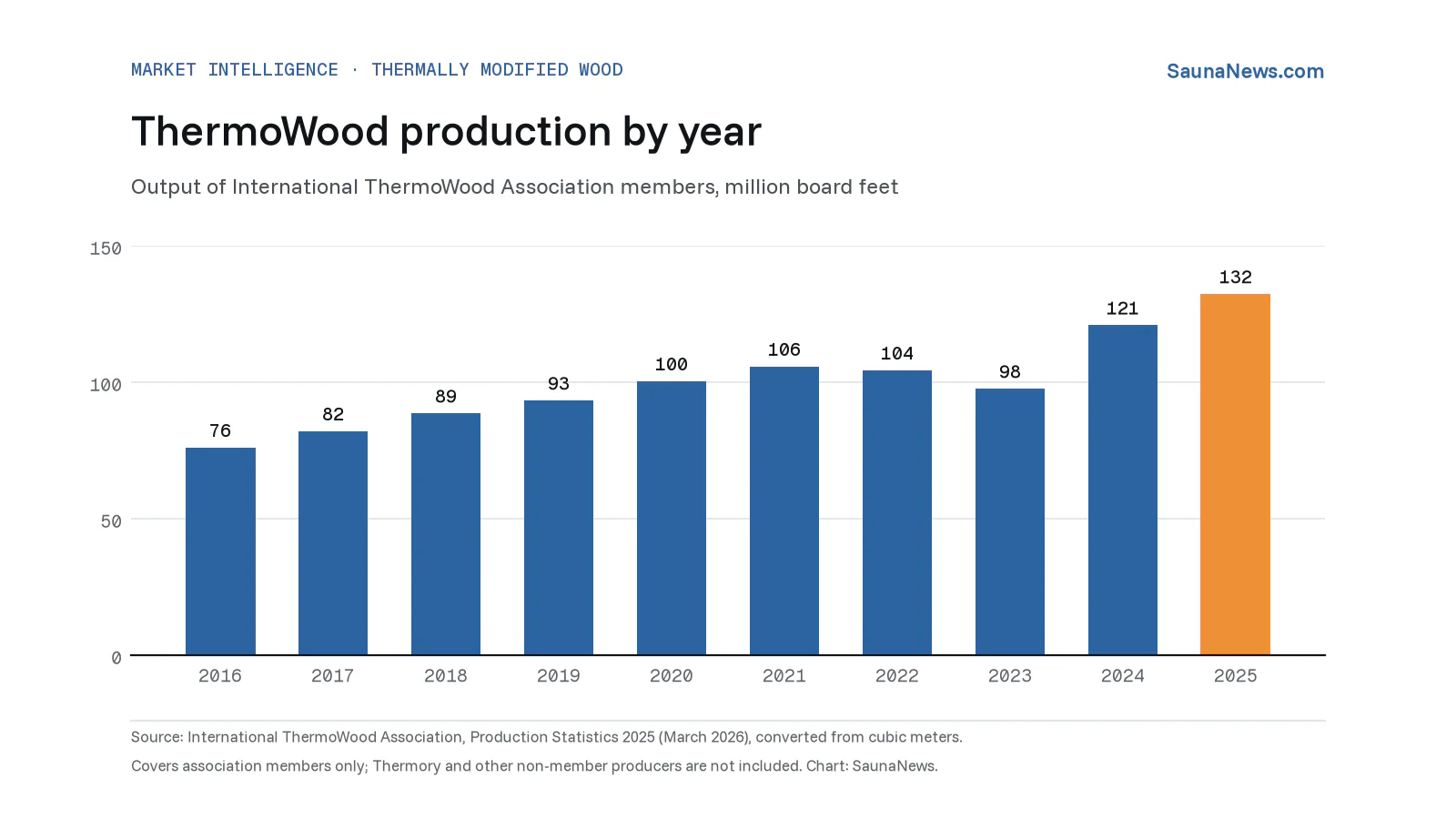
Aspen is one of the 13 species on the association’s list, and alder isn’t. Members made a record 132.3 million board feet in 2025, before Thermory joined, and aspen rounded to zero.
The US trademark covers wood for “sauna structures”
ThermoWood has been a registered US trademark since 2010. The owner is the association, under its Finnish name, Lämpöpuuyhdistys. The goods it covers include wall panels, ceiling boards and steam-treated wood for decks, flooring and “sauna structures.”
Only permanent members have the legal right to use the word for thermally modified timber, the association says. The generic term is thermally modified wood.
Three of the 20 certificates are in North America
Arbor Wood, with its office in Duluth, Minnesota, and its mill in St. Joe, Indiana, was the first certified producer in the US. Western Forest Products of British Columbia joined in October, a month before Thermory. Lunawood, which also runs a Georgia mill, is certified for two plants in Finland. Certificates go to plants, so they don’t match the 20 members one for one.
ThermoWood certificates in the auditor’s register, November 25, 2026, by listed address
| Country | Certificates | Holder and address |
|---|---|---|
| Finland | 7 | HJT-Holz (Vilppula, Kolho), Lunawood (Iisalmi, Kaskinen), Sahakuutio (Kerimäki), Siparila (Teuva), SWM-Wood (Mikkeli) |
| Turkey | 4 | Haşep (Düzce), Naswood (Bucak), Novawood (Gerede), Tantimber (Gümüşova) |
| Canada | 2 | ThermalWood Canada (Bathurst, New Brunswick), Western Forest Products (Chemainus, British Columbia) |
| Belgium | 1 | LDCwood (Ostend) |
| Denmark | 1 | Frøslev Træ (Padborg) |
| Estonia | 1 | Thermory (Loo) |
| Latvia | 1 | Stora Enso (Launkalne) |
| Poland | 1 | Tartak Stefan (Włoszakowice) |
| Sweden | 1 | Heatwood (Hudiksvall) |
| United States | 1 | Arbor Wood (Duluth, Minnesota) |
Ask for the certificate, the plant and the species
- Sauna walls and benches: Order Thermory boards by species and Thermory’s own grade, such as thermo-aspen, Medium. Thermo-S and Thermo-D are classes of the atmospheric-pressure process, so they don’t describe these boards.
- Outdoor sauna cladding and decks: The register lists plants and classes, not species, so a Loo board isn’t ThermoWood by default. To require it, write the species, Thermo-D, Loo and 133-01 on the order, get the plant confirmed in writing, and check the certificate’s issue date, durability classes and any species it names.
- Any board sold as ThermoWood: Open the register and click Thermally modified timber to list all 20 certificates. Names vary there: Tantimber is under Tanwood. Certificates have no end date unless one is stated, so check on the day you order.