Aalto University Runs the First Zero-Gravity Sauna Simulations

By Arlene Scott
Senior Wellness Correspondent & Hospitality Consultant
- Published
- Reading time
- 5 min
SaunaNews is published by SaunaShare, Inc., which also runs SaunaShare.com and SaunaMarketplace.com, where we sell many of the products we write about. Assume that experience shapes what we cover and what we don't. Who owns SaunaNews · The ownership announcement
Aalto University asked CFD engineer Corentin Macqueron for his validated model of VTT’s 1992 experimental sauna and has now run first zero-gravity calculations on it, with Macqueron running his own in parallel. Without gravity there is no buoyancy, no convection, and possibly no löyly at all. The idea started with a sauna in a 1987 NASA Antarctic study.
In this story4 sections
The first zero-gravity sauna simulations have been run. Not proposed, not sketched on a slide: run, on a validated numerical model of a real Finnish test sauna, by researchers at Aalto University in Finland and by the French engineer whose model it is.
That engineer is Corentin Macqueron, and if sauna design has a physics department, he is most of it. His day job is computational fluid dynamics at Orano, the French nuclear group, where he models safety scenarios. On his own time he built a full thermal model of a wood-fired sauna in NIST’s Fire Dynamics Simulator, validated it against a real room, followed it with an electric-sauna model, published a book-length literature review on the science of sweating in 2024, and keynoted the Sauna Innovation Conference last December on the state of sauna thermal modeling.
When SaunaNews covered his plan to simulate space saunas earlier this month, the work was an announcement: his firm McQueron Engineering “will simulate space saunas in the upcoming few months,” with a name, SaunaX, already picked out for the first one to fly on a Starship. In a comment responding to that coverage, Macqueron says the timeline has already been overtaken. “Spatial sauna simulation has actually already begun,” he wrote.
Aalto called first
The push came from Finland, not from a launch provider. Aalto University contacted Macqueron about sauna modeling in microgravity, and he handed them the best-validated starting point that exists: his numerical model of the experimental sauna that VTT, Finland’s state technical research centre, built and instrumented for its 1992 study Saunan lämpötilat ja ilmanvaihto (Sauna temperatures and ventilation, VTT Research Notes 1431). That report has been the benchmark dataset for sauna physics for three decades, and Macqueron had reconstructed the room in CFD and validated his model against it in 2023.
The Aalto team has now performed first zero-gravity calculations on that model, Macqueron says, and he has started running his own in parallel, adapting the model for 0 g as the results come in. Both sides plan to have more to say in the coming months.
His summary of what happens when you switch gravity off is the cleanest statement of the problem anyone has made: “Without buoyancy, one of the fundamental mechanisms governing terrestrial sauna physics simply disappears: no natural convection, no familiar thermal stratification, and potentially a very different löyly.”
Why gravity is the whole problem
The problem is not heat. Macqueron’s own published model needed 8.75 kilowatts to hold a small room at 176°F, a big draw on a spacecraft but a solvable one. The problem is that a sauna runs on gravity. Löyly works because hot, humid air is buoyant: it rises off the stones, rolls along the ceiling, and sinks down the walls onto your shoulders. In orbit there is no buoyancy, so there is no rising steam, no stack effect, no natural convection at all. A zero-g sauna is a box of still, hot fog with a fan in it. On the Moon, at one-sixth gravity, convection comes back weakly. On Mars, at three-eighths, a little more.
So the question these simulations can settle is one nobody has ever had a reason to ask: how much gravity does löyly need before it behaves like löyly? That number does not exist yet, and the calculations now running at Aalto and at McQueron Engineering are the first attempt to produce it. “So perhaps the first space sauna will not only have to be built,” Macqueron wrote. “It will first have to be simulated.”
The idea started in Antarctica
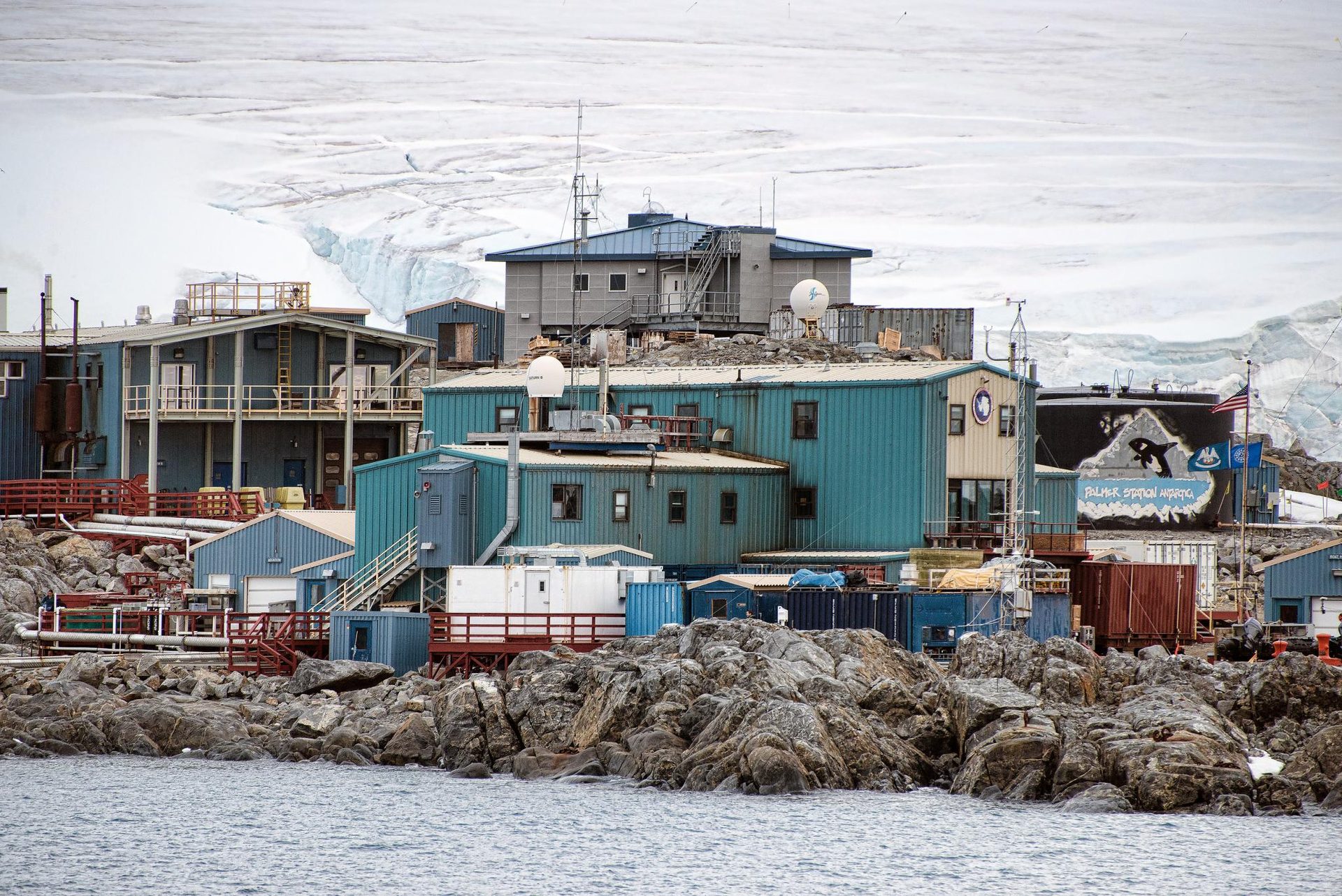
What set Macqueron off in the first place was not a client. It was a 141-page NASA contractor report from 1987 that he found while digging through the agency’s archive: Human Adaptation to Isolated and Confined Environments, a study of nine men wintering at Palmer Station, Antarctica. NASA funded it because an Antarctic winter is the cheapest available rehearsal for a long spaceflight, and one of the researchers, Sybil Carrere, lived on the station for the full seven months, logging how the crew used every room in the place.
Buried in the building inventory is a sauna, and the entry is a small comedy of undercounting:
“A total of 36 hours of use was reported for the sauna. This building was used only for personal activities. Several individuals took saunas most every day either after work or after their exercise in the gym. The personal projects information indicates that people took saunas alone, although there were some unreported uses of this room when as many as four people took saunas at the same time.”
(Evans, Stokols & Carrere, NASA-CR-181502)
Read that again. The crew logged every session as solo. The researchers watched four people go in at once. Out of every room at the station, the gym, the pub, the labs, the darkroom, the sauna is the only one where the report says the paperwork and the behavior disagreed. In one of the most heavily monitored small communities on Earth, the sauna was the room people used more than they bothered to write down.
The report proves nothing about health, and Macqueron does not claim it does. There was no sauna group, no control, no measurement of a single bather. What it records is behavior: confined, stressed people with a fixed set of rooms picked the hot one most days. Which is roughly the finding the University of Greenwich team reached this year with 1,907 participants and actual instruments, at the cost of only one Antarctic winter and nine guys.
It has flown before
There is precedent, and it is Soviet. Engineer Alexander Massarsky built a collapsible steam cubicle that flew on Salyut 6, Salyut 7 and Mir, where by his account it worked well enough that cosmonauts used veniks in it. It burned up with Mir in 2001, and nothing replaced it; the International Space Station does not even have a shower. Russia’s life-support institute floated shower-and-sauna development again in 2018 and nothing public has come of it. Massarsky’s cubicle was built and flown without a single published simulation. This time the order is reversed, and the terrestrial record keeps making the case for bothering at all: Palmer Station still has its sauna, plus a hot tub. The South Pole station limits crew to two two-minute showers a week for water conservation and keeps a sauna running at 200°F, where winter-overs use it to launch the 300 Club run to the pole at minus 100°F. Australia’s stations have them. ESA’s Concordia crew gets theirs on Sundays. Nobody at any of these agencies ran a trial first. They just kept specifying the room.
The Palmer study began in April 1985. Macqueron was born the same month, a coincidence he flagged himself. Some assignments pick their engineer.