
HUUM Core Now in the US: An Electric Heater Built to Disappear Into Your Bench

By Arlene Scott
Senior Wellness Correspondent & Hospitality Consultant
- Published
- Reading time
- 6 min
SaunaNews is published by SaunaShare, Inc., which also runs SaunaShare.com and SaunaMarketplace.com, where we sell many of the products we write about. Assume that experience shapes what we cover and what we don't. Who owns SaunaNews · The ownership announcement
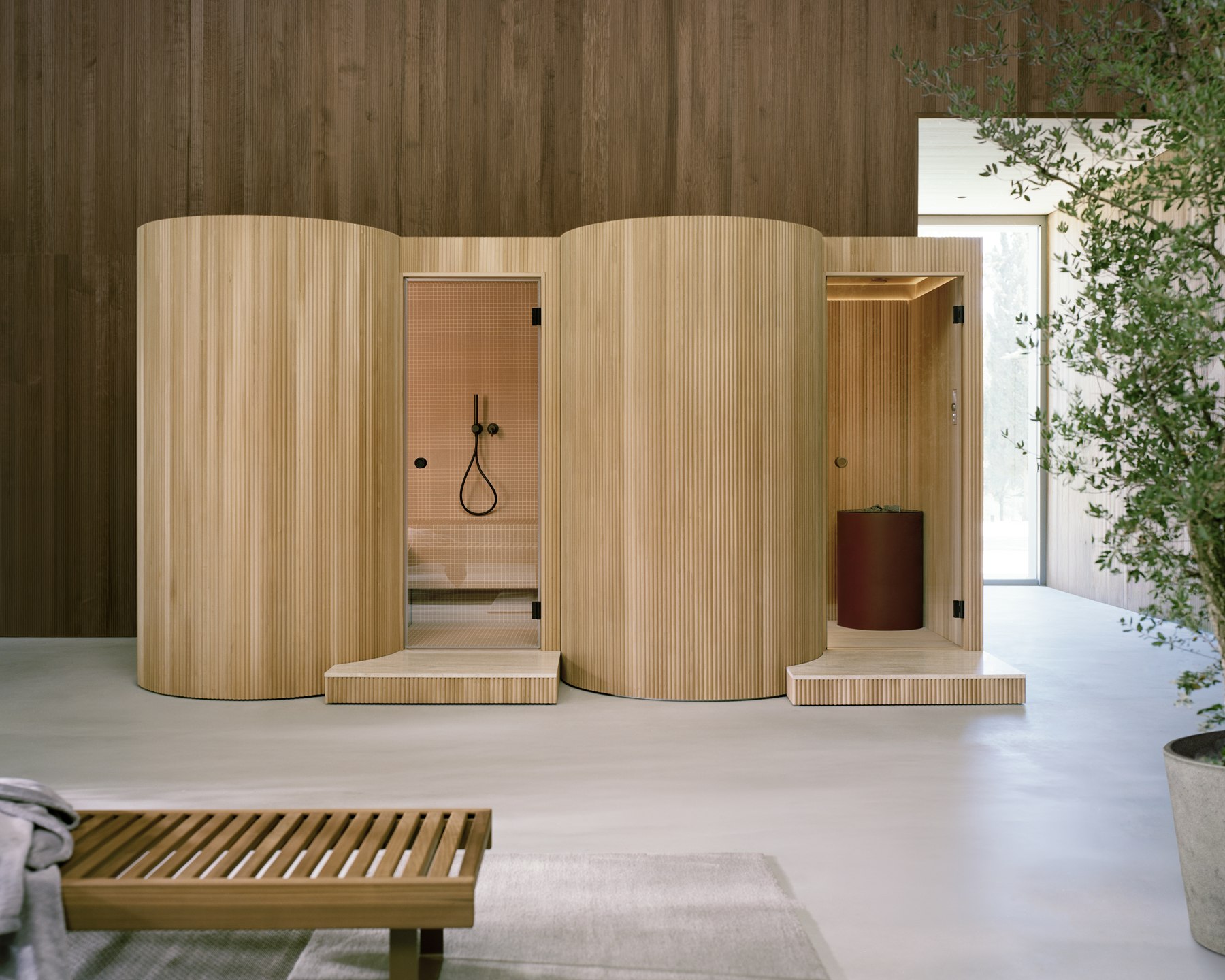
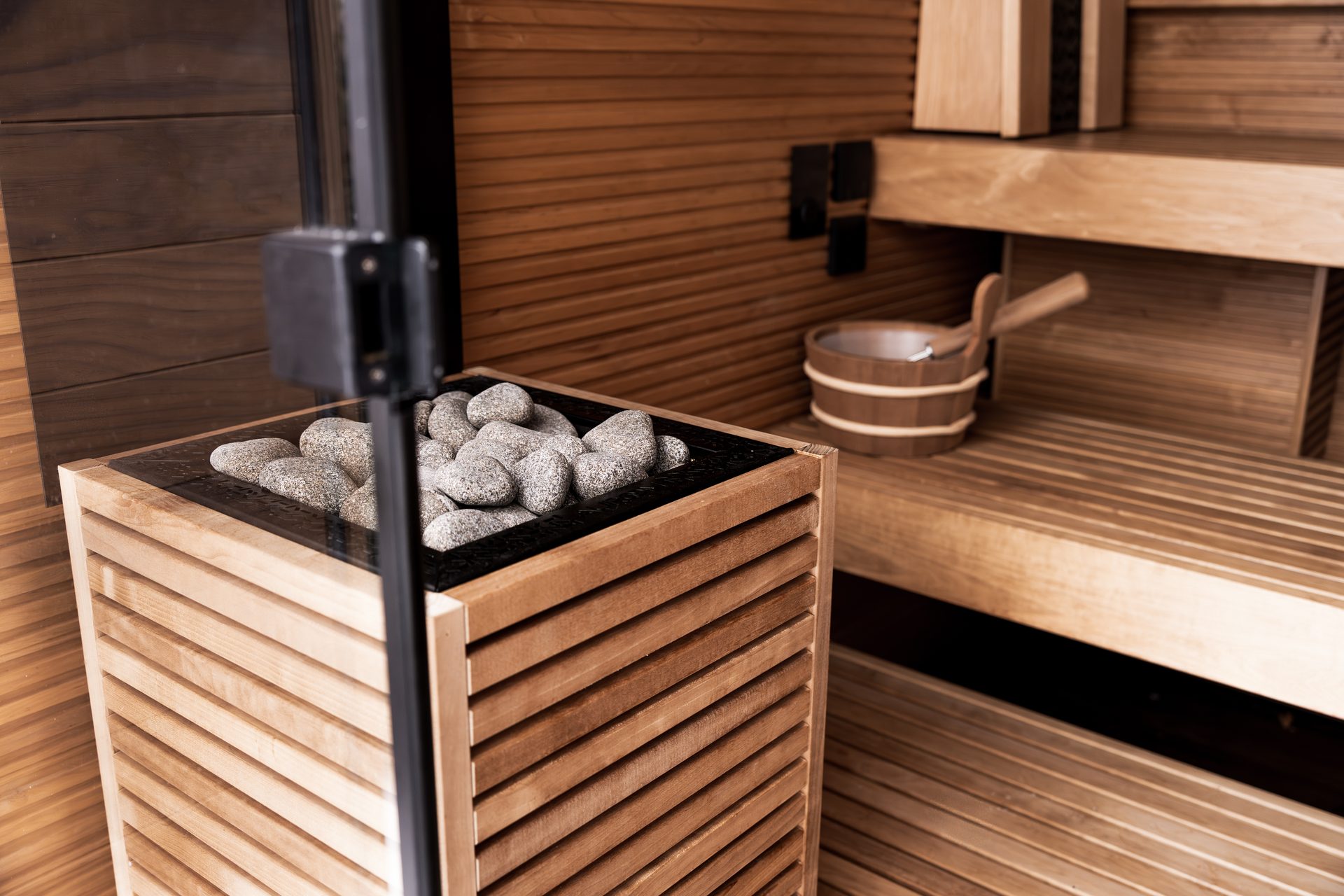
The Estonian-made HUUM Core can be clad in the same wood as your sauna walls and benches, so the electric heater can visually vanish into the room.
In this story5 sections
HUUM, the Estonian heater maker known for its sculptural DROP and HIVE designs, has brought its Core series to the US market. Its central design idea: the unit accepts factory-engineered wood panels in alder, aspen, or thermo-aspen, species widely used for sauna benches and walls. Clad correctly, the heater disappears into the bench.
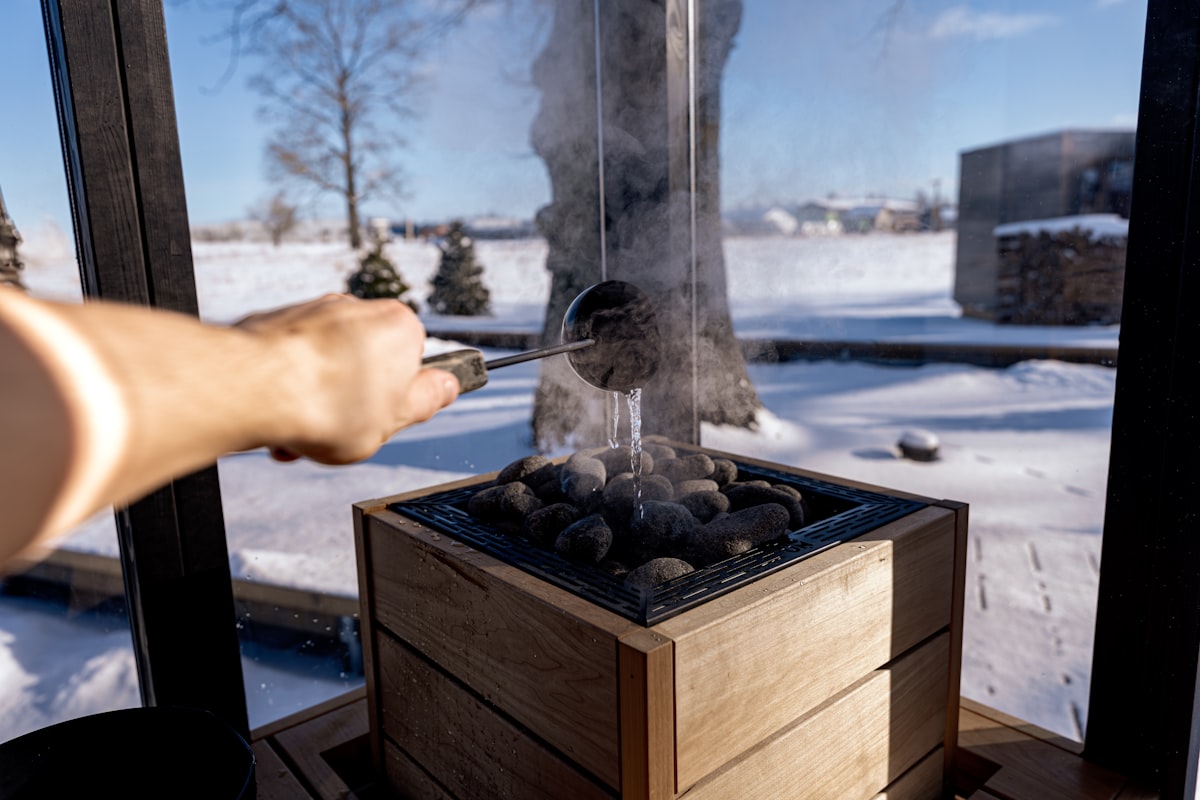
That is not a small thing if you care about how a sauna looks. Most residential electric heaters are industrial objects surrounded by a wood guard rail. The Core is designed to sit inside the bench structure itself, with only the stone basket visible above the bench surface. The effect is something closer to what you see in high-end spa installations, without the custom metalwork bill.
What makes it different
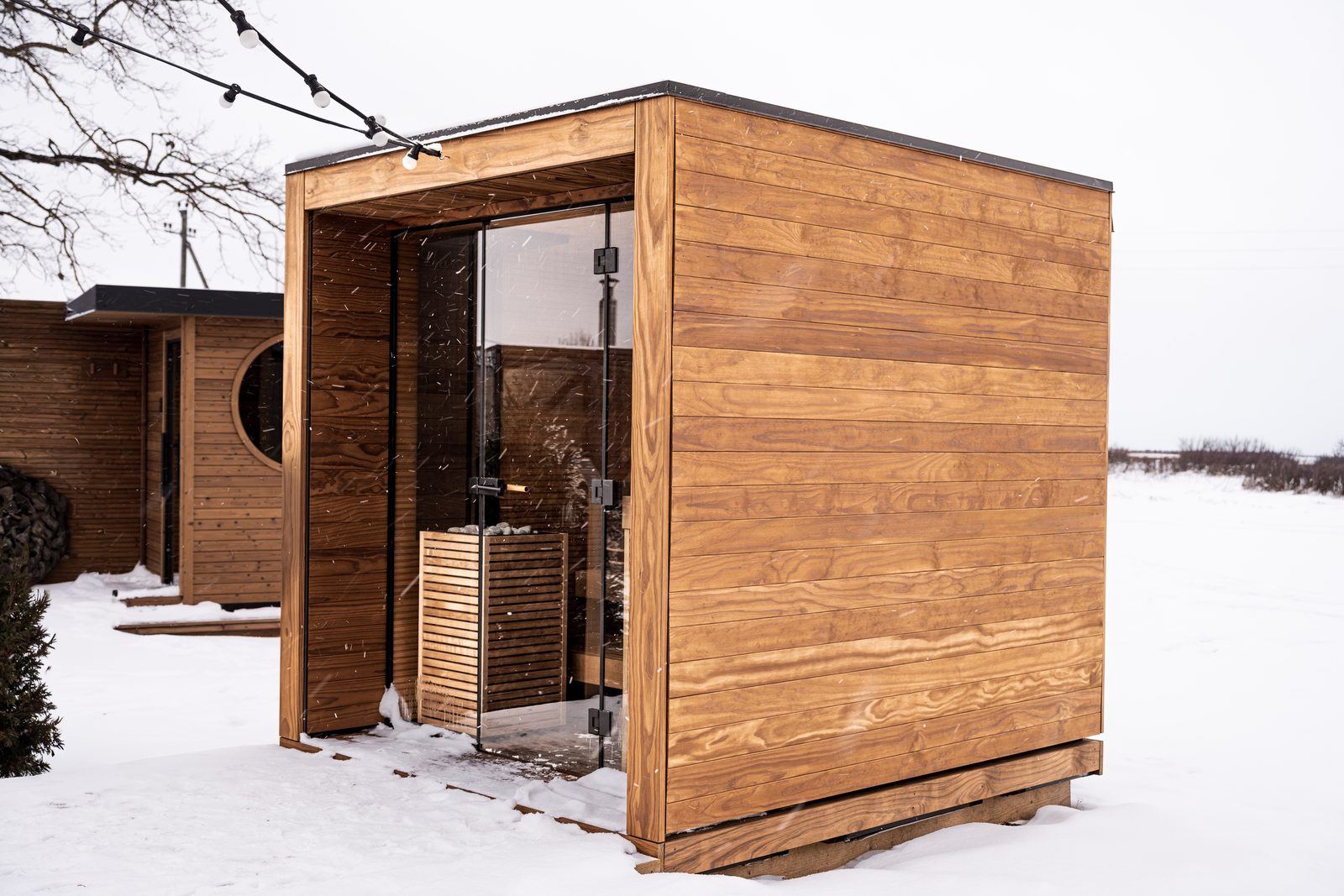
The Core is bench-embeddable by design. Its US manual calls for only 2 inches of clearance from combustible materials. That tight clearance makes it physically possible to frame the heater into a bench structure and surround it with matching wood. Air must remain unobstructed at the base to keep the convection cycle running, but the sides and visible surfaces can be finished to match the room exactly.
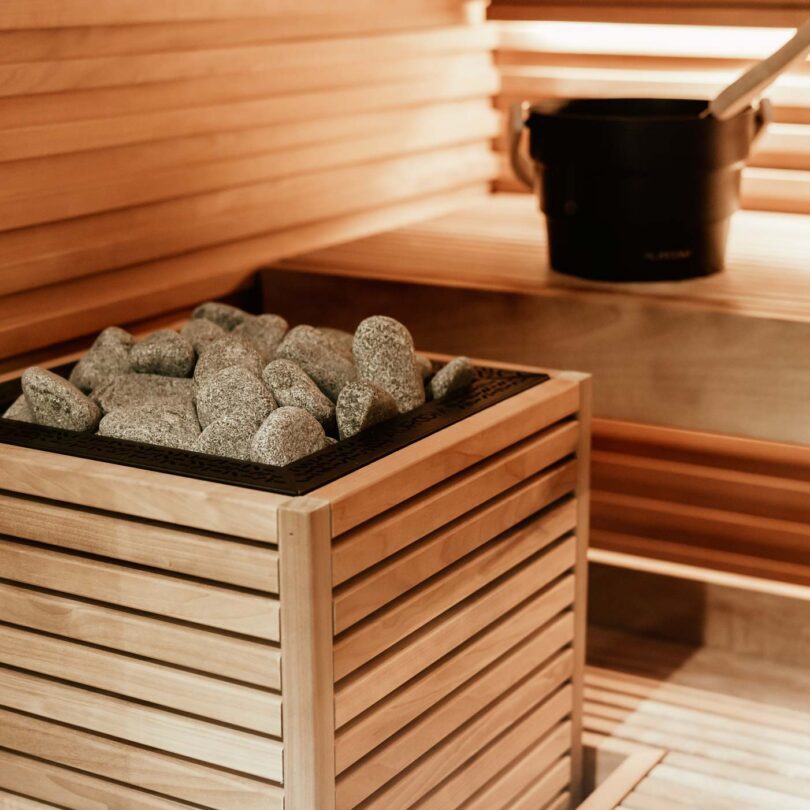
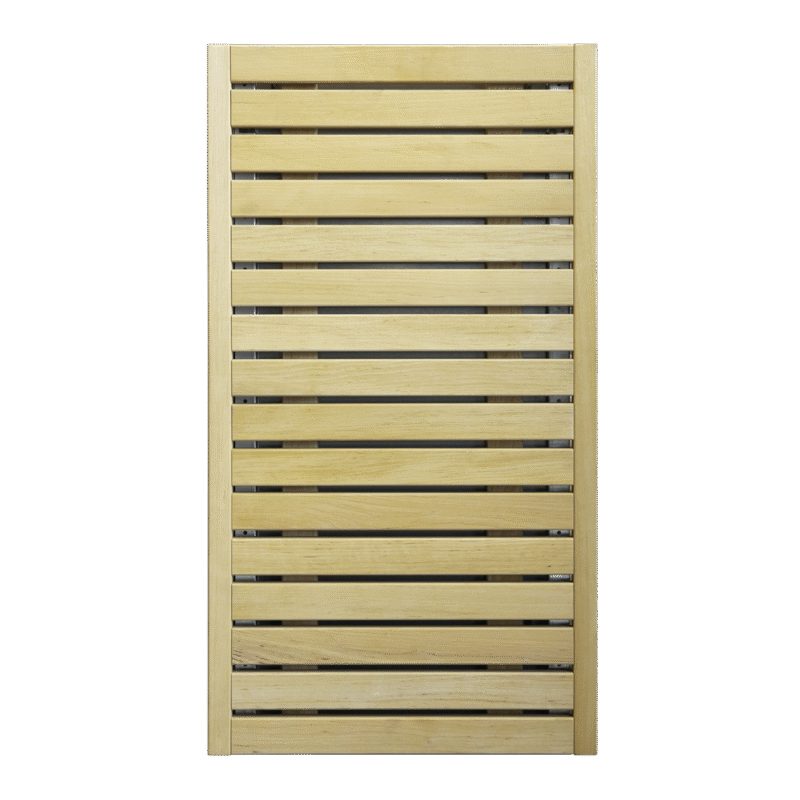
HUUM sells three factory-engineered wood panel kits for the Core, in alder, aspen and thermo-aspen, each a set of four panels with fastening screws. HUUM says the wood finish also reduces the risk of touching the hot heater, and pitches it to families with small children. All three species are common sauna-interior woods. If your benches are thermo-aspen, your heater can be thermo-aspen.
Those panels fit the Core BK/ST, which ships with unfinished metal side shields and no exterior panels; the BK has black cover strips on the top rim, the ST stainless steel. Builders can fit HUUM’s wood panels or attach their own cladding in stone, ceramic tile, glass, or wood. The US manual caps each finished side panel at 44.1 lbs. For projects with bespoke architectural requirements, this is the version to specify.
The ready-to-install option is the Core Black, which comes in a black metal casing. No carpentry required, ships and installs as a finished unit.
A 230°F setpoint
The Core carries SGS’s c-US certification mark rather than a UL listing, according to its US manual. SGS is an OSHA-recognized Nationally Recognized Testing Laboratory. The difference shows up in the controls: room temperature at the thermostat sensor of a UL 875-listed electric sauna heater is capped at 194°F, while HUUM’s US manual for its UKU controller allows a setpoint of up to 230°F. On the newer UKU 4.2, adding the optional bench sensor limits the setpoint to 194°F, read at the bench rather than above the heater.
The extra headroom is a matter of preference rather than a health requirement: in the Kuopio cohort study behind the cardiovascular findings on regular sauna bathing, men who used the sauna four or more times a week kept it at about 171°F on average. HUUM’s US manual says the Core’s safety is based on EN 60335-2-53, the European sauna-heater standard.
For outdoor saunas, saunas with substantial glass walls, or rooms that struggle to hold heat, the additional thermal headroom is a practical advantage, not a spec sheet number.
Specs and sizing
The Core ships in three power ratings: 6.5 kW (CORE 6), 9.0 kW (CORE 9), and 10.5 kW (CORE 11). All three share the same exterior dimensions: 32.7 inches tall, 15.2 inches square. That consistent footprint means framing and bench cutouts can be standardized regardless of which kilowatt version a given room requires. The heater weighs 41.9 lbs before stones.
Stone capacity is about 88 lbs of olivine diabase, loaded in rounded 2-to-4-inch pieces. HUUM says round stones give milder steam, and it describes the Core’s steam as gentle despite the heater’s compact size.
Electrical requirements follow standard US residential specs. The 6.5 kW model draws 25 amps and requires a 30-amp breaker on 10 AWG wire. The 9.0 and 10.5 kW models draw 37.5 to 43.75 amps and require a 50-amp breaker on 8 AWG wire. The unit is also compatible with 208V commercial power grids, though the output derate reduces effective kilowatt delivery proportionally.
The UKU controller
The Core does not operate standalone. It needs a separate control system, and HUUM pairs it with its UKU control unit, sold separately. The UKU contains the logic board, contactors, and safety sensors. It mounts outside the sauna room and connects to a door sensor that cuts power if the door is left open.
The Wi-Fi version of the UKU connects the heater to the HUUM mobile app (iOS and Android), allowing remote activation and temperature monitoring from anywhere with a data connection. Remote start lets the room heat before anyone arrives. Set the heater from the office, walk in the door when it’s ready.
The UKU controller console supports temperatures between 104°F and 230°F, allows delayed start up to 48 hours in advance, and is available in multiple finishes including black, glass, mirror, gold, and wood housings.
Where to buy
The Core is available now through authorized specialty dealers in all three power ratings and panel finish options. The unit ships by freight. HUUM’s warranty on electric heaters runs three years for private use and one year for commercial use, and it excludes the heating elements.
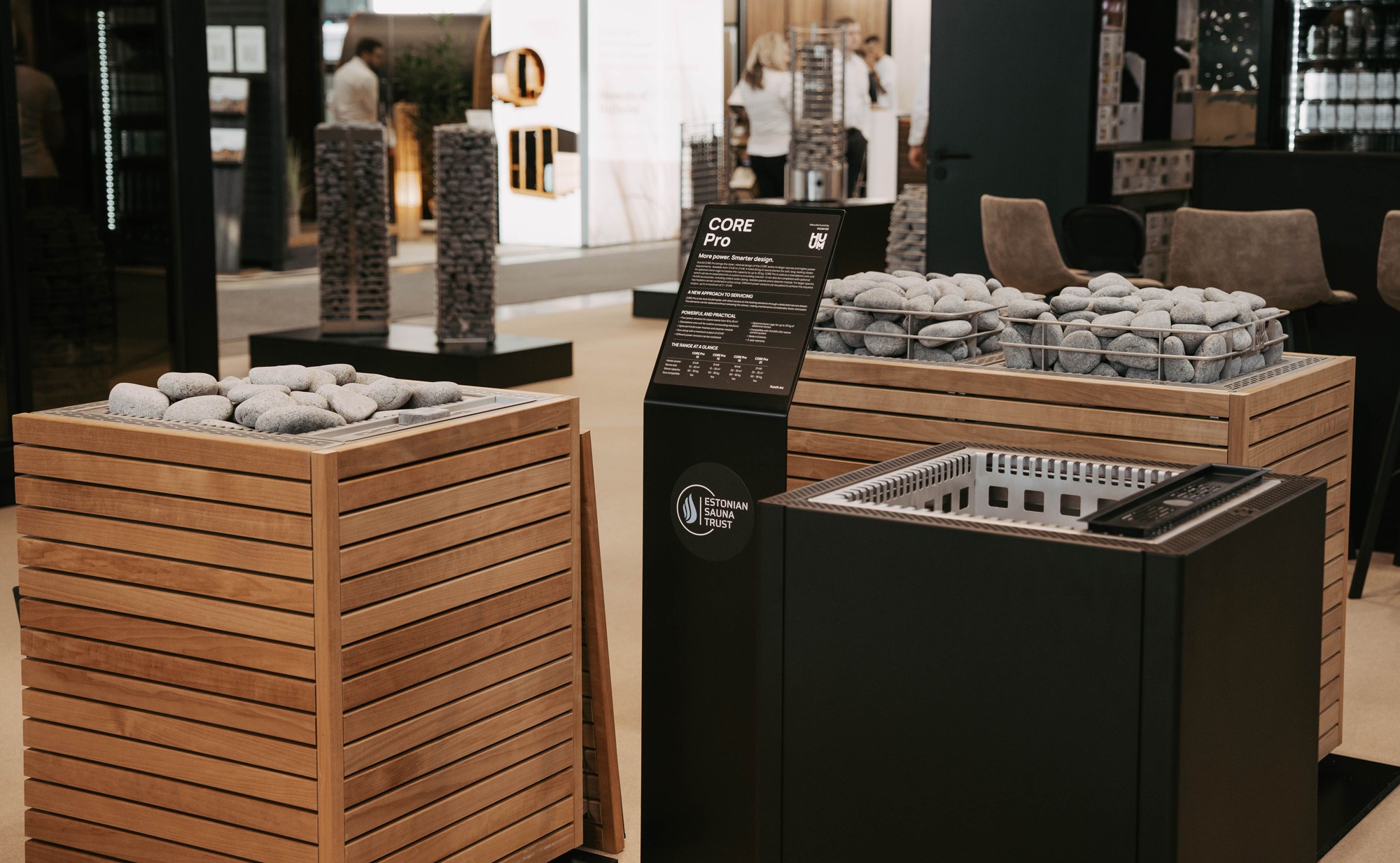
HUUM has since taken the design into commercial rooms. CORE Pro, a 12 to 21 kW version for spas and hotels, debuted at Interbad in October 2026 and is due in Europe in the second quarter of 2027.
Wood-clad sauna heaters exist in the European market. In the US, they have been a custom fabrication problem: expensive to execute and dependent on finding a builder who knows how to frame a heater safely into a bench. The Core makes this a product decision rather than a construction problem. For anyone building a sauna where the aesthetic matters as much as the performance, that changes the calculus significantly.