Kihnu Open Saunas Day 2026 (Kihnu avatud saunad)
For one Saturday, private saunas across a 6.5-square-mile Estonian island open their doors to visitors. Third edition, and one of the cleanest examples anywhere of turning existing private sauna stock into a paid visitor product for a day.
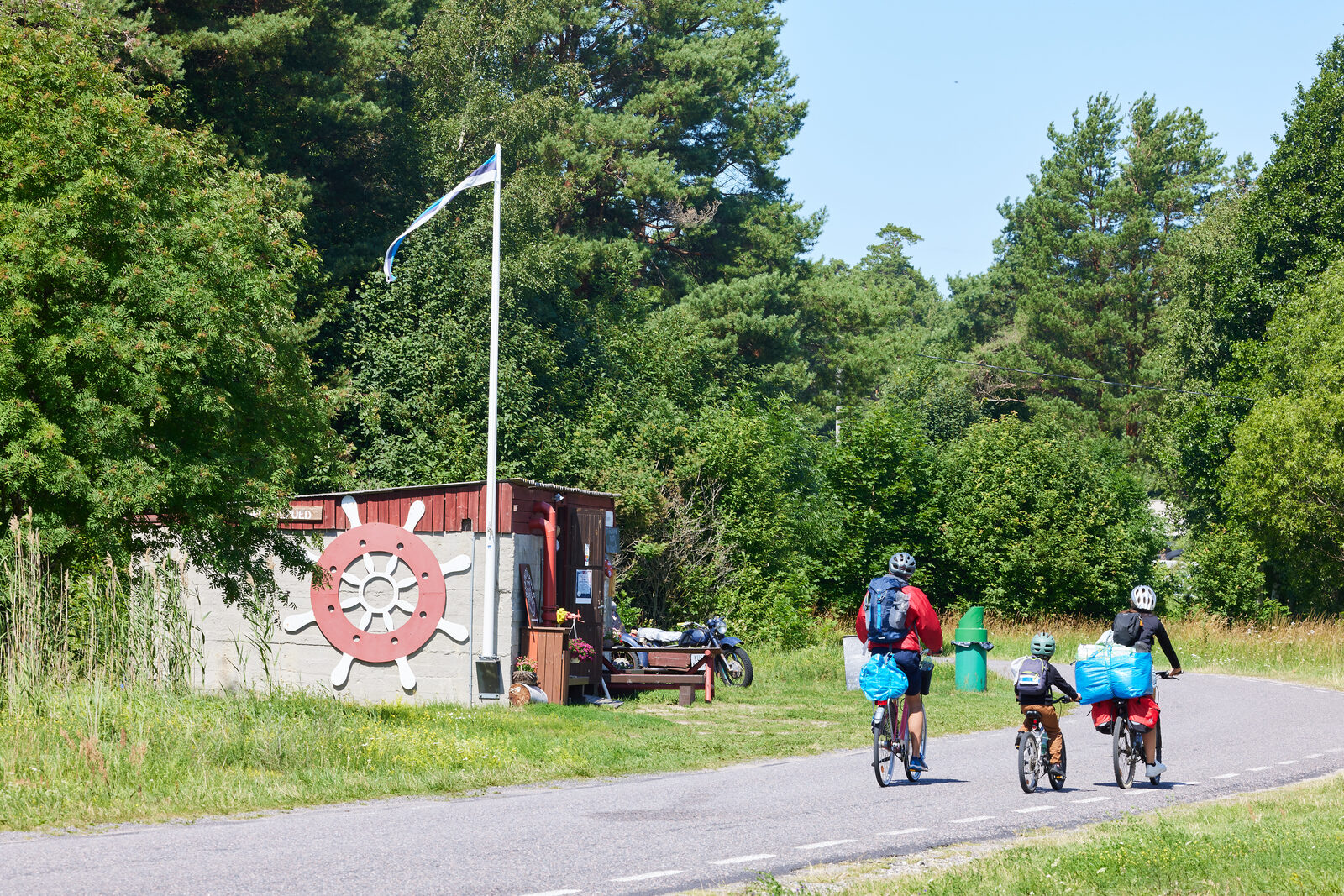
Kihnu is small enough to cycle end to end, which is how most visitors work an open-sauna day. Photo: Vaido Otsar / Wikimedia Commons (CC BY-SA 4.0). Not a photograph of the event. Official source
On Saturday 8 August 2026, saunas across Kihnu open to visitors for the day. Not a festival site, not a temporary build: the island’s own private and farm saunas, heated and opened by the households that own them. The Kihnu municipality events calendar describes it as running for the third year.
Where This Is Happening
Kihnu is a small island in the Gulf of Riga, off the coast of Pärnu County, with a permanent population of roughly 600 and a land area of about 6.5 square miles. Reaching it means a ferry from Munalaid or Pärnu, or the short flight into the island’s airfield. The island is also a UNESCO listing in its own right: the Kihnu cultural space was proclaimed in 2003 and inscribed on the Representative List of the Intangible Cultural Heritage of Humanity in 2008, covering the island’s songs, dances, wedding customs and handicraft, carried largely by its women.
Kihnu also runs a separate, larger event: Kihnu SaunaFest, whose seventh edition was held on 13 June 2026. The August open-sauna day is the quieter, more domestic one. If you are searching and finding two Kihnu sauna events, that is why.
Why an Operator Should Care
This is the cheapest bathhouse model that exists, and it is worth understanding before dismissing it as tourism.
An open-sauna day has no capital cost at all. The saunas are already built, already owned, already heated for household use. The municipality supplies the calendar entry, the marketing and the day. What gets created is not a facility but a market: for one Saturday, sauna stock that has never earned a euro becomes a bookable visitor product. Compare that to the American path, where opening a sauna to the public means a lease, a fit-out, plan review, and a cost base that has to be recovered from memberships from day one. We covered the same structural gap from a different angle in our report on a Finnish club that assembles a public bathhouse for seven hours and then removes it.
The transferable question for a US region with dense private sauna ownership, which is to say Minnesota, Michigan’s Upper Peninsula, and parts of the Pacific Northwest, is whether anyone has tried the same thing: one coordinated day, existing private saunas, a shared listing, a nominal fee. The barrier is not construction. It is insurance and liability, which is the thing the Estonian model never has to price in.