Who Tends the Fire Picks the Booking Software, Nomad Sauna Tells Rental Operators

By SaunaShare
Sauna culture and community
- Published
- Reading time
- 5 min
SaunaNews is published by SaunaShare, Inc., which also runs SaunaShare.com and SaunaMarketplace.com, where we sell many of the products we write about. That experience may change what we write about and what we don't. Who owns SaunaNews
The Wisconsin barrel sauna builder’s new guide splits rentals into drop-offs the guest runs and sessions an attendant runs, caps a 12-foot trailer at 8 to 10 bathers and blocks up to two hours of heat-up before the first booking.
In this story5 sections
Mobile sauna operators shopping for booking software should settle a different question first: who is on site when the stove is lit. Nomad Sauna, which builds barrel saunas and sauna trailers in Hudson, Wisconsin, makes that case in a guide for sauna rental operators published on October 26.
The guide comes from the operating plans Nomad hands to buyers of its Mobile Series trailers. It splits the business into drop-off rentals and attended sessions, sets working capacities for four trailer sizes and compares five booking tools.
Nomad’s operating numbers
- Heat-up one to two hours for a wood-fired unit to reach 160 to 190°F
- Cool-down stop feeding the stove 30 to 60 minutes before close, then allow several hours before maintenance
- Attended staffing one trained attendant at all times, two at peak hours or with a full house
- Drop-off rentals a five-minute hands-on stove walkthrough, plus an instruction card inside the door
- Rounds each 15 minutes long, with cool-down breaks between them
Drop-off rentals and attended sessions need different calendars
In an unattended rental, the guest books the trailer for a date range and runs the fire after a walkthrough at drop-off. That calendar has to block date ranges, take a deposit and leave a delivery window at each end. Nomad’s cycle is five steps: book and confirm, deliver and light the stove, let the guest run the fire, pick up once the fire is out and cool, then clean and restock.
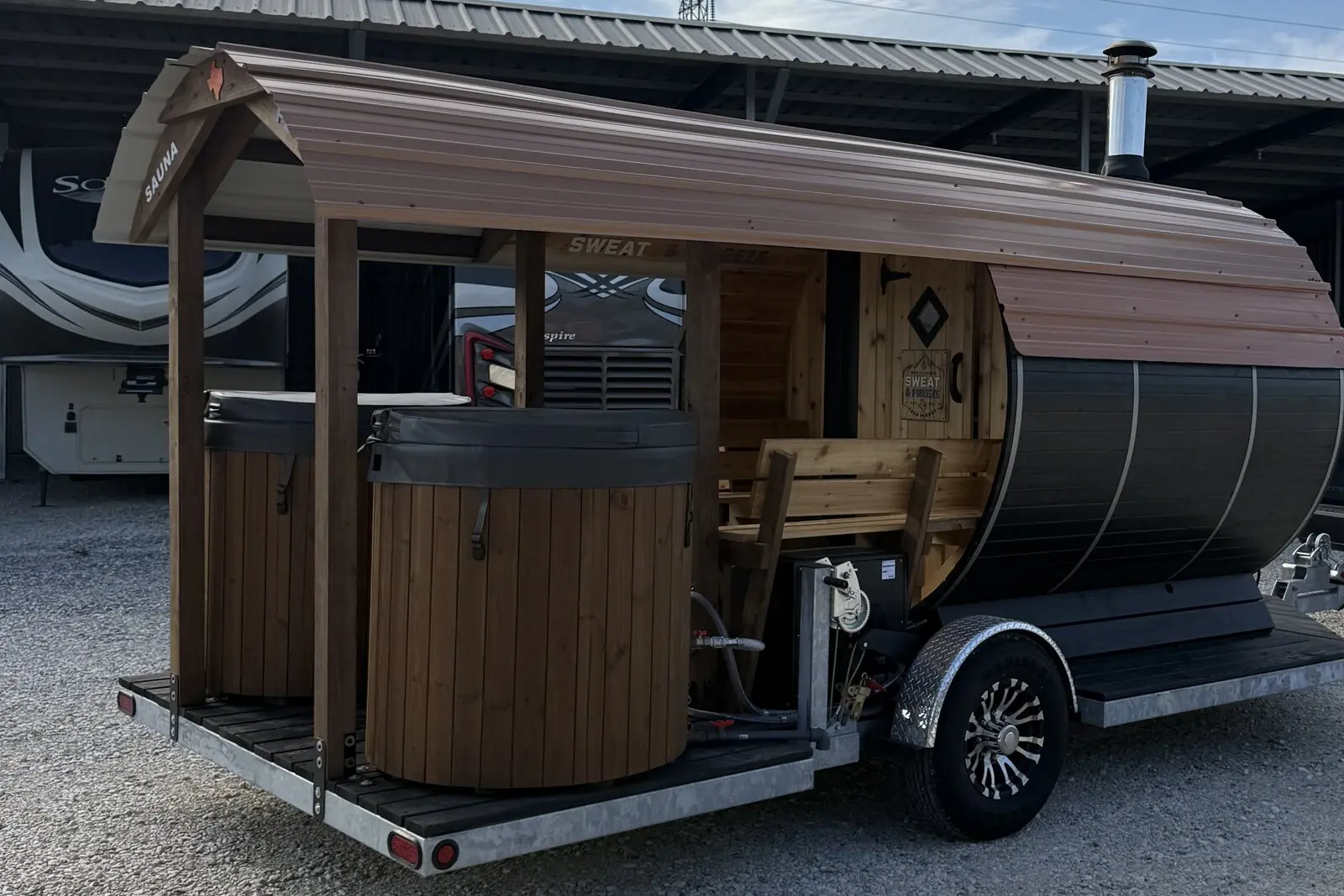
Attended operations sell time instead: a private slot for the whole unit, a pop-up ticket or a membership. A trained attendant runs the stove, and the calendar sells fixed slots, sends reminders and collects a waiver for every guest. Houston’s Sweat & Freeze works this way, and delivers its trailer, runs the sauna and packs it up again.
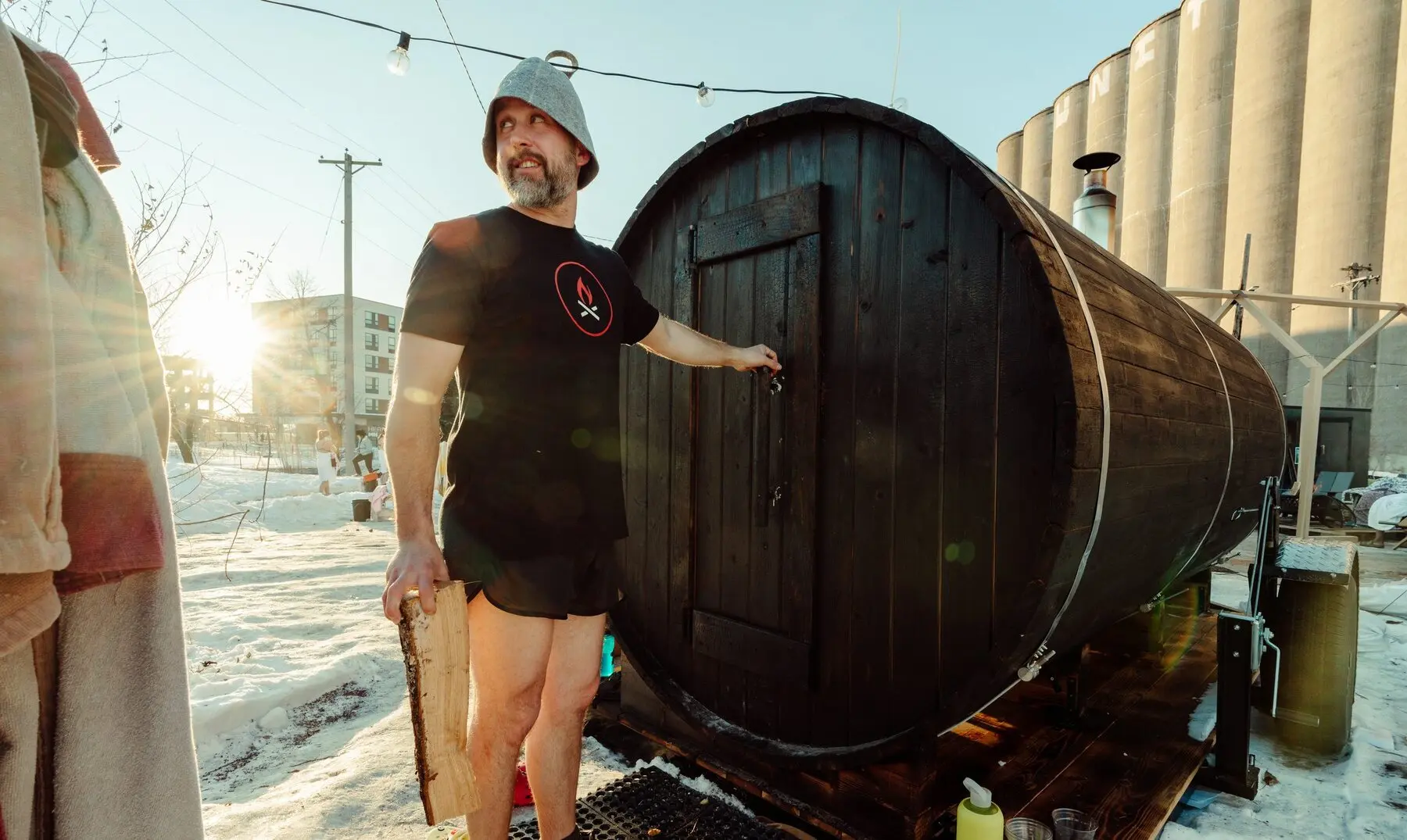
Nomad’s own one-day winter event, on a frozen lake in Hudson, sold four 90-minute slots. Each slot booked the whole sauna, which seats eight comfortably. Everyone who stepped inside signed an e-waiver, and guests could arrive no more than 15 minutes early. Nomad calls whole-unit slots with a waiver per guest “the simplest attended format to run.”
Pop-ups and community sessions sell single seats at set times, the model behind Tuli Lodge’s social sauna pop-ups in Seattle.
Festivals sell the same thing at scale. General admission at the Seattle Sauna Festival on November 7 and 8 is a 90-minute timed ticket to saunas from 11 regional partners.
Book to the working capacity, not the brochure
Nomad tells operators to set capacity in their booking platform to a unit’s operating maximum, “not the marketing number.” An overbooked unit, the guide says, “is an uncomfortable session and a heat-safety problem.”
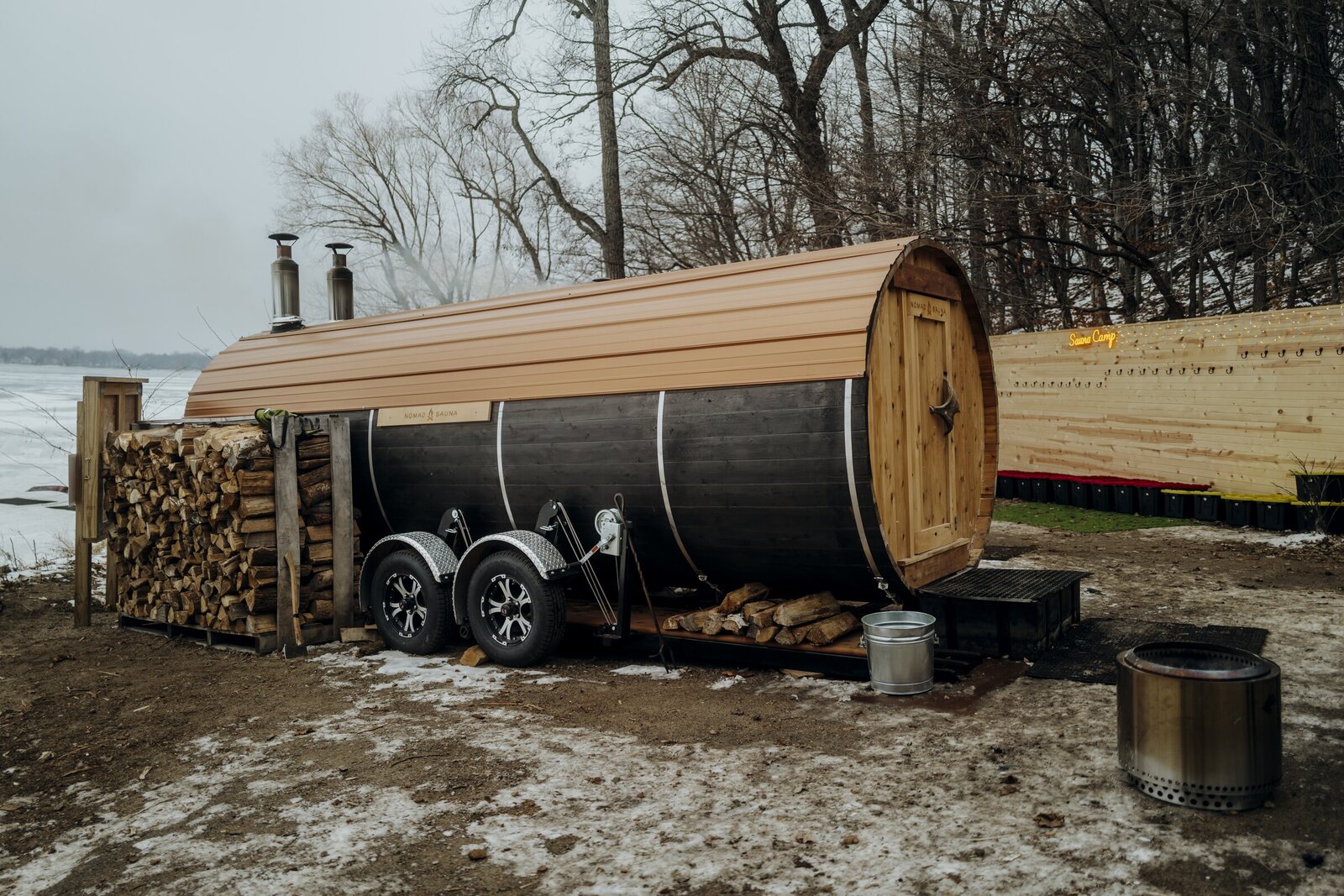
Nomad’s operating maximums are six to eight people in a 10-foot unit, eight to 10 in a 12-foot unit, 12 to 14 in a 16-foot unit and 14 to 16 in a 20-foot unit.
Nomad’s own pages show the gap. Its mobile sauna page lists the 20-foot barrel at 16 to 18 or more people, two more than the guide’s working maximum for the same length.
Block the heat-up and the cool-down
Two buffers belong on every calendar, the guide says. A wood-fired unit takes one to two hours to reach 160 to 190°F, so block that time before the first guest. At the end of the day, stop feeding the stove 30 to 60 minutes before close and let it burn down to embers. It then needs several hours to cool before maintenance. Ash holds heat for days, so it goes into a lidded metal bucket on non-combustible ground. Nomad’s rule is never to schedule a same-day turnaround that skips the cool-down.
For drop-off guests, Nomad posts a card inside the door. It sets the target at 160 to 190°F, says to feed the stove in small loads and bans gasoline, kerosene and lighter fluid. It tells guests to get out and call 911 if smoke won’t clear or the chimney roars. It also asks them to skip alcohol and drugs, take 15-minute rounds and drink water throughout.
Every trailer gets a 10-minute check before it leaves the shop: hitch and lights, chocks and leveling blocks, dry seasoned firewood, an empty ash bucket, a clear chimney and spark arrestor, towels and water, and a fire extinguisher and first-aid kit on board.
Five booking tools, matched to the model
Nomad matches each tool to an operating model. Prices below are from each company’s pricing page on October 27, except where noted.
Booking tools for sauna rentals, as of October 27, 2026
| Tool | Fits | Price |
|---|---|---|
| Booqable | Drop-off rentals: buffer time between rentals, deposits, contracts | From $29 a month billed yearly, or $35 monthly; deliveries add-on $9 a month |
| Acuity Scheduling | Attended private slots, with deposits on every plan | $16 a month billed yearly, or $20 monthly; packages, memberships and text reminders start on the $27 ($34 monthly) Standard plan |
| Square Appointments | Attended and per-seat sessions, group classes and prepaid series | Free plan; Plus $49 and Premium $149 a month per location; online card payments 3.3% plus 30 cents on the free plan, 2.9% plus 30 cents on paid plans |
| Momence | Community sessions: classes, courses and workshops on one calendar | Quote on request; Nomad’s October 7 check found a free plan with a 5% fee to the business and 4% to the client, and a $60-a-month Pro plan at 2.5% |
| Checkfront | Mixed offerings, with waivers built in | $99 a month plus 3% on online bookings |
Per-booking fees decide which plan costs less. On Square’s posted rates, the Plus plan’s lower online card rate covers its $49 monthly fee once online card sales pass about $12,250 a month. Nomad makes the same point about free and low-cost plans in general: a busy operator can pay more in fees than a paid plan’s flat price.
If the platform doesn’t collect waivers, Smartwaiver’s plan for up to 100 waivers a month costs $22 a month, or $210 a year. Nomad’s guide lists it at $19. Have an attorney review the waiver language, the guide adds, and remember that a waiver doesn’t replace insurance.
Write four policies before taking the first deposit
“Software enforces policies. It does not write them,” the guide says. It names four to settle before taking money.
- Deposit: it holds the date and pays for the trip.
- Cancellation: a refund schedule that matches your fixed costs, stated at checkout.
- Weather: high wind affects the stove’s draft and spark control, so the plan allows adjusting or postponing a session. Smoke advisories and burn bans fall under the same rule. Rain and cold don’t cancel a session. In winter, put sand or salt on the paths and aim lights at the ground from dusk.
- Paperwork: general liability insurance, a business license or permit, a signed rental agreement and waiver for every booking, and written permission from the owner of any site you don’t control.
Before the first rental, check with your local clerk and the fire marshal. Permit requirements vary by city.