Badii Talk Gathers Sauna Founders’ Advice on Building a Business

By SaunaShare
Sauna culture and community
- Published
- Reading time
- 4 min
SaunaNews is published by SaunaShare, Inc., which also runs SaunaShare.com and SaunaMarketplace.com, where we sell many of the products we write about. That experience may change what we write about and what we don't. Who owns SaunaNews
Seven sauna businesses share lessons on operations, local relevance, collaboration, and growth in Sarah Spoto’s October 4 episode.
In this story8 sections
- 01Start with the people and the place
- 02Ryan Linner: expect the operational work
- 03Justin Juntunen: define the problem the sauna solves
- 04Katie More: take small steps and learn from peers
- 05Alisa Cardenas: choose a scale that fits your life
- 06Travis Talmadge: let guests show you what needs to change
- 07Mike and Meg Garrow: build a circle of support
- 08Steve Crosbie: give the idea time to develop
Sauna founders call local relevance, operating discipline, and guest feedback necessary for building a business in a new Badii Talk compilation released October 4. Their experiences also show expansion taking different forms, including larger bathhouses and a founder-led retreat program.
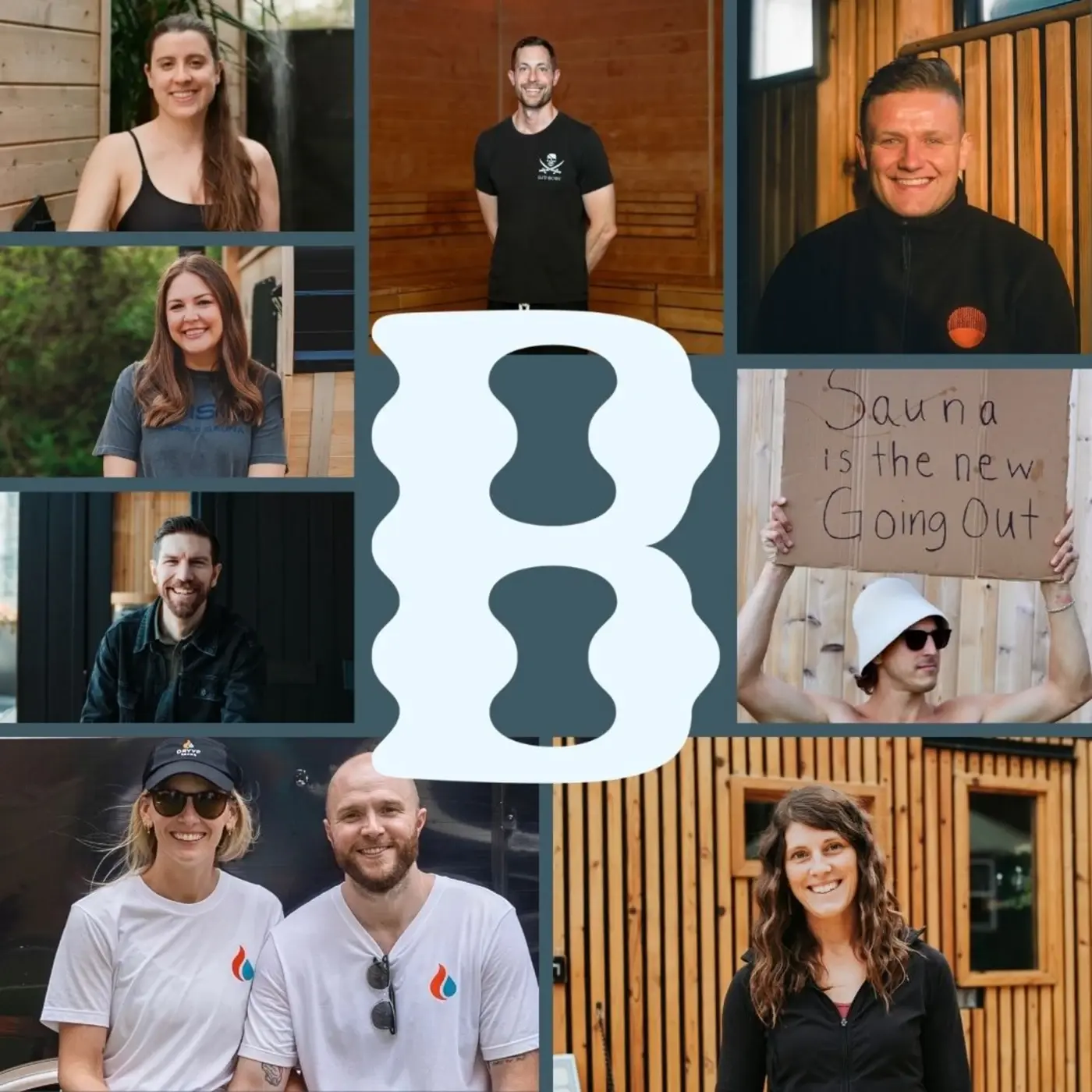
Host Sarah Spoto’s 36-minute episode brings together earlier interviews with founders of seven businesses: Hideout Sauna Club, Cedar & Stone, Sisu Mobile Sauna, Howl at the Moon Sauna Co., BATHHOUSE, DRYYP, and Fad Saoil.
The discussion adds firsthand operator perspectives to the questions in SaunaNews’ reporting on bathhouse development and bathhouse operating benchmarks. It contains personal experience and advice; it does not establish a universal demand forecast or financial model.
Start with the people and the place
Spoto opens with a practical question: what makes an experience relevant to its location? A sauna in the Maine woods will serve a different setting from one on the Connecticut coast. Local culture and the people an operator hopes to welcome should shape the offering.
She describes several possibilities, including partnerships with running clubs or yoga studios, community residencies that make sessions more affordable, and a focus on everyday sauna etiquette. Structured rituals are one option within that range. The starting point is understanding the community. Spoto’s own advice is to evaluate both the economics and the qualitative feedback.
Ryan Linner: expect the operational work
Hideout Sauna Club founder Ryan Linner, based in Stamford, Connecticut, describes entrepreneurship as a daily test of adaptability. Building the brand is one part of the work. The founder also has to solve operational problems and welcome guests while under pressure.
Linner draws on his own cold-plunge mindset as a metaphor for staying composed. His broader advice is to build discipline, recognize small wins, and keep confidence through setbacks.
Justin Juntunen: define the problem the sauna solves
Justin Juntunen, co-founder of Cedar & Stone in Duluth, Minnesota, argues that a clear vision should guide the business before its doors open. Enjoying sauna does not by itself identify an audience or explain why someone would choose the experience.
He encourages founders to be specific about the need they hope to address, such as stress, isolation, or a desire for connection. He also encourages action: talk about the project, try things, and learn whether people respond to the vision. Clarity can develop through those conversations.
Katie More: take small steps and learn from peers
Katie More of Sisu Mobile Sauna in Michigan recalls being held back by the feeling that she needed every detail settled. Her advice is to make progress through small, concrete tasks and ask other operators questions along the way.
She also names work that a mobile-sauna plan needs to account for: delivery, cleaning, towel laundry, maintenance, and getting the sauna into a customer’s driveway. Relationships with fellow operators help her keep learning. She sees collaboration as part of building a wider sauna culture.
Alisa Cardenas: choose a scale that fits your life
Alisa Cardenas of Howl at the Moon Sauna Co. in Michigan wants growth to stay connected to the reasons she began. She describes setting personal boundaries and considering how a larger business would affect her autonomy.
Rather than defaulting to a fleet of mobile saunas or a permanent location, she is developing thermal-bathing retreats that bring together her interests in travel, hospitality, and exploring places. Her example gives founders another question to ask: which kind of growth would they actually want to live with?
Travis Talmadge: let guests show you what needs to change
BATHHOUSE co-founder Travis Talmadge describes how customer feedback changed the company’s understanding of capacity. After the first location opened, guest comments and observed behavior showed that the pools and saunas needed more room.
For Talmadge, listening includes watching how people use a space. That experience helped shape BATHHOUSE’s approach to scale. It is an account of demand at his business; prospective hosts still need to learn what guests in their own location want.
Mike and Meg Garrow: build a circle of support
Mike and Meg Garrow of DRYYP in New Haven, Connecticut, emphasize finding people who share the project’s passions and values. They describe the amount of learning involved in getting started and the importance of the community around them.
For their accessible sauna concept, that support is part of how the project became possible. The lesson for a new host is to seek collaborators early, especially people who understand both the experience and the community it is meant to serve.
Steve Crosbie: give the idea time to develop
Steve Crosbie of Fad Saoil in Ireland returns to purpose and patience. He encourages founders to work out what they want to create, make room for reflection, and resist forcing the business into a model that does not fit.
A founder can test an idea while continuing to think carefully about its direction.
By SaunaShare. Adapted from SaunaShare’s companion article. Source: Sarah Spoto’s Badii Talk, October 4, 2026. Listen to the full episode or read the publisher’s transcript. Episode artwork: Badii Talk.